Glenn Scobey Warner, universally known as Pop Warner, was an American college football coach. Over a 44-year career as coach from 1895 to 1938, he compiled a record of 319 wins, 106 losses, and 32 ties, a mark that once stood as the most in college football history. Warner is credited with numerous innovations that shaped the modern game, including the single-wing and double-wing formations, the three-point stance, and the screen pass. His legacy also includes the Pop Warner Little Scholars youth football program, founded in his honor in 1929. Warner entered the College Football Hall of Fame with its first group of inductees in 1951.
Early Life and Playing Career
Glenn Scobey Warner was born on a farm in Springville, New York, on April 5, 1871, the son of a Civil War cavalry officer and a schoolteacher. In 1878 a railroad came to Springville, and his family moved to a house on East Main Street four years later. As a plump child, he was sometimes called Butter, and his early exposure to football involved an inflated cow's bladder in games that resembled soccer. In 1889 at age 19, Warner graduated from Springville-Griffith Institute and moved with his family to a ranch in Wichita Falls, Texas, where he worked as a tinsmith. He returned to New York in 1892 and enrolled at Cornell University to study law after losing money gambling on horse races. Warner played as a guard on the Cornell football team for three years. His age relative to other students, being one of the oldest at Cornell, earned him the enduring nickname Pop. Warner graduated with a law degree in June 1894 and practiced law in Buffalo, New York, for only a few months before turning to coaching. In the first professional indoor football game, Syracuse defeated the heavily favored New York team, and Warner was seriously cut on the side of his head.
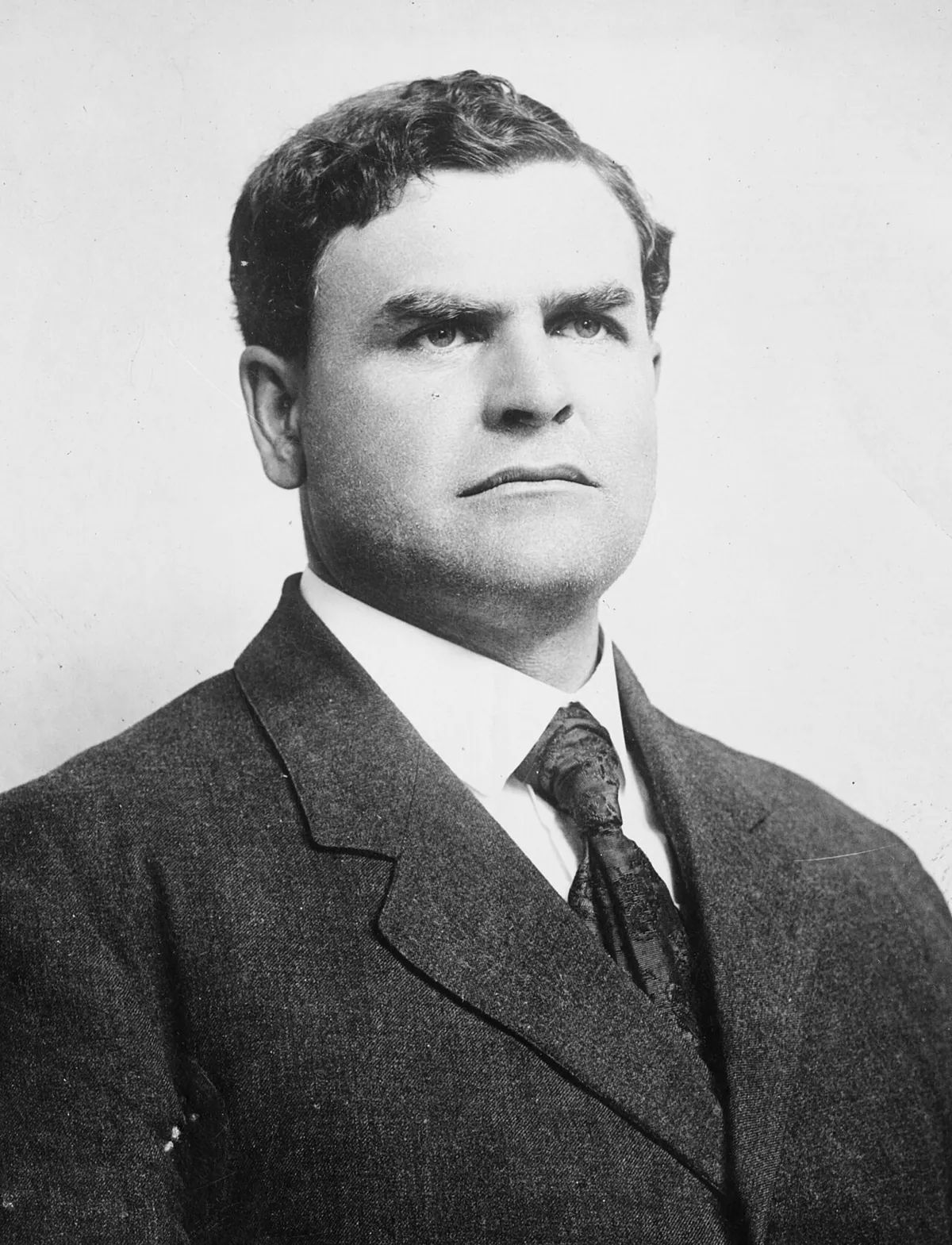
Coaching Career: Early Concurrent Tenures
Warner's coaching career began in 1895 with an unusual arrangement where he held two head coaching jobs simultaneously. He started the season at Iowa Agricultural College, now Iowa State, for a salary of $25 per week. In September, he left to coach at the University of Georgia for $34 per week, but continued to advise the Iowa State team remotely for an additional $30. Warner was rehired at a salary of $40 per week for the 1896 season. That Georgia team had an undefeated record, marking the school's first conference title in the Southern Intercollegiate Athletic Association. The 1896 season included a 16-6 victory over John Heisman's Auburn team, a game featuring an early onside kick. In a 1895 game against the Butte Athletic Club in Montana, Warner bet his entire Iowa State wages of $150 on his team and lost 12-10 after entering the game as a player at guard. Warner's early coaching involved facing future legend John Heisman in the 1895 and 1896 games of the Deep South's Oldest Rivalry between Georgia and Auburn. The 1898 Cornell team went 10-2 and outscored its opponents 296 to 29. His first coaching salary at Georgia was $34 per week in 1895, which increased to $40 per week in 1896. While acting as captain at Cornell in 1894, he came up with his first original play involving three backs faking a run to one side.
First Carlisle Tenure and Early Innovations
Warner became head coach at the Carlisle Indian Industrial School in Pennsylvania in 1899, receiving a high salary of $1,200. He immediately improved the program, leading the 1899 team to a 9-2 record with victories over Penn and Columbia. The 1899 game against Columbia at the Polo Grounds featured the first use of a crouching start for running backs, an early version of the three-point stance. Warner was appointed the school's athletic director after that season, and his salary more than doubled. He also started a track and field program at Carlisle in 1899 after studying the sport from books and consulting coaches Jack Moakley and Mike Murphy. The 1900 team went 6-4-1, and the 1901 season was a losing 5-7-1 record. During a 1903 game against Harvard, Warner executed the hidden-ball trick, a play he learned from John Heisman, having elastic bands sewn into players' jerseys to hide the football. After the 1903 season, Warner left to return to Cornell for three seasons from 1904 to 1906. His 1905 Cornell team lost to undefeated champion Penn by one point, and the 1906 team tied Penn 0-0 while losing only to Princeton. Warner acknowledged that a referee, a Cornell graduate, had assisted his Cornell team during a game against Carlisle before he coached there, stating, We outscored 'em but we didn't defeat 'em.
Second Carlisle Tenure and Football Evolution
Warner returned to Carlisle in 1907 for a second stint that lasted through 1914. From 1907 to 1914, his teams won ten or more games a season five times. This period was marked by profound innovation that changed offensive football. Warner introduced the body blocking technique in 1908, moving away from shoulder blocking. He developed the single-wing and double-wing formations, which became offensive staples for decades. Carlisle quarterbacks like Frank Mount Pleasant and Pete Hauser were among the first to regularly throw the legalized forward pass with a spiral. The 1907 team, which went 10-1 and beat Harvard 23-15 and Penn 26-6, is noted for pioneering a deep-passing game. It was during this second stint that Warner coached the noted athlete Jim Thorpe. Warner later stated that the 1907 Carlisle squad was about as perfect a football machine as he ever sent on the field, as it outscored opponents 267 to 62. He adjusted his coaching style at Carlisle, moving away from rough language after key players stopped attending practices, and said he found he could get better results without swearing at players. In 1902, he began implementing double lateral passes at Carlisle, where the quarterback would lateral to a halfback who then tossed it back. Innovations introduced during his Carlisle tenures include the single-wing and double-wing formations, the three-point stance, body blocking, and the regular use of the spiral forward pass. He also used the hidden-ball trick play and is credited with being the first to use the football huddle and the first to practice numbering plays.
Head Coaching Tenures at Major Programs
Warner left Carlisle for the University of Pittsburgh in 1915, lured by a higher salary and better facilities. His Pittsburgh Panthers won 33 games and claimed national championships in 1915, 1916, and 1918. In 1924, he moved to Stanford University, where his 1926 team went undefeated and won the national title. At Stanford, he coached another noted player, Ernie Nevers, and believed that when Jim Thorpe gave his all, he was unstoppable, but that Nevers always gave 100 percent. Warner finished his head coaching career at Temple University from 1933 to 1938, posting only one losing season. The College Football Data Warehouse gives him one fewer win than the NCAA's credited total of 319.
Schemes, Coaching Tree, and Honors
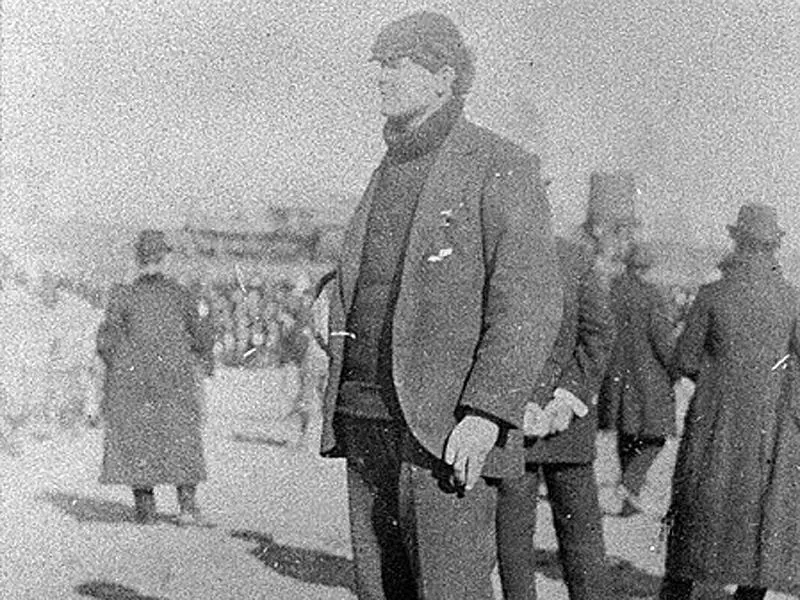
Pop Warner's offensive innovations fundamentally changed football strategy and training. He is credited with inventing or popularizing the single-wing and double-wing formations, the screen pass, the three-point stance, and the body block. He was among the first coaches to use the spiral punt and forward pass systematically. Warner also introduced practical elements like numbering plays, using the huddle, and employing blocking sleds and tackling dummies in practice. Fellow pioneer coach Amos Alonzo Stagg referred to Warner as one of the excellent creators. The National Football Foundation credits Warner with being the first to coach the dummy scrimmage and the first to teach the spiral punt. His coaching tree influenced countless future coaches through his extensive career at eight different programs. Warner entered the College Football Hall of Fame in 1951 as part of its inaugural class. During his career, he also contributed innovations in equipment, advocating for the use of shoulder pads, thigh pads, safer helmets, and lightweight uniforms. He created the naked bootleg and double reverse plays.
Pop Warner Little Scholars and Later Life
In 1929, a youth football league in Philadelphia founded by Joe Tomlin was renamed the Pop Warner Conference in Warner's honor. This organization evolved into Pop Warner Little Scholars, the nation's first and largest organized youth football and cheer program. The program is a non-profit organization that promotes youth football and cheer. His health declined in 1954, and he was admitted to a hospital in Palo Alto, California, on July 26 for surgery on a tumor. Doctors reported his health was failing fast on September 6, 1954, and Warner died the next day, September 7, 1954, in Palo Alto at the age of 83.
Controversies and Historical Context
Warner's celebrated tenure at the Carlisle Indian Industrial School exists within the complex history of federal Indian boarding schools, institutions designed to assimilate Native American children. While Warner's teams achieved success and featured Native athletic talent like Jim Thorpe, the school itself was part of a coercive federal policy. Early in his life, Warner used his cowboy experience to gamble on horse races, which led to his enrollment at Cornell Law School after he lost all his money. His initial coaching methods included rough language and a strict routine, which he adjusted after realizing they were ineffective with his Carlisle players, leading him to adopt a less confrontational style. After a game where his Cornell team faced Carlisle before he coached there, Warner considered Carlisle to be the future of college football. The 1895 game against the Butte Athletic Club was played on a field devoid of grass, and the referee was a hometown official whose decisions chilled the Iowa college boys according to a later account.
Legacy and Lasting Impact
Pop Warner's impact on American football is measured in wins, innovations, and the widespread youth program that carries his name. Over a 44-year career as coach, he won 319 games, the most in the NCAA until the 1980s. His emphasis on speed and technique over sheer size, honed at Carlisle, influenced how the game is played. The Pop Warner Little Scholars program, established in 1929, has introduced millions of children to organized football and cheerleading, emphasizing scholastic achievement. Warner's philosophy was summarized in his own words: You cannot play two kinds of football at once, dirty and good. You play the way you practice. Practice right and you will react right.
Video
FAQ
What is Pop Warner known for?
Pop Warner is known for being a Hall of Fame college football coach with 319 career wins and four national championships. He is famous for inventing key football innovations like the single-wing formation, the three-point stance, and the screen pass. His name is also synonymous with the Pop Warner Little Scholars youth football and cheerleading organization, founded in his honor in 1929. Warner coached for 44 years at schools including Carlisle, Pittsburgh, and Stanford, and he once held the record for most wins by a college football coach.
Why was he called Pop Warner?
He earned the nickname Pop while a student and football player at Cornell University. Because he was one of the oldest students at Cornell, he became known as Pop. The nickname stuck with him for the rest of his life and career. His full name was Glenn Scobey Warner, but he is universally remembered by his nickname in sports history and through the youth league named for him.
What football innovations did Pop Warner create?
Warner created or popularized numerous football innovations that became standard. These include the single-wing and double-wing offensive formations, the three-point stance for linemen and backs, the screen pass, and the body blocking technique. He also pioneered the use of the huddle, numbering plays, and practice tools like blocking sleds and tackling dummies. Warner was among the first to advocate for the spiral punt and the spiral forward pass after it was legalized in 1906. He is also credited with introducing the naked bootleg and the double reverse.
What is the Pop Warner youth football program?
Pop Warner Little Scholars is a non-profit youth sports organization founded in 1929. Originally named the Pop Warner Conference of Philadelphia in honor of the coach, it has grown into the largest youth football and cheer program in the world. The program emphasizes academics and safety. All Pop Warner coaches must complete a USA Football Youth Coach certification. As of 2010, it involved approximately 250,000 football players and 160,000 cheerleaders globally, with over 65 percent of NFL players having participated in it.
What was Pop Warner's role in the development of the forward pass at Carlisle?
Pop Warner coached Carlisle quarterback Frank Mount Pleasant and fullback Pete Hauser to become two of the first regular spiral passers in football after the forward pass was legalized in 1906. In a 1907 game against Penn, Hauser threw a 40-yard spiral pass that hit his receiver in stride, which was considered an evolutionary step in the game. Warner's Carlisle teams of that era, particularly the 1907 squad, pioneered an elegant, high-speed passing game and were among the first to regularly throw the ball deep downfield. This innovation was part of Warner's broader offensive contributions during his second stint at Carlisle.
What was Pop Warner's career college football coaching record?
Pop Warner compiled a career college football record of 319 wins, 106 losses, and 32 ties. This record was accumulated over a 44-year coaching career at major institutions including Georgia, Iowa State, Cornell, Carlisle, Pittsburgh, Stanford, and Temple. He once had the most wins of any coach in college football history, predating later legends like Bear Bryant. The NCAA credits him with this record, though some sources note a slight variation of one fewer win.
Sources
- Pop Warner (Wikipedia) Wikipedia
- Remembering a legend: Glenn "Pop" Warner NCAA
- Glenn "Pop" Warner georgiaencyclopedia.org