The Fiesta Bowl is an annual college football bowl game played in the Phoenix metropolitan area since 1971, created to give the Western Athletic Conference champion a postseason game after several were passed over by other bowls. The game has been played at State Farm Stadium in Glendale, Arizona since 2007, having previously been held at Sun Devil Stadium in Tempe. The Fiesta Bowl has been a part of the national championship structure since 1992, first as part of the Bowl Coalition, then the Bowl Alliance and Bowl Championship Series, and now as a rotating host in the College Football Playoff. It is known for historic games, including two de facto national championship games in the late 1980s and the 2007 overtime game between Boise State and Oklahoma.
History and Founding
The Fiesta Bowl originated from frustration within the Western Athletic Conference. After its champions in 1968 (Wyoming) and 1969 (Arizona State) failed to receive bowl invitations, and the 1970 undefeated Arizona State team had to settle for the Peach Bowl, supporters created a new game. The inaugural Fiesta Bowl was played on December 27, 1971, featuring No. 8 Arizona State against Florida State . For its first nine editions, the bowl guaranteed a berth to the WAC champion. This tie-in ended in 1978 when Arizona and Arizona State left the WAC for the Pac-10 Conference. From 1978 until the advent of the Bowl Coalition in 1992, the Fiesta Bowl operated without a fixed conference affiliation, which allowed it the flexibility to create high-profile matchups. This period set the stage for the bowl's rise to major status, culminating in its ability to host de facto national championship games in the late 1980s.
Venue and Location Moves
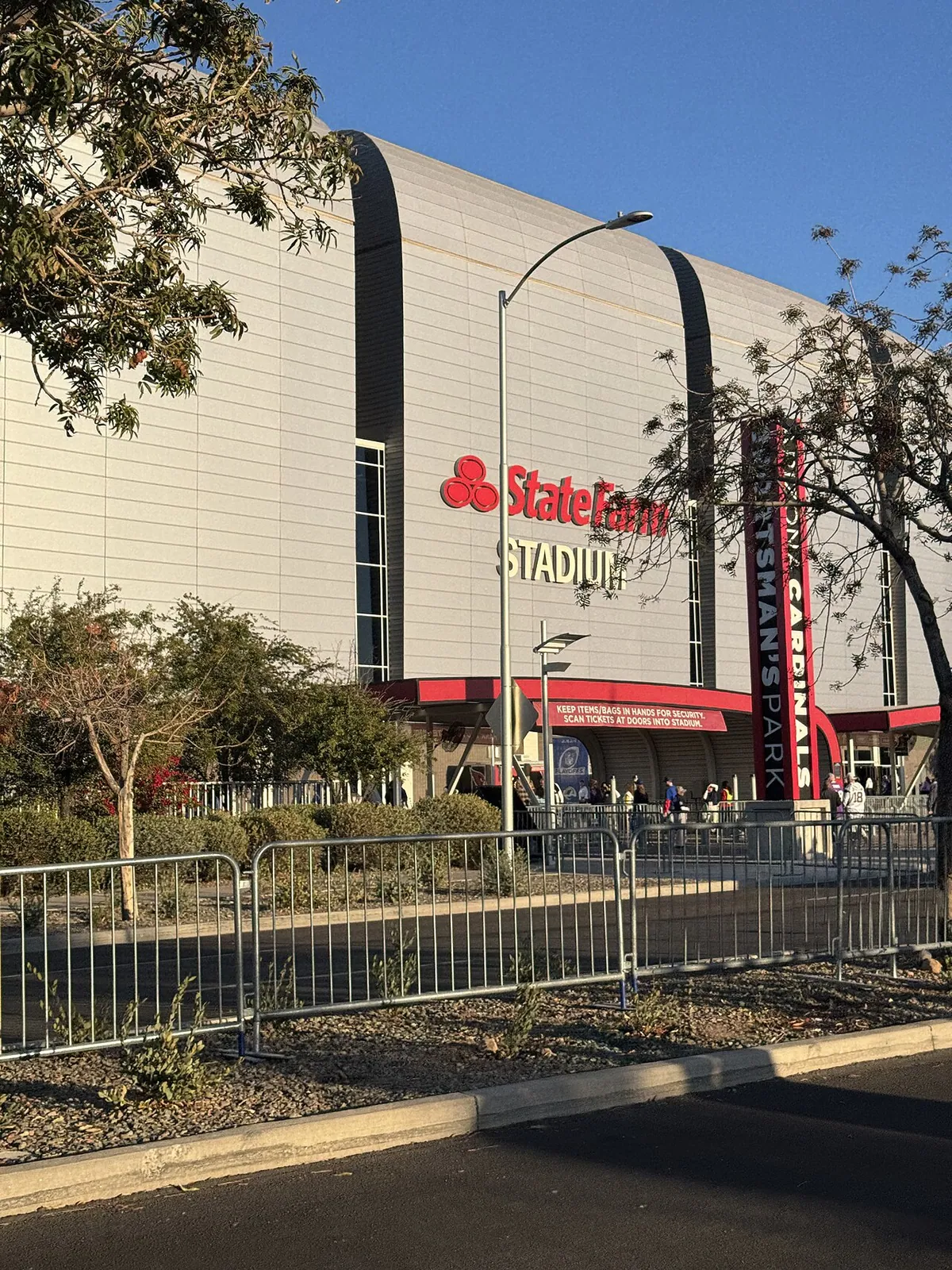
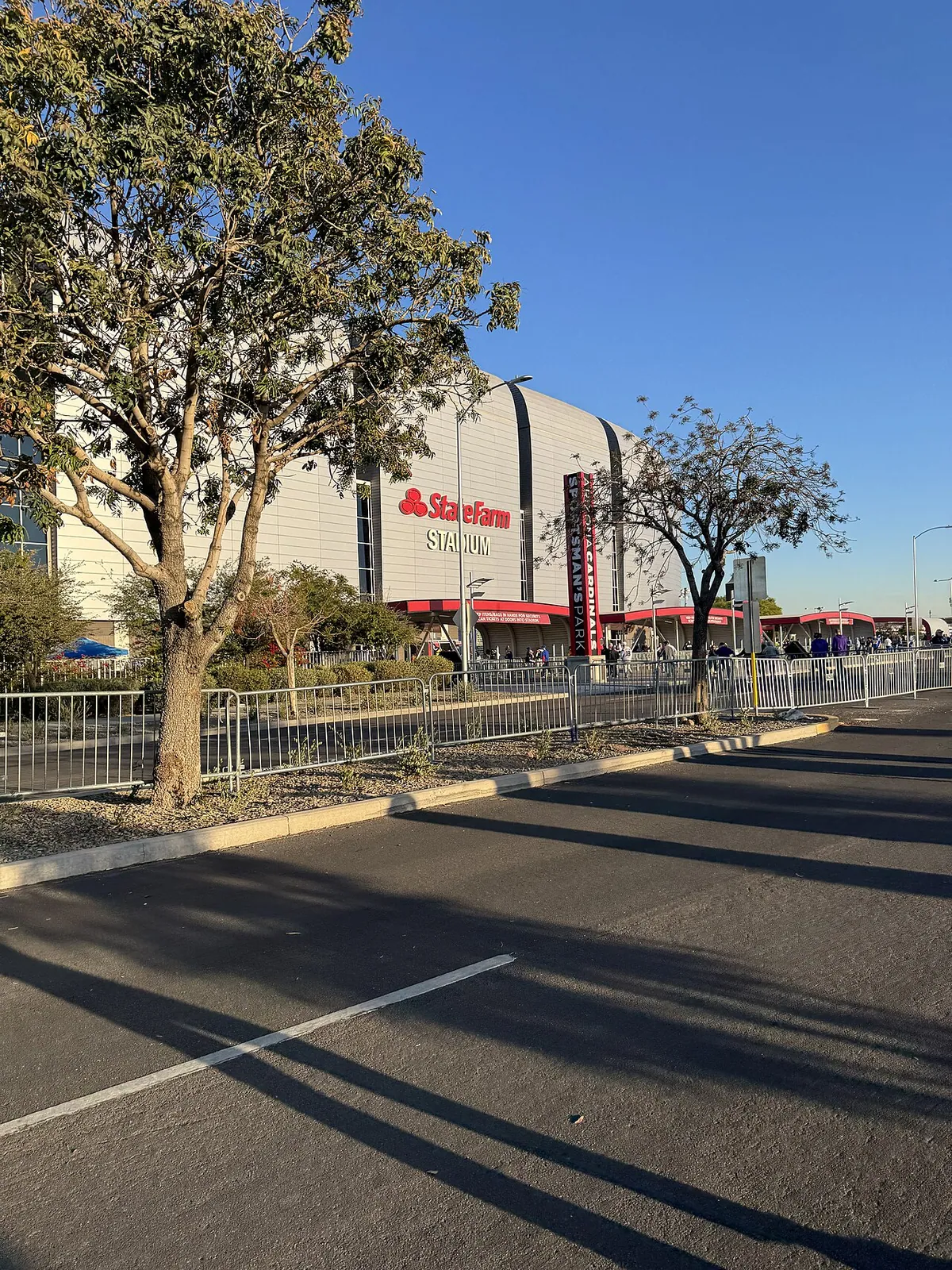
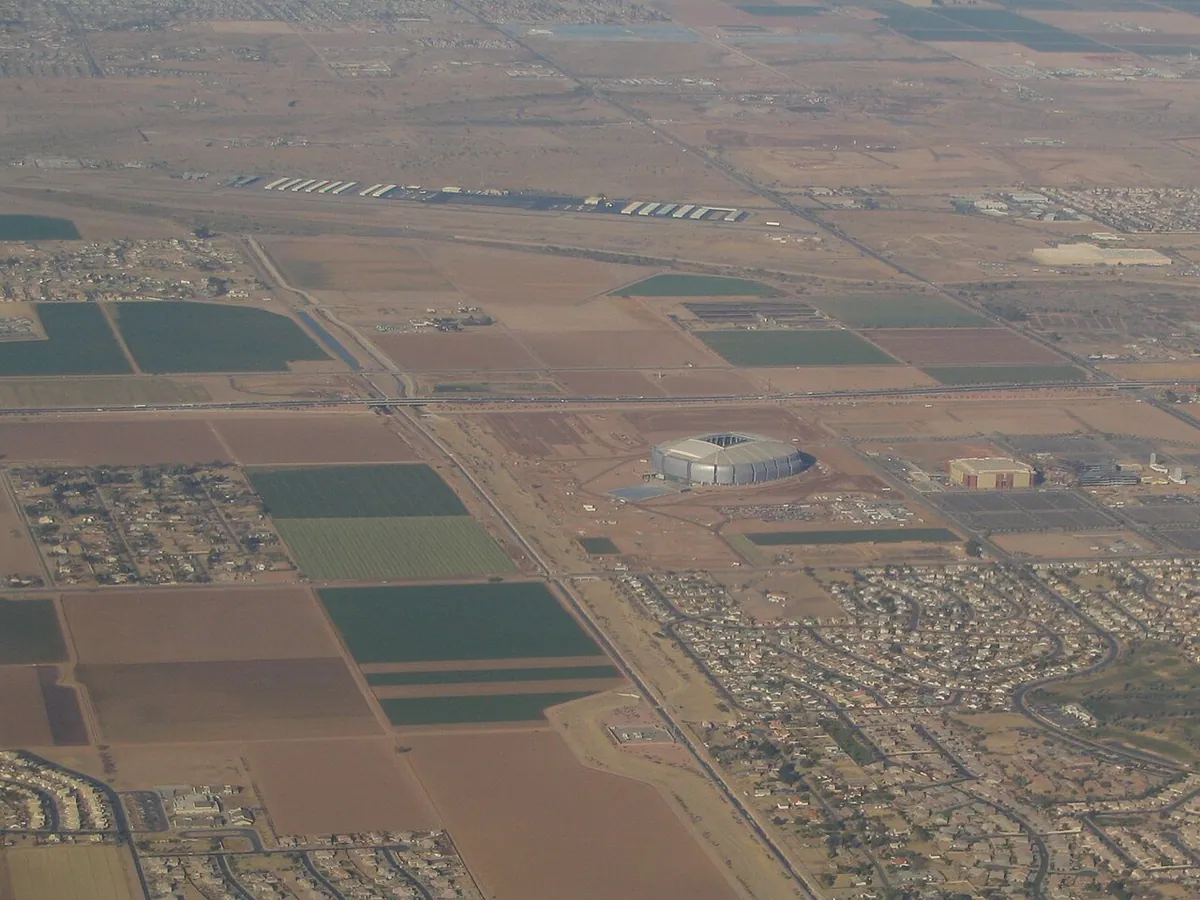
The Fiesta Bowl was played at Sun Devil Stadium on the campus of Arizona State University in Tempe, Arizona from 1971 through 2006. In 2007, the game moved to the new stadium in Glendale, then named University of Phoenix Stadium and now State Farm Stadium. The move to the state-of-the-art, domed stadium coincided with the Phoenix area and Fiesta Bowl Committee hosting the BCS National Championship Game that same season. The stadium has also hosted three Super Bowls, with the Fiesta Bowl's public address announcer, Jim Barnett, serving as the pregame announcer for those events.
Conference Tie-ins and Playoff Evolution
After its initial tie-in with the WAC ended in 1978, the bowl operated without a fixed partner until 1997. That year, it agreed to host the champion of the newly formed Big 12 Conference in years when it was not the national championship site, an arrangement that lasted through the 2013 season. The bowl's strategic importance grew when it joined the Bowl Coalition in 1992, a system designed to match the top two teams for a national championship. It continued as part of the successor Bowl Alliance (1995 to 1997) and then the Bowl Championship Series (1998 to 2013). The Fiesta Bowl served as the national championship game for the 1995, 1998, and 2002 seasons, and the Phoenix area also hosted the standalone BCS title games in 2007 and 2011. In 2014, it became part of the College Football Playoff's "New Year's Six" rotation. During the four-team College Football Playoff, it served as a semifinal in 2016, 2019, and 2022. With the playoff's expansion to 12 teams starting in the 2024 season, the Fiesta Bowl now hosts quarterfinal or semifinal rounds.
Sponsors and Bowl Names
The Fiesta Bowl has had several corporate title sponsors throughout its history, which is reflected in its official name. It was the first bowl game to secure a corporate title sponsor when Sunkist Growers signed an agreement in September 1985, creating the Sunkist Fiesta Bowl starting with the January 1986 game. IBM held the sponsorship from 1993 to 1995. The longest-running sponsorship was with Tostitos, which lasted from 1996 through January 2014. Subsequent sponsors include Vizio (December 2014), BattleFrog (January 2016), and PlayStation (December 2016 through 2022). Since 2022, the bowl has been sponsored by Vrbo and is officially known as the Vrbo Fiesta Bowl. The bowl organization has donated over $12 million to charity, including $1 million in emergency relief during the COVID-19 pandemic in 2020.
Records and Notable Appearances
Penn State holds the record for most Fiesta Bowl wins, with victories in the games played in 1982, 1987, 1992, 1997, and 2024. Several teams have made multiple appearances, including Ohio State, Nebraska, and Florida State. In the 2005 Fiesta Bowl, Utah from the Mountain West Conference became the first team from a non-automatic qualifying conference to play in a BCS game, defeating Pittsburgh 35-7. The 2007 game featured Boise State of the WAC pulling off a overtime win against Oklahoma. The 2010 Fiesta Bowl was the first and only BCS bowl to feature two non-AQ teams, with Boise State defeating TCU 17-10. The highest-scoring game in Fiesta Bowl history was the 2022 CFP semifinal, where TCU defeated Michigan 51-45. The 2010 game was a rematch of the 2008 Poinsettia Bowl.
- Largest margin of victory in a national championship game: Nebraska's 62-24 win over Florida in the Bowl Alliance title game for the 1995 season.
- Most famous trick plays: Boise State's "hook and lateral" and "Statue of Liberty" plays to defeat Oklahoma in 2007.
- Second-highest scoring CFP semifinal (at time of game): The 51-45 result between TCU and Michigan in 2022.
- First BCS non-AQ participant: Utah in 2005.
Notable Games and Recent Results
The 1987 game featured No. 1 Miami and No. 2 Penn State playing for the de facto national championship, with Penn State winning 14-10 in a contest that drew the largest television audience in college football history at that time. The Bowl Alliance National Championship for the 1995 season saw No. 1 Nebraska crush No. 2 Florida 62-24. The first BCS National Championship Game was held at the Fiesta Bowl in 1999, with Tennessee defeating Florida State 23-16. The 2007 game, where Boise State beat Oklahoma 43-42 in overtime using a series of trick plays, is frequently cited as one of the greatest college football games ever played. The 2003 game, the first overtime national championship game, ended with Ohio State beating Miami 31-24 in double overtime. The 50th edition, after the 2020 season, saw No. 10 Iowa State defeat No. 25 Oregon 34-17 behind closed doors, with only players' family members admitted because of the COVID-19 pandemic. In the 2022 Fiesta Bowl (non-playoff), Oklahoma State rallied from a 28-7 deficit to beat Notre Dame 37-35. Later that same year in December, the CFP semifinal version saw No. 3 TCU defeat No. 2 Michigan 51-45. The most recent game, the 2026 Fiesta Bowl, was a CFP semifinal where the No. 10 Miami Hurricanes upset the No. 6 Ole Miss Rebels 31-27 to advance to the national championship game. Miami's path to that game was controversial, as their selection over Notre Dame for the final playoff spot drew significant debate.
| Year | Winning Team | Losing Team | Score |
|---|---|---|---|
| 2026 | No. 10 Miami | No. 6 Ole Miss | 31-27 |
| 2022 (Dec) | No. 3 TCU | No. 2 Michigan | 51-45 |
| 2022 (Jan) | Oklahoma State | Notre Dame | 37-35 |
| 2020 | No. 10 Iowa State | No. 25 Oregon | 34-17 |
Controversies and Scandals
The Fiesta Bowl has faced several controversies over its team selections and internal operations. In 1996, a group of Brigham Young University students burned bags of Tostitos chips after the No. 5 Cougars were passed over for the 1997 game in favor of No. 7 Penn State. The selection of the 2010 matchup between TCU and Boise State, two teams from non-automatic qualifying conferences, was derided by some as a "Separate But Equal Bowl," with accusations that the BCS deliberately paired them to avoid potential losses by power-conference teams. Earlier, in 1991, several universities declined invitations because the state of Arizona had not yet adopted the Martin Luther King Jr. holiday. A major financial scandal emerged in 2009 to 2011, involving allegations of illegal campaign contributions by bowl employees. A 276-page internal report released on March 29, 2011, found $46,539 in illegal campaign contributions. The scandal led to Junker's firing in March 2011, a $1 million fine from the BCS, and threats to the bowl's status in the championship system. Junker later pleaded guilty to a federal felony charge and was sentenced to eight months in prison. In June 2011, the bowl hired University of Arizona president Robert Shelton to replace Junker.
Fiesta Bowl Parade and Events
Beyond the football game, the Fiesta Bowl organization hosts a series of associated events, most notably the Fiesta Bowl Parade. The parade began in 1973 and travels along Central Avenue in Phoenix. It features marching bands from the participating universities and high schools, floats, equestrian units, and a queen and her court. Grand marshals have included celebrities from sports and entertainment. The parade sponsorship has changed over the years, from the Bank of Arizona to Desert Financial Credit Union in 2018, and to the law firm Lerner & Rowe by 2026. The 2026 grand marshal was WWE star Nikki Bella. The Fiesta Bowl Block Party, a pre-game party, draws tens of thousands of people.
Video
FAQ
What is the Fiesta Bowl?
The Fiesta Bowl is an annual college football bowl game played in the Phoenix metropolitan area. It was first played in 1971 and has grown into one of the most prestigious postseason games. Since 2014, it has been part of the College Football Playoff's New Year's Six rotation, and since the 2024 season it has hosted a quarterfinal or semifinal. The game is currently played at State Farm Stadium in Glendale, Arizona and is sponsored by Vrbo.
When is the Fiesta Bowl game played?
The Fiesta Bowl is typically played in late December or early January. Historically, it was played on Christmas Day afternoon from 1976 to 1979 before moving to New Year's Day beginning with the 1981 season. With its integration into the College Football Playoff, its schedule now depends on the playoff rotation. When it serves as a semifinal, the game is played one week after New Year's Day. The most recent edition was played on January 8, 2026.
What is the history of the Fiesta Bowl?
The Fiesta Bowl was founded in 1971 after the Western Athletic Conference's champions were repeatedly snubbed by other bowls. It initially provided an automatic berth for the WAC champion. The bowl gained national prominence by hosting de facto national championship games in 1987 and 1989. It joined the Bowl Coalition in 1992, later becoming part of the Bowl Alliance and BCS, hosting several national title games. It established a tie-in with the Big 12 Conference from 1997 to 2013. Since 2014, it has been a key component of the College Football Playoff system.
Where is the Fiesta Bowl played?
The Fiesta Bowl has been played at State Farm Stadium in Glendale, Arizona since 2007. Before that, it was held at Sun Devil Stadium on the campus of Arizona State University in Tempe, Arizona, from 1971 to 2006. The move to the modern, domed State Farm Stadium provided a state-of-the-art venue and coincided with the bowl hosting the BCS National Championship Game. The stadium is also the home of the NFL's Arizona Cardinals and has hosted multiple Super Bowls.
What was the most famous Fiesta Bowl game?
Many consider the 2007 Fiesta Bowl between Boise State and Oklahoma to be the most famous game. Boise State, a major underdog, won 43-42 in overtime using a series of audacious trick plays, including a "hook and lateral" to tie the game late in regulation and a "Statue of Liberty" play for a game-winning two-point conversion in overtime. The game is frequently cited as one of the greatest in college football history. Other historic games include the 1987 national championship between Miami and Penn State and the first BCS title game in 1999 between Tennessee and Florida State.
What are some of the most memorable games in Fiesta Bowl history?
The Fiesta Bowl has hosted many memorable games. The 2007 game is often called one of the greatest college football games ever played, featuring the undefeated Boise State Broncos defeating the Oklahoma Sooners 43-42 in overtime with a famous trick play. The December 2022 Fiesta Bowl, a CFP semifinal, saw TCU defeat Michigan 51-45, the highest-scoring game in Fiesta Bowl history. Other notable games include the 1987 de facto national championship where Penn State beat Miami 14-10 and the 1996 Bowl Alliance National Championship where Nebraska routed Florida 62-24.
Sources
- Fiesta Bowl (Wikipedia) Wikipedia
- Fiesta Bowl Tickets Cheap, No Fees at.. ticketclub.com
- How underdogs Miami, Ole Miss earned trip to Fiesta Bowl arizonasports.com
- History: Fiesta Bowl NCAA
- Fiesta Bowl Winners: Full list of champions through history marca.com