The Hawaii Bowl is a National Collegiate Athletic Association (NCAA) Football Bowl Subdivision (FBS) postseason game played in Honolulu, Hawaii. Founded in 2002, the bowl was created after the Aloha Bowl ceased operations. The game is operated by ESPN Events and is typically played on or around December 24. It normally features a team from the Mountain West Conference, with the University of Hawaii receiving an automatic bid if bowl-eligible, playing a team from another conference. The Hawaii Rainbow Warriors hold the record for most appearances in the game with ten.
History and Founding
The Hawaii Bowl was established in 2002 as a new postseason game in Honolulu. Its creation followed the end of the Aloha Bowl and Oahu Bowl, with the Aloha Bowl being decertified by the NCAA. The inaugural game was played on December 25, 2002, and was sponsored by ConAgra Foods. The game is operated by ESPN Events. The game's original conference tie-ins were with the Western Athletic Conference (WAC) and Conference USA (C-USA). The University of Hawaii, as a WAC member, was given priority for the conference's slot if bowl-eligible. The bowl has been televised on ESPN for every edition since 2002.
The game's scheduling has been closely tied to the Christmas holiday. The first two editions were played on Christmas Day, but after ESPN acquired broadcast rights to NBA Christmas Day games, the bowl was moved to Christmas Eve after 2004. Exceptions have occurred when Christmas Eve fell on a Monday, as in 2007, when the game was played on December 23 to avoid a conflict with Monday Night Football. The bowl has served as a historic first for several programs, including the UCF Knights, who made their first-ever bowl appearance in the 2005 Hawaii Bowl. The 2008 game marked the first appearance by an independent program when Notre Dame was selected as an at-large team.
Conference affiliations have evolved over the bowl's history. The WAC was the primary tie-in for the Hawaii spot until the conference ceased sponsoring FBS football after the 2012 season. C-USA served as the opponent from 2002 to 2018, with the Pac-10 (now Pac-12) also serving as an opponent from 2006 to 2008. The American Athletic Conference replaced C-USA from 2019 through 2024. A new cycle beginning in 2026 will see the Pac-12 provide the opponent for the Mountain West representative. The bowl has also hosted conference champions, with the C-USA champion appearing in 2011 and the Mountain West champion in 2015.
Venue and Location
The Hawaii Bowl was originally held at Aloha Stadium in Halawa, a suburb of Honolulu. The game was played at Aloha Stadium from its 2002 inception through the 2019 season. In 2022, the bowl moved to the Clarence T. C. Ching Athletics Complex on the campus of the University of Hawaii at Manoa. This move coincided with the planned redevelopment of Aloha Stadium. Attendance figures for games at the Ching Complex, such as 6,605 in 2022 and 15,194 in 2025, are lower than many of the crowds at Aloha Stadium.
The bowl is the only current FBS postseason game played in Hawaii. It is not affiliated with the historical Poi Bowl, Pineapple Bowl, Aloha Bowl, or Oahu Bowl, nor is it connected to the Hula Bowl all-star game. The Hula Bowl, established in 1946, was held in Hawaii for decades but is planned to be played in Florida in 2026. The logistical advantage for the University of Hawaii is a key feature, as the bowl-eligible Rainbow Warriors are guaranteed the Mountain West's bid to the game if they are not selected for the College Football Playoff. This provision eliminates the need for the team to travel to the mainland for a postseason contest.
Conference Tie-ins and Playoff Era
The Hawaii Bowl's conference partnerships have shifted multiple times since 2002. For the first decade, the bowl paired a team from the WAC against a team from C-USA. When the WAC ceased football operations, Hawaii moved to the Mountain West, and that conference inherited the bowl's primary tie-in starting in 2012. The opponent from 2012 to 2018 remained C-USA. From 2019 to 2024, the American Athletic Conference served as the primary opponent. The Pac-12 will become the primary opponent starting with the 2026 season.
The bowl exists outside the College Football Playoff (CFP) structure but is impacted by its selections. The Mountain West's agreement stipulates that if the University of Hawaii is bowl-eligible and is not chosen for a CFP first-round game or a New Year's Six bowl, it will automatically receive the conference's bid to the Hawaii Bowl. This rule explains why Hawaii has made ten appearances. The bowl does not have a rotating spot in the CFP but serves as a traditional postseason destination for teams from its partner conferences.
The conference with the best record in the bowl's history is C-USA, which compiled a 9-4 record over 13 appearances. The WAC posted a 4-6 record over ten appearances before its dissolution. The Mountain West has a 5-7 record over 12 appearances. The American Athletic Conference has a 1-2 record over three appearances. The Pac-12 has a 1-1 record from its two appearances in 2006 and 2013. Independent programs are 1-1, with Notre Dame winning in 2008 and BYU losing in 2019.
Sponsors and Bowl Names
The bowl has had several title sponsors throughout its history, leading to changes in its official name. The inaugural 2002 game was called the ConAgra Foods Hawaii Bowl. From 2003 through 2013, Sheraton Hotels and Resorts Hawaii held the sponsorship, and the game was known as the Sheraton Hawaii Bowl. Sheraton sponsorship ended after 2013. SoFi sponsored the 2018 and 2019 editions. Financial technology company SoFi sponsored the 2018 and 2019 editions, branding it the SoFi Hawaii Bowl. The 2020 and 2021 games were canceled.
When play resumed in 2022, logistics company EasyPost was the sponsor for the 2022 and 2023 editions, known as the EasyPost Hawaii Bowl. The 2024 edition was played without a title sponsor. On April 24, 2025, it was announced that Sheraton would return as the title sponsor of the game. This sponsorship history reflects the common practice in college football where corporate partners attach their name to bowl games for marketing exposure.
Team and Individual Records
The University of Hawaii Rainbow Warriors hold the most appearances and most wins in the bowl's history. Hawaii has played in ten Hawaii Bowls, winning six and losing four for a .600 winning percentage. No other team has more than three appearances. Teams with three appearances include Nevada and Fresno State, both with 1-2 records. SMU has a perfect 2-0 record in its two appearances. Several teams have made two appearances, including Middle Tennessee, San Diego State, Houston, Boise State, and San Jose State.
Individual and team performance records from the 22 games played through 2025 are numerous. The record for most points scored by one team is 62, set by Tulsa in a 62-35 win over Hawaii in 2010. The highest combined score was 102 points in the Hawaii vs. Houston game in 2003. The largest margin of victory is 35 points, achieved by SMU over Nevada in 2009 and San Diego State over Cincinnati in 2015. The record for total offense in a game is 680 yards, gained by Hawaii against Arizona State in 2006. Key individual records from the bowl's history include.
- All-purpose yards: 408 by Chris Johnson (East Carolina) vs. Boise State (2007).
- Passing yards: 559 by Colt Brennan (Hawaii) vs. Arizona State (2006).
- Receptions: 14 by Jason Rivers (Hawaii) vs. Arizona State (2006) and Pofele Ashlock (Hawaii) vs. California (2025).
- Receiving yards: 308 by Jason Rivers (Hawaii) vs. Arizona State (2006).
- Sacks: 4 by Willie Baker (Louisiana Tech) vs. Hawaii (2018).
Notable Games and Recent Results
Several Hawaii Bowl games have been memorable for dramatic finishes and record-setting performances. The 2003 edition featured a triple-overtime thriller where Hawaii defeated Houston 54-48. The 2005 game saw Nevada edge UCF 49-48 in a single overtime. In 2006, Hawaii quarterback Colt Brennan passed for 559 yards in a 41-24 win over Arizona State. The 2008 game featured Notre Dame in a 49-21 victory over Hawaii. The 2019 game provided a late comeback, with Hawaii beating BYU 38-34.
The 2020 edition was canceled due to the COVID-19 pandemic. The 2021 game was also canceled after Hawaii withdrew due to injuries and COVID-19 issues within the team. When the bowl resumed in 2022 at its new venue, Middle Tennessee defeated San Diego State 25-23. Coastal Carolina beat San Jose State 24-14 in the 2023 game. The 2024 contest became an instant classic, with South Florida defeating San Jose State 41-39 in a game that required five overtimes.
The most recent Hawaii Bowl, played on December 24, 2025, saw the host Hawaii Rainbow Warriors defeat the California Golden Bears 35-31. The win was Hawaii's sixth victory in the bowl. The 2025 game featured a standout performance by Hawaii wide receiver Pofele Ashlock, who tied the bowl record with 14 receptions. The announced attendance for the 2025 game was 15,194 at the Clarence T. C. Ching Athletics Complex.
| Year | Winner | Score | Loser |
|---|---|---|---|
| 2022 | Middle Tennessee | 25-23 | San Diego State |
| 2023 | Coastal Carolina | 24-14 | San Jose State |
| 2024 | South Florida | 41-39 (5OT) | San Jose State |
| 2025 | Hawaii | 35-31 | California |
Most Valuable Players
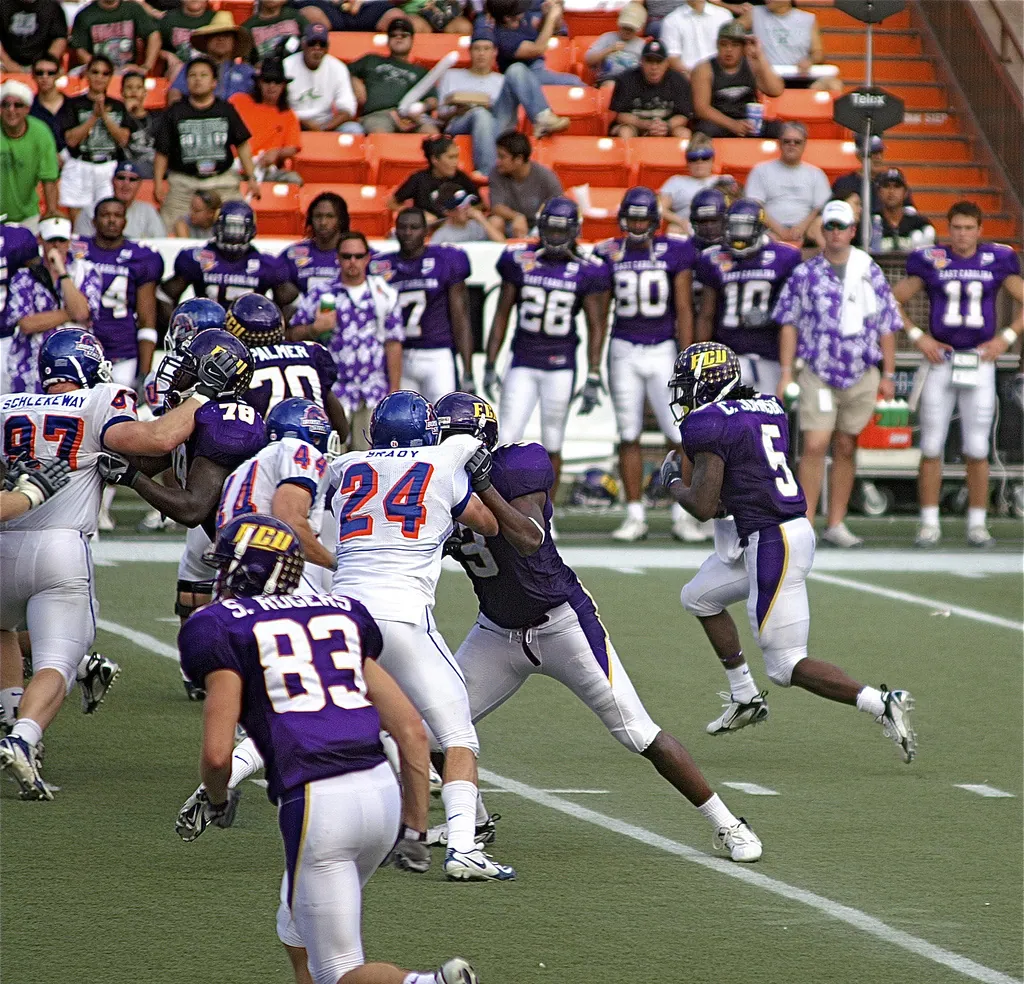
From the bowl's inception in 2002 through the 2019 edition, the game named a Most Valuable Player from both the winning and losing teams. This practice highlighted standout performances regardless of the game's outcome. MVPs from the winning team include Hawaii quarterback Timmy Chang in 2003 and 2004, and Notre Dame quarterback Jimmy Clausen in 2008. MVPs from the losing team include UCF receiver Brandon Marshall in 2005 and Hawaii receiver Greg Salas in 2010. Starting with the 2022 game, the award format changed to honor a single player from the winning team.
The award was renamed the Hugh Yoshida Most Valuable Player Award, honoring the former University of Hawaii athletic director. The first recipient under this format was Middle Tennessee defensive end Jordan Ferguson in 2022. Coastal Carolina quarterback Ethan Vasko won the award in 2023. In the five-overtime game in 2024, South Florida kicker John Cannon earned MVP honors. The 2025 award went to Hawaii wide receiver Pofele Ashlock after his 14-catch performance in the win over California.
Video
FAQ
What is the Hawaii Bowl?
The Hawaii Bowl is an NCAA college football bowl game played annually in Honolulu, Hawaii. It was first played in 2002 and is operated by ESPN Events. The game typically takes place on or near Christmas Eve and is televised on ESPN. It normally features a team from the Mountain West Conference against a team from another conference, with the University of Hawaii having an automatic bid if eligible.
Where is the Hawaii Bowl played?
The Hawaii Bowl is played at the Clarence T. C. Ching Athletics Complex on the campus of the University of Hawaii at Manoa in Honolulu. From 2002 through 2021, the game was held at Aloha Stadium in Halawa, a suburb of Honolulu. The move to the on-campus stadium occurred in 2022. The bowl is the only current FBS postseason game hosted in the state of Hawaii.
Has Hawaii ever won the Hawaii Bowl?
The University of Hawaii Rainbow Warriors have won the Hawaii Bowl six times. Their victories came in 2003, 2004, 2006, 2016, 2019, and 2025. Hawaii also holds the record for most appearances in the game with ten. Their automatic bid arrangement when bowl-eligible has provided them frequent opportunities to play in the game.
What teams are in the Hawaii Bowl?
The Hawaii Bowl features teams from specific conferences based on tie-in agreements. A team from the Mountain West Conference is a primary participant. From 2026 onward, the opponent will come from the Pac-12 Conference. Previously, opponents have come from Conference USA (2002 to 2018) and the American Athletic Conference (2019 to 2024). The University of Hawaii automatically receives the Mountain West bid if it is bowl-eligible and not selected for the College Football Playoff.
Who sponsors the Hawaii Bowl?
The Hawaii Bowl has had multiple title sponsors. Sheraton Hotels and Resorts Hawaii is returning as sponsor. Other past sponsors include ConAgra Foods (2002), SoFi (2018 to 2019), and EasyPost (2022 to 2023). The 2024 edition was played without a title sponsor. The sponsorship determines the bowl's official name, such as the Sheraton Hawaii Bowl.
What is the longest Hawaii Bowl game?
The longest Hawaii Bowl game in terms of overtime periods was the 2024 edition. The South Florida Bulls defeated the San Jose State Spartans 41-39 in a game that required five overtime periods. This set a record at the time for the most overtimes in an FBS bowl game. The 2003 Hawaii Bowl between Hawaii and Houston also went to triple overtime.
Sources
- Hawaii Bowl (Wikipedia) Wikipedia
- Prognosticators See One Specific Bowl Opportunity for Huskies Sports Illustrated
- History: Hawaii Bowl NCAA
- Our History, Hula Bowl hulabowl.com
- Beavers in Paradise, the history of Hawaiian Bowl appearances, OSU Wordpress blogs.oregonstate.edu