An NFL game consists of 60 minutes of regulation playing time, divided into four 15-minute quarters. The actual broadcast duration from kickoff to final whistle typically runs over three hours due to frequent clock stoppages, timeouts, and breaks. This structure is shared with college football, while high school games typically use 12-minute quarters. The game includes a halftime break and can extend into overtime if the score is tied after regulation.
Regulation Game Clock and Quarters
The official length of an NFL game is 60 minutes, divided into four quarters of 15 minutes each. This regulation structure is defined in Rule 4 of the NFL rulebook and is also based on four 15-minute quarters like college football. High school football typically uses shorter quarters, often 12 minutes long, as determined by individual state associations. The game clock measures only the time the ball is in play or is eligible to be put into play, and it stops frequently under specific conditions. The first and second quarters constitute the first half, while the third and fourth quarters make up the second half. Teams switch ends of the field after the first and third quarters, but possession, down, and distance remain unchanged.
Real-World Broadcast Duration
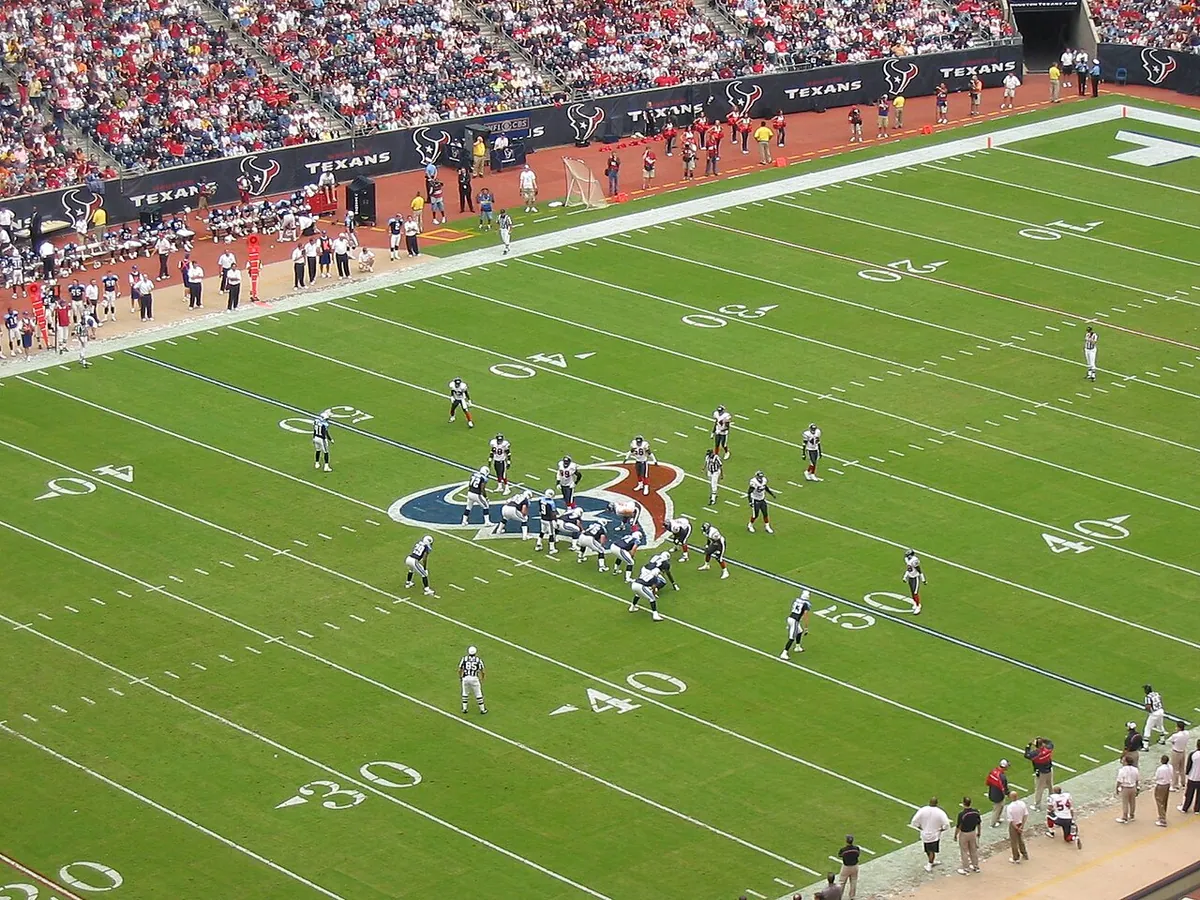
Despite only 60 minutes of game clock, the typical NFL broadcast lasts significantly longer. An analysis of every game from the 2025 NFL season found the average duration from opening kickoff to final snap was 182.6 minutes, or about 3 hours and 3 minutes. The median game time was 3 hours and 1 minute, with the middle half of all games finishing between 2 hours 54 minutes and 3 hours 9 minutes. This extended real-time duration is due to the numerous stoppages built into the game's flow. Factors include incomplete passes, plays ending out of bounds, scores, changes of possession, penalties, instant replay reviews, injuries, and team-called timeouts. Television broadcasts also incorporate commercial breaks during many of these natural stoppages, further extending the total viewing time.
The amount of actual live action, when the ball is snapped and players are actively engaged in a play, is relatively small. Estimates suggest only about 18 minutes of an average three-hour broadcast consist of live gameplay. The pace and total length of a game can vary based on the style of play and score. High-scoring games with many touchdowns, which trigger extra points, kickoffs, and commercial breaks, tend to run longer. For example, games with over 60 total points in the 2025 season averaged 3 hours and 9 minutes. Conversely, low-scoring, one-sided games can be the fastest, such as two 31-0 shutouts in 2025 that each concluded in roughly 2 hours and 31 minutes.
Clock Stoppages and Strategic Time Management
The NFL game clock is designed to stop frequently, making clock management a critical strategic element. The clock stops automatically after an incomplete forward pass, when a ball carrier goes out of bounds, following a score, and after a change of possession. Officials also stop the clock to administer penalties, measure for a first down, or attend to an injured player. Each team is allotted three timeouts per half, each of which creates a two-minute stoppage. A unique feature is the two-minute warning, an automatic timeout called by officials when the game clock shows two minutes or less remaining in the second and fourth quarters, as well as in overtime. This is not typically used in most high school football.
Separate from the game clock is the play clock, which limits the time the offense has to start the next play. The NFL uses a 40-second play clock that starts immediately after the previous play ends, though it resets to 25 seconds in certain situations like after a penalty. This play clock ensures a consistent pace between snaps but does not directly add to the game clock's 60 minutes. In the final minutes of a close game, teams use deliberate strategies to either conserve or expend the remaining game clock. A team with a lead may use running plays that keep the clock moving or take a knee (kneeldown), while a trailing team will use timeouts and call plays designed to stop the clock, such as passing plays or plays directed toward the sideline.
Halftime, Breaks and Time Slot Variations
Standard NFL games include several scheduled breaks. There is a break of at least two minutes after the first and third quarters when teams switch ends of the field. The primary intermission is halftime, which occurs between the second and third quarters. Under NFL rules, halftime is scheduled for 12 to 13 minutes, though the league can specify a longer duration for special events like the Super Bowl to accommodate an extended halftime show. The combination of 60 minutes of game clock, a halftime break, and the two shorter quarter breaks accounts for a portion of the total broadcast time. The remaining 100-plus minutes are filled by the various game stoppages and commercial intervals.
Game duration can also vary slightly by broadcast time slot. Primetime games (Thursday, Sunday, and Monday nights) tend to run a few minutes longer than afternoon games, though the difference is not drastic. A more significant factor is the actual kickoff time, as games rarely begin exactly at their listed start time. For planning purposes, a 1:00 p.m. Eastern Time game typically kicks off a few minutes late and will usually conclude around 4:00 p.m. to 4:15 p.m. ET. Games with later listed start times follow a similar pattern, with the 3-hour average serving as a reliable guideline, though overtime can extend this window substantially.
Overtime Rules and Procedures
If a game is tied at the end of regulation during the regular season or playoffs, it proceeds to overtime. In the NFL regular season, overtime consists of one 10-minute period, shortened from 15 minutes starting with the 2017 season. Each team receives two timeouts for the overtime period. The rules guarantee both teams an opportunity to possess the ball, unless the team that receives the opening kickoff scores a touchdown on its first possession or the defense scores a touchdown or safety on that first possession. If the score remains tied after both teams have had one possession, the game proceeds to sudden death, where the next team to score wins. If neither team scores in the 10-minute period, the game ends in a tie.
Playoff overtime rules are different and continue until a winner is determined. Overtime periods in the playoffs are 15 minutes long, and teams play consecutive periods if necessary. Teams are granted three timeouts for the first two overtime periods played. The same possession rules apply, where both teams get a chance to possess the ball unless the first team scores a touchdown or the defense scores on the initial drive. Super Bowl LI in 2017 was the first Super Bowl to go into overtime, with the New England Patriots defeating the Atlanta Falcons. The 2019 AFC and NFC Championship games both went to overtime, marking the first time both conference title games required extra time in the same season.
- Regular Season Overtime: One 10-minute period, can end in a tie.
- Playoff Overtime: 15-minute periods, continues until a winner is decided.
- Possession Rule: Both teams generally get at least one offensive chance.
- Coin Toss: The visiting team captain calls the coin flip to start overtime.
- History: Overtime rules have changed several times, notably in 2010 and 2017.
Comparison to College and High School Football
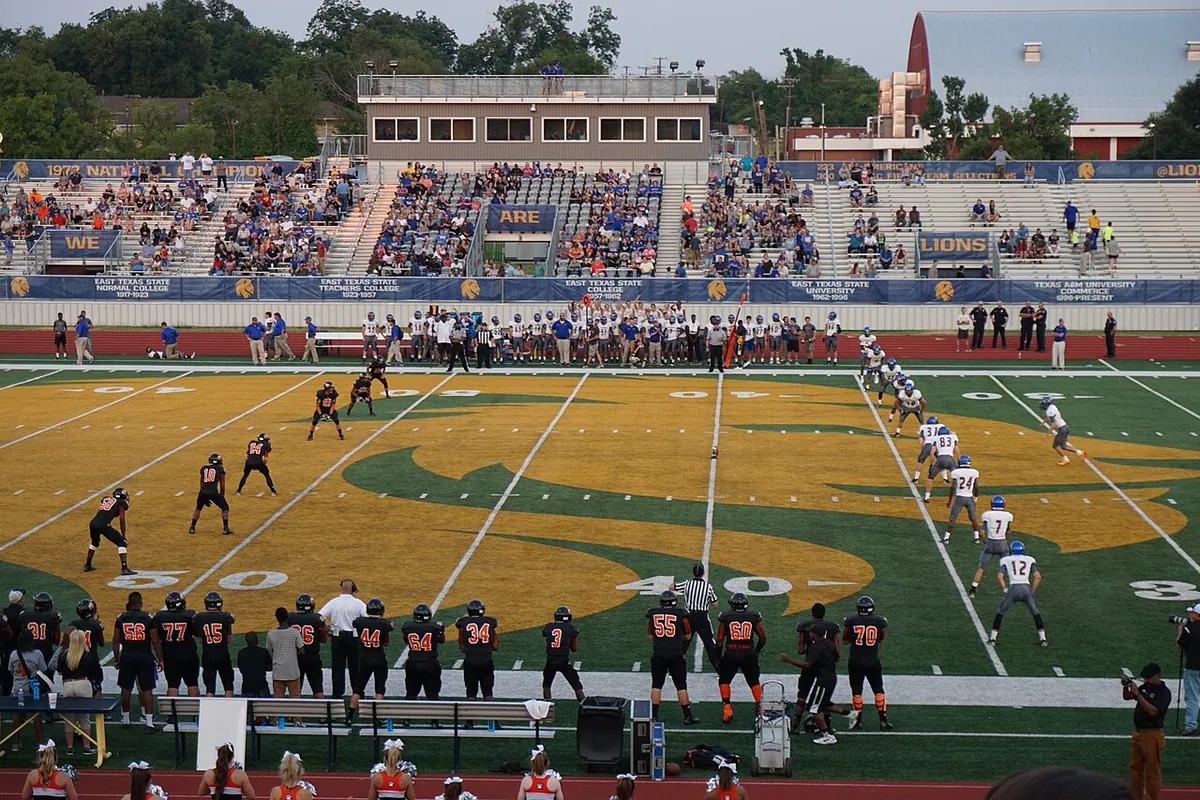
While the NFL and NCAA college football both use four 15-minute quarters, there are key differences in timing and overtime procedures. College games also frequently exceed three hours in real time due to similar clock stoppages. The major distinction is in overtime, where college football uses a unique system designed to eliminate ties. In college overtime, each team gets a possession starting at the opponent's 25-yard line, with the game clock not used. If tied after two overtimes, teams proceed to additional periods where they must attempt two-point conversions instead of starting from the 25-yard line. High school football rules vary by state but commonly feature 12-minute quarters. Many states use an overtime system similar to the Kansas Plan, where teams alternate possessions from the 10-yard line, though some, like Texas, adopt the college football overtime rules.
| Level of Play | Quarter Length | Overtime Format | Ties Allowed? |
|---|---|---|---|
| NFL | 15 minutes | 10-min period (RS), 15-min periods (Playoffs) | Yes, in regular season |
| NCAA College | 15 minutes | Possessions from 25-yard line | No |
| High School (Typical) | 12 minutes | Varies by state (often Kansas Plan) | Varies by state |
Other professional leagues have used different overtime formats. The defunct World Football League in 1974 used a full 15-minute overtime period divided into two halves. The XFL's second incarnation used a shootout of two-point conversion attempts, a concept later adapted by the NCAA for multiple overtime games. The current United Football League also uses a version of this two-point conversion shootout. These alternative systems aim to ensure both teams have a fair chance to win while also controlling the total length of the overtime period.
Historical Development of Game Timing
The fundamental structure of four quarters has been a constant in professional football, but specific timing rules have evolved. The NFL's overtime rules have undergone several significant changes to balance competition and manage game length. Before the 2010 playoffs, the league used a pure sudden-death format, where the first team to score any points won. This was changed because the team winning the overtime coin toss won approximately 60 percent of games, often by driving for a field goal without the opponent getting the ball. The current system, which guarantees both teams a possession opportunity in most scenarios, was introduced for the playoffs in the 2010 season and later adjusted for the regular season.
Other timing adjustments have been made to streamline the broadcast. The shortening of the regular-season overtime period from 15 to 10 minutes in 2017 was one such change. The two-minute warning has been a part of the game for decades, serving as both a strategic stoppage and a built-in commercial break for television. The consistent increase in the average real-time length of games over the years has led the league to periodically review rules related to clock stoppages and commercial breaks in an effort to maintain an engaging pace for viewers while accommodating the economic model of television broadcasting.
Video
FAQ
Can an NFL game end in a tie?
Yes, NFL regular season games can end in a tie if the score is still even after the 10-minute overtime period concludes. Ties are uncommon but do occur, such as the game between the New York Giants and Washington Commanders on October 11, 2026. Preseason games that are tied at the end of regulation also end as ties. Playoff games cannot end in a tie. Overtime periods continue until a winner is determined.
How does overtime work in the NFL?
In the NFL regular season, overtime is a 10-minute period. A coin toss decides which team gets the ball first. Both teams are guaranteed a possession unless the team that receives the opening kickoff scores a touchdown or the defense scores on that first drive. If the game remains tied after both possessions, it becomes sudden death. If no one scores in the 10 minutes, the game ends in a tie. Playoff overtime uses 15-minute periods and continues until there is a winner.
Why does a 60-minute football game take over 3 hours?
A 60-minute game takes over three hours because the game clock stops frequently. Stoppages occur for incomplete passes, when a player runs out of bounds, after scores, during changes of possession, for penalties, and for instant replay reviews. Each team also has three timeouts per half, and there are scheduled breaks like the two-minute warning, quarter breaks, and a 13-minute halftime. Television commercial breaks are inserted during many of these natural pauses, extending the total broadcast time.
What is the official length of an NFL game in terms of playing time?
An NFL game has an official playing time of 60 minutes, which is divided into four quarters of 15 minutes each. This regulation time is measured by the game clock, which frequently stops during the action. The 60-minute duration is specified in the NFL's rulebook as the length of the game. However, this clock time does not reflect the total real-world duration of the event, as it stops for many reasons including incomplete passes, plays ending out of bounds, and changes of possession.
How long does a typical NFL game last from start to finish in real time?
A typical NFL game lasts about three hours and three minutes from the opening kickoff to the final whistle. While the official game clock is only 60 minutes, frequent stoppages extend the real-time duration. An analysis of the 2025 NFL season found the average game length was approximately 182.6 minutes, with a median of 3 hours and 1 minute. This additional time comes from timeouts, commercial breaks, halftime, quarter breaks, penalties, replay reviews, and the natural stoppage between plays governed by the play clock.
How long is halftime during an NFL game?
Halftime during a standard NFL game is scheduled for 13 minutes, though some sources indicate 12 minutes. This break occurs between the second and third quarters. For major events like the Super Bowl, the halftime break is longer to accommodate a special show. The official NFL game-operations guidance states halftime is generally 13 minutes unless the league specifies otherwise. This intermission is separate from the shorter breaks of at least two minutes that occur after the first and third quarters when teams switch ends of the field.
Sources
- American football rules (Wikipedia) Wikipedia
- How long does an NFL game last? How long is halftime? dazn.com
- How Long Is an NFL Game? Quarters & Halftime Explained sportscapemagazine.com
- How Long Is a Football Game? I Timed Every NFL Game From Last Season upintherafters.com
- How Long Is an NFL Game? - Football Nation footballnationusa.com