The Army, Navy Game is an annual college football rivalry game contested between the Army Black Knights of the United States Military Academy and the Navy Midshipmen of the United States Naval Academy. First played on November 29, 1890, it is one of the oldest rivalries in the sport, often branded as America's Game. The contest marks the end of the regular season and serves as the final game in the annual Commander-in-Chief's Trophy series, which also includes the Air Force Falcons. Through the 2025 meeting, Navy leads the all-time series 64-55-7 across 126 total games. The game is nationally televised, traditionally features presidential attendance, and is known for its unique pageantry and traditions that honor military service.
Origins and Early History
The rivalry began in 1890 when West Point cadet Dennis Michie accepted a challenge from a group of Naval Academy midshipmen for a football game. The first contest was played on November 29, 1890, on the parade grounds at West Point, with the more experienced Navy team winning 24-0. Army avenged that loss the following year with a 32-16 victory, establishing the competitive foundation of the series. The early games from 1890 to 1893 alternated between the campuses of each academy. The series was suspended after the 1893 game due to objections from the academies' superintendents. Through the efforts of Philadelphia surgeon Dr. J. William White, the series resumed in 1899 at the University of Pennsylvania's Franklin Field , inaugurating the tradition of playing the game in Philadelphia. The rivalry has been played annually since 1930.
Cultural Significance and Presidential Involvement
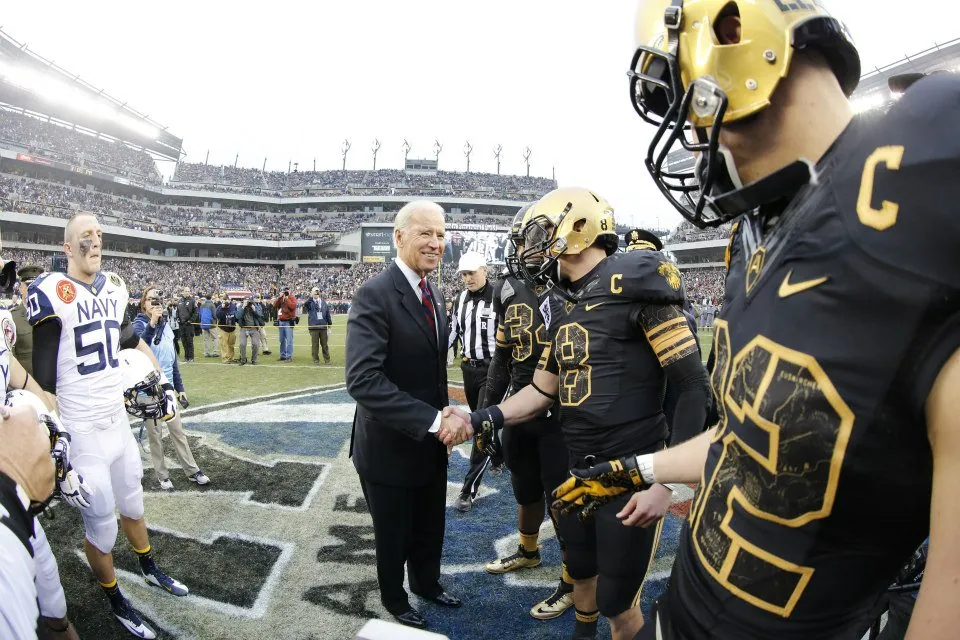
The Army, Navy Game embodies the interservice rivalry of the United States Armed Forces, with every player being a future commissioned officer. The phrases Beat Navy and Beat Army are deeply ingrained in the respective academies' cultures. The game has been frequently attended by sitting U.S. presidents, a tradition that began with Theodore Roosevelt in 1901. Roosevelt also played a key role in restoring the suspended series in 1899 and later intervened in 1905 to help reform the sport for safety. Other presidents who have attended include Woodrow Wilson, Calvin Coolidge, Harry S. Truman, John F. Kennedy, Gerald Ford, Bill Clinton, George W. Bush, Barack Obama, and Donald Trump. President Trump attended games in 2016, 2018, 2019, 2020, 2024, and 2025. An executive order signed by President Trump in March 2026 told the head of the Federal Communications Commission to set up an exclusive broadcast window for the game.
Gameplay Evolution and Modern Era
For much of the early and mid-20th century, both Army and Navy were often national football powers, with their games occasionally deciding national championships. The stringent admissions and physical standards of the service academies later made consistent top-level competition more difficult. Since 1963, only the 1996, 2010, 2016, 2017, 2024, and 2025 games have featured both teams entering with winning records. The game was historically played on Thanksgiving weekend but moved to the second Saturday in December in 2009 to reduce scheduling conflicts and give it an exclusive window in the college football calendar. In the 2024 season, Army joined Navy as a football member of the American Athletic Conference , though their annual matchup remains an out-of-conference contest. Following the announcement of the College Football Playoff's expansion to 24 teams beginning in 2027, it was announced that the Army, Navy Game would move to the first weekend of December starting that year.
Key Traditions and Pageantry
The week leading up to the game is filled with spirited events at both academies, including bonfire rallies where a 20-foot boat representing Navy is burned at West Point. A formal prisoner exchange is conducted during pre-game ceremonies, where cadets and midshipmen studying at the sister academy are returned to their own student sections. After the pre-game invocation, members of the Military Academy and Naval Academy choirs sing the national anthem instead of a recording artist or marching band. After the game, in a profound show of mutual respect, both teams gather to sing each other's alma mater. The losing team's song is performed first, with the winning team standing alongside them, making the phrase sing second synonymous with victory. The game also features the Patriot Games, a two-day athletic competition between cadets and midshipmen, with the winner presented a trophy on the field.
- Pre-game prisoner exchange of exchange students.
- Bonfire rallies with effigy burning.
- Post-game joint singing of alma maters.
- Patriot Games athletic competition.
- Performance of the national anthem by academy choirs.
Historic and Notable Games
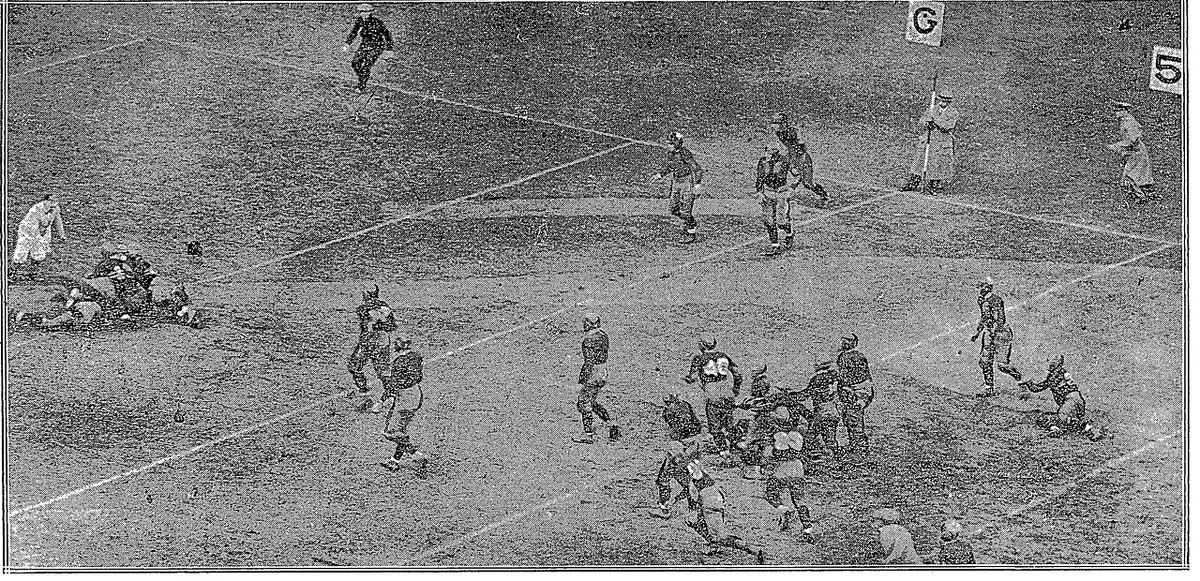
The 1893 game is notable because Navy's Joseph Mason Reeves wore a leather helmet, considered one of the first used in football, on doctor's orders after a prior head injury. The 1926 game at Soldier Field in Chicago, played before over 100,000 fans, ended in a 21-21 tie and resulted in Navy being awarded a share of the national championship. In both 1944 and 1945, Army and Navy entered ranked first and second nationally, with Army winning the latter game of the century 32-13. The 1963 game, played on December 7 after a delay following President Kennedy's assassination, featured the first American television broadcast use of instant replay. Navy quarterback Roger Staubach led a 21-15 victory that year. More recently, Army snapped Navy's 14-game winning streak with a 21-17 win in 2016, and the first overtime game in series history occurred in 2022, a 20-17 double-overtime Army victory.
Venues and Locations
The Army, Navy Game has been played primarily at neutral sites due to the massive crowds it attracts. Early Philadelphia games were held at Franklin Field (1899 to 1935), followed by Municipal/John F. Kennedy Stadium (1936 to 1979), Veterans Stadium (1980 to 2001), and Lincoln Financial Field (since 2003). The New York area has hosted numerous games, including nine at the Polo Grounds and others at Yankee Stadium and Giants Stadium. Other notable venues include Soldier Field in Chicago (1926), the Rose Bowl in Pasadena (1983), and various stadiums in the Baltimore-Washington area such as M&T Bank Stadium and FedExField. The 2020 game was held at Army's Michie Stadium due to COVID-19 restrictions. Future scheduled venues include MetLife Stadium in 2026 and a return to Lincoln Financial Field in Philadelphia in 2027.
| City/Area | Primary Venue(s) | Notable Years |
|---|---|---|
| Baltimore / Washington | Municipal Stadium, M&T Bank Stadium, FedExField | 1924, 1944, 2000, 2011, 2024, 2025 |
| Other Notable Sites | Soldier Field (Chicago), Rose Bowl (Pasadena), Gillette Stadium (Foxborough) | 1926, 1983, 2023 |
Commander-in-Chief's Trophy and Series Context
The Army, Navy Game is the third and final contest in the annual competition for the Commander-in-Chief's Trophy, a triangular series that includes the Air Force Academy. The trophy was first awarded in 1972, an idea conceived by former Air Force Athletic Director General George B. Simler. Before its creation, Army and Navy played annually, while Air Force played each academy in alternating years. The trophy is awarded to the academy that wins the round-robin series each season. Winning the Army, Navy Game often decides the trophy holder, as it did in 2025 when Navy's 17-16 victory allowed them to retain it. The rivalries with Air Force are considered less intense than the Army, Navy rivalry itself, due to the Air Force Academy's later founding in 1954 and greater geographical distance.
Records, Streaks, and Statistics
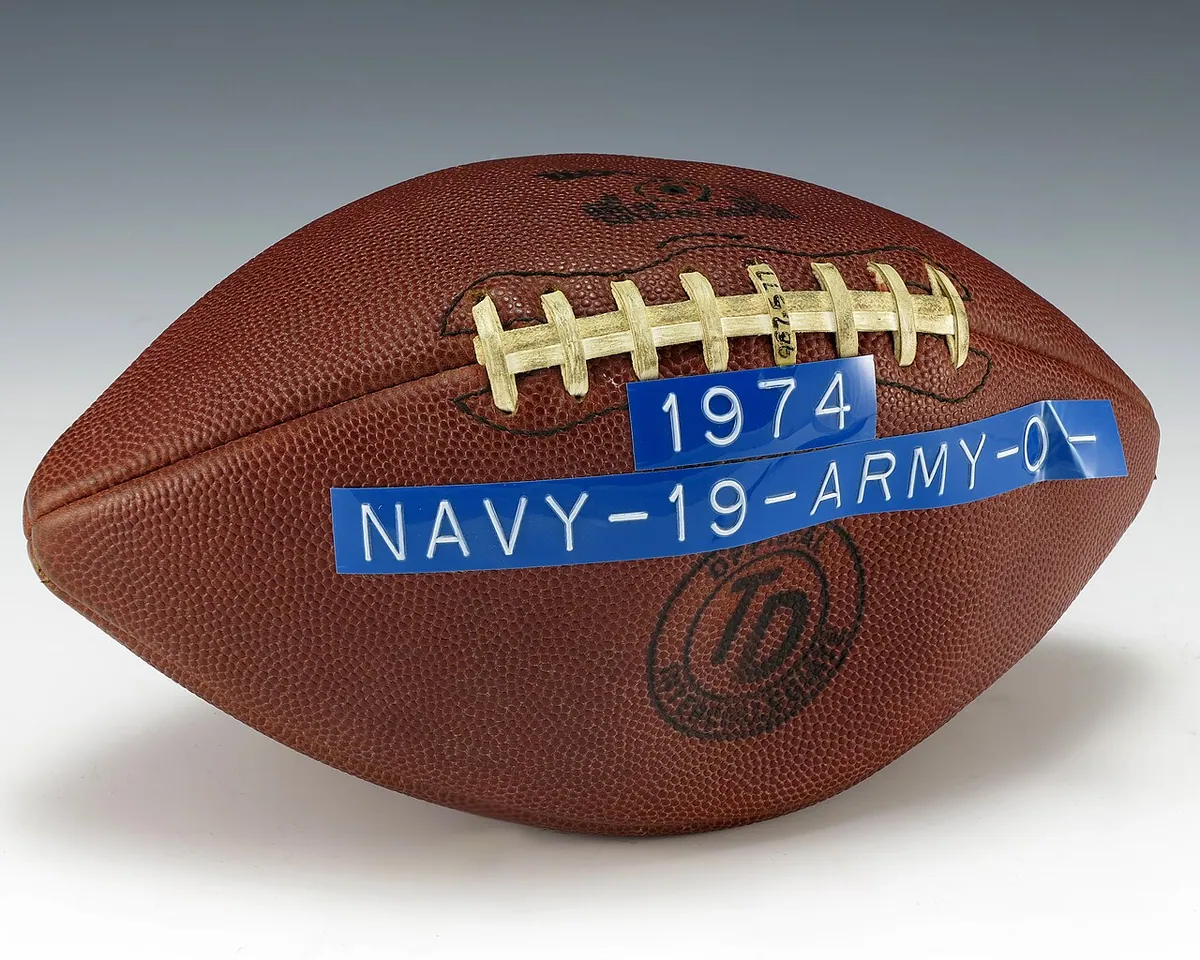
Through the 2025 meeting, Navy holds the overall series lead with 64 wins to Army's 55, with 7 ties. The largest margin of victory in series history is Navy's 51-0 win in Philadelphia in 1973. The longest winning streak belongs to Navy, who won 14 consecutive games from 2002 through 2015. Navy is on a two-game winning streak from the 2024 and 2025 contests. The series has seen only one overtime game, a 20-17 double-overtime Army win in 2022. While many players see this game as their final competitive football contest, some have gone on to professional careers, most notably Navy's Roger Staubach, a Pro Football Hall of Fame quarterback with the Dallas Cowboys, and Army's Alejandro Villanueva , who played offensive tackle for the Pittsburgh Steelers and Baltimore Ravens .
Broadcast History and Media Coverage
It has aired on national radio since 1930 and on television every year since 1945, originally on ABC, CBS, or NBC. Since 1996, CBS has held exclusive television rights to the game, with a contract extension announced in December 2024 securing those rights through 2038. This extension also grants CBS international broadcast rights in the United Kingdom and Australia. The 1963 game was historically significant as the American television debut of instant replay on CBS. Since 2009, its date on the second Saturday of December has given it a window with little competition from other Division I FBS games. As talks on further Playoff expansion began in 2025, Army head coach Jeff Monken proposed moving the game back to Thanksgiving weekend, but Navy athletic director Michael Kelly disagreed.
Video
FAQ
What is the significance of the Army, Navy Game in the college football season?
The Army, Navy Game is the final contest of the regular season for both teams. It also serves as the concluding game in the annual competition for the Commander-in-Chief's Trophy, which involves Army, Navy, and the Air Force Falcons. Since 2009, the game has been played on the second Saturday of December, a window with little competition from other Division I FBS games. The outcome frequently determines which service academy wins the coveted trophy for that year.
When and where is the next Army, Navy Game?
The next scheduled game is the 127th meeting, set for Saturday, December 12, 2026. It will be played at MetLife Stadium in East Rutherford, New Jersey, with a kickoff time of 3 p.m. Eastern Standard Time. This will mark the game's return to MetLife Stadium for the first time since the 2021 contest. The game will be broadcast live on CBS and streamed on Paramount+.
What was the largest margin of victory in the series?
The largest margin of victory in the history of the Army, Navy Game is 51 points. This occurred on December 1, 1973, when the Navy Midshipmen defeated the Army Black Knights by a score of 51-0. The game was played in Philadelphia, which has been the most frequent host city for the rivalry. It remains the most lopsided result in the 126 meetings between the two service academies through 2025.
What was the score of the first Army-Navy football game?
The first Army-Navy football game ended with Navy defeating Army by a score of 24 to 0. This historic meeting took place on November 29, 1890. The game was played on the Plain at West Point after Cadet Dennis Michie accepted a challenge from a group of midshipmen. Navy's Red Emrich scored four touchdowns and kicked two field goals in that inaugural contest, leading the more experienced Navy team to victory over the newly formed and inexperienced Army squad.
Who currently holds the longest winning streak in the Army-Navy Game series?
The Navy Midshipmen hold the record for the longest winning streak in the series, with 14 consecutive victories from 2002 through 2015. Army ended that streak with a 21-17 win on December 10, 2016. The current win streak also belongs to Navy, standing at two games as of the 2024 and 2025 meetings. Through the 2025 game, Navy leads the all-time series 64 wins to Army's 55, with 7 ties.
What is the 'sing second' tradition at the end of the Army-Navy Game?
The phrase 'sing second' refers to the post-game tradition where both teams sing each other's alma mater. The winning team's alma mater is always performed last. After the game, the winning team stands with the losing team to face the losing academy's students during their song, and then the losing team accompanies the winners. This ritual is a profound show of mutual respect and solidarity between the service academies.
Further reading
- The Army-Navy game: 13 historical facts you probably don't know U.S. Army. The official Army account of the rivalry's history, cancelled years and traditions such as the mascots.
Sources
- Army, Navy Game (Wikipedia) Wikipedia
- Army- Navy Game, A Storied Rivalry | U.S. Military Academy.. westpoint.edu
- The Rivalry, Army Navy Game armynavygame.com
- Army vs Navy Football Game: History, Rivalry & Traditions woundedwarriorproject.org