The Beast Quake is the name given to a 67-yard touchdown run by Seattle Seahawks running back Marshawn Lynch during the 2010 NFC Wild Card playoff game. The play occurred on January 8, 2011, at Qwest Field in Seattle, Washington, with the Seahawks leading the New Orleans Saints by four points late in the fourth quarter. Lynch broke nine tackles on the run, which secured a 41-36 upset victory for Seattle. The name combines Lynch's nickname 'Beast Mode' with the fact that the ensuing fan celebration registered as a small earthquake on a nearby seismometer. The play is ranked number 13 in the NFL's '100 Greatest' series of the top plays of all time, and the seismic reading was measured at magnitude 2.0.
The 2010 NFC Wild Card Game Context
The 2010 NFC Wild Card game featured the defending Super Bowl champion New Orleans Saints against the Seattle Seahawks. The Saints entered the playoffs as the NFC's fifth seed with an 11-5 record for the season. The Seahawks, coached by Pete Carroll, won the NFC West division with a 7-9 record, becoming the first team since the 1982 season to make the postseason with a losing record. The two teams had met in Week 11 of the regular season, with the Saints winning 34-19 in New Orleans. The Saints were favored by 10 points for the playoff rematch in Seattle. The game was televised nationally on NBC with announcers Tom Hammond, Mike Mayock, and Alex Flanagan, and referee Walt Coleman officiated. Head coach Sean Payton led the Saints, who were attempting to begin another Super Bowl run. The Seahawks' 7-9 record made them a significant underdog, as they were the first team to reach the playoffs with a losing record since the 1982 season.
Game Situation Before the Beast Quake
The Seahawks held a 34-30 lead late in the fourth quarter after the Saints had kicked a field goal. Following an exchange of punts, Seattle took possession at their own 33-yard line with 4 minutes and 20 seconds remaining in the game. On first down, Marshawn Lynch was stopped for no gain, setting up a 2nd and 10 situation. The Seahawks were protecting a four-point lead with 3 minutes and 38 seconds left on the clock. A single first down would have significantly improved Seattle's chances of running out the clock, while a punt would have given Saints quarterback Drew Brees another opportunity to drive for a game-winning score. The Saints had trailed 34-27 with 13:11 left in the game before their field goal drive, showing their offense was capable of quick scoring.
The Play Call and Blocking Scheme
The Seahawks called '17 Power,' a power run play they had not used in the game up to that point. Seattle lined up in an I-formation with fullback Michael Robinson and tight end Carlson. The Saints countered with an eight-man front, crowding the line of scrimmage with strong safety Roman Harper. At the snap, right guard Mike Gibson pulled to the left to lead the block. The play required man-on-man blocking, with Carlson assigned to linebacker Jo-Lonn Dunbar, left tackle Russell Okung blocking defensive end Will Smith, and receiver Ben Obomanu blocking Harper. Left guard Tyler Polumbus and center Chris Spencer double-teamed defensive tackle Remi Ayodele, while Robinson was to block middle linebacker Jonathan Vilma. The Saints effectively frustrated the initial blocking, with Dunbar preventing Gibson from reaching his target and linebackers Scott Shanle and Vilma reading the play. The Seahawks had called zone runs for most of the game, making this power call a strategic change.
The Run: A Step-by-Step Breakdown
Instead of following his pulling guard, Marshawn Lynch cut between Mike Gibson and Michael Robinson directly into linebacker Scott Shanle at the line of scrimmage. Lynch broke Shanle's tackle attempt and then powered through the grasp of defensive linemen Sedrick Ellis and Will Smith. As he reached the second level, Lynch evaded diving tackles from Remi Ayodele and safety Darren Sharper. Cornerback Jabari Greer caught Lynch from behind but could not hang on to bring him down. Lynch then angled toward the sideline, stiff-arming cornerback Tracy Porter to the ground. Defensive end Alex Brown made a final lunge at Lynch's heels but fell short. Safety Roman Harper, blocked by Tyler Polumbus, made a last diving attempt inside the five-yard line. Lynch leapt backwards into the end zone, holding the ball aloft with his right hand and grabbing his crotch with his left, for a 67-yard touchdown. The run officially featured nine broken tackles and covered 67 yards in total, clinching the game for Seattle.
Immediate Aftermath and Final Score
Drew Brees responded by leading a quick scoring drive, connecting with Henderson for a 6-yard touchdown pass with 1 minute and 52 seconds left. The Saints' attempt at a two-point conversion failed, leaving the score at 41-36. The Seahawks sealed the victory when John Carlson recovered the ensuing onside kick attempt by Hartley. Seattle was then able to run out the clock, securing the 41-36 upset victory. With the win, the Seahawks improved their home record for the season to 6-3 at Qwest Field. The victory ended the Saints' postseason run.
The Earthquake and Scientific Measurement
The Pacific Northwest Seismic Network recorded significant ground vibrations from the crowd's reaction to Lynch's run. The activity registered as a magnitude 2.0 seismic event located at Qwest Field, leading to the play's name. The seismometer reading provided a unique, scientific measurement of the fan excitement generated by the play. This event demonstrated the ability of a large, synchronized crowd to create detectable seismic signals. The phenomenon linked the sports world with geoscience in a memorable way, creating a new metric for fan intensity.
Lasting Impact and Bounty Scandal
In 2012, the NFL's investigation into the New Orleans Saints' bounty scandal revealed that the team had placed bounties on several Seahawks players, including Lynch and quarterback Matt Hasselbeck, during this playoff game. The play itself has been enshrined in NFL lore, ranked as the 13th greatest play of all time in the NFL's '100 Greatest' series. It remains a defining moment for the Seahawks franchise and a staple of NFL playoff highlight reels. Current and former Seahawks players and coaches frequently reflect on the play in team retrospectives and interviews. The play is often broken down by Lynch himself, including in an appearance on the Rich Eisen Show where he recounted the run. The bounty scandal revelation added a layer of controversy to the game's history, showing the Saints had placed bounties on several Seahawks players.
Subsequent Seismic Events in Seattle
Key seismic events recorded at Seattle's Lumen Field (formerly Qwest Field) since the Beast Quake include RaveQuakes, the Swift Quake, and events during the 2025 MLB postseason. The Pacific Northwest Seismic Network has recorded multiple seismic events from Seattle Sounders FC fans, referred to as RaveQuakes, including during the 2019 MLS Cup final and the 2022 CONCACAF Champions League final. The Swift Quake was a magnitude 2.3 event recorded during Taylor Swift's Eras Tour concerts in July 2023, which was 0.3 greater in magnitude than the Beast Quake. During the 2025 Major League Baseball postseason, a seismometer at T-Mobile Park recorded a magnitude 3.0 event after a walk-off hit in the ALDS and an approximately 3.2 magnitude event after a grand slam in the ALCS. Because the Richter scale is logarithmic, the 3.0 reading means the shaking was ten times stronger than the Beast Quake, and the 3.2 event registered three times higher in activity than the 3.0 event.
- Beast Quake (2011): Magnitude 2.0 during Seahawks playoff game.
- RaveQuakes (2019, 2022): During Seattle Sounders FC matches.
- Swift Quake (2023): Magnitude 2.3 during Taylor Swift concerts.
- Mariners 2025 Postseason: Magnitude 3.0 and 3.2 events during playoff games.
Beast Quake 2.0 and Career Context
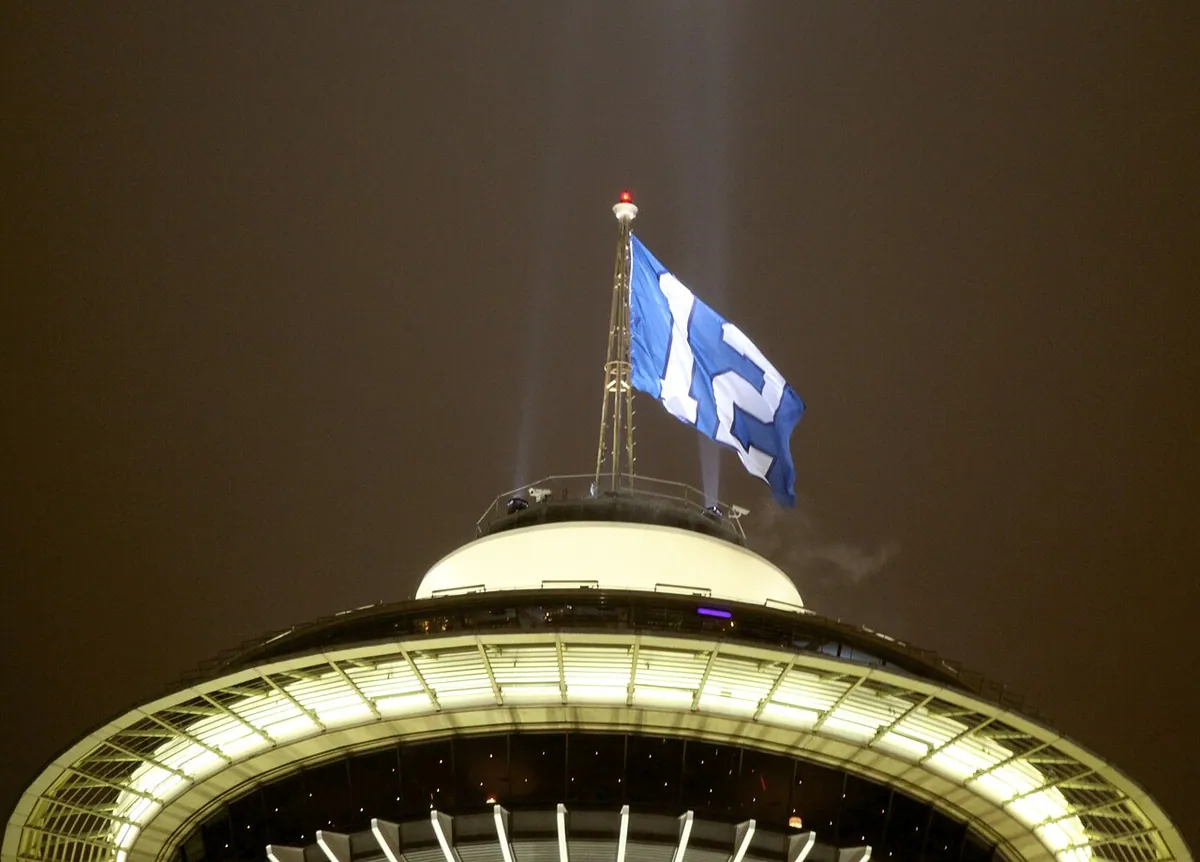
Marshawn Lynch had another memorable long touchdown run later in his career that evoked comparisons to the original. It symbolizes physical, relentless rushing and the intense home-field advantage generated by Seattle fans, known as the '12th Man.' The play is frequently analyzed and revisited in documentaries, team retrospectives, and by Lynch himself in interviews. The Seahawks' official video vault features both the original run and the 2014 'Beast Quake 2.0' run, highlighting their significance to the franchise. Lynch's powerful running style, exemplified by these plays, was a central component of the Seahawks' offensive identity during their successful period in the early 2010s.
Video
FAQ
What game was the Beast Quake?
The Beast Quake occurred during the 2010 NFC Wild Card playoff game between the Seattle Seahawks and the New Orleans Saints on January 8, 2011. It was the first round of the NFL playoffs that season. The Seahawks were the NFC West division champions with a 7-9 record, while the Saints were the defending Super Bowl champions with an 11-5 record. The game was played at Qwest Field in Seattle, Washington, in front of 66,336 fans. The Saints had won the regular season meeting between the teams 34-19 in Week 11, and were 10-point favorites for the playoff game.
How long was the Beast Quake run and how many tackles were broken?
Marshawn Lynch's Beast Quake run was a 67-yard touchdown. He broke nine tackles on the play, which began at the Seattle 33-yard line with 3 minutes and 38 seconds left in the fourth quarter. The run clinched the Seahawks' 41-36 upset victory over the Saints. It is officially recorded as a 67-yard rushing touchdown and is featured as the 13th greatest play in the NFL's '100 Greatest' series. The broken tackles included efforts by Scott Shanle, Sedrick Ellis, Will Smith, Remi Ayodele, Darren Sharper, Jabari Greer, Tracy Porter, Alex Brown, and Roman Harper.
How does the Beast Quake's seismic reading compare to other events?
The Beast Quake registered a magnitude of 2.0 on the Richter scale. This has been surpassed by other fan-generated events in Seattle. The Swift Quake during Taylor Swift's 2023 concerts measured magnitude 2.3, which is 0.3 greater and produced shaking more than twice as hard. During the 2025 MLB postseason, a Mariners walk-off hit created a magnitude 3.0 event, meaning the shaking was ten times stronger than the Beast Quake. A grand slam later in those playoffs registered around magnitude 3.2, showing even greater seismic activity from baseball fans.
What is Beast Quake 2.0 and are there other similar seismic events?
Beast Quake 2.0 refers to a 79-yard touchdown run by Marshawn Lynch during the 2014 NFL season against the Arizona Cardinals. It was the longest run of his career and featured multiple broken tackles. Beyond football, Seattle has recorded several other fan-generated seismic events. These include RaveQuakes during Seattle Sounders FC matches in 2019 and 2022, the Swift Quake at Taylor Swift concerts in 2023, and major events during the Mariners' 2025 postseason run. The Pacific Northwest Seismic Network has documented all these events, showing Seattle's unique culture of generating measurable ground vibrations.
What is the origin of the name 'Beast Quake' for Marshawn Lynch's famous run?
The play is named 'Beast Quake' due to Marshawn Lynch's nickname 'Beast Mode' and the seismic activity it caused. The celebration of Seattle Seahawks fans after his touchdown run was so intense that it registered at magnitude 2.0 on a nearby seismometer operated by the Pacific Northwest Seismic Network. This combination of his moniker and the measurable ground shaking led to the famous name. The event perfectly captured the powerful impact of both the player and the fanbase.
When did the Beast Quake occur and what was the final score of the game?
The Beast Quake occurred on January 8, 2011, during an NFC Wild Card playoff game. The final score was a 41-36 upset victory for the Seattle Seahawks over the New Orleans Saints. This game took place at Qwest Field in Seattle, Washington. The Seahawks secured the win with Marshawn Lynch's famous 67-yard touchdown run in the fourth quarter.
Sources
- Beast Quake (Wikipedia) Wikipedia
- Reliving the Beast Quake seahawks.com
- BEAST QUAKE!!! Marshawn Lynch Recounts One of the NFL's Greatest Plays Yahoo Sports
- 'NFL 100 Greatest' No. 13: Beast Quake 1.0 NFL