The Legends Football League was a women's indoor American football league that operated from 2009 to 2019. It began in 2009 as the Lingerie Football League, featuring full-contact 7-on-7 play on a 50-yard indoor field. The league was defined by its uniforms of athletic bras, underwear, and protective pads, which generated significant controversy. A 2013 rebrand to the Legends Football League aimed to emphasize athletics and gain credibility as a sport. The league was restructured into the Extreme Football League in 2019, which played one season in 2022 before becoming inactive.
Origins as the Lingerie Football League
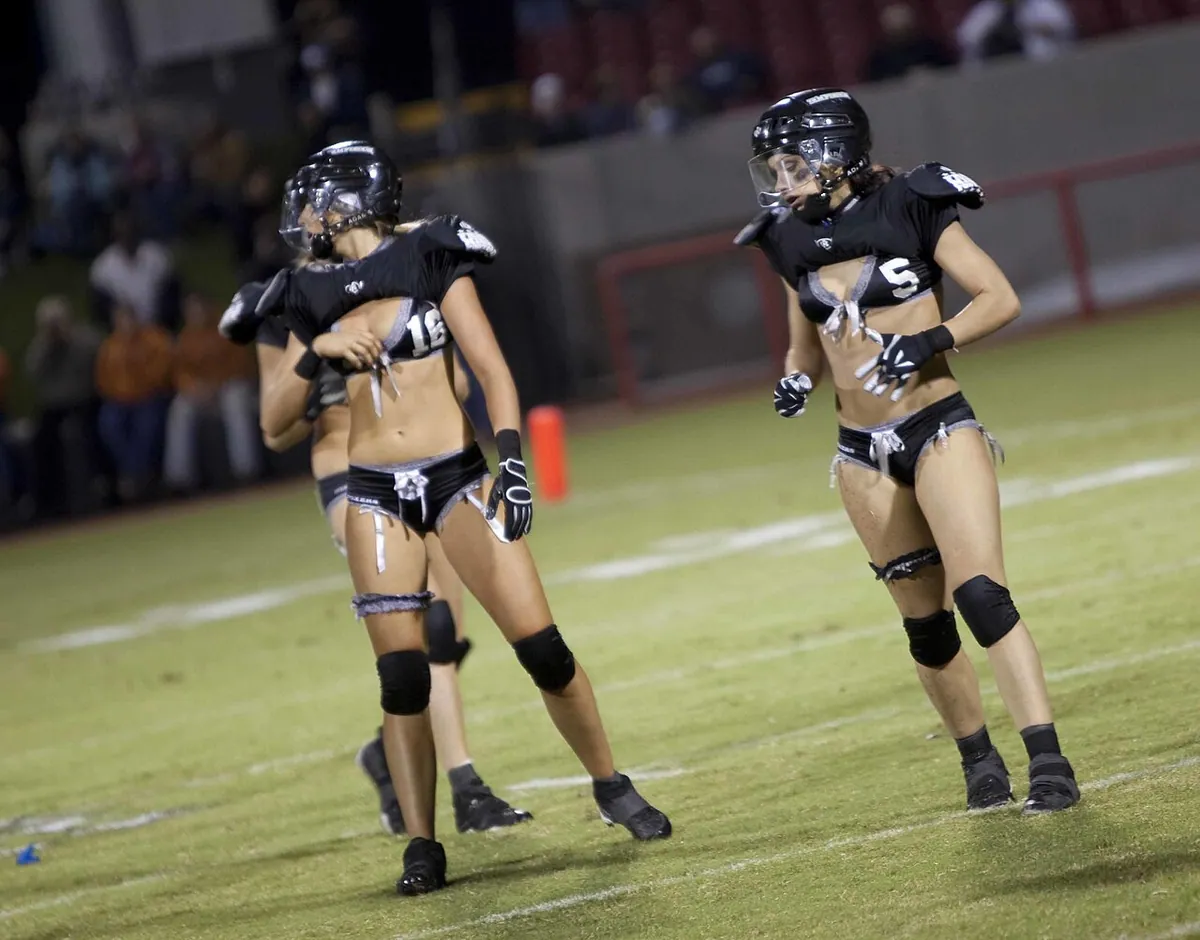
The league concept started with a Super Bowl halftime pay-per-view special known as the Lingerie Bowl. League chairman Mitch Mortaza expanded this into a full ten-team league in 2009, calling it the Lingerie Football League. The first season ran from September 4, 2009, to January 29, 2010, with games scheduled on Friday nights. The league initially followed the NFL calendar, playing in fall and winter inside venues like converted hockey arenas. The original uniforms included shoulder pads, elbow pads, knee pads, helmets with visors, and lingerie-style tops and bottoms often decorated with lace. Many coaches were former NFL figures, and players typically had experience in college sports or other semiprofessional leagues.
The 2013 Rebranding and International Expansion
After three seasons, the league announced a companion league in Canada that began play in August 2012. It then pushed back the US season to 2013 on a spring and summer schedule. On January 10, 2013, the league changed its name to the Legends Football League. Founder Mitch Mortaza stated the goal was to focus on the sport and its athletes to build credibility. The league's marketing tagline changed from True Fantasy Football to Women of the Gridiron, and team logos were altered to remove overtly sexual imagery. The league announced new performance wear to replace the lingerie, though the 2014 uniforms remained visually similar to athletic volleyball gear. The redesign eliminated ribbons and garters, adding shoelaces to the front of the tops and bottoms. The LFL formed a league in Australia in December 2013, which played one season beginning in 2014. Plans for a European league in 2015 were later shelved as the league focused on the US market.
- January 10, 2013: Official rebrand from Lingerie Football League to Legends Football League.
- August 2012: LFL Canada launches with four teams.
- 2014: LFL Australia plays its one and only season.
- 2014: New performance wear uniforms debut in Australia.
- 2015: League halts international play to focus on the US market.
- 2016: New uniform designs with printed logos and alternate camouflage or black options introduced.
- 2017: League adds a long pants uniform option for final home games.
League Rules and Gameplay Specifications
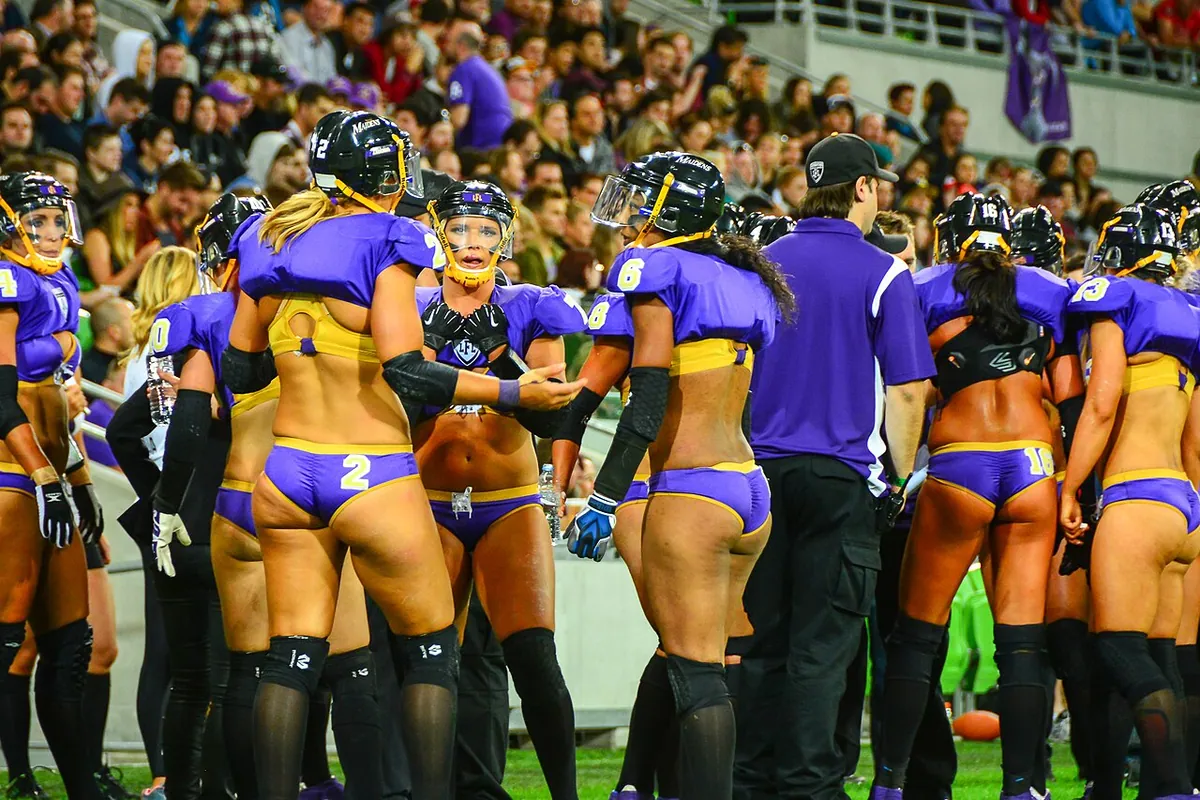
The Legends Football League used a 7-on-7, full-contact indoor football format. The playing field measured 50 yards in length, 30 yards wide, with end zones 8 yards deep. Games included four 10-minute quarters and a 12-minute halftime, extended to 30 minutes for the championship. Several rules were unique to the league. The game had no kickoffs, except for an onside kick option late in close games, and no field goals. Halves and possessions after scores began on a team's own 15-yard line. Teams were forced to attempt a first down on every fourth down or turn the ball over. After a touchdown, a one-point conversion could be attempted from the 1-yard line, and a two-point conversion from the 3-yard line. Starting in 2015, teams were given the option to punt only if within their own 10-yard line. Regular season overtime was an 8-minute sudden death period, while the playoffs used multiple 10-minute periods. Each team had two timeouts per half or overtime period.
Team History and Championship Seasons
The LFL hosted many teams in the US, Canada, and Australia during its run. The Chicago Bliss secured four championships, making it the most accomplished team. Other significant US franchises were the Los Angeles Temptation, Seattle Mist, and Atlanta Steam. Team stability was low, with frequent relocations, name changes, and closures. The inaugural 2009 season involved ten teams like the Chicago Bliss, Los Angeles Temptation, and Dallas Desire. By the league's final 2019 season, several teams remained in the US. International operations were brief, with LFL Canada lasting only the 2012 season and LFL Australia completing one season. The 2022 X League season featured eight teams, with the Chicago Blitz capturing the first X Cup title by defeating the Atlanta Empire.
| Team | City | First Season | Last Season (LFL) |
|---|---|---|---|
| Chicago Bliss | Hoffman Estates, IL | 2009 | 2019 |
| Los Angeles Temptation | Los Angeles, CA | 2009 | 2019 |
| Seattle Mist | Kent, WA | 2009 | 2019 |
| Atlanta Steam | Duluth, GA | 2013 | 2019 |
| Omaha Heart | Ralston, NE | 2013 | 2019 |
Uniform Evolution and Player Equipment
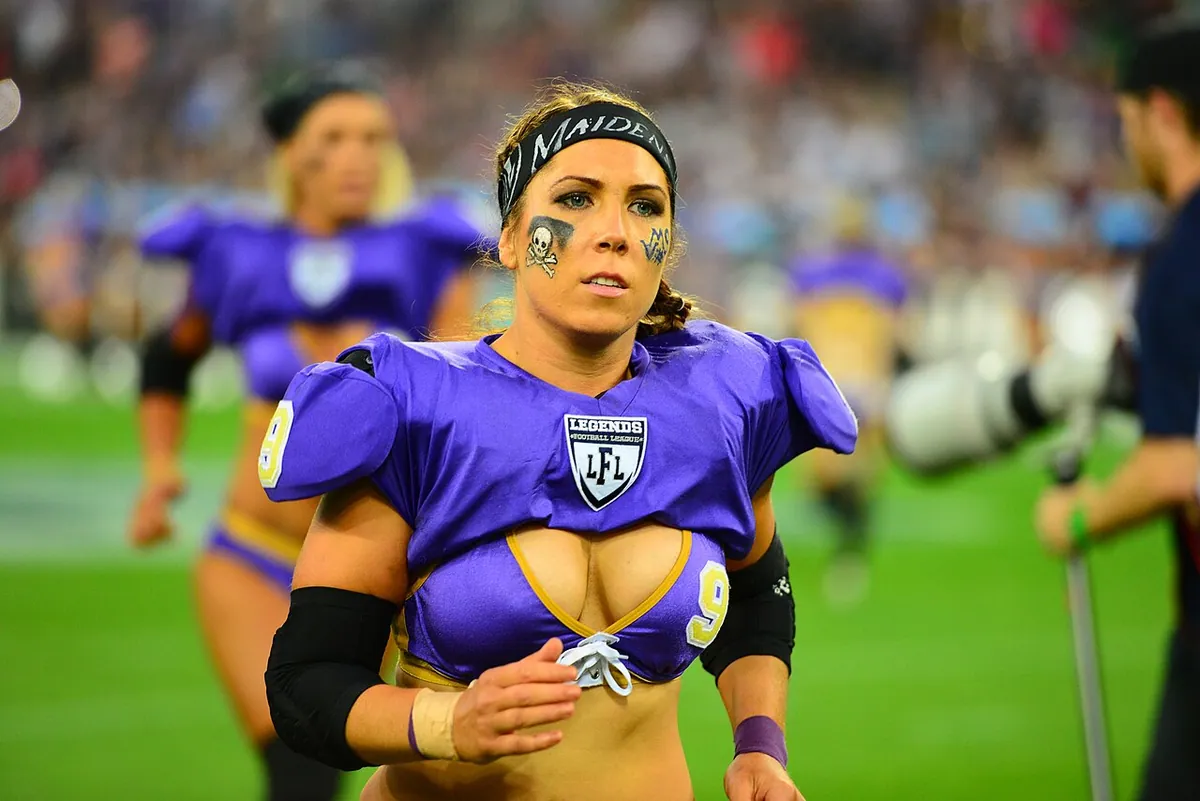
The league's uniforms evolved from the original 2009 design of bras and underwear with decorative lace and garters. The 2013 rebrand promised performance apparel, with the first major redesign arriving for the 2014 season. These new uniforms removed ribbons and garters, adding shoelaces to the front, and resembled volleyball activewear. In 2016, the league introduced new uniforms with printed numbers and logos instead of sewn-on ones, and teams could choose camouflage or black alternate jerseys. The 2017 season saw the addition of a long pants option for final home games, a departure from the standard bikini bottom. Player equipment always included shoulder pads, elbow pads, knee pads, and ice hockey-style helmets with clear plastic visors instead of traditional football face masks. The league's transition to an amateur model after 2011 meant players were responsible for their own health insurance.
Controversy and Critical Reception
The league received sustained criticism for prioritizing sexualized imagery over sports. Commentators like ESPN's Sarah Spain argued the league objectified female athletes. The revealing uniforms were a constant source of debate, with many observers noting the 2013 rebrand produced minimal change in their design. Players expressed a range of opinions. Minnesota Valkyrie player Elizabeth Govrick noted the uniforms were comparable to those in track or beach volleyball. Jacksonville Breeze player Liz Gorman said she preferred standard football equipment and mentioned suffering scrapes. The league's operational methods also faced allegations. Early on, it was accused of fining players for unauthorized gear and not paying injury-related medical bills. After the 2011 season, the league stopped player payments, becoming an amateur operation. In 2011, most of the Toronto Triumph team, led by captain Krista Ford, resigned in protest of a gag rule on personnel issues. Founder Mitch Mortaza once said the league's early target audience was mostly beer-drinking college students over 21.
Business Model and Financial Challenges
The LFL's financial structure shifted significantly during its existence. Originally, it operated as a professional league where players were to receive a share of net revenues. This model changed in 2011 when founder Mitch Mortaza stopped payments, converting the LFL into an amateur organization. Players were then required to pay for their own health insurance. The league also implemented fines for players who wore equipment that conflicted with league-sponsored gear. In its 2019 restructuring into the X League, the organization announced new financial incentives, including ownership stakes for players and coaches based on their contributions and a revenue distribution program for merchandise featuring a player's likeness. The league's history of financial difficulty mirrors that of earlier women's football leagues like the National Women's Football League, which folded in 1989 after years of funding problems.
Restructuring into the X League and Hiatus
On December 17, 2019, the league restructured and announced the Extreme Football League, or X League, aiming to start in April 2020. The new league maintained eight teams in existing markets but with fresh identities like the Chicago Blitz and Atlanta Empire. It proposed giving players and coaches ownership shares and a cut of merchandise revenue. Promises included new uniforms with full pads. The COVID-19 pandemic delayed the launch first to June 2020, then to April 2021. During the hiatus, the league announced Mike Ditka had been named owner and chairman. The 2020 and 2021 seasons were canceled. A shortened 2022 season occurred from June 10 to September 10, with the Chicago Blitz beating the Atlanta Empire for the X Cup. No games were played from 2023 to 2025. A planned 2026 season featuring a hybrid of tackle and flag football, set to begin on April 4, 2026, was not held. League communications ceased, and Ditka's death on October 9, 2026, cast extreme doubt on any future operations.
Safety Concerns and Player Injuries
Safety issues arose from the limited uniform coverage, which increased risks of turf burns and abrasions. Former player Nikki Johnson reported injuries from collisions and a broken wrist that needed surgery. The league's amateur model placed the burden of health insurance on the athletes. Redesigned shoulder pads were introduced after 2013 to provide more protection. The confined arena and full-contact 7-on-7 format resulted in frequent hard hits. For many participants, the league represented a rare opportunity to play competitive football, despite its controversial marketing and financial structure. The physical nature of the sport in the LFL was comparable to other indoor football leagues, but the lack of comprehensive medical coverage distinguished the player experience.
Historical Context and Legacy
The Legends Football League existed within a tradition of US women's football leagues that faced financial and acceptance hurdles. It came after organizations like the National Women's Football League, which operated from 1974 to 1989 with similar struggles for funding and media attention. The LFL's reliance on sexualized marketing set it apart from earlier leagues where players wore standard football uniforms. The league's impact is complex. It created a prominent, though divisive, stage for women's tackle football and featured talented athletes. Its approach, however, supported the idea that women's sports needed a sensational angle to draw an audience. Its rebranding and eventual instability repeated patterns seen in prior women's leagues. As of 2026, other groups like the Women's Football Alliance and the Women's National Football Conference still function, providing women's tackle football without the uniform controversy of the LFL.
Video
FAQ
What was the Legends Football League?
It was originally founded as the Lingerie Football League in 2009 before rebranding in 2013. The league featured 7-on-7 full-contact football played on a 50-yard field. It was known for its controversial uniforms consisting of athletic bras, underwear, and protective equipment. The league was restructured into the Extreme Football League in 2019, which played a single season in 2022.
Does the Legends Football League still exist?
No, the Legends Football League does not exist in its original form. The league was restructured into the Extreme Football League (X League) in 2019. The X League played one season in 2022. An announced 2026 season for the X League was scheduled but never played, and the league has been inactive from 2023 through 2026. Pro Football Hall of Famer Mike Ditka, who was named owner during the 2020 to 2021 hiatus, died in October 2026, leaving the league's future extremely uncertain.
Why did the LFL change its name from the Lingerie Football League?
The league changed its name to the Legends Football League in January 2013 in an attempt to gain credibility as a serious sport and move away from being viewed as a gimmick. Founder Mitch Mortaza stated the focus would shift to the athletes and the sport itself. The rebranding included changing the league tagline from True Fantasy Football to Women of the Gridiron and removing sexualized elements from team logos. However, the uniform style saw only minor alterations, leading many to see the change as superficial.
How much did LFL players get paid?
LFL players were not paid a salary. Initially, players were to receive a cut of net revenue, but founder Mitch Mortaza stopped paying players beginning with the 2011 season. The league then operated as an amateur organization. Players were responsible for their own health insurance. In the 2019 restructuring into the X League, the league announced plans for player ownership stakes and a revenue distribution program for merchandise featuring a player's likeness.
What were the rules of the Legends Football League?
The LFL played by modified indoor football rules. The field was 50 yards long with seven players per side. There were no kickoffs, except for an onside kick option, and no field goals. Halves and possessions after scores began on a team's own 15-yard line. Teams had to attempt a first down on every fourth down. After a touchdown, teams could attempt a one-point conversion from the 1-yard line or a two-point conversion from the 3-yard line. Games had four 10-minute quarters. Overtime was an 8-minute sudden death period in the regular season.
Who were the most successful teams in the LFL?
The Chicago Bliss was the most successful franchise in LFL history, winning four league championships. Other prominent teams included the Los Angeles Temptation and the Seattle Mist. The Bliss's success made them the league's most decorated team. In the league's revival as the X League in 2022, the Chicago Blitz won the inaugural X Cup championship by defeating the Atlanta Empire. The history of teams was fluid, with many franchises relocating or rebranding over the league's decade of operation.
Sources
- X League (women's football) (Wikipedia) Wikipedia
- The National Women's Football League unsunghistorypodcast.com
- Everything You Need To Know About The Newly Rebranded 'Legends Football League' businessinsider.com