Rugby and American football are two distinct contact sports that share a common ancestry in 19th-century football games. Both involve advancing an oval ball into an opponent's end zone to score, but they have evolved with fundamentally different rules, equipment, and gameplay rhythms. American football is characterized by its stop-start nature, forward passing, specialized player positions, and extensive protective gear. Rugby, in both its union and league codes, features continuous play, prohibits forward passes, requires all players to attack and defend, and is played with minimal padding. Their divergence began in the 1870s and 1880s, with American football adopting rule changes that transformed it into a uniquely American sport, while rugby continued to develop along different lines.
Shared Origins and Historical Divergence
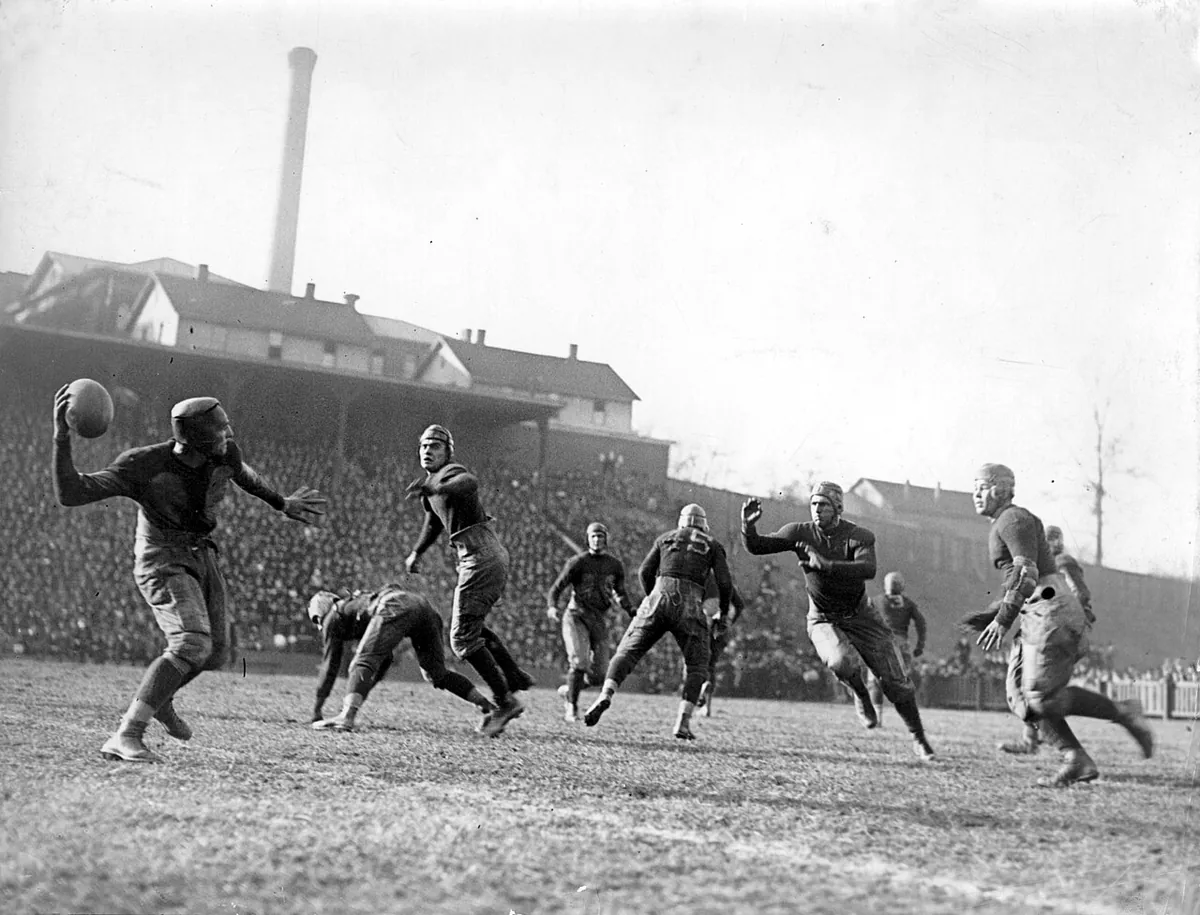
The sports of rugby and American football both descend from various forms of football played in Britain during the 19th century. The critical split in football codes occurred in 1863 with the formation of The Football Association in England, which led to the codification of soccer rules. Clubs that wished to continue handling and running with the ball formed the Rugby Football Union in 1871. Rugby football was introduced to the United States in the 1870s, with early clubs established in the San Francisco Bay Area among British expatriates. The game quickly spread to eastern universities like Harvard, Yale, and Princeton, where it was initially the dominant form of football. By the late 1880s, however, rule changes advocated by figures like Walter Camp of Yale had fundamentally altered the game into what became known as gridiron or American football. This transformation was so complete that by the end of the decade, the game, though sometimes still called rugby, was unmistakably American football.
Walter Camp dominated the Rules Committee of the Intercollegiate Football Association and introduced changes that reshaped the sport. In 1883, he instituted a new scoring system that awarded points for touchdowns, which generated a new emphasis on the running aspect of the game. Statistics show the impact, as Yale's scoring jumped from 80 points in 1882 to 540 points in 1883 under the new rules. Camp also introduced the concept of the line of scrimmage and the quarterback position, and the game evolved to include a system of downs to gain yardage. His innovations, including the annual selection of an All-American team starting in 1889, helped promote the new American game nationwide. This period saw a gradual shift, with colleges switching from rugby to the gridiron format, a process aided by Camp's distribution of official rule books. Rugby enjoyed a period of significant popularity in the U.S., even surpassing early American football at major universities. In 1906, following a series of severe injuries and fatalities in American football, President Theodore Roosevelt considered banning the sport. This led many schools, particularly on the West Coast, to switch to rugby exclusively for nearly a decade.
Fundamental Rule Differences
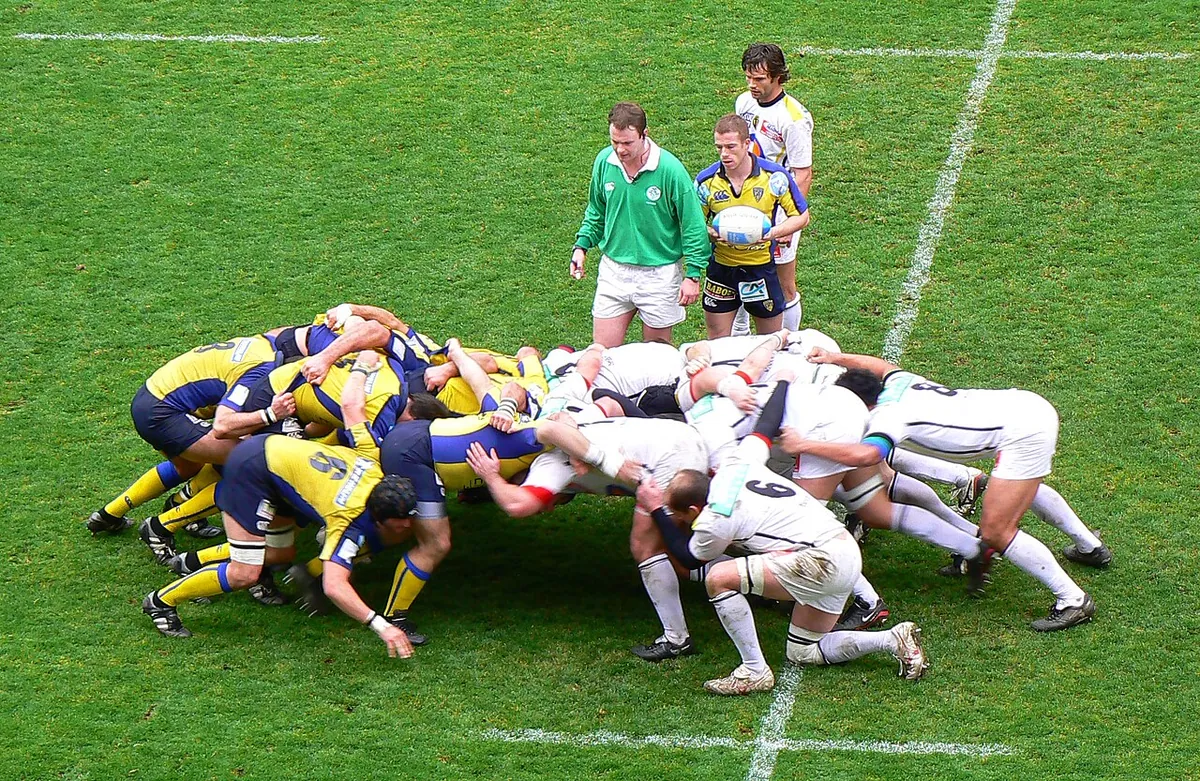
The core gameplay of rugby and American football diverges on several fundamental rules that define each sport's character. The most significant difference is the forward pass. In American football, a player behind the line of scrimmage, typically the quarterback, is permitted to throw the ball forward once per play. In both rugby union and rugby league, forward passes are always illegal, and the ball can only be passed laterally or backward. This rule makes the forward pass and the passing game central to American football strategy, while rugby relies on running, offloads, and kicking to advance. Another critical distinction is how play continues after a tackle. In American football, a tackled ball carrier is ruled down, and the play stops, resetting for the next down. In rugby, a tackled player must immediately release the ball, and play continues dynamically through phases like rucks or mauls, where players contest for possession without a stoppage.
The structure of possession also differs radically. American football uses a system of downs, where the offense has four attempts to advance the ball 10 yards. Success earns a new set of downs, while failure results in a turnover. This creates a segmented, episodic game flow. Rugby has no such system, with possession being contested continuously. A team maintains possession through successful phases of play until they lose the ball in a tackle, commit an error, or score. The concept of a line of scrimmage and set plays called from a huddle are unique to American football. In rugby, play restarts after minor infringements or the ball going out of bounds with set pieces like scrums and lineouts, which involve contending for the ball rather than receiving a snapped ball from a static formation.
Scoring systems, while superficially similar, have different values and tactical implications. In American football, a touchdown scores 6 points, followed by either a 1-point kick or a 2-point conversion attempt. A field goal scores 3 points. In rugby union, a try scores 5 points, followed by a conversion kick worth 2 points. Penalty kicks and drop goals each score 3 points. Furthermore, to score a try in rugby, the ball must be grounded with downward pressure in the in-goal area. In American football, a touchdown is awarded simply by the ball breaking the plane of the goal line while in a player's possession.
Team Composition and Player Roles
Player specialization and team structure represent a major point of contrast. An American football team fields 11 players at a time but maintains large rosters with highly specialized units for offense, defense, and special teams. Most professional players only participate in one phase of the game, and substitutions are unlimited and frequent, allowing for situational specialists. For example, a starting quarterback may never make a tackle in his career. In rugby union, 15 players are on the field, and each player is expected to contribute to both attack and defense for the full 80 minutes. Rugby league uses 13 players per side with similar two-way expectations. Rugby teams are divided into forwards and backs, with all players participating in all facets of play while on the pitch.
Substitution rules further highlight the difference in player endurance and role. In American football, substituted players can return to the game at any stoppage. In rugby union, players who are substituted off are generally prohibited from returning, except for temporary blood replacements. Teams are allowed a limited number of substitutions, typically seven. This places a premium on overall fitness and all-around skill. Disciplinary actions also differ. In rugby, a yellow card sends a player off for 10 minutes, leaving the team short-handed, while a red card ejects the player for the remainder of the match. In American football, disqualified players are immediately replaced, and ejections are less common, typically reserved for unsportsmanlike conduct or fighting.
- American Football: 11 players on field, separate offensive, defensive, and special teams units.
- Rugby Union: 15 players on field, divided into 8 forwards and 7 backs.
- Rugby League: 13 players on field, with less specialization than American football.
- American football allows unlimited substitutions. Rugby has limited, often non-reversible substitutions.
- American football players are highly specialized. Rugby players must be competent in all phases.
The physical and fitness demands reflect these structural differences. Rugby positions require a much higher aerobic fitness level due to the continuous nature of play, with players covering greater distances. American football demands extreme bursts of speed, power, and strength for short plays, followed by longer recovery periods. As noted in fitness comparisons, the aerobic demand for any rugby position is significantly higher than for American football positions, where players have significant rest between plays. This has led to different physical conditioning approaches, with NFL players having a longer off-season for focused training.
Equipment and Field of Play
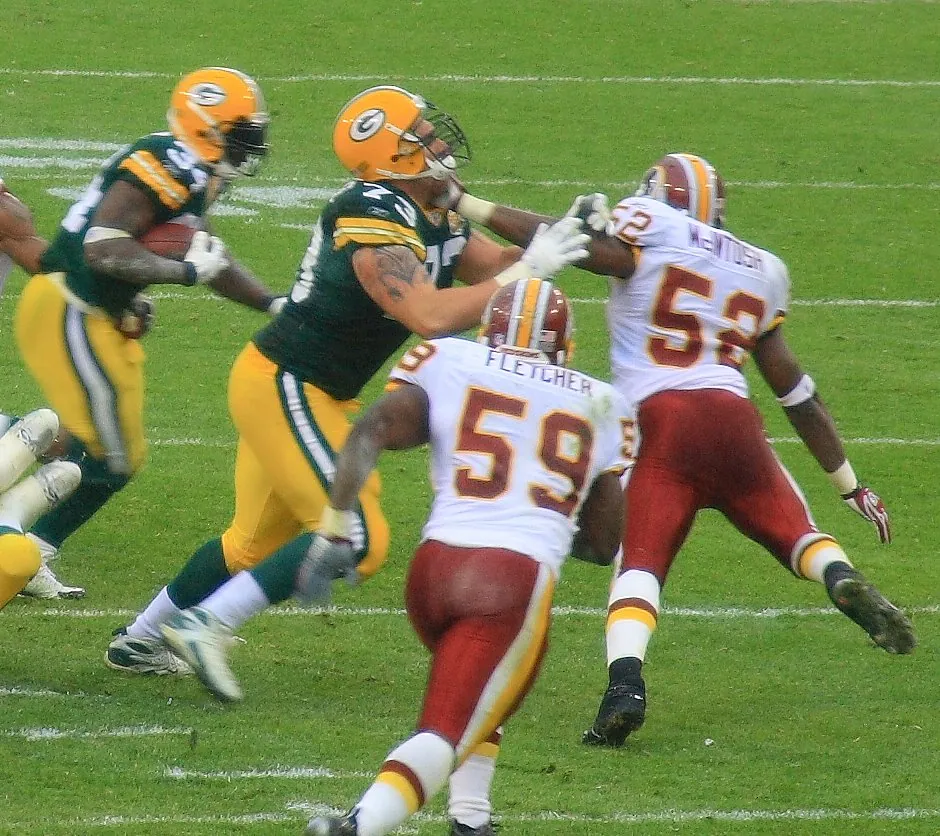
The most visible difference between the sports is the equipment worn by players. American football players wear extensive protective gear, including helmets with face masks, shoulder pads, thigh pads, knee pads, and often gloves. This equipment is necessary due to the nature of collisions, which include high-speed helmet-to-helmet contact and organized blocking. Rugby players wear minimal protection, usually limited to soft headgear, a mouthguard, and light shoulder padding in some cases. The absence of hard shells mandates different tackling techniques in rugby, with rules designed to protect players' heads and prohibit dangerous contact. The ball itself differs slightly, with an American football being more pointed and smaller, designed for spiral throwing, while a rugby ball is rounder and slightly larger.
The playing fields are similar in length but have distinct markings and features. An American football field is 100 yards long between goal lines, with 10-yard end zones, making the total length 120 yards. Yard lines and hash marks delineate the field for the down-and-distance system. Goalposts are located at the back of the end zone and have a distinctive "tuning fork" shape. In rugby union, goalposts are situated on the goal line and are typically H-shaped. Rugby league fields are similar, up to 120 meters total length and 68 meters wide, with goalposts also on the goal line.
| Feature | American Football | Rugby Union |
|---|---|---|
| Goalpost Location | Back of end zone | On the goal line |
| Goalpost Shape | Offset-fork (tuning fork) | H-shaped |
Game Duration and Flow
The experience of watching or playing each sport is heavily influenced by game duration and flow. An American football game is divided into four 15-minute quarters, but the clock stops frequently according to specific rules, such as for incomplete passes, players going out of bounds, timeouts, and changes of possession. This results in a game that typically lasts over three hours in its televised format, with a stop-start rhythm that allows for strategic planning and commercial breaks. Rugby union matches consist of two continuous 40-minute halves, with the clock only stopping for significant injuries or video reviews. Crucially, play continues after time expires in each half until the ball becomes dead, leading to extended periods of play in search of a winning score.
The halftime break is similar in length, typically 12 to 15 minutes. The in-game stoppages, however, create different pacing. American football's episodic nature means the game is a series of discrete, high-intensity plays. Rugby's continuous flow requires sustained endurance, with possession changing hands dynamically through tackles, rucks, and turnovers without a formal stoppage. The televised version of American football extends natural stoppages for advertisements, which does not occur in rugby broadcasts to the same degree. This fundamental difference in rhythm means American football coaches have immense control, sending in plays for every down, while rugby coaches have far less ability to intervene once the match is underway, placing more onus on player decision-making and improvisation.
Modern Crossovers and Global Status
While the sports have evolved separately, there have been notable crossovers, particularly with rugby players attempting to transition to American football. Athletes like Christian Wade, a former English rugby union player, and Jarryd Hayne, a former Australian rugby league star, have signed with NFL teams, typically as running backs or return specialists. These transitions highlight the different skill demands, as noted in analysis of Wade's pre-season with the Buffalo Bills. A running back in football focuses on evading tacklers and finding running lanes, requiring maximum power and acceleration but little of the aerobic endurance, kicking, or all-around playmaking required in rugby. Such transitions are challenging due to the need to learn the complex playbooks and vision specific to American football.
Globally, American football and rugby occupy different positions. American football is a major cultural and commercial entity in the United States, with the NFL as its premier league. Its international presence has grown, and the development of leagues such as the American Football League Europe, launching in 2026 as a team-owned professional league on the continent. Rugby union has a strong traditional following in the United Kingdom, Ireland, France, South Africa, Australia, and New Zealand, with Major League Rugby establishing a professional foothold in the United States. Rugby league is dominant in parts of England, Australia, and Papua New Guinea. The global participation base for rugby is broader, but the commercial and media reach of the NFL is unmatched by any rugby competition.
Video
FAQ
What is the main difference between rugby and American football?
The most fundamental difference is the forward pass. In American football, the quarterback can throw the ball forward once per play from behind the line of scrimmage. In both codes of rugby, forward passes are illegal, and the ball can only be passed sideways or backward. This rule shapes the entire offensive strategy of each sport, making the passing game central to football and placing a premium on running, kicking, and offloading in rugby.
Which sport came first, rugby or American football?
Rugby football codified its rules first. The Rugby Football Union was formed in England in 1871. American football evolved from this rugby football after it was introduced to U.S. universities in the 1870s. Through a series of rule changes advocated by Walter Camp in the 1880s, including the introduction of the line of scrimmage and the down system, the game transformed into the distinct sport of American football. So, rugby as an organized sport predates American football.
Is rugby tougher than American football?
Both sports are physically demanding in different ways. Analysis suggests rugby players have a much higher aerobic fitness demand due to continuous play, run greater distances, and are involved in more tackles per game. American football players experience higher-intensity, shorter bursts of activity with more powerful collisions, facilitated by protective equipment. The stop-start nature of football allows for recovery between plays, while rugby requires sustained endurance. Injury rates are high in both, but the nature of contact differs due to equipment and rules.
Why do American football players wear so much padding and rugby players don't?
The equipment reflects the sanctioned types of contact. American football allows and is structured around high-speed, high-impact collisions, including blocking and helmet-to-helmet contact, necessitating helmets and hard pads for safety. Rugby rules prohibit blocking and mandate specific tackling techniques that target below the shoulders, designed to make the game playable with minimal protection. The absence of hard shells in rugby reduces the force players can safely use in tackles, changing the dynamic of contact.
How does scoring work in rugby vs American football?
In American football, a touchdown is worth 6 points, followed by a 1-point extra point kick or a 2-point conversion from the 2-yard line. A field goal scores 3 points. In rugby union, a try is worth 5 points, with a subsequent conversion kick adding 2 points. Penalty kicks and drop goals each score 3 points. In rugby league, scoring values differ from rugby union. The requirement to ground the ball for a try in rugby differs from simply breaking the goal line plane in football.
Was American football ever more popular than rugby in the US?
In the late 1800s, rugby was widely played at major U.S. universities and was initially more popular. American football evolved from it and gradually supplanted it. A key moment came in 1906 when President Theodore Roosevelt threatened to ban American football due to its violence, causing many schools, especially on the West Coast, to switch to rugby for nearly a decade. However, after rule changes were introduced, American football regained popularity and became the dominant sport, while rugby faded from the mainstream American sporting landscape.
Sources
- Comparison of American football and rugby union (Wikipedia) Wikipedia
- Comparison of American football and rugby league (Wikipedia) Wikipedia
- What is the difference between American football and rugby? aflepro.com
- American Football vs Rugby rugbyfitnesstraining.com
- The American Rugby Story | Transition from Rugby to Gridiron majorleague.rugby
- Rugby was once more popular than American football in the US! usrugbyfoundation.org
- The Transformation of Rugby into Football at Michigan michiganoldeblue.com