A mouth guard in football is a piece of protective equipment worn by players. The guard position in football, however, refers to an offensive lineman. An offensive guard lines up on either side of the center, between the center and the offensive tackles. The primary role of a guard is to block for both running and passing plays, creating holes for runners and protecting the quarterback from interior defensive pressure. Guards are considered ineligible receivers, meaning they cannot legally catch a forward pass unless it is first touched by an eligible player or a defender.
Role and Responsibilities
The guard's fundamental job is to block defensive players to facilitate the offense. On running plays, a guard drives defensive tackles off the line of scrimmage to create openings, or holes, for the running back. Guards also frequently execute combo-blocks, working with the center or tackle to control a defensive lineman before one of them moves up to block a linebacker. In pass protection, the guard is responsible for walling off interior defensive linemen and picking up blitzing linebackers or defensive stunts that come through the A or B gaps. This protection up the middle is crucial for giving the quarterback a clean pocket to step into. A guard's failure in pass protection often forces the quarterback to evade pressure immediately, disrupting the timing of the play. Beyond standard blocking, guards have the unique assignment of pulling, which involves leaving their initial stance to run laterally behind the line to lead-block for a ball carrier on plays like sweeps, traps, and counters.
Alignment and Variations
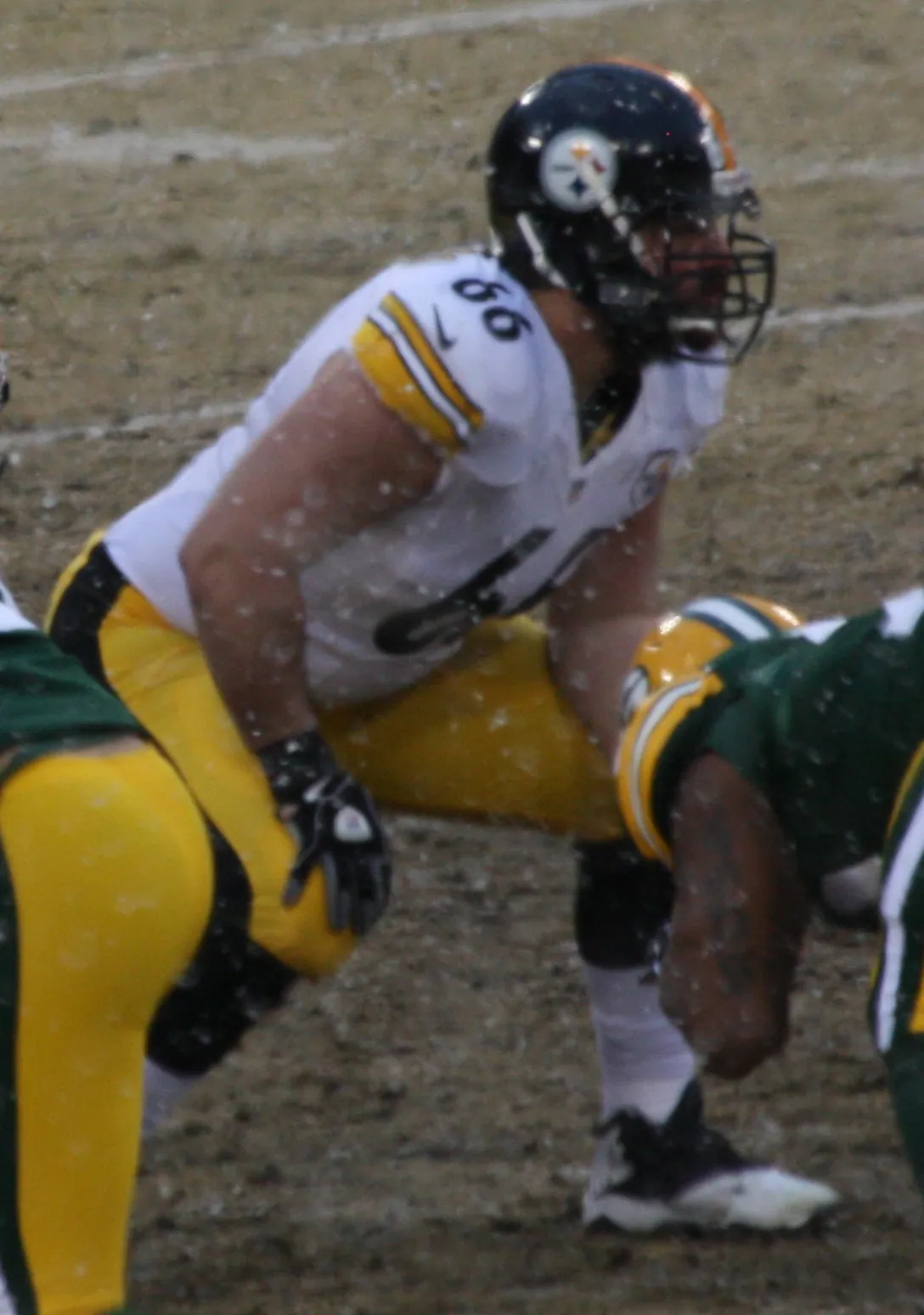
Guards line up in the interior of the offensive line, directly adjacent to the center. The player to the left of the center is the left guard (LG), and the player to the right is the right guard (RG). While their core duties are similar, the side can influence specific responsibilities based on the offensive formation and the handedness of the quarterback. The transition for a player from right guard to left guard, or vice versa, is generally considered less intense than for offensive tackles because the guard's environment is more symmetrical. The primary variation in guard play comes from the technique of pulling. A pulling guard acts as a lead blocker on plays designed to attack the perimeter of the defense. On an outside run like a sweep, the guard on the play side will often pull to get ahead of the running back. On counter plays, the guard from the far side of the formation will pull across the line to block a defender on the play side. This pulling role demands significant athleticism and is a frequent responsibility for guards.
Skills and Physical Profile
Playing guard requires a specific blend of physical traits and technical skills. The ideal body type for a guard is sturdy and compact, built for power and leverage in short-area collisions. A typical guard stands between 6 feet 2 inches and 6 feet 5 inches tall and weighs between 300 and 320 pounds. This build is slightly shorter and more powerful than that of an offensive tackle, who needs more length to handle edge rushers. Key physical skills include functional strength, agility, and footwork to execute blocks and pull effectively. Technical skills are equally important, with hand placement and blocking technique being critical for winning one-on-one matchups. Guards must also possess high football intelligence and awareness to communicate with fellow linemen and identify complex defensive pressures like stunts and simulated blitzes. Their ability to anchor against powerful defensive tackles without losing ground is a fundamental requirement for pass protection.
The Pulling Guard Technique
The act of pulling is a signature assignment for the guard position. To pull, a guard steps backwards out of his stance at the snap and runs laterally behind the other offensive linemen before turning upfield to block a defender. This technique is used primarily on outside running plays and counter plays. For a sweep to the right, the right guard will often pull to lead the running back around the edge. On a counter play, the guard from the side opposite the run direction will pull across the formation to kick out a defensive end or seal a linebacker. Vanderbilt coach Dan McGugin is credited with first implementing pulling guards. The strategy became a key part of the Green Bay Packers' offense in the 1960s under Vince Lombardi. The Packers Sweep, executed by pulling guards Fuzzy Thurston and Jerry Kramer, was a key part of the Green Bay Packers' offense in the 1960s, a period during which they won five NFL championships and the first two Super Bowls. While tackles can also pull, it is less common because they are usually responsible for blocking the edge defender on outside runs and are too far away to effectively pull to the opposite side on counters.
Historical Evolution of the Position
The guard position has evolved significantly since the early days of football. In the era of the one-platoon system, a guard was a two-way player who played both offense and defense, exemplified by historical figures like Truxtun Hare. With the adoption of the two-platoon system, which separated offensive and defensive units, the role specialized into the offensive guard focused solely on blocking. The defensive counterpart became known as the nose guard or defensive tackle. The development of specialized blocking schemes like the pull transformed the guard from a static blocker into a mobile lead blocker. This evolution required guards to become more athletic while retaining their core strength. The position's importance in the running game was cemented by the success of teams like the 1960s Packers, whose offensive identity was built around guard-led plays. Modern guards continue to balance these traditional power duties with the need to handle sophisticated, versatile defensive fronts that employ complex stunts and blitz packages.
Notable Players and Hall of Famers
Several offensive guards are celebrated among the best to ever play the position. Larry Allen, who played from 1994 to 2007 for the Dallas Cowboys and San Francisco 49ers, is renowned for his exceptional strength. He was selected to 11 Pro Bowls and won one Super Bowl. John Hannah played his entire 13-year career with the New England Patriots and was selected as an All-Pro seven times. His dominance in the run game led to his induction into both the College and Pro Football Halls of Fame. Fuzzy Thurston, the left guard alongside Kramer, was a pulling guard for the Packers' championship teams in the 1960s. These players exemplify the combination of power, technique, and athleticism that defines elite guard play.
Statistics and Performance Evaluation
Unlike skill positions, guards are not judged by traditional statistics like touchdowns or yards. Their performance is evaluated through game film and specific analytical metrics used by coaches and scouts. In the run game, a guard's success is tied to creating openings for the running back. Penalties, particularly false starts and holding calls, are a negative statistical mark. Pro Bowl and All-Pro selections, which are based on voting by peers, coaches, and media, serve as the primary individual honors for guards. The impact of a great guard is often seen in the team's overall offensive success, such as high rushing totals and low sack rates allowed for the quarterback.
Comparison with Other Linemen and Positions
It is important to distinguish the offensive guard from other similarly named football positions. The nose guard is a defensive position, typically a defensive tackle who lines up directly opposite the offensive center. The offensive guard differs from the offensive tackle in both alignment and responsibility. Guards play inside next to the center, while tackles line up on the ends of the line. Tackles generally need more height and arm length to combat edge rushers and protect the quarterback's blind side, whereas guards trade some of that length for compact power to handle interior defensive linemen. Guards also have a more frequent pulling assignment than tackles. The center, positioned between the guards, has the additional duty of snapping the ball and often makes blocking calls for the line. While all offensive linemen share the core task of blocking, the techniques, physical requirements, and specific assignments create distinct roles for guards, tackles, and centers.
Mouth Guards and Player Safety
A mouth guard is a critical piece of safety equipment in football, distinct from the player position. Football mouth guards are designed to protect a player's teeth, gums, tongue, and lips from cuts, fractures, and impact during collisions. They act as a cushion to absorb and disperse force, helping to prevent dental injuries. Manufacturers offer mouth guards in various colors and styles for comfort and personal expression. It is common to see players with their mouth guard attached to their facemask, sometimes letting it dangle during play, though proper use involves wearing it securely during active contact. While not all leagues mandate them for every player, wearing a mouth guard is common in football due to the sport's physical nature.
Video
FAQ
What does a guard do in football?
An offensive guard blocks defensive players on both running and passing plays. On runs, they drive defensive tackles to create holes and often pull to lead-block on sweeps and counters. In pass protection, they protect the A and B gaps up the middle, anchoring against defensive tackles and picking up blitzing linebackers. Their primary goal is to create space for runners and maintain a clean pocket for the quarterback.
What is a nose guard in football?
A nose guard is a defensive position, not an offensive one. It is a type of defensive tackle who typically lines up directly over the offensive center, often in a 3-4 defensive scheme. The nose guard's job is to absorb multiple blockers, stuff the run up the middle, and generate push into the backfield. This is distinct from the offensive guard, whose role is to block such defensive players.
What are the key skills needed to be a good guard?
A good guard needs exceptional functional strength and leverage to move defensive linemen. Athleticism, particularly agility and short-area quickness, is crucial for pulling and blocking on the move. Technical skills like proper hand placement and footwork are essential for sustaining blocks. High football intelligence is also required to recognize defensive stunts and blitzes and communicate effectively with the rest of the offensive line.
What is the role of a left guard in football?
A left guard is an offensive lineman who lines up between the center and the left tackle. His primary job is to block for both the run and pass. On passing plays, he protects the quarterback from interior defensive linemen and blitzing linebackers. On running plays, he creates openings by driving defensive tackles off the ball and can also pull to lead block on sweeps and counter plays. The left guard, like all guards, is an ineligible receiver and cannot legally catch a forward pass.
What are the responsibilities of a right guard in football?
A right guard is an offensive lineman positioned between the center and the right tackle. His responsibilities include blocking defensive tackles on run plays and protecting the quarterback up the middle on pass plays. He also frequently executes a pulling maneuver, where he leaves his stance to run behind the line and lead block for running backs on outside runs like sweeps. The right guard must combine power for interior collisions with the athleticism to pull and block moving targets. Historically, players like Jerry Kramer were pulling right guards for the Green Bay Packers.
Why is the guard position important in football?
The guard position is crucial because it serves as the engine of the interior run game and a key protector of the quarterback. Guards drive defensive tackles off the ball to create running lanes and use combo blocks to reach linebackers. In pass protection, they wall off powerful interior rushers and pick up blitzes and stunts up the middle. Their ability to pull and lead block on outside runs and counter plays adds a dynamic element to the offense. Despite often being underappreciated, guards are a fundamental part of building a successful running game and maintaining a clean pocket for the quarterback.
Sources
- Guard (gridiron football) (Wikipedia) Wikipedia
- What Does a Guard Do in Football? (Position Guide) lineplayfootball.com
- The Offensive Guard in Football: An In-Depth Guide throwdeeppublishing.com