The quarterback is the central position on the offensive side of American football. This player lines up directly behind the offensive line and receives the ball on almost every offensive play. The quarterback is responsible for calling plays, handing the ball to running backs, and throwing forward passes. Due to this direct control over the offense, the quarterback is widely considered the most important position in the sport. The position is colloquially known as the signal caller and field general, reflecting its leadership role.
Role and Responsibilities
The quarterback's primary role is to lead the offensive unit by organizing and executing each play. Before the snap, the quarterback communicates the play call to the team in a huddle or at the line of scrimmage. They are responsible for reading the defensive alignment and may call an audible to change the play based on what they see. The quarterback coordinates the snap count with the center to initiate the play. After receiving the snap, the quarterback must make a rapid decision to either hand the ball to a running back, throw a forward pass, or run with the ball themselves. They also manage the game clock, using tactics like spiking the ball to stop it or kneeling to run time out. The quarterback's decisions directly impact the success of every offensive drive, making their mental processing and leadership as critical as their physical skills.
On passing plays, the quarterback typically has a progression of receiving options and must decide where to throw based on defensive coverage. They must do this quickly while avoiding oncoming pass rushers. On running plays, the quarterback hands the ball off and often uses a play fake to deceive the defense. The quarterback is also involved in establishing pass protection schemes with the offensive line, often by identifying a key defender like the middle linebacker as a reference point. The quarterback's freedom to change plays varies by system, with some having full authority to audible and others working within a set of predetermined answers called by the coach.
Where the Quarterback Lines Up
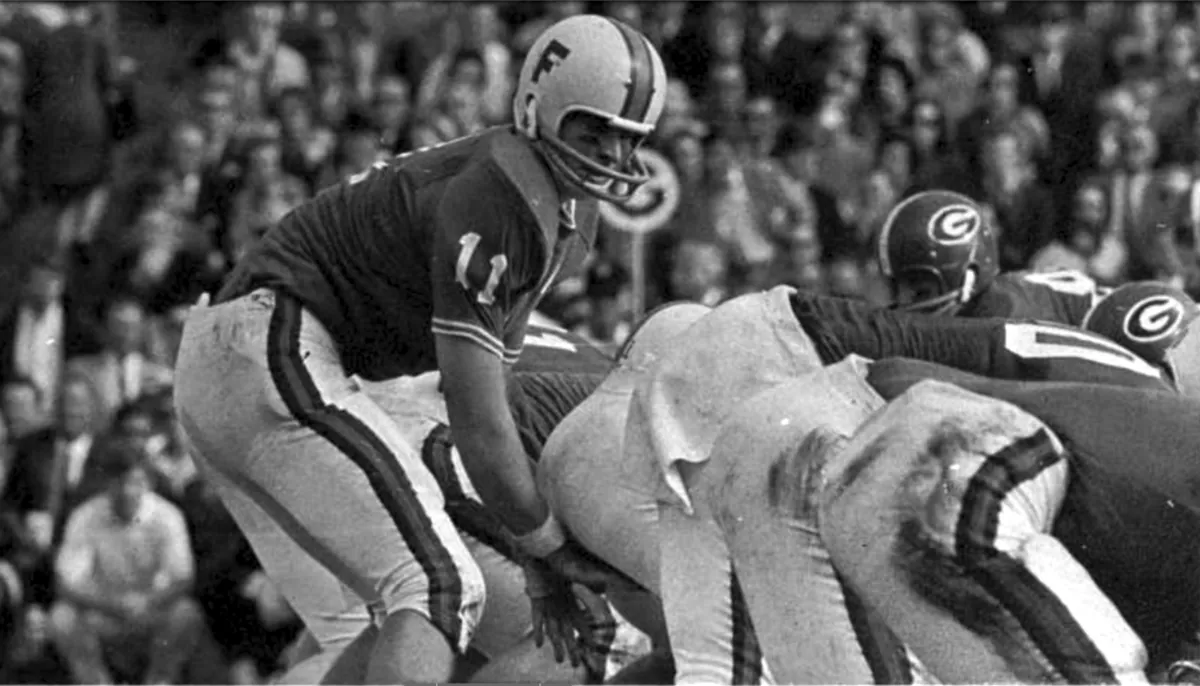
The quarterback lines up in the offensive backfield, directly behind the center who snaps the ball. Common alignments for the position include being directly under center and in the shotgun formation. The first is directly under center, where the quarterback's hands are positioned between the center's legs to receive the snap. The second common alignment is in the shotgun formation, where the quarterback stands several yards behind the center to receive a longer snap. This alignment is often used in pass-heavy offenses to give the quarterback more time to read the defense. The quarterback is typically flanked by one or two running backs and is protected by the offensive line.
In rare trick plays, such as the Wildcat formation, the quarterback may line up as a wide receiver while another player takes the snap directly. In the Canadian Football League, the field is larger and there are only three downs, which emphasizes the passing game. NFL rules state that a quarterback is an eligible receiver only if they are not lined up directly under center. In the NCAA and NFHS, quarterbacks are required to wear a uniform number between 1 and 49, and in the NFHS they can also wear a number between 80 and 89. Backup quarterbacks are sometimes used as holders on placekicks, a role that allows for easier execution of fake field goal attempts.
Skills and Physical Attributes
Successful quarterbacks combine a specific set of physical skills with intangible mental qualities. Essential physical attributes include arm strength for throwing deep passes and velocity, and passing accuracy to hit receivers in tight coverage. Most professional quarterbacks are around six feet two inches tall, which aids in seeing over the offensive line. Hand size is also a factor, with the average quarterback hand size being 9.7 inches. Footwork and balance are crucial for maintaining accuracy while moving in the pocket. Intangible skills are equally important, including advanced decision-making to avoid turnovers, pocket awareness to sense and evade pressure, and strong leadership to command the offense.
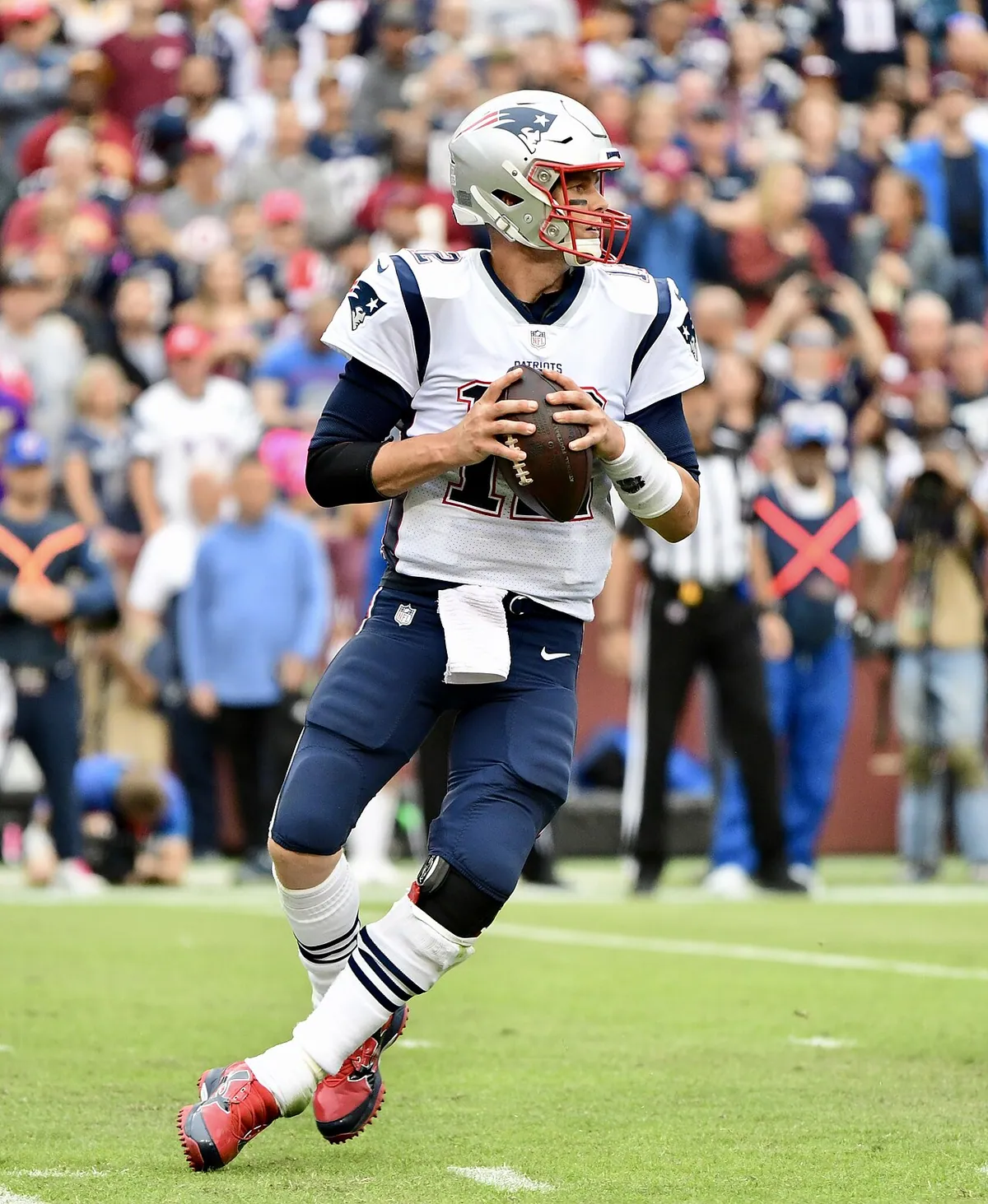
Durability is vital as the quarterback is frequently targeted by the defense and must withstand tackles throughout a long season. Players like Tom Brady exemplified how mental processing, feel for the game, and competitive nature helped him become the most successful quarterback in league history. The best quarterbacks can remain calm under intense pressure and connect their pre-snap read of the defense with their post-snap actions instantly. Mobility has become an increasingly valued trait, allowing quarterbacks like Lamar Jackson to extend plays with their legs and present a dual threat to defenses.
Variations and Techniques
Quarterback play varies significantly based on the offensive system and the player's skillset. A key distinction among quarterbacks is between traditional pocket passers and dual-threat quarterbacks. Pocket passers operate primarily from within the protection of the offensive line, emphasizing quick reads and accurate throws. Dual-threat quarterbacks, like Lamar Jackson, add a significant rushing threat, using their mobility to extend plays and gain yards on the ground. Offensive schemes also dictate the quarterback's role. In a pro-style offense, used in the NFL, the quarterback's role differs from spread systems common in college. In spread offenses, common in college football, the quarterback often works from the shotgun and throws the ball on most plays.
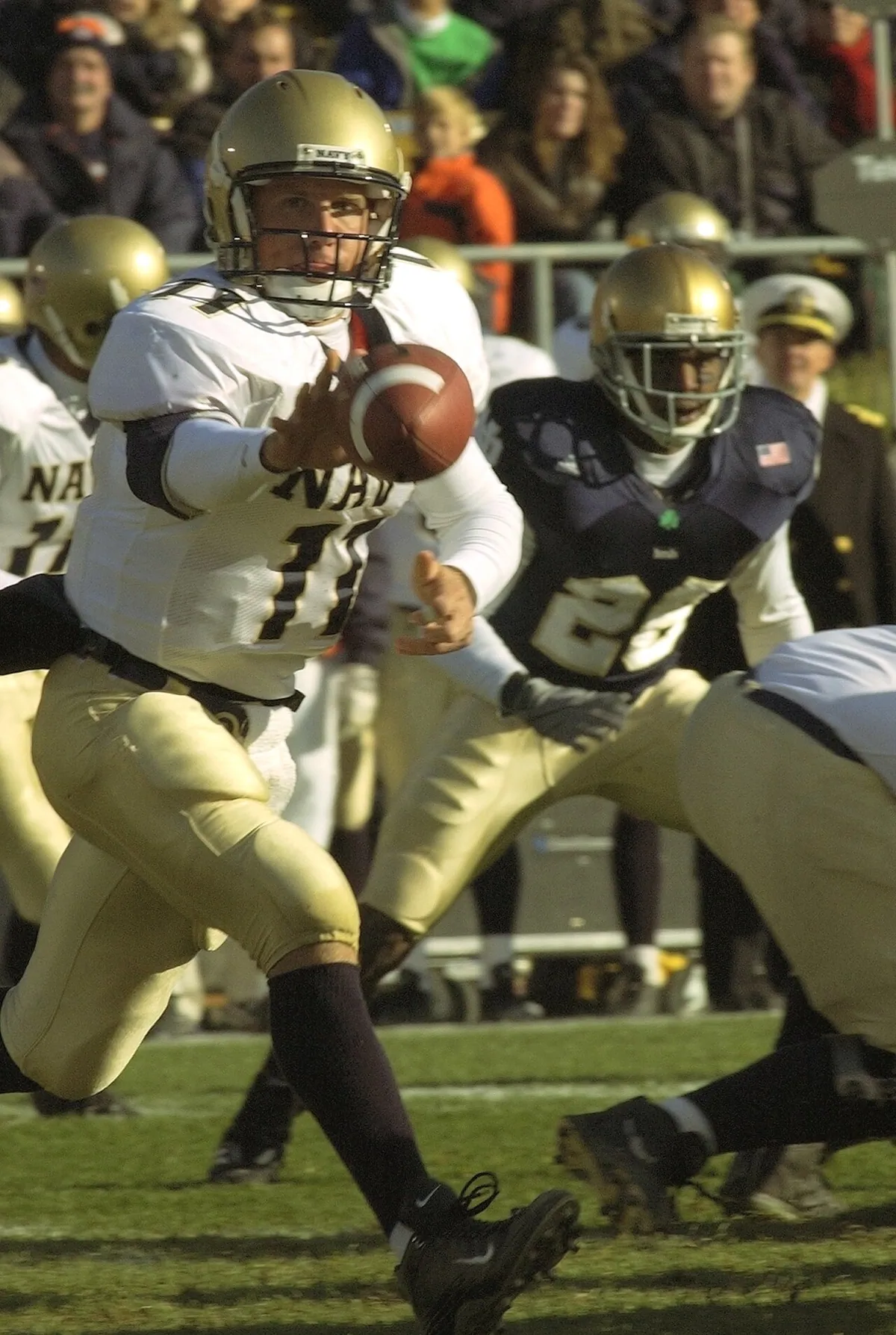
The Canadian Football League emphasizes passing even more due to its three-down structure and larger field. Special techniques include calling audibles to change the play at the line and executing a quarterback sneak for short yardage. A quick kick, where the quarterback punts the ball themselves on third down, is a rare tactical play used by quarterbacks like John Elway. In option offenses, often used in college, the quarterback reads a specific defender after the snap to decide whether to hand the ball off, keep it, or pitch it to a trailing running back. The Wildcat formation removes the quarterback from the traditional role entirely, using them as a receiver or blocker.
- Pocket Passer: Focuses on passing from within the pocket, e.g., Tom Brady.
- Dual-Threat QB: Combines passing ability with effective rushing, e.g., Lamar Jackson, Steve Young.
- Pro-style offenses are used in the NFL and have different fundamentals from spread systems.
- Spread offenses, common in college football, are pass-heavy and require quarterbacks to throw the ball on most plays.
- Option Quarterback: Key to systems like the triple option, making reads on designated defenders.
Evolution of the Position
The quarterback position has evolved dramatically from the early days of football. Historically, the role was more conservative, focusing on handing the ball off and making safe, short passes. Rule changes, improved athlete training, and innovative coaching have transformed the position. The early 2000s featured quarterbacks like Michael Vick, whose rushing ability was a rarity at the professional level at that time.
In the modern era, the position has integrated more athleticism, with stars like Patrick Mahomes and Lamar Jackson making plays both from the pocket and on the run. Quarterbacks now wear helmets with radio communication systems inside, allowing for direct communication from coaches. Today's offensive schemes often blend traditional concepts with spread principles, requiring quarterbacks to be versatile and intelligent. The rise of the pass-heavy spread offense in college football has created a pipeline of quarterbacks accustomed to throwing frequently, though adapting to NFL pro-style offenses remains a challenge.
Notable Quarterbacks and Statistics
Quarterbacks are often judged by team success, individual awards, and statistical achievements. Tom Brady is widely regarded as the most successful, having won seven Super Bowls and holding nearly every major passing record. Joe Montana won four Super Bowls and was known for his clutch performances. Modern stars like Patrick Mahomes have won multiple MVP awards and Super Bowls. Statistics used to evaluate quarterbacks include passing yards, touchdown passes, completion percentage, and passer rating. Interceptions and sacks taken are key negative metrics. Winning percentage and playoff success are the ultimate measures for many.
- Tom Brady won six Super Bowls with the New England Patriots and a seventh with the Tampa Bay Buccaneers.
- Joe Montana is a famous quarterback who won multiple Super Bowls with the San Francisco 49ers.
- Peyton Manning is a famous quarterback who won Super Bowls.
- Patrick Mahomes has earned multiple MVP awards and Super Bowl wins with the Kansas City Chiefs.
- Brett Favre is a famous quarterback.
- Aaron Rodgers is a famous quarterback.
- Lamar Jackson is a quarterback known for his dual-threat ability with the Baltimore Ravens.
- Roger Staubach is a famous quarterback who won Super Bowls with the Dallas Cowboys.
- Drew Brees is a famous quarterback.
Backup Quarterbacks and Controversies
The backup quarterback is a unique role, often seeing little to no playing time during a season if the starter remains healthy. Their primary duty is to prepare the defense in practice by simulating the upcoming opponent's quarterback. They must stay ready to enter the game if the starter is injured. Backup quarterbacks sometimes serve as the holder on field goals or, rarely, as the team's punter, a role exemplified by Dallas Cowboys quarterback Danny White. A quarterback controversy arises when two capable players compete for the starting job. Notable controversies include the Dallas Cowboys alternating Roger Staubach and Craig Morton on each play in a strategy by coach Tom Landry. The San Francisco 49ers had a high-profile controversy involving Joe Montana, Steve Young, and Steve Bono.
Leadership and Cultural Impact
The starting quarterback is almost always a team captain and the de facto leader of the offense. Before the NFL formalized team captain designations, the quarterback was the unquestioned on-field leader. The quarterback's performance and demeanor have a profound effect on team morale, as noted by players like Junior Seau who emphasized the security a reliable quarterback provides. The position carries disproportionate importance and scrutiny, with commentators describing it as the most glorified and scrutinized in team sports. It is believed that no other position dictates the terms of a game the way a quarterback does, as every other player on both offense and defense reacts to the threats the quarterback presents. The cultural impact of the quarterback extends beyond the field. The position is the subject of documentaries like the Netflix series Quarterback, which followed Patrick Mahomes, Kirk Cousins, and Marcus Mariota.
Video
FAQ
What does a quarterback do in football?
The quarterback is the leader of the offensive team. Before the play, they call the play in the huddle and may change it at the line based on the defense. They receive the snap from the center and then decide to hand the ball to a running back, throw a forward pass, or run with the ball themselves. They are responsible for reading the defense, managing the game clock, and directing all offensive players on the field. The quarterback touches the ball on almost every offensive snap, making their decisions central to the team's success.
What is the quarterback position in football?
The quarterback is an offensive position that lines up directly behind the center. This player touches the ball on almost every offensive snap and is the primary decision-maker for the offense. The position is often called the signal caller or field general due to its leadership role. The quarterback's actions directly determine whether a play is a run or a pass and are central to the team's scoring success. In the NFL, quarterbacks wear numbers between 1 and 19.
What skills does a good quarterback need?
A good quarterback needs a combination of physical and mental skills. Physically, they require arm strength for deep throws, accuracy to complete passes, and often mobility to evade pressure. Mentally, they must have excellent decision-making to avoid turnovers, the ability to quickly read complex defenses, and strong leadership to command the team. Pocket awareness, which is sensing pressure without seeing it, and competitiveness are also crucial intangible qualities for success at the position. The average hand size for a quarterback is 9.7 inches, which helps with ball control.
How has the quarterback position changed over time?
The quarterback position has evolved from a primarily hand-off role to the focal point of the offense. Early football emphasized running, but rule changes and innovations made the forward pass central. The modern era features prominent dual-threat quarterbacks like Lamar Jackson. Technological changes, like quarterback helmets with radio systems, have also altered communication. The Canadian Football League has always emphasized the pass due to its three-down format and larger field.
Who are some of the most notable quarterbacks in NFL history?
Tom Brady is the most decorated quarterback with seven Super Bowl wins and numerous passing records. Joe Montana won four Super Bowls and is famous for his playoff performances. John Elway led his team to five Super Bowl appearances. Modern stars include Patrick Mahomes, who has earned multiple MVP awards and Super Bowl wins with the Kansas City Chiefs, and Lamar Jackson, a prominent dual-threat quarterback. Other noted names include Peyton Manning, Brett Favre, Aaron Rodgers, Drew Brees, and Roger Staubach.
What statistics are used to judge a quarterback's performance?
Quarterbacks are evaluated using a range of statistics that measure efficiency and production. Key metrics include passing yards, touchdown passes, completion percentage, and passer rating, which combines several factors into one number. Interceptions thrown and sacks taken are critical negative stats. For a broader view, winning percentage and playoff record are used to assess overall success. Ultimately, team success, particularly Super Bowl victories, is the most significant measure for a quarterback's legacy. On replay, analysts may ask what the defense showed and whether the quarterback delivered the available answer on time.
Sources
- Quarterback (Wikipedia) Wikipedia
- Watch Quarterback | Netflix Official Site netflix.com
- The role of the NFL quarterback explained dazn.com
- What is a Quarterback in Football? (QB Position Guide) footballadvantage.com
- What Does a Quarterback Do? - Football Nation footballnationusa.com
- The Quarterback in American Football isnation.com