Darrell K Royal, Texas Memorial Stadium, often called DKR, is the home stadium of the University of Texas Longhorns football team. Located on the university campus in Austin, Texas, the stadium opened in 1924 and has undergone numerous expansions to become one of the largest college football venues in the nation. The stadium was renamed in 1996 to honor noted Texas coach Darrell K Royal, while retaining its original dedication as a memorial to Texans who served in American wars. The Longhorns have compiled a home record of 406-123-10 through December 21, 2024, demonstrating a significant home field advantage.
Stadium Location and Construction
The stadium is situated at 405 East 23rd Street on the campus of the University of Texas at Austin. Groundbreaking for the original structure occurred on April 4, 1924, with the first game played on November 8 of that same year. The formal dedication ceremony was held on November 27, 1924. The initial construction, designed by architect Herbert M. Greene and built by general contractors Walsh and Burney, cost $275,000, equivalent to approximately $5.17 million in 2025 dollars. The original dual-purpose facility seated 27,000 spectators and featured a 440-yard athletics track surrounding the football field. Funding for the project came from donations provided by both students and alumni, and upon its completion it was celebrated as the largest sports facility in the Southwest.
Naming History and Memorial Dedication
The stadium has carried several names reflecting its history and purpose. It opened as War Memorial Stadium, dedicated by the student body to the 198,520 Texans who fought in World War I, including 5,280 who died. A statue representing democracy was placed atop the north end zone. After World War II, the enlarged stadium was rededicated on September 18, 1948, to honor those who died in that conflict. On November 12, 1977, a granite monument was added to rededicate the stadium to the memory of all alumni in all American wars. In 1996, the university honored coach Darrell K Royal by renaming the facility Darrell K Royal, Texas Memorial Stadium. A Veterans Committee ensures the stadium remains dedicated to UT students and alumni who gave their lives for their country, with one home game each year designated as Veterans Recognition Day.
Capacity and Major Expansions
The stadium's seating capacity has grown dramatically from its original 27,000 seats through a series of expansions. The first major expansion came in 1926 when the north end was enclosed for $125,000, creating a horseshoe shape and raising capacity to 40,500. A significant $1.4 million expansion in 1948 added rows to the east and west stands and a section to the south end, boosting capacity to 60,136. The addition of an upper deck to the west side in 1971 increased seating to 77,809. A major multi-phase expansion from 2006 to 2009, which included a new south end zone seating section, brought the capacity to its current 100,119. A temporary reduction to 95,594 occurred from 2019 to 2020 during another south end zone expansion project. The history of capacity changes is detailed in the table below.
| Years | Seating Capacity |
|---|---|
| 1924 to 1925 | 27,000 |
| 1926 to 1947 | 40,500 |
| 1948 to 1963 | 60,136 |
| 1964 to 1967 | 60,916 |
| 1968 to 1970 | 66,397 |
| 1971 to 1996 | 77,809 |
| 2006 to 2007 | 85,123 |
| 2009 to 2018, 2021 to present | 100,119 |
| 2019 to 2020 | 95,594 |
Playing Surface and Stadium Features
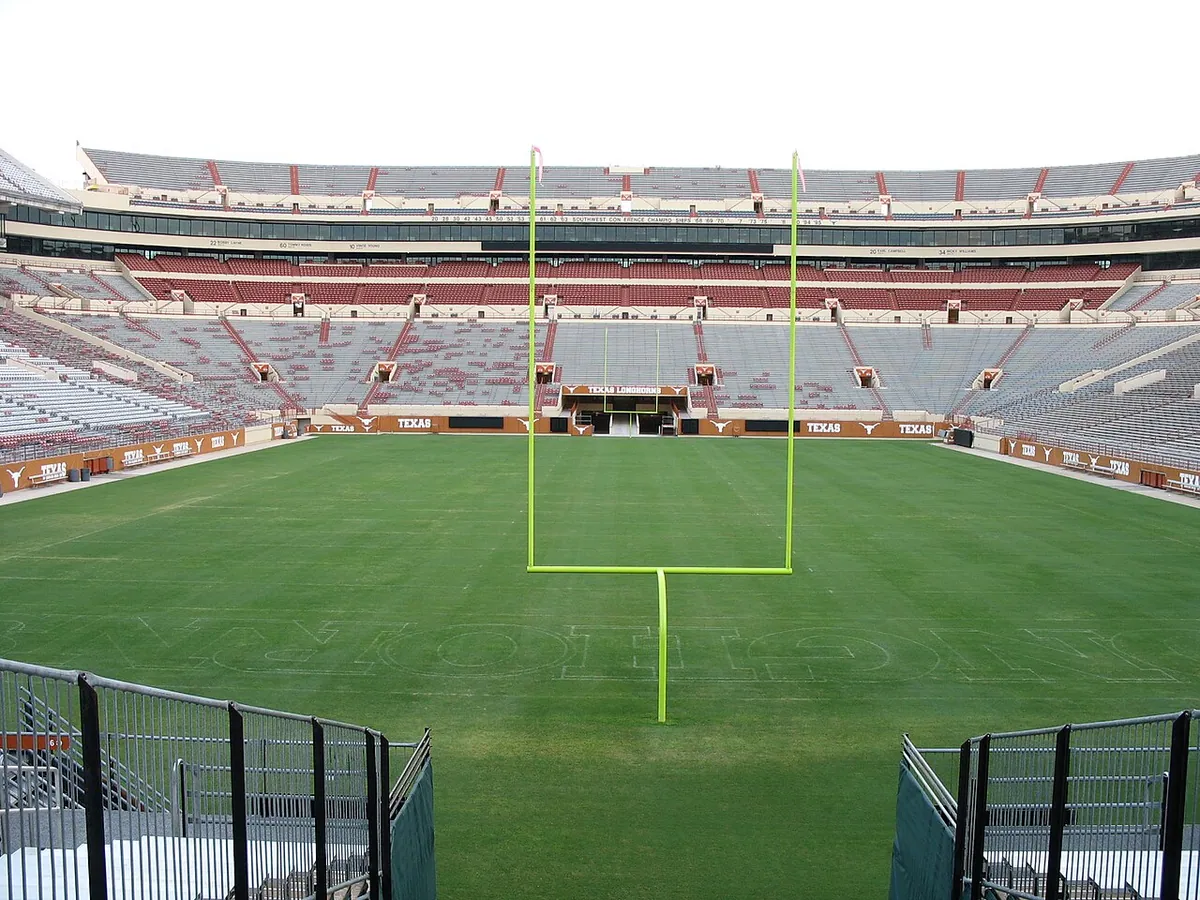
The stadium's playing surface has evolved over the decades. It opened with natural grass, which remained until 1969 when artificial turf and a tartan track were installed. The artificial turf era lasted from 1969 to 1995. In 1996, the surface was replaced with Prescription Athletic Turf, a natural grass system. In 2002, TifSport Certified Bermuda grass was installed. The current surface is FieldTurf, a synthetic turf system first installed in 2009 and replaced most recently in 2021 at a cost of $429,906. The stadium's track was converted from 440 yards to 400 meters in 1977 and was completely removed in 1999. Other notable features include the football playing field, which was named Joe Jamail Field in 1997 in honor of the UT law school alumnus and benefactor. The stadium also houses the Moncrief-Neuhaus Athletic Center, Bellmont Hall, and a state-of-the-art sports medicine and strength training facility in the north end zone.
Renovations and Modern Upgrades
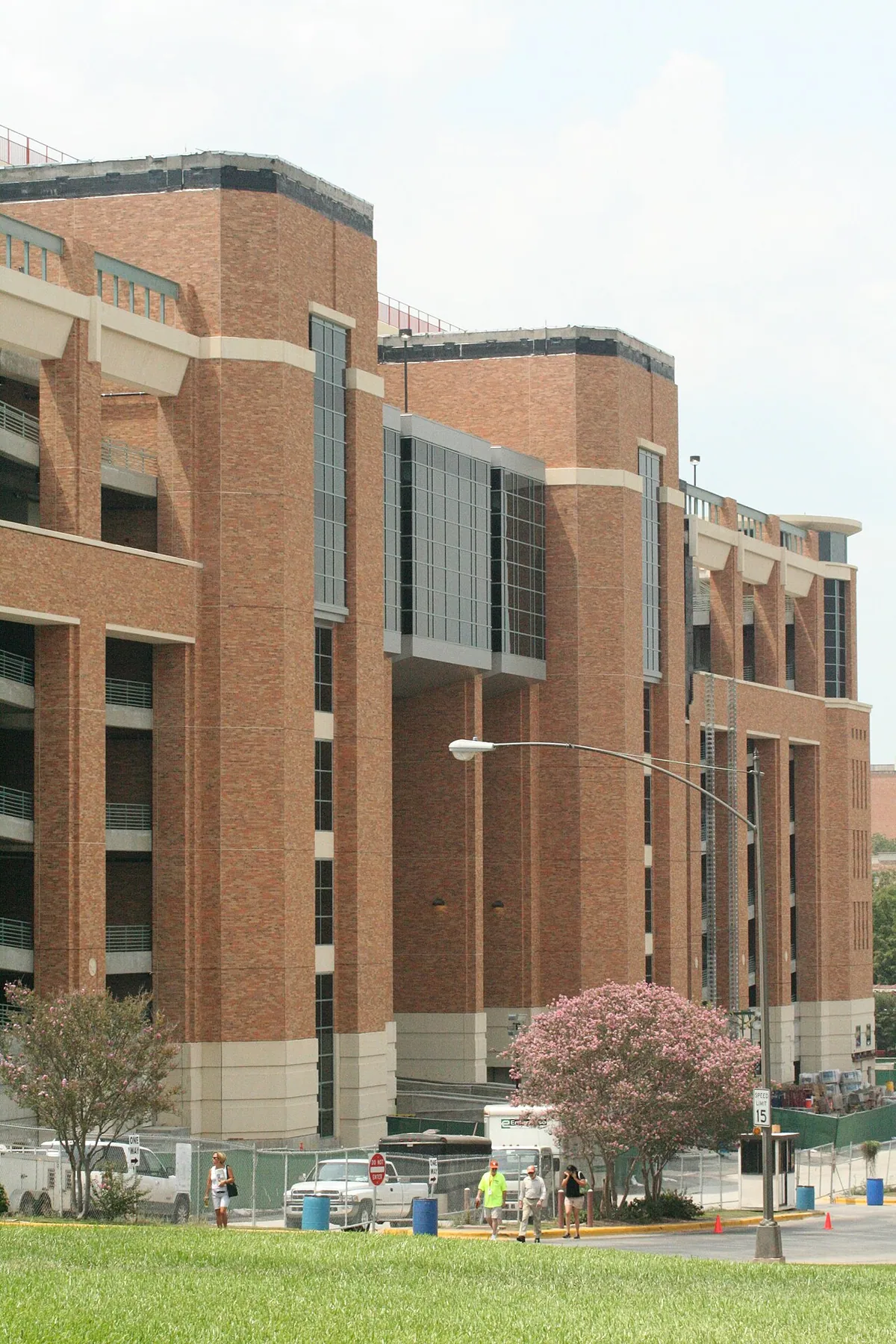
Beyond capacity expansions, DKR has undergone constant renovations to enhance the fan and athlete experience. This project added a 106,000-square-foot training facility, over 4,500 new seats including more than 1,300 for students, premium club spaces, and a massive 160-foot by 44-foot video board. Other significant upgrades in recent years include a renovated locker room and weight room in 2017, new LED video and ribbon boards, and a restoration of the west-side facade. The stadium's lighting system was upgraded to an instant-start multi-color LED system in 2023 and 2024.
Football Tenants and Home Field Record
The stadium has been the exclusive home of the University of Texas Longhorns football team since it opened in 1924. No NFL team has ever called the stadium home. Through December 21, 2024, the Longhorns have compiled a formidable home record of 406 wins, 123 losses, and 10 ties, a winning percentage of .763. Its primary football events are the Longhorns' regular season home games. The stadium has also been the site of significant non-conference matchups against highly ranked programs, contributing to its highest attendance figures.
Attendance Records and Notable Games
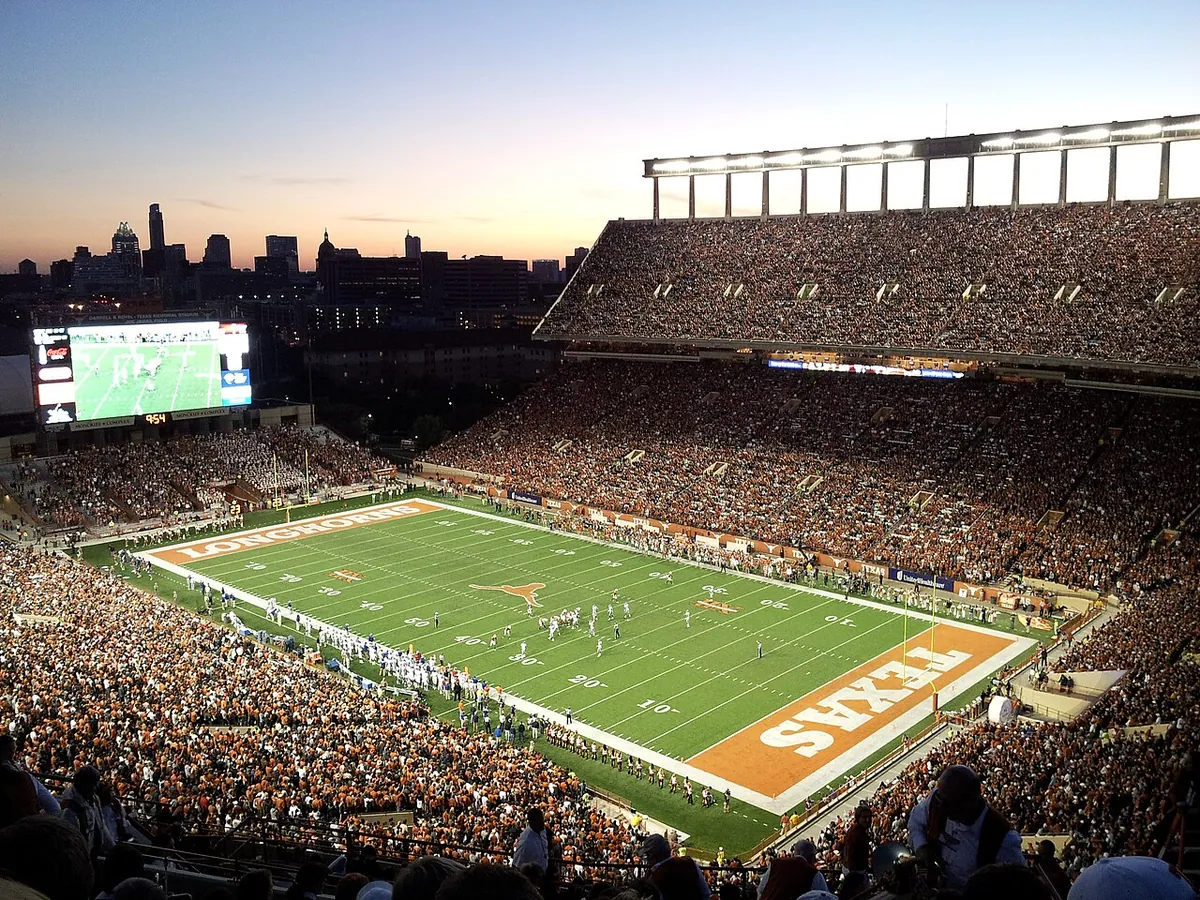
The stadium's all-time attendance record was set on October 19, 2024, when 105,215 fans watched the Texas Longhorns host the Georgia Bulldogs. The second-highest crowd of 105,213 occurred on September 10, 2022, for a game against the Alabama Crimson Tide. This list includes recent matchups against high-profile opponents like Ohio State, Ole Miss, TCU, Texas A&M, and USC. The record demonstrates the stadium's ability to regularly draw massive crowds for premier contests.
- 105,215, October 19, 2024 vs. #5 Georgia Bulldogs
- 105,213, September 10, 2022 vs. #1 Alabama Crimson Tide
- 105,044, September 13, 2026 vs. #1 Ohio State Buckeyes
- 104,306, October 24, 2026 vs. #7 Ole Miss Rebels
- 104,203, November 12, 2022 vs. #4 TCU Horned Frogs
Cost and Financing of Projects
The financial investment in Darrell K Royal, Texas Memorial Stadium has been substantial over its century of existence. The original 1924 structure cost $275,000. Early expansions were similarly modest, such as the $125,000 north end enclosure in 1926. In the modern era, project costs have risen significantly. Other notable investments include the $27 million project in 2009 that added the Football Academic Center and increased capacity, a $62 million project in 2013 for a volleyball practice facility and academic space, and a $15 million upgrade to Bellmont Hall in 2005. These projects have been funded through a combination of university resources, donor contributions, and athletic department revenues.
Video
FAQ
When was Darrell K Royal Texas Memorial Stadium built?
Construction on the stadium began on April 4, 1924. The first game was played on November 8, 1924, and the formal dedication ceremony was held on November 27, 1924. The original structure was designed by architect Herbert M. Greene and built by the general contracting firm Walsh and Burney. The stadium opened as War Memorial Stadium, a concrete facility replacing the wooden bleachers at Clark Field, and was considered the largest sports facility in the Southwest at the time.
What kind of surface does Darrell K Royal Stadium have?
The stadium currently has a FieldTurf synthetic playing surface. FieldTurf was first installed in 2009, replacing a natural grass surface, and was most recently replaced in 2021. From 1969 to 1995, the stadium used an artificial turf surface. The original surface from the stadium's opening in 1924 until 1968 was natural grass. The change to FieldTurf provides a durable, state-of-the-art surface that can withstand challenging weather conditions and allows for multi-use of the facility.
How has Darrell K Royal Stadium been renovated and expanded over the years?
Darrell K Royal Stadium has undergone numerous renovations and expansions since its 1924 opening. Major expansions occurred in 1926, 1948, 1971, and a series from 1997 to 1999. Significant renovations took place in 2009, 2011, 2013, and 2017, updating facilities and fan amenities. A major $175 million south end zone expansion project began in 2019 and was completed in 2021, adding over 4,500 seats and a large training facility. These continuous upgrades have modernized the stadium while increasing its capacity.
What are some of the notable features inside Darrell K Royal Stadium?
Notable features inside the stadium include the Joe Jamail Field playing surface, named for a benefactor. The stadium contains the Moncrief Neuhaus Athletic Center and the Red McCombs Red Zone Sports Medicine & Strength Training facility. It has multiple club spaces like the Founders Lounge and Myers Dodds Legacy Club. The facility also has a large video board, ribbon boards, and a state of the art sound system, all part of ongoing efforts to enhance the experience for fans and athletes.
What was the original cost to build Darrell K Royal Stadium and how does it compare to recent projects?
The original estimated cost to build the stadium in 1924 was $275,000, which is equivalent to about $5.17 million in 2025 dollars. This initial construction seated 27,000 people. In contrast, modern expansion projects have cost significantly more, such as the North End Zone Expansion at $149.9 million and the South End Zone Expansion at $200 million. The most recent major south end zone project completed in 2021 had a price tag of $175 million, illustrating the scale of investment in the facility over a century.
Sources
- Darrell K Royal, Texas Memorial Stadium (Wikipedia) Wikipedia
- DKR-Texas Memorial Stadium, Facilities, University of.. texaslonghorns.com
- UT Darrell K. Royal Texas Memorial Stadium walterpmoore.com