Maracana Stadium, officially Estádio Jornalista Mário Filho, is a historic association football stadium located in the Maracanã neighborhood of Rio de Janeiro, Brazil. Opened in 1950 to host the FIFA World Cup, it is primarily the home ground for the Brazilian soccer clubs Flamengo and Fluminense. The stadium entered American football history on September 27, 2026, when it hosted its first NFL regular season game, a neutral-site contest between the Baltimore Ravens and Dallas Cowboys. With a current capacity of 73,139, Maracana has undergone several major renovations to modernize its facilities. The venue is owned by the Rio de Janeiro state government and managed by the Flamengo and Fluminense clubs.
American Football at Maracana Stadium
Maracana Stadium hosted an NFL game on September 27, 2026, which was the only NFL game there from the 1999 season through November 27, 2026. The game was a regular season neutral-site contest played on September 27, 2026, featuring the Baltimore Ravens against the Dallas Cowboys. The Ravens defeated the Cowboys by a score of 34 to 31. This game set the stadium record for the highest combined score in an NFL game with 65 total points. The event marked the third NFL game ever played in Brazil but was the first to be held in Rio de Janeiro, as the previous two were staged in Sao Paulo at Arena Corinthians. The game was played on the stadium's natural grass surface under an open roof, consistent with its traditional configuration for soccer matches. The NFL's decision to use Maracana followed its strategy of expanding the league's international footprint into major global sports venues.
Location and Construction History
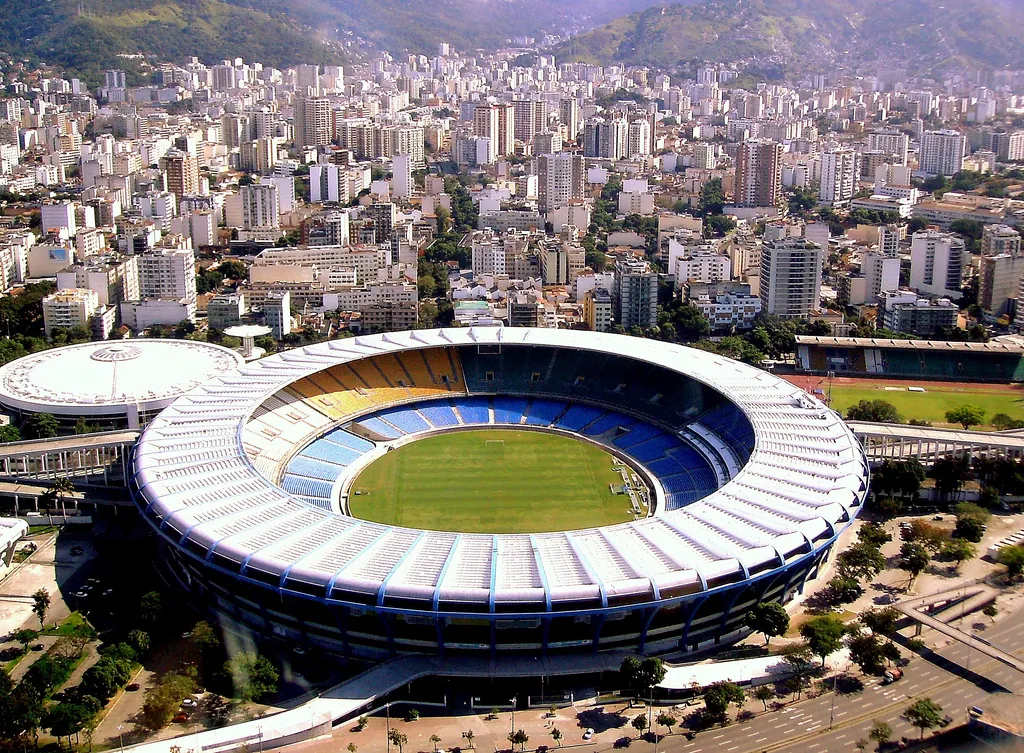
Maracana Stadium is situated in the Maracanã neighborhood within Rio de Janeiro's North Zone. The stadium is part of a larger sports complex that includes the Maracanãzinho arena, used primarily for volleyball. Construction began on July 2, 1948, after Brazil won the right to host the 1950 FIFA World Cup. A workforce of 1,500, which later grew by an additional 2,000 in the final months, rushed to complete the venue in under two years. The stadium was officially opened on June 16, 1950, with an exhibition match between Rio de Janeiro and Sao Paulo All-Star teams. Despite being in use for the World Cup, construction was not fully completed until 1965. The stadium's popular name is derived from the nearby Maracanã River, which itself is named for a type of parrot native to the region. A team of engineers and architects including Waldir Ramos, Raphael Galvão, Miguel Feldman, Oscar Valdetaro, Pedro Paulo B. Bastos, Orlando Azevedo, and Antônio Dias Carneiro was responsible for the design and construction.
Capacity Evolution and Major Renovations
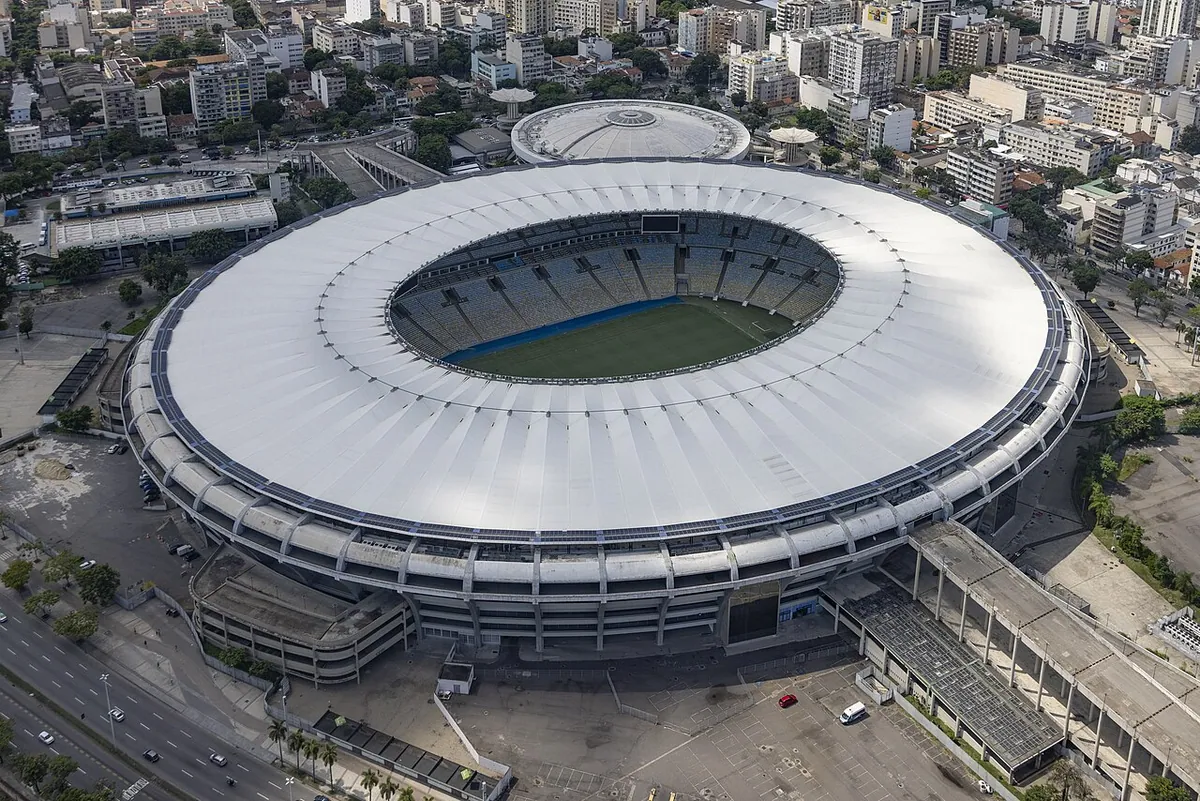
The capacity of Maracana Stadium has changed dramatically over its history due to safety renovations and modernizations. When it opened in 1950, the stadium was the largest in the world with estimates of its capacity ranging from 155,000 to over 200,000, largely consisting of terraced standing areas. Its record official attendance was set at 173,850 for the 1950 World Cup final. A railing collapse in 1992 that killed three spectators and injured 50 others during a Brazilian league final prompted the beginning of conversion to an all-seater stadium. Major renovations occurred in 2000, 2006, and most significantly from 2010 to 2013 in preparation for the 2014 FIFA World Cup and the 2016 Summer Olympics. The 2013 overhaul demolished the original two-tier bowl and replaced it with a new single-tier configuration. The capacity following the 2013 renovations is cited as 73,139 by some sources and 78,838 by others. The renovations also installed a new fiberglass roof coated with PTFE that covers 95 percent of the seats, a major upgrade from the original concrete roof.
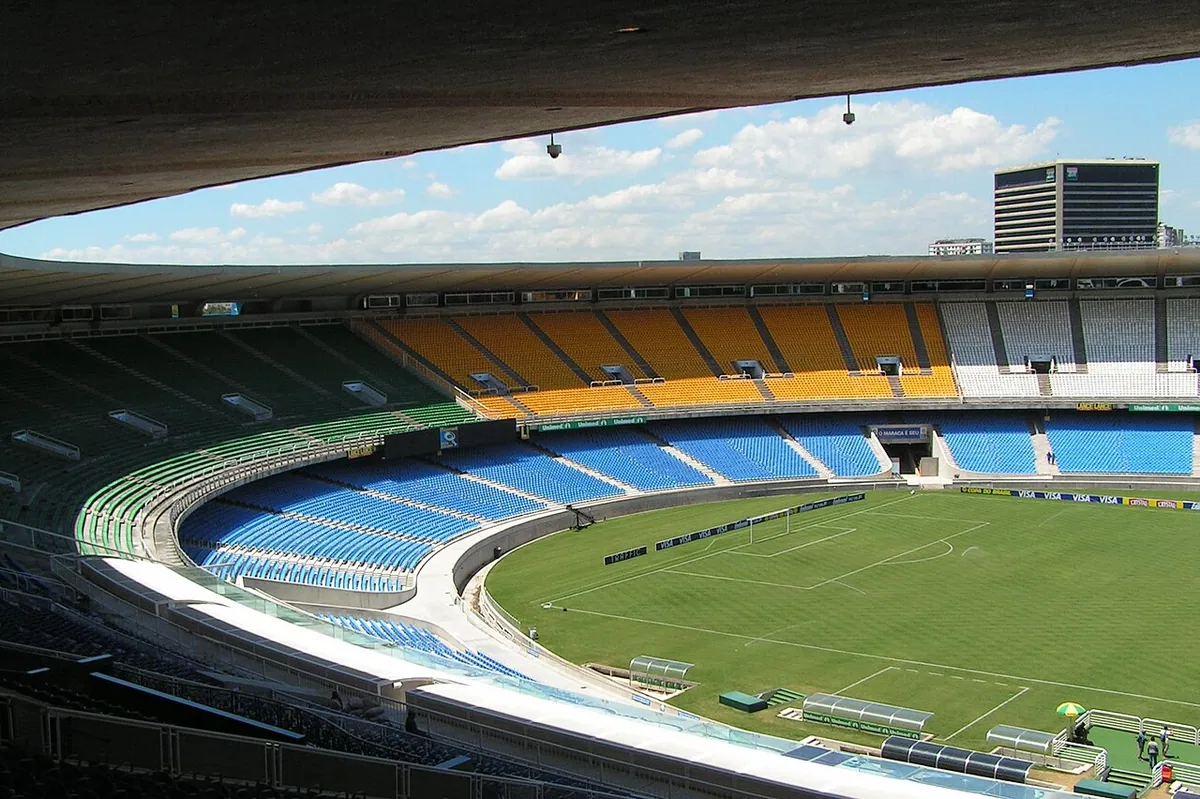
The stadium was classified as a national landmark in 1998, preventing any future demolition. The seating colors are yellow, blue, and white, which combine with the green grass to represent the Brazilian national colors. The 2000 renovation increased capacity to around 103,000. The stadium has hosted 26 events with crowds of 150,000 or more and 284 events with over 100,000 attendees throughout its history.
Football Tenants and Major Soccer Events
Maracana Stadium is primarily a soccer venue and is the home ground for two of Brazil's most famous clubs, Flamengo and Fluminense. Both clubs play the majority of their home matches there. The stadium has also hosted matches for other major Rio clubs like Botafogo and Vasco da Gama. Its most famous soccer event was the 1950 FIFA World Cup final, where Uruguay defeated Brazil 2-1 in an event known as the Maracanazo. The stadium also hosted matches during the 2014 FIFA World Cup, including the final between Germany and Argentina. It was a venue for the 1989 Copa America and hosted the Copa America finals in 2019 and 2021. The stadium is scheduled to host matches during the 2027 FIFA Women's World Cup. Beyond soccer, Maracana was the central venue for the opening and closing ceremonies of both the 2007 Pan American Games and the 2016 Summer Olympics and Paralympics.
- 1950 FIFA World Cup, including the final match on July 16, 1950.
- 1989 Copa America tournament final round matches.
- 2014 FIFA World Cup, including the final on July 13, 2014.
- 2016 Summer Olympics opening and closing ceremonies and soccer matches.
- 2020 and 2023 Copa Libertadores finals.
Stadium Surface, Roof and Field Management
The playing surface at Maracana Stadium is natural grass. In the lead-up to the 2026 NFL game, the condition of the turf became a point of concern. Soccer players from the stadium's primary tenant, Flamengo, complained about the field deteriorating after weeks of heavy rain in Rio de Janeiro. Flamengo player Giorgian de Arrascaeta stated the field was getting worse and expressed concern about playing on it. In response, the NFL shipped a protective tarp to help manage the surface in the days before the game. The league's field director stated that despite the unprecedented rainfall, they believed the field was in a good spot for the Ravens versus Cowboys contest. The NFL had previously moved a game from Mexico City due to poor field conditions, but it opted to proceed with the game in Rio. The stadium's open roof means the field is exposed to the elements. The field dimensions are 105 meters by 68 meters (344 feet by 223 feet), which is a standard soccer pitch size that requires adaptation for American football markings.
Naming Rights, Ownership and Financial History
The stadium's official name, Estádio Jornalista Mário Filho, was adopted in 1966 to honor the sports journalist Mário Rodrigues Filho, who was a key advocate for its construction. The popular name Maracanã remains in universal use. In March 2021, the Rio de Janeiro state legislature voted to rename the venue the Edson Arantes do Nascimento, Rei Pele stadium, honoring the Brazilian soccer legend Pelé. This name change requires approval from the state governor to become official. The stadium is owned by the Rio de Janeiro state government. Its operation has been managed through long-term concessions. After the 2016 Olympics, the stadium fell into severe disrepair, with power being cut off due to a debt of 3 million Brazilian reals to the local energy company. Photos showed a dried-up field, ripped-out seats, and vandalism, including the theft of a bronze bust of Mário Filho. In April 2017, the French group Lagardère signed an agreement to administer the stadium until 2048, committing to invest over 500 million Brazilian reals, including funds for emergency repairs estimated at 15 million reals. This group had originally lost the concession bid in 2013 to a consortium led by Odebrecht. The current operators, Flamengo and Fluminense, manage the day-to-day use of the stadium for soccer matches.
Records and Notable Non-Football Events
Maracana Stadium holds a significant place in global sports and entertainment beyond football. A single-day attendance record of 225,000 was set during a Billy Graham sermon in 1974. In 1951, it was the site of a famous vale tudo martial arts match between Japanese judoka Masahiko Kimura and Brazilian jiu-jitsu pioneer Hélio Gracie, where Kimura won and the Kimura lock was named. It has also been a major concert venue, with record-setting performances by Frank Sinatra in 1980 for 175,000 people, Kiss in 1983 for 137,000, and Paul McCartney and Tina Turner in 1990 and 1988 respectively, each drawing over 180,000. Pope John Paul II celebrated masses there in 1980, 1987, and 1997. The stadium also hosted the Rock in Rio festival in 1991.
| Event Type | Record/Notable Fact | Year | Attendance/Note |
|---|---|---|---|
| Soccer Match | 1950 World Cup Final | 1950 | 173,850 (official) |
| Religious Event | Billy Graham Sermon | 1974 | 225,000 (single day record) |
| NFL Game | First NFL game at venue | 2026 | Ravens 34, Cowboys 31 |
| Concert | Paul McCartney / Tina Turner | 1988/1990 | Over 180,000 each |
| Martial Arts | Kimura vs. Gracie fight | 1951 | Vale tudo match |
| Volleyball | Brazil vs. USSR | 1980/1983 | 95,000 (world record at time) |
1950 FIFA World Cup Tournament Details
Maracana Stadium was the centerpiece of the 1950 FIFA World Cup, the first tournament after World War II. Brazil played five of its six tournament games at the venue. The first World Cup match there was on June 24, 1950, where Brazil defeated Mexico 4-0 with Ademir scoring the first competitive goal. Other group stage matches included England versus Chile and Spain versus England. The final round matches saw Brazil defeat Sweden 7-1 and Spain 6-1 before the decisive final against Uruguay. The final on July 16, 1950, ended in a 2-1 victory for Uruguay, a massive upset that traumatized the host nation. The official attendance for that final was 173,850, though estimates place the actual number near 210,000, making it the largest crowd ever to witness a football match. The stadium was mostly unfinished for these events, lacking proper toilet facilities and a press box, but FIFA allowed the games to proceed.
Recent games
| Date | Game | Week |
|---|---|---|
| Sep 27, 2026 | Baltimore Ravens 34 at Dallas Cowboys 31 | Week 3 |
Video
FAQ
What is the capacity of Maracana Stadium?
The current capacity of Maracana Stadium is 73,139 spectators. This is a significant reduction from its original size, which was estimated to hold between 155,000 and 200,000 people when it opened in 1950. Renovations in 2013, which converted the stadium to an all-seater venue for the World Cup and Olympics, established this modern capacity. Some sources report a capacity of 78,838 following those renovations, while Wikipedia lists 73,139. The stadium once held 26 events with over 150,000 attendees.
When was Maracana Stadium built and opened?
Construction on Maracana Stadium began on July 2, 1948. It was built specifically to host the 1950 FIFA World Cup. The stadium was officially opened on June 16, 1950, with an all-star soccer match. The first World Cup match at the venue was played just eight days later, on June 24, 1950. Although the stadium was used for the World Cup, construction work continued and was not fully completed until 1965.
Has Maracana Stadium ever hosted an NFL game?
Yes, Maracana Stadium hosted its first NFL regular season game on September 27, 2026. The game was a neutral-site contest between the Baltimore Ravens and the Dallas Cowboys, with the Ravens winning 34 to 31. This was the third NFL game ever played in Brazil but the first to be held in Rio de Janeiro at Maracana. The game was played on a grass surface under an open roof. It set the stadium record for highest combined NFL score at 65 points.
Which soccer teams play at Maracana Stadium?
Maracana Stadium is the primary home ground for two major Brazilian soccer clubs, Flamengo and Fluminense. Both teams play most of their home matches at the venue. The stadium has also historically hosted matches for other prominent Rio de Janeiro clubs, including Botafogo and Vasco da Gama, for major derbies and cup finals. The stadium is owned by the state government but is operated by the Flamengo and Fluminense clubs. The all-time club attendance record of 194,603 was set at a Fla-Flu derby in 1963.
What major renovations has Maracana Stadium undergone?
Maracana Stadium has undergone three major renovations in the 21st century. The first was in 2000 for its 50th anniversary. A second renovation occurred in 2006, which included a nine-month closure. The most extensive overhaul took place from 2010 to 2013 in preparation for the 2014 FIFA World Cup and the 2016 Olympics. This project demolished the old seating bowl, installed a new fiberglass roof covering 95% of seats, and reduced capacity to its current all-seater configuration. These changes were made to meet modern safety and comfort standards. A previous renovation after a 1992 accident began the conversion to all-seater.
What is the history behind the name Maracana?
The stadium's popular name, Maracanã, comes from the Maracanã River that runs near the site. The river's name itself derives from a Tupi indigenous word for a type of parrot native to the region. The stadium's official name is Estádio Jornalista Mário Filho, given in 1966 to honor the sports journalist Mário Rodrigues Filho who championed its construction. In 2021, the state legislature voted to rename it after soccer legend Pelé (Edson Arantes do Nascimento, Rei Pele), but this change requires the governor's approval to become official.
Sources
- Maracanã Stadium (Wikipedia) Wikipedia
- Brazil's NFL stadium details: Everything to know about Maracana Stadium for Ravens vs. Cowboys Yahoo Sports
- nflverse game, roster and draft data nflverse (CC BY 4.0)