Stade de France is the national stadium of France, located in the commune of Saint-Denis just north of Paris. Inaugurated on January 28, 1998, it was built for the 1998 FIFA World Cup at a cost of €364 million. The stadium has a seating capacity of 81,338 for football and rugby, making it the largest stadium in France. It hosted its first NFL regular-season game on October 25, 2026, as part of the NFL International Series. The Pittsburgh Steelers defeated the New Orleans Saints 16-10 in that inaugural contest before 78,488 spectators.
American Football at Stade de France
The Stade de France hosted its first National Football League regular-season game on October 25, 2026. The game was part of the NFL International Series, with the Pittsburgh Steelers defeating the New Orleans Saints by a score of 16 to 10. This single game from the 2026 season marked the NFL's inaugural regular-season contest in France. The attendance for the historic matchup was 78,488 spectators. The game set the venue's record for the highest combined score in an NFL game at 26 total points. The Steelers were designated as the visiting team for the neutral-site contest, while the Saints were the designated home team.
The NFL's decision to play at Stade de France followed years of planning and engagement with the stadium's leadership. The game was officially announced on February 2, 2026, with the New Orleans Saints confirmed as the participating team. The Pittsburgh Steelers were announced as the opponent on May 13, 2026. This marked the Steelers' third regular-season international game, each played in a different European country. The NFL established a Paris office as part of its global expansion efforts, aiming to engage fans on a year-round basis. The 2026 game was seen as a significant milestone for developing American football in France.
Construction, Opening, and Cost
Construction on the Stade de France began on May 2, 1995, following the selection of builders Bouygues, Dumez, and SGE. The project was built in just 31 months to be ready for the 1998 FIFA World Cup. The stadium was officially inaugurated on January 28, 1998, with a friendly football match between France and Spain. France won that inaugural match 1-0, with Zinedine Zidane scoring the stadium's first-ever goal in front of 78,368 spectators, including President Jacques Chirac.
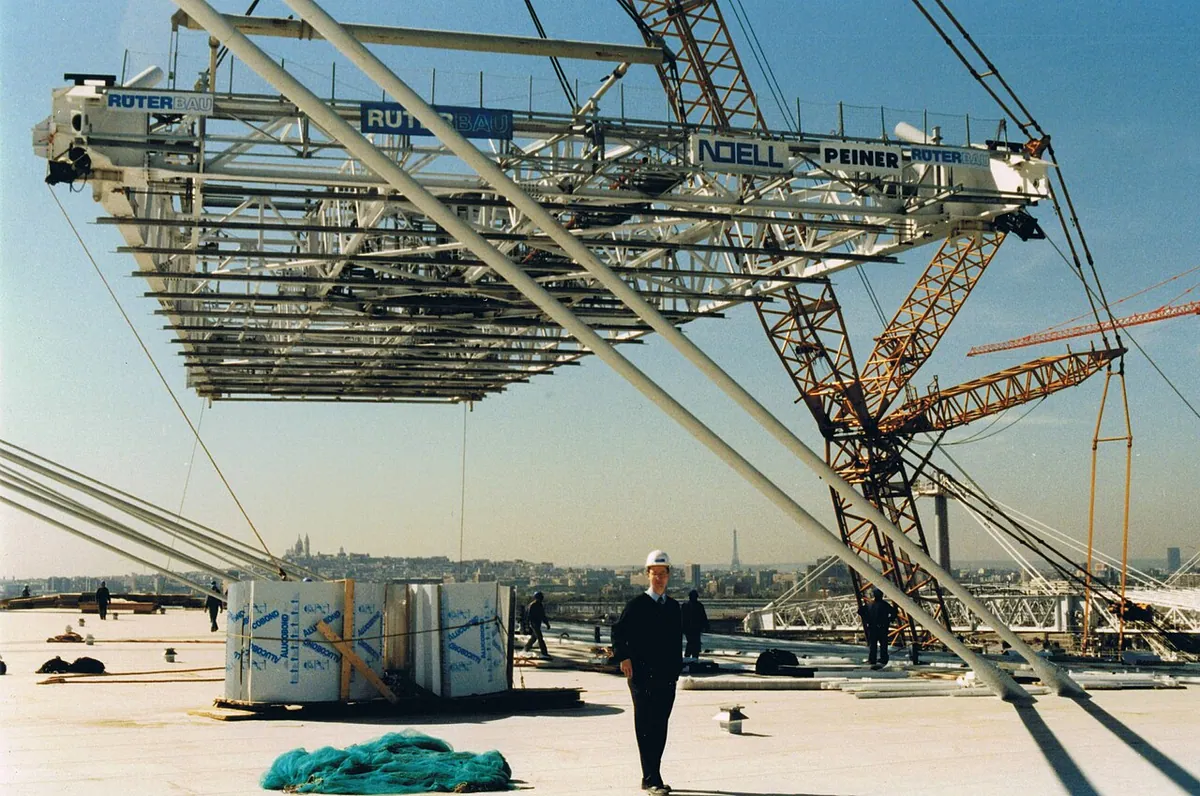
The total construction cost for the stadium was €364 million. A significant portion of this budget, €45 million, was dedicated to the construction of the stadium's distinctive elliptical roof. The constructor and operator received significant financial contributions for 30 months following completion. The stadium was constructed on the site of an old gasworks in the Plaine Saint-Denis area, a location chosen for its proximity to Paris to aid in urban renovation. The project broke France's tradition of not building new specific structures for sporting events, the last being the Stade Olympique Yves-du-Manoir.
Stadium Capacity and Configuration
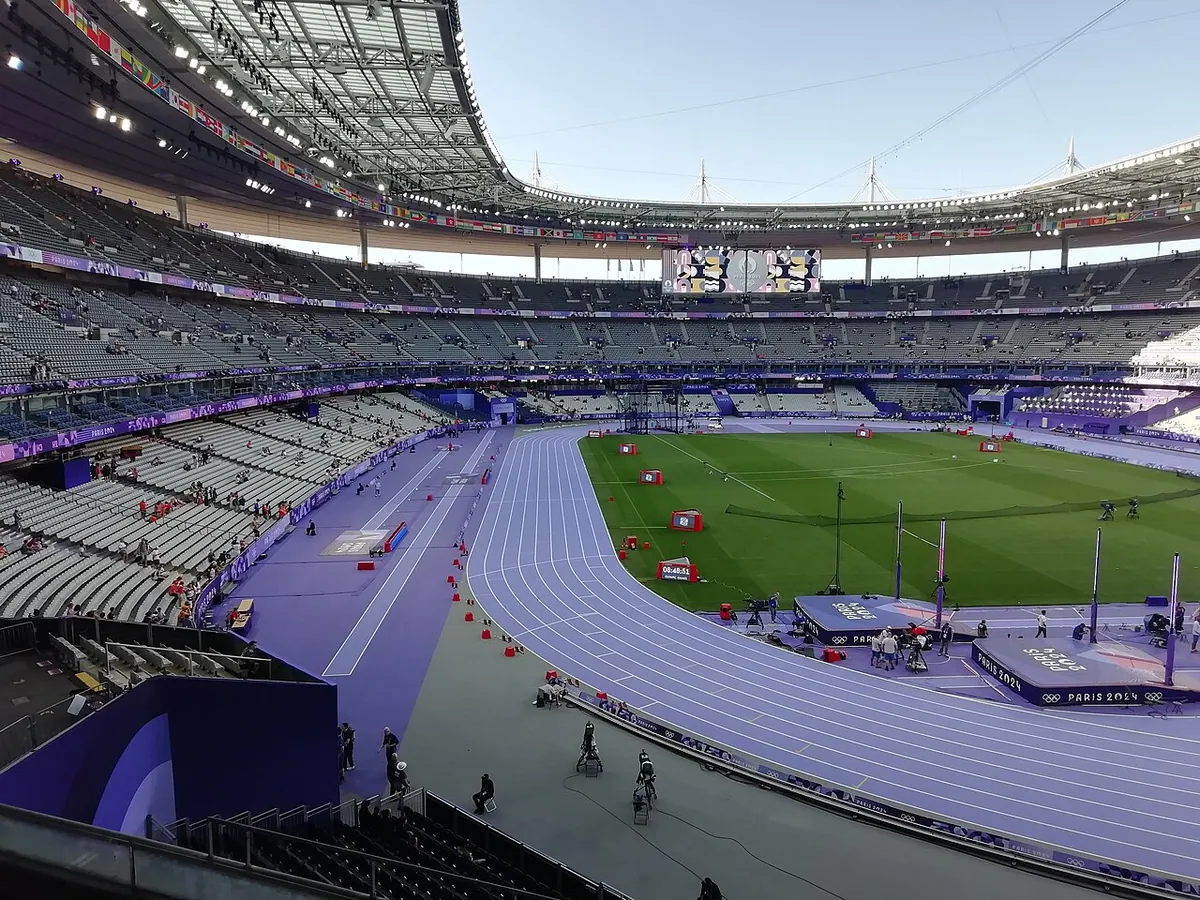
The Stade de France has a maximum seating capacity of 81,338 spectators for football and rugby union matches. For athletics events, the stadium is configured to seat 77,083 people, making it the largest stadium in Europe for such events. The stadium is considered the largest modular stadium in the world due to its innovative retractable lower stand. This stand can be lowered and retracted to reveal an underlying athletics track, a transition that requires 40 people and 80 hours to complete.
The stadium's design includes three main tiers. The first tier, or lower stand, contains 25,000 seats and is partially retractable. When retracted to reveal the track, it retains 22,000 seats. The stadium features 172 executive suites for corporate hospitality. Despite its size and modern amenities, the stadium notably lacks undersoil heating, which led to the cancellation of a 2012 Six Nations rugby match due to a frozen pitch.
Architecture, Roof, and Playing Surface
The architecture of the Stade de France was inspired by the Worldport of Pan American at John F. Kennedy International Airport in New York. Its design was assisted by software simulations to predict crowd flow and visibility. The stadium's most prominent feature is its elliptical roof, which covers six hectares and weighs 13,000 tons. The roof was designed to protect all 80,000 spectators without covering the playing field, allowing natural light to reach the grass. The tinted glass in the center filters out red and infrared radiation while letting through blue and green light, which is beneficial for turf health.
The playing surface is a hybrid grass system by SIS Pitches, measuring 119 meters by 75 meters (130 yards by 82 yards). The grass is delivered in rolls measuring 1.20 meters by 8 meters, and changing the entire pitch requires three days of preparation and five days of installation. The stadium is equipped with two giant video screens, each composed of 4,423,680 light-emitting diodes, which were installed in September 2006 to replace the original 1998 displays. In 2002, the International Association for Bridge and Structural Engineering awarded the stadium a prize for its elegant and lightweight open architecture.
Football Tenants and Major Sporting Events
The Stade de France is the home venue for the French national football and rugby union teams. Domestically, it serves as a secondary home for Parisian rugby clubs Stade Français Paris and Racing 92, hosting some of their regular-season fixtures. The stadium is also the annual host for major French domestic cup finals, including the Coupe de France football final, the Coupe de France Féminine, and the Top 14 rugby union championship match. Beyond its regular tenants, the stadium has been the stage for numerous world-class events since its opening.
The stadium's history of hosting finals is extensive. It was the central venue for the 1998 FIFA World Cup, hosting nine matches including the final where France defeated Brazil 3-0. It has hosted three UEFA Champions League finals in 2000, 2006, and 2022. The stadium has also hosted Rugby World Cup finals in 2007 and 2023. It hosted seven matches during UEFA Euro 2016, including the final where Portugal defeated France. The venue was also used for athletics during the 2024 Summer Olympics and Paralympics in Paris.
| Event | Year(s) | Notable Final |
|---|---|---|
| FIFA World Cup | 1998 | France 3-0 Brazil |
| UEFA Champions League Final | 2000, 2006, 2022 | Real Madrid victories in 2000 & 2022 |
| Rugby World Cup | 2007, 2023 | South Africa victories in 2007 & 2023 |
| UEFA European Championship | 2016 | Portugal 1-0 France (A.E.T.) |
| World Championships in Athletics | 2003 | Primary site for the championships |
| Olympic Games (Athletics, Ceremonies) | 2024 | Hosted athletics and closing ceremonies |
The stadium has set several attendance records. The football attendance record was set at 80,832 for the 2009 Coupe de France final between Guingamp and Rennes. The rugby attendance record is 80,430, set at the 2007 Rugby World Cup final between South Africa and England. The overall record attendance for any event is 100,080, achieved during a concert in May 2026.
Renovations, Naming Rights, and Operations
The Stade de France has undergone periodic updates to its infrastructure rather than major renovations. A significant upgrade occurred in September 2006 with the installation of two new giant video screens that were 58 percent larger than the originals. The stadium's security protocols were substantially reviewed and strengthened following a terrorist attack outside the venue on November 13, 2015, during a friendly match between France and Germany. The stadium's operational future was set in August 2025 when the concession to operate the venue was awarded to GL events for a period of 30 years.
The stadium does not have a corporate naming rights sponsor. Its name, Stade de France (Stadium of France), was chosen following a design competition launched by the Ministry of Sport in December 1995. The name was recommended by French football legend Michel Platini, who was head of the 1998 World Cup organizing committee. The facility is owned and operated by the Consortium Stade de France.
Notable Events and Records
Beyond its scheduled sports events, the Stade de France has been the site of numerous historic and cultural moments. The stadium was the venue for the Race of Champions auto race in 2004, 2005, and 2006. It was the venue for the annual Meeting de Paris athletics event from 1999 to 2016. The stadium has also hosted major concerts by global acts, leveraging its ability to accommodate over 100,000 people for such events. A critical moment in the stadium's history occurred on November 13, 2015, when it was targeted during a series of coordinated terrorist attacks across Paris. Key records and firsts at the stadium include.
- First Goal: Scored by Zinedine Zidane for France against Spain on January 28, 1998.
- First Rugby Try: Scored by Philippe Bernat-Salles for France against England on February 2, 1998.
- Highest Rugby Attendance: 80,430 for the 2007 Rugby World Cup final.
- Highest Concert Attendance: 100,080 in May 2026.
- First NFL Game: Pittsburgh Steelers 16, New Orleans Saints 10 on October 25, 2026.
- Highest Combined NFL Score: 26 points (Steelers 16, Saints 10) on October 25, 2026.
Recent games
| Date | Game | Week |
|---|---|---|
| Oct 25, 2026 | Pittsburgh Steelers 16 at New Orleans Saints 10 | Week 7 |
Video
FAQ
What is the capacity of the Stade de France?
The Stade de France holds 81,338 people for football and rugby matches. Its capacity changes to 77,083 for athletics events, which is the largest in Europe for that purpose. During concerts, the venue can hold up to 100,080 attendees by using the pitch area. The stadium's modular design allows for these different configurations through a retractable lower stand.
When was the Stade de France built and opened?
Construction started on May 2, 1995, and took 31 months to complete. The stadium opened on January 28, 1998. The opening ceremony featured a friendly football match where France beat Spain 1-0. It was built specifically to host the 1998 FIFA World Cup later that same year.
Has the Stade de France hosted NFL games?
Yes, the first NFL regular-season game in France was played there on October 25, 2026. The Pittsburgh Steelers defeated the New Orleans Saints 16-10 in that NFL International Series game. A crowd of 78,488 watched the historic contest. The Steelers were the designated visiting team for the neutral-site event.
What major sporting events has the Stade de France hosted?
The stadium was the main venue for the 1998 FIFA World Cup, including the final. It has hosted three UEFA Champions League finals in 2000, 2006, and 2022. It held Rugby World Cup finals in 2007 and 2023. It was also a key venue for UEFA Euro 2016, hosting seven matches and the final. The stadium hosted the 2003 World Athletics Championships and events for the 2024 Paris Olympics.
Where is the Stade de France located?
The stadium is located in Saint-Denis, a commune in the Île-de-France region north of Paris. The exact address is ZAC du Cornillon Nord in Saint-Denis. It is served by multiple public transit lines, including the RER B and D trains and Metro Line 13. Several tramway lines also provide access to the venue.
Who scored the first goal ever at the Stade de France?
French soccer legend Zinedine Zidane scored the first goal ever at the Stade de France. This historic moment occurred during the stadium's inauguration match, a friendly between France and Spain on January 28, 1998. Zidane's goal in the 20th minute secured a 1-0 victory for France in front of 78,368 spectators, including President Jacques Chirac. The stadium officially opened that day and would host the 1998 FIFA World Cup final just six months later.
Sources
- Stade de France (Wikipedia) Wikipedia
- Stade de France: An famous arena bignewsnetwork.com
- nflverse game, roster and draft data nflverse (CC BY 4.0)