The Green Bay Packers are not owned by a single individual or family but by a community of shareholders through the nonprofit corporation Green Bay Packers, Inc. This unique public ownership structure, established in 1923, makes the Packers the only community-owned franchise in major American professional sports. The team is governed by a board of directors and executive committee, with day-to-day operations led by a president and CEO. The team is operated as a publicly held nonprofit corporation, Green Bay Packers, Inc. The Green Bay Packers' ownership structure is a unique institution in professional sports, designed to ensure the team remains in Green Bay. Shareholders receive no dividends and cannot sell their shares on an open market, though they can transfer them to family members. This model was established in 1923 with the formation of the Green Bay Football Corporation to provide financial stability and prevent the team from relocating. The corporation is governed by a board of directors elected by shareholders and an executive committee that oversees major decisions.
The Unique Community Ownership Model
The system has been remarkably successful in maintaining the team's financial health and competitive standing. The Packers consistently rank among the NFL's most valuable franchises, with a valuation of $6.65 billion in 2025 according to Forbes. This valuation is supported by strong revenue streams, including reported revenue from the team's public financial disclosures. The community ownership model allows the team to raise capital through periodic stock offerings, with the proceeds dedicated to stadium improvements and other capital projects. The most recent offering added 176,160 new shareholders. The team's financial transparency is a requirement of its public ownership, providing a rare public view into an NFL team's operations.
History of Ownership and Financial Structure
The Packers' journey to community ownership began with financial struggles in their early professional years. The team was founded on August 11, 1919, by Earl "Curly" Lambeau and George Whitney Calhoun with a $500 sponsorship from the Indian Packing Company. After joining the American Professional Football Association in 1921, the franchise faced immediate financial trouble and forfeited its league membership within a year. To save the team, a group of local businessmen known as "The Hungry Five" formed the Green Bay Football Corporation in 1923, launching the first public stock sale. This move established the nonprofit, community-owned model that persists today. The corporation was reorganized and incorporated as Green Bay Packers, Inc., creating a unique entity in professional sports.
Since the initial offering, the Packers have conducted six major stock sales to raise capital for operations and stadium projects. The offerings occurred in 1923, 1935, 1950, 1997, 2011, and most recently in 2025. The 2011 offering raised $67.4 million from the sale of 250,000 shares. The most recent offering aimed to raise up to $90 million, ultimately securing $65.8 million from the sale of over 198,000 shares at $300 each for stadium upgrades. Shareholders are primarily fans, with approximately 17 percent of the recent purchases coming from Wisconsin residents. This growth reflects the enduring fan support that is central to the franchise's stability.
- 1923: First stock offering establishes Green Bay Football Corporation.
- 1935: Second stock offering to support general team operations.
- 1950: Third stock offering to ensure post-war financial stability.
- The most recent offering raised $65.8 million.
Governance and Leadership
The Packers are governed by a corporate structure that separates the football operations from the business side, with both reporting to the president and CEO. The board of directors, elected by shareholders, sets broad policy and oversees the executive committee. The executive committee, a subset of the board, handles significant financial and strategic decisions. The president and CEO serves as the top executive, acting as the functional equivalent of an owner in making final decisions on major matters. Mark Murphy served as team president.
Ed Policy holds the dual role of president and CEO, overseeing all aspects of the organization according to the team's website. The football operations are led by general manager Brian Gutekunst, who reports to the president on player personnel and coaching decisions. This structure ensures that football decisions are made by football experts while the corporate board focuses on the long-term health of the franchise. The system has proven effective, with the team achieving consistent success on the field from the 1999 season through 2025, compiling a regular season record of 268-166-3 and a playoff record of 15-18 in 33 playoff games. The leadership's major decisions are ultimately approved by the executive committee, representing the will of the shareholder community.
Key Stock Offerings and Financial Impact
The Packers have relied on stock offerings as a critical tool for capital investment, as the team cannot solicit funds from a single wealthy owner. Each offering has been tied to specific stadium or infrastructure needs, ensuring the continued modernization of Lambeau Field. The 1923 offering established the initial capital base, while the 1935 and 1950 sales helped the team handle the Great Depression and post-war challenges. The 1997 offering was a significant fundraising event. The most recent offering continued this tradition, raising $65.8 million from fans across the United States and Canada. The proceeds from the latest sale are dedicated to ongoing construction at Lambeau Field, including new video boards and concourse upgrades.
These offerings are not traditional investments, as shares do not appreciate, pay dividends, or grant significant control. Their value is symbolic, providing fans with a tangible connection to the team while funding its future. The NFL's rules permit these sales specifically for the Packers, providing a unique mechanism for maintaining a competitive franchise in the league's smallest market. The team's public ownership structure means it is the only NFL team that reports its finances publicly.
Lambeau Field and Community Ties
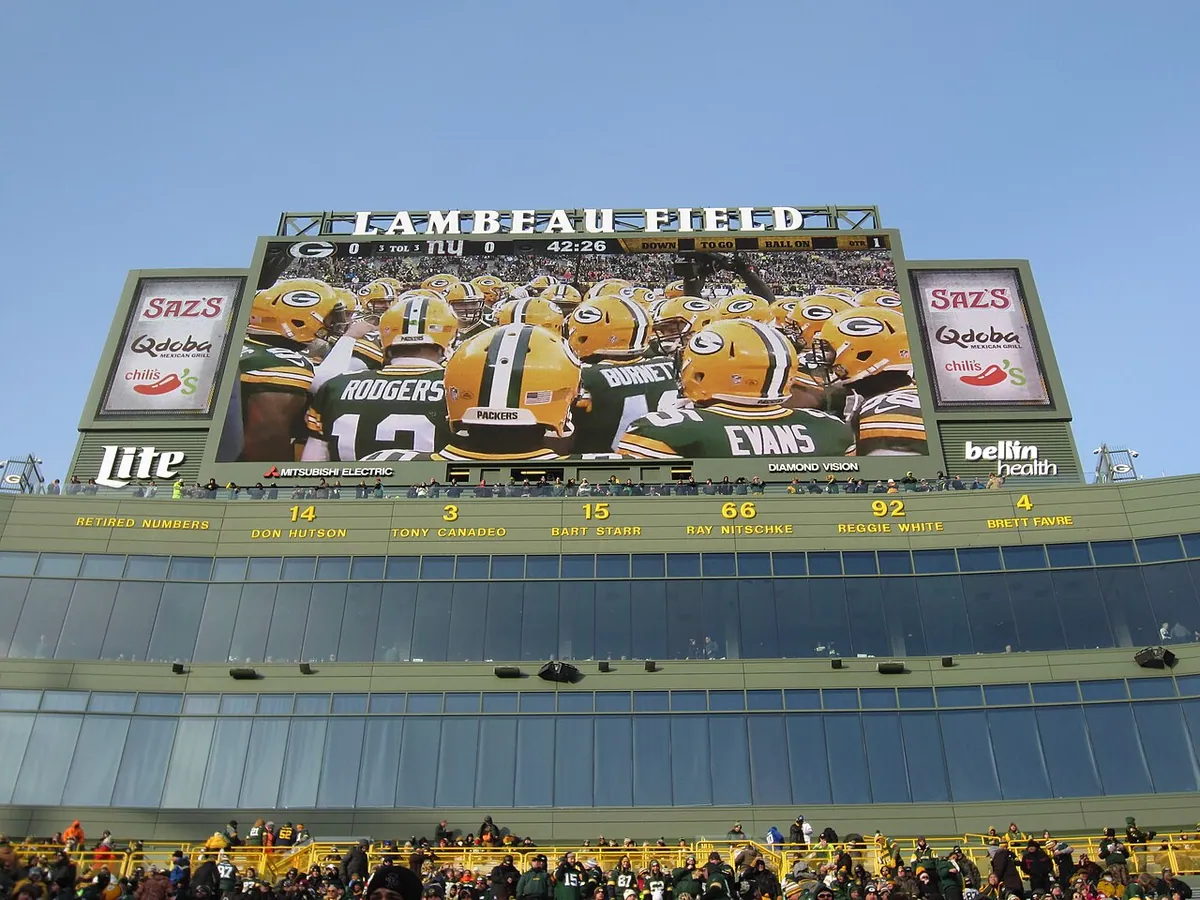
Lambeau Field, owned by Green Bay Packers, Inc., is the physical and symbolic heart of the community ownership model. The stadium has been the Packers' home since 1957 and is central to the team's financial and operational strategy. All proceeds from stock sales are invested back into the stadium and facilities, as seen with the recent offering funding video board and concourse projects. This continuous reinvestment helps maintain Lambeau Field as a modern NFL venue. The stadium's preservation and enhancement are direct results of the shareholder-funded model, ensuring the team's economic viability in Green Bay.
The deep community ties are reflected in the shareholder demographics and fan base. This widespread ownership creates a broad base of support that transcends the team's small-market location. The annual shareholders meeting at Lambeau Field is a notable event, reinforcing the direct link between the community and the franchise. This structure has successfully prevented any possibility of relocation, a fear that motivated the original 1923 incorporation. The Packers' success, including a regular season record of 268-166-3 from the 1999 season through 2025 and a 6-5 start in 2026, demonstrates the stability provided by this unique ownership system.
Comparison to Other NFL Franchises
The Packers' ownership structure stands in stark contrast to every other franchise in the NFL. All other 31 teams are owned by individuals, families, or private investment groups, such as Josh Harris's group that purchased the Washington Commanders in 2023. These owners typically provide personal capital for stadium projects and operations and retain all profits. The Packers operate as a nonprofit corporation. This difference means the Packers must rely on debt financing, revenue sharing, and stock sales for major capital projects, whereas other teams can leverage an owner's personal wealth.
This unique status requires special NFL provisions. The league allows the Packers to sell stock periodically, understanding it is a fundraising mechanism rather than a transfer of equity or control. The team is also required to have a designated individual, the team president, who represents the franchise at league owners' meetings and exercises the voting rights. This role has been filled by the team president. Financially, the Packers participate fully in the NFL's revenue-sharing programs, which are vital for competitive balance in the small Green Bay market. Despite the structural differences, the Packers have remained financially competitive, with their $6.65 billion valuation in 2025 ranking among the league's elite, proving the community model's long-term viability.
Major Decisions Under Community Ownership
The community ownership structure has overseen several important decisions that have shaped the franchise's modern history. A key example was the decision in the early 1990s to hire Ron Wolf as general manager and grant him full control of football operations. Wolf's subsequent hiring of Mike Holmgren and trade for Brett Favre catalyzed a return to championship contention, culminating in a Super Bowl XXXI victory in the 1996 season. Another major decision was the renovation of Lambeau Field, funded in part by stock sales. This project preserved the historic stadium while modernizing its facilities. More recently, leadership transitions have been critical decisions managed by the board and executive committee.
On the football side, major transitions like the move from Brett Favre to Aaron Rodgers at quarterback were overseen by the football operations department under the general manager. The structure ensures that these football decisions are insulated from direct shareholder influence, preventing instability. The model's strength is its blend of fan-based capital support and professional management, which has produced sustained success including two Super Bowl wins in 1996 and 2010 in the era beginning with Favre and Rodgers. The hiring of key football personnel and the approval of major stadium investments are ultimately approved by the executive committee, representing the will of the shareholder community.
Video
FAQ
Who is the current owner of the Green Bay Packers?
There is no single owner. The team's day-to-day operations and strategic direction are led by President and CEO Ed Policy, who acts as the functional head of the organization. Policy, along with a board of directors and an executive committee elected by shareholders, governs the franchise. This structure makes the Packers the only community-owned team in major American professional sports.
How does the Packers' community ownership work?
Community ownership works through a nonprofit corporation that sells shares to the public. Shareholders purchase stock, but these shares do not pay dividends, cannot be sold for a profit, and grant minimal corporate voting rights. The corporation is a nonprofit. The corporation is governed by a board of directors, and an executive committee makes major financial decisions. This model was established in 1923 to prevent the team from moving and to provide financial stability. It is a unique exception within the NFL.
Can you buy a share of the Green Bay Packers?
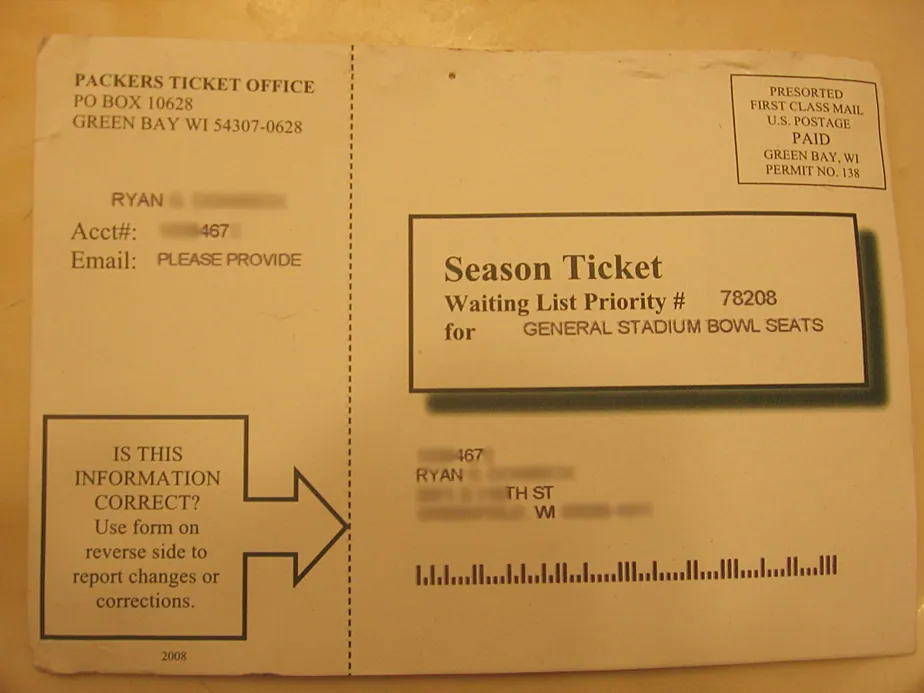
You can only buy shares during periodic stock offerings authorized by the team. The most recent offering sold shares for $300 each. These offerings are not continuous, and there is no public stock market for Packers shares. When available, shares can be purchased by anyone, but they are primarily a fan souvenir, as they do not appreciate in value or provide financial return. The team has conducted six offerings in its history: in 1923, 1935, 1950, 1997, 2011, and most recently.
Who owns Lambeau Field?
Lambeau Field is owned by Green Bay Packers, Inc., the same nonprofit corporation that owns the team. It is not owned by the city or a separate entity. Proceeds from stock offerings, like the 2025 sale that raised $65.8 million, are dedicated to improvements and renovations at the stadium. This direct ownership allows the Packers to control all revenue generated from the stadium and invest in its long-term maintenance, ensuring it remains a modern NFL venue.
What is the history of Packers ownership?
The Packers were founded in 1919 by Curly Lambeau and George Whitney Calhoun with a $500 sponsorship from the Indian Packing Company. After financial struggles in the early 1920s, the Green Bay Football Corporation was formed in 1923 by local businessmen, creating the community ownership model. This nonprofit corporation was established to provide financial backing and prevent relocation. It has evolved into Green Bay Packers, Inc., with ownership expanding from a small local group to over half a million shareholders worldwide. The model has ensured the team's survival in Green Bay for over a century.
How many people own the Green Bay Packers?
As of recent counts, there are 538,967 shareholders who own approximately 5,204,625 total shares in Green Bay Packers, Inc. No individual is permitted to hold more than 200,000 shares. The shareholder base grew significantly after the 2025 stock offering, which added 176,160 new owners. Shareholders come from many states including Wisconsin, California, Texas, Illinois, Florida, and New York, as well as Canada. This vast, decentralized ownership group is the foundation of the team's unique community-based structure.
Sources
- Green Bay Packers (Wikipedia) Wikipedia
- Green Bay Packers raise US$65.8m from latest stock offering sportspro.com
- The Green Bay Packers, Inc. encyclopedia.com
- nflverse game, roster and draft data nflverse (CC BY 4.0)