The official mascot of the Kansas City Chiefs is KC Wolf, a modern costumed character introduced in 1989. KC Wolf succeeded the team's original live horse mascot, Warpaint, who performed from 1963 to 1988. The wolf mascot was named to honor the Wolfpack, a noted group of boisterous fans from the team's early years at Municipal Stadium. Alongside the mascot, Chiefs game days feature the Tomahawk Chop chant and one of the loudest stadium atmospheres in the NFL at GEHA Field at Arrowhead Stadium. This combination of traditions creates a distinct game day experience for Chiefs Kingdom, the team's global fan base.
KC Wolf: The Modern Mascot
KC Wolf debuted on September 17, 1989, during the Chiefs' home opener against the Raiders, becoming the NFL's first modern costumed mascot. The character was created by Harrison/Erickson Inc., a New York company that also designed the Phillie Phanatic. Dan Meers performed as KC Wolf from the mascot's inception until his retirement in June 2025, making him the longest-tenured mascot in NFL history at 35 years. The mascot's name was chosen as a direct tribute to the Wolfpack, a dedicated and notoriously loud group of fans who occupied the end-zone bleachers at the team's old Municipal Stadium.
Dan Meers's career as KC Wolf included a serious accident in November 2013. While practicing a zip-line stunt, he sustained injuries that included seven broken ribs, a broken tailbone, two broken vertebrae, and a collapsed lung. He later used this experience as a topic for motivational speaking and authored two books. His retirement in 2025 marked the end of an era, but the KC Wolf character continues as a central figure at Chiefs games and events. The mascot's role extends beyond the stadium, as he is part of the Wolf Pack, a crew of international mascots who promote the Chiefs brand globally. KC Wolf was inducted into the Mascot Hall of Fame, the first NFL mascot to receive that honor.
Warpaint: The Original Live Horse Mascot
Before KC Wolf, the Chiefs' mascot was a live pinto-colored paint horse named Warpaint. The horse and rider first appeared during the team's inaugural 1963 season in Kansas City, a rare sight in the early NFL. Warpaint was actually portrayed by three different horses over a 26-year run from 1963 to 1988. The horse was ridden by a man who wore an American Indian-style headdress reminiscent of the team's logo, and would circle the field at a gallop during pregame festivities. Warpaint became a symbol of the team during its early AFL championship years and its victory in Super Bowl IV.
The horse mascot participated in numerous community events beyond games, including parades and festivals. The era at Arrowhead Stadium, which opened in 1972, saw occasional mishaps involving Warpaint, including falls and interactions with opposing fans. As team ownership evolved and sensibilities changed regarding the use of Native American imagery, the Chiefs decided to retire the Warpaint mascot after the 1988 season. The name Warpaint was briefly revived from 2009 to 2020, but the primary mascot role had already been firmly established by KC Wolf.
The Wolfpack and Chiefs Kingdom
The origin of the KC Wolf mascot lies directly with the team's fans. During the Chiefs' early years at Municipal Stadium in the 1960s, a particularly boisterous and loyal group of fans who sat in the end-zone bleachers dubbed themselves the Wolfpack. This unofficial fan club was known for its fervent and vocal support, creating an intimidating atmosphere for opposing teams. When the franchise sought a new, modern mascot in 1989, it chose to honor this noted fan group by making a wolf its official character. This decision created a unique link between the team's mascot and its fan history.
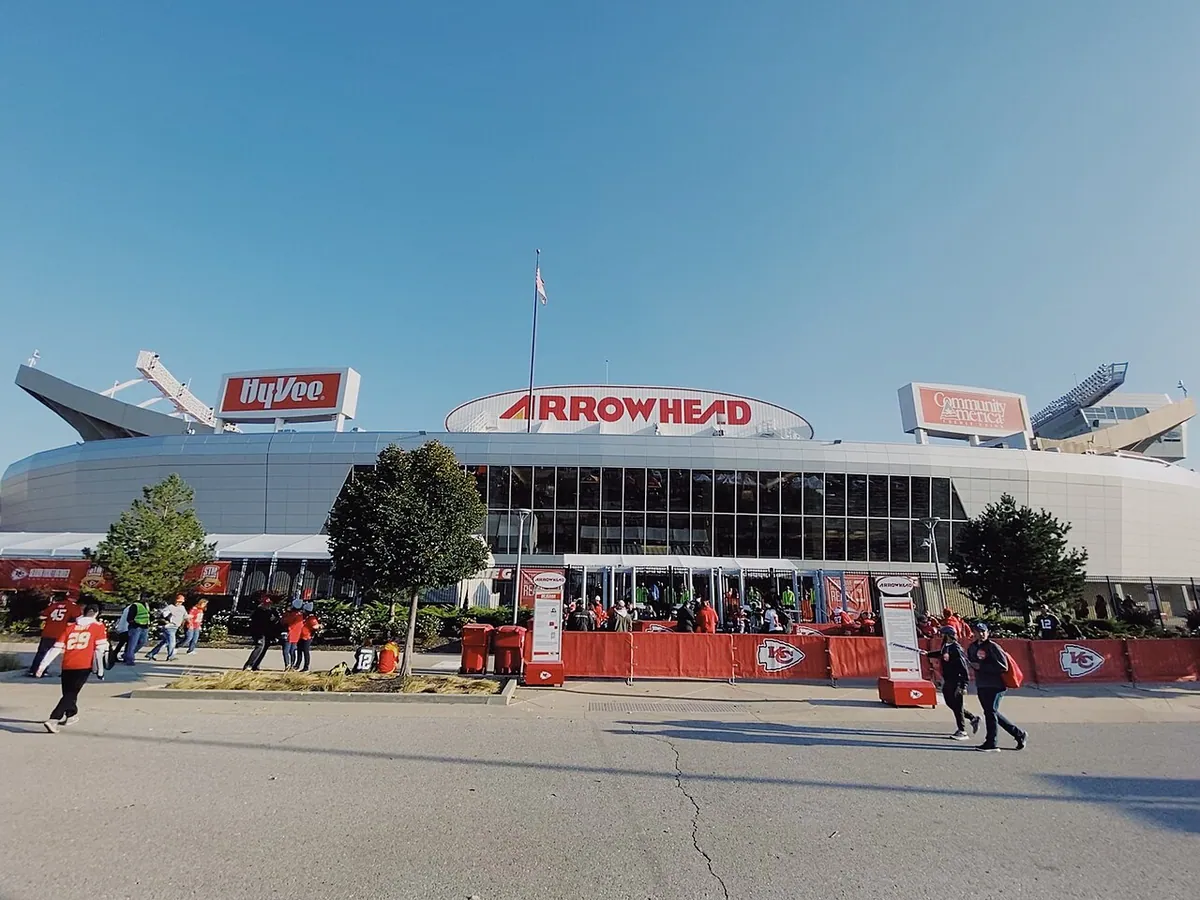
Today, the entire Chiefs fan base is widely known as Chiefs Kingdom, a term that encompasses the global community of supporters. The team actively fosters this community through its mascot programs and fan engagement. The modern Wolf Pack is also the name for a crew of international mascots managed by the Chiefs organization, who travel the world to spread enthusiasm for the team. The passion of Chiefs Kingdom is most visibly on display at GEHA Field at Arrowhead Stadium, which consistently ranks among the loudest outdoor stadiums in the world, a tradition that traces its roots back to the original Wolfpack's vocal support.
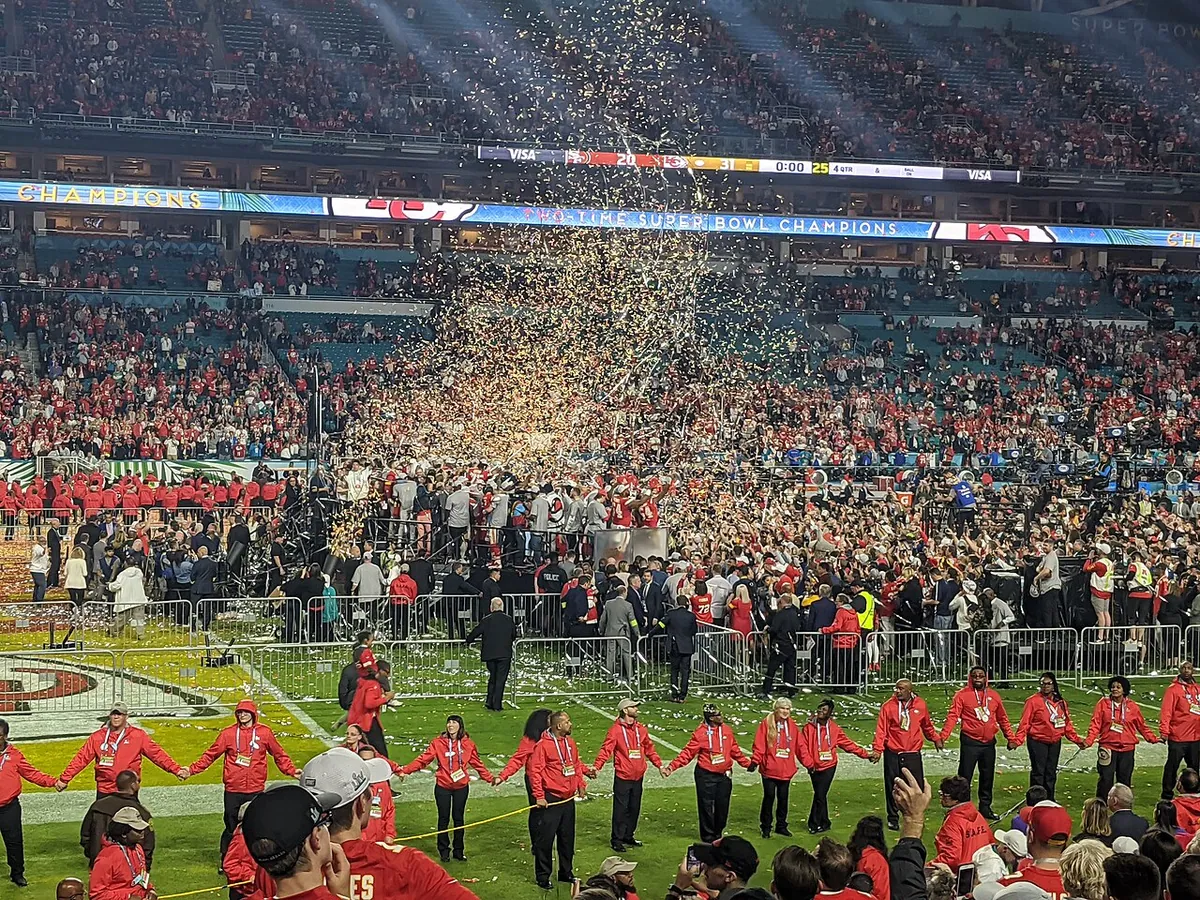
The Tomahawk Chop and Fight Song
The most recognizable fan tradition associated with the Kansas City Chiefs is the Tomahawk Chop chant and its accompanying arm motion. The chant, a rhythmic call-and-response between the stadium sound system and the crowd, swells throughout Arrowhead Stadium during key defensive stands and important moments. The motion involves fans moving their forearm up and down in a chopping motion in time with the chant's beat. This tradition, while controversial to some due to its appropriation of Native American imagery, remains a deeply ingrained part of the Chiefs' auditory identity and is passionately embraced by the majority of the fan base.
The team's fight songs include the Tomahawk Chop chant and '(You Gotta) Fight for Your Right (To Party!)'. The chant is often initiated in the stadium. Another song closely associated with the team is the Beastie Boys' "(You Gotta) Fight for Your Right (To Party!)", which is regularly played during games. The combination of the relentless chop chant, popular music, and the crowd's natural roar creates an overwhelming sensory experience for visitors and a significant home-field advantage for the Chiefs, who had a regular season record of 247-190 from the 1999 season through 2025.
Game Day Atmosphere at Arrowhead
The game day atmosphere at GEHA Field at Arrowhead Stadium is noted in the NFL, renowned for its volume and intensity. This deafening environment is a point of pride for Chiefs Kingdom and a strategic asset for the team. The pregame buildup includes player introductions, often accompanied by pyrotechnics and the team's signature music. KC Wolf roams the sidelines and end zones, engaging with fans and leading cheers. The cheerleaders perform on the field and on platforms around the stadium. A key ritual is the beating of the drum to start the Tomahawk Chop, which unifies the entire stadium. Tailgating in the vast parking lots begins hours before kickoff, featuring elaborate setups, barbecues, and communal gatherings that are a defining feature of Chiefs culture. This entire spectacle contributes to the Chiefs' strong record, which included an 8-3 start in the 2026 season through November 27.
Mascot and Fan Timeline
The evolution of the Chiefs' mascot and fan traditions is closely tied to the franchise's history in Kansas City. The team moved from Dallas in 1963 and quickly established its game day identity. The original Wolfpack fans made their mark in the 1960s, setting a standard for vocal support. The retirement of Warpaint and introduction of KC Wolf in 1989 marked a major shift toward modern sports entertainment. Dan Meers's 35-year tenure provided notable consistency, bridging the gap between the franchise's early AFL success and its modern dynasty.
- 1963: The Dallas Texans move to Kansas City and become the Chiefs. The live horse mascot Warpaint debuts around this time.
- 1960s: The Wolfpack fan group becomes famous at Municipal Stadium.
- 1972: The Chiefs move into Arrowhead Stadium.
- 1989: Warpaint is retired. KC Wolf debuts as the NFL's first modern mascot on September 17.
- 2009 to 2020: The Warpaint name is revived for a ceremonial horse.
- 2013: Dan Meers suffers severe injuries in a zip-line accident.
- 2025: Dan Meers retires after 35 years as KC Wolf.
- 2026: The Chiefs continue to play at GEHA Field at Arrowhead Stadium, with a new stadium slated for 2031.
Video
FAQ
What is the Kansas City Chiefs mascot?
The Kansas City Chiefs mascot is KC Wolf, a costumed wolf character. KC Wolf debuted in 1989 and is the NFL's first modern mascot. The mascot was named after the Wolfpack, a famous group of loud fans from the team's early days at Municipal Stadium. Before KC Wolf, the team's mascot was a live horse named Warpaint that ran the field from 1963 to 1988. The horse was ridden by a man in a headdress and was a fixture at games for 26 years.
Why is the Chiefs mascot a wolf?
The Chiefs mascot is a wolf to honor a historic group of fans called the Wolfpack. This unofficial fan club sat in the end-zone bleachers at the old Municipal Stadium in the 1960s and was known for being extremely loud and passionate. When the team created a new mascot in 1989, they chose the wolf as a tribute to these dedicated supporters, creating a direct link between the mascot and the team's fan history. The name KC Wolf permanently connects the character to that original, vocal fan base.
Who was the man behind KC Wolf?
Dan Meers was the performer inside the KC Wolf costume from the mascot's debut in 1989 until his retirement in June 2025. Meers served for 35 years, making him the longest-tenured mascot in NFL history. He performed at 375 games and five Super Bowls. In 2013, Meers suffered serious injuries in a zip-line stunt accident. He later wrote books and gave speeches about his experience.
What is the Chiefs fight song?
Instead, the team is famous for the Tomahawk Chop chant, a rhythmic call-and-response that sweeps through the stadium. The chant is accompanied by a chopping arm motion by the fans. Another song closely associated with the team is "(You Gotta) Fight for Your Right (To Party!)" by the Beastie Boys, which is frequently played during games. The combination of these sounds defines the audio environment of a Chiefs home game.
What are Kansas City Chiefs fans called?
Kansas City Chiefs fans are collectively known as Chiefs Kingdom. This term refers to the global community of supporters. Historically, a specific and famous subgroup of fans from the 1960s was called the Wolfpack, which inspired the name of the current mascot, KC Wolf. The passion of Chiefs Kingdom is most evident at Arrowhead Stadium, which is renowned for its record-breaking crowd noise.
Who performed as KC Wolf for 35 years?
Dan Meers performed as the Kansas City Chiefs mascot KC Wolf for 35 years. He wore the wolf suit for 375 games and five Super Bowls before retiring in June 2025. His tenure made him the longest-tenured mascot in NFL history. Meers also turned a severe zip-line injury from 2013 into a motivational speaking topic and authored books.
Sources
- Kansas City Chiefs (Wikipedia) Wikipedia
- K.C. Wolf | Kansas City Chiefs Mascot mascothalloffame.com
- Why do the Chiefs have a wolf as their mascot? - AS USA en.as.com
- nflverse game, roster and draft data nflverse (CC BY 4.0)