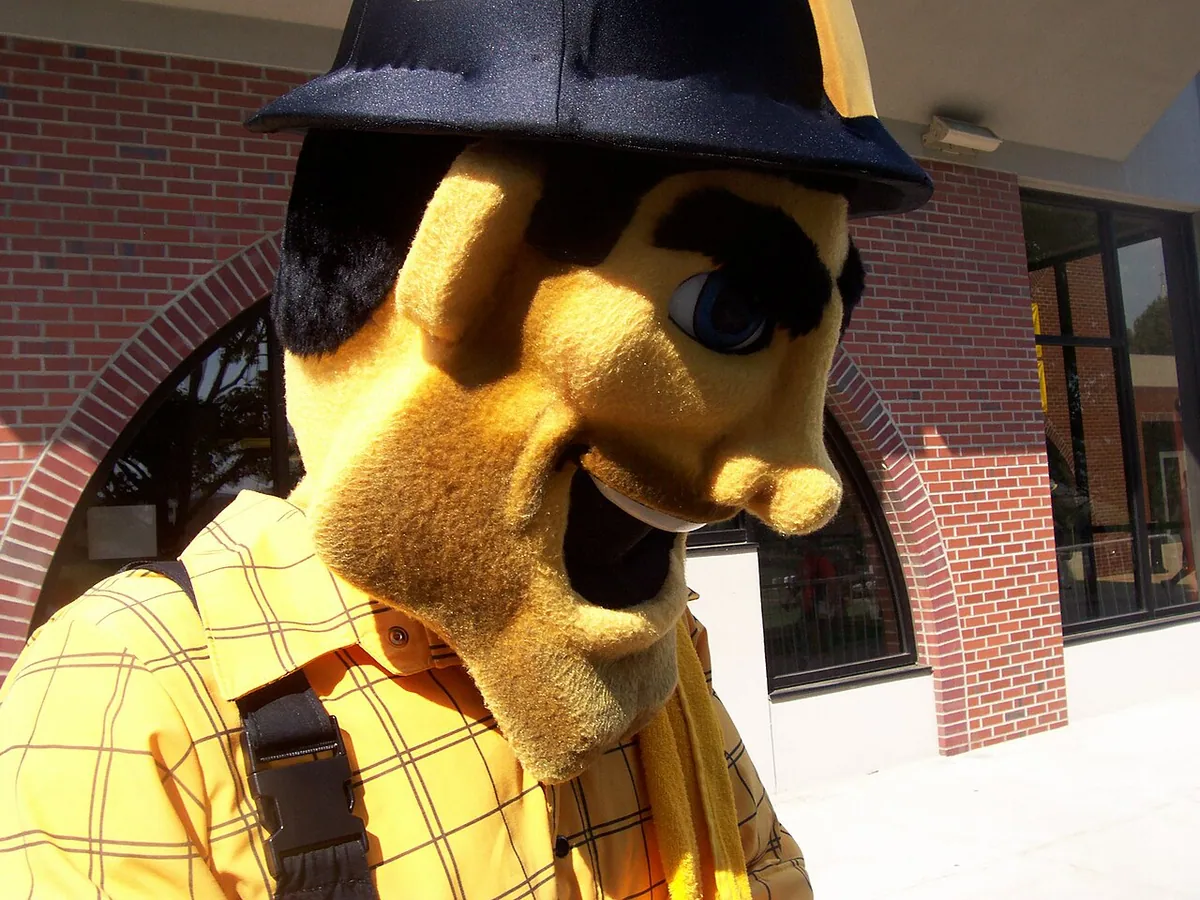
The official mascot of the Pittsburgh Steelers is Steely McBeam, a character introduced in 2007. Steely McBeam represents the team's connection to Pittsburgh's steel industry heritage and appears at home games and community events. The Steelers' fan culture is defined by the Terrible Towel, the fight song 'Renegade', and a massive, dedicated following known as Steeler Nation. This fan base supports a team with six Super Bowl titles and a record 16 conference championship game appearances.
Steely McBeam: The Official Mascot
His name was selected from over 70,000 fan submissions in a public contest. The character is designed to embody the blue-collar, industrial spirit of Pittsburgh, with his appearance modeled after a steelworker. Steely McBeam wears the team's black and gold colors, a hard hat adorned with the Steelers logo, and work boots. On game days at Acrisure Stadium, he is responsible for rallying the crowd, interacting with fans, and posing for photographs, with a particular focus on entertaining younger attendees. Beyond the stadium, Steely McBeam makes regular appearances at community events, charity functions, and local schools as an ambassador for the franchise. The mascot has become a staple of the modern game day experience, blending the team's historic identity with family-friendly entertainment. Officially licensed merchandise featuring Steely McBeam, including figures and hats, is widely available for fans.
The creation of Steely McBeam marked a shift for a franchise that had long operated without an official mascot. His design explicitly references the steel industry, which is the source of the team's nickname. The hard hat he wears is a direct symbol of Pittsburgh's industrial workforce. The mascot's presence is intended to create a bridge between the team's historic identity and new generations of fans. His activities are not limited to the football season, as he participates in year-round community outreach. The Steelers organization uses Steely McBeam to maintain a visible and engaging connection with the Pittsburgh area.
Sideline Personalities and Fan Figures
While the Steelers have an official mascot in Steely McBeam, the sideline atmosphere is also shaped by prominent superfans. One of the most recognizable is the fan known as Mascot Troy, who dresses in a full uniform resembling Hall of Fame safety Troy Polamalu, complete with a long, flowing wig. Mascot Troy has attended every Steelers game for at least the last five years and has been a fixture at Halloween home games since 2006. He has become a famous face amongst Steelers fans, often featured on social media and in fan publications. The energy for Steelers games is generated largely through fan rituals like the Terrible Towel wave and the collective response to the song 'Renegade'. This creates an environment where the crowd itself is a primary source of spectacle and noise. The team's identity, emphasizing toughness and a connection to the city's working-class roots, is reflected in these organic fan expressions.
The story of Mascot Troy illustrates how individual fans can become integral parts of the game day experience. His commitment to attending every game mirrors the dedication of the broader Steeler Nation. Other fan clubs and online communities, such as Fan of the Logo, also contribute to mobilizing and uniting supporters. These groups help sustain the team's widespread fan base beyond the stadium. The sideline culture at Acrisure Stadium is therefore a mix of the official mascot's activities and the unofficial but celebrated presence of dedicated superfans. This combination helps maintain a high-energy atmosphere focused on supporting the team on the field.
Steeler Nation and Fan Culture
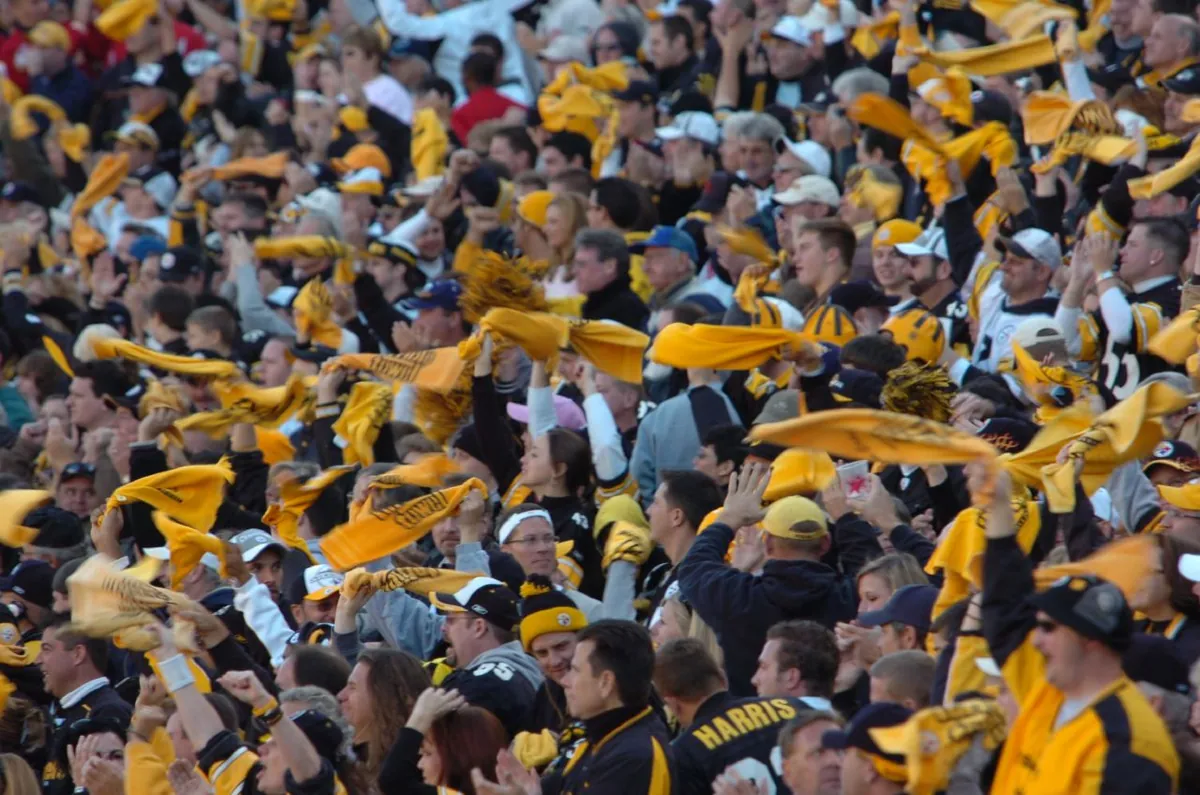
The Pittsburgh Steelers' fan base is unofficially known as Steeler Nation, a term coined by an NFL Films narrator. This fan community is renowned for its size, dedication, and geographic reach, with supporters located across the United States and beyond. Fans wave the Terrible Towel en masse during games, creating a striking visual and auditory effect throughout the stadium. The Terrible Towel has transcended its original purpose to become a powerful symbol of unity and support, with proceeds from its sales benefiting charity. Steelers home games are played at Acrisure Stadium, which opened in 2001 as Heinz Field and replaced Three Rivers Stadium. The stadium environment is consistently loud and passionate, fueled by a fan base that expects a physical, defensive brand of football, a legacy of the 1970s Steel Curtain teams.
The Steelers' on-field success has been a major driver in building this widespread fan community. They have made 16 conference championship game appearances, which is an NFL record, and have won eight AFC championships. This consistent performance from the 1970s through the present day has cultivated loyalty across multiple generations. The fan base's identity is deeply intertwined with the city of Pittsburgh's reputation for resilience and hard work. Steelers merchandise and the Terrible Towel are common sights in cities far from Pennsylvania, demonstrating the national scale of Steeler Nation. The team's ability to avoid extended losing periods, including a streak of non-losing seasons from 2007 to 2025, helps maintain the passion and size of this fan community.
Fight Songs and Game Day Atmosphere
The most famous musical tradition associated with the Pittsburgh Steelers is the playing of 'Renegade' by the rock band Styx. The song is played during the third quarter or fourth quarter of home games, typically during a critical defensive moment. When the opening chords of 'Renegade' echo through Acrisure Stadium, it triggers an immediate and intense reaction from the crowd, with fans waving their Terrible Towels and roaring. Another common chant is 'Here We Go', which serves as an unofficial fight song and rallying cry during key moments. The game day atmosphere is a blend of these audio cues, the visual spectacle of the waving towels, and the raw energy of the spectators. These traditions, from 'Renegade' to the Terrible Towel, are integral components of the Steelers' identity and are passed down through generations of fans. The experience is designed to unify the home crowd and support the team's defensive efforts.
The use of 'Renegade' contributes significantly to the home-field advantage at Acrisure Stadium. The song's association with defensive stands makes its timing a key part of the game's narrative. The collective response from Steeler Nation demonstrates how fan rituals can directly influence the stadium environment. The 'Here We Go' chant often arises spontaneously from the stands, showing the organic nature of fan participation. Together, these elements create a sensory experience that is unique to Steelers home games. The traditions reinforce the team's identity of toughness and collective effort, values that resonate with the Pittsburgh community. The fight songs and chants are as much a part of the team's lore as its historic players and championships.
Historical Context and Team Identity
The Pittsburgh Steelers' visual and cultural identity is deeply tied to the city's history. The team's logo, the Steelmark, was originally designed by U.S. Steel and was adopted by the franchise in 1962. The logo's three colored stars represent the materials used in steelmaking: coal, iron ore, and scrap metal. The team's name, colors, and mascot all derive from Pittsburgh's industrial heritage, which also informs the perceived character of the team and its fans. The concept of 'Steelers football' is synonymous with a tough, physical, and defensive-minded style of play, a legacy cemented by the 1970s dynasty. That team, featuring the famed Steel Curtain defense, won four Super Bowls in six years and established a standard of excellence.
The Steelers were founded on July 8, 1933, and are the seventh-oldest franchise in the NFL. They were originally named the Pittsburgh Pirates before adopting the Steelers name prior to the 1940 season. The team's modern era of success began with the hiring of coach Chuck Noll in 1969. Noll's drafts built the core of the 1970s teams, including the 1974 draft where he selected four future Hall of Famers: Lynn Swann, Jack Lambert, John Stallworth, and Mike Webster. In the 1970 AFL-NFL merger, the Steelers were one of three old-guard NFL teams moved to the American Football Conference to balance the leagues. This identity of resilience and hard work continues to define the franchise's operations and its connection to the community.
Stadium History and Venues
The Pittsburgh Steelers have played in three primary home stadiums since the 1999 season, each part of the franchise's evolution. From 1999 to 2000, the team played at Three Rivers Stadium, a multi-purpose facility they shared with the Pittsburgh Pirates baseball team. In 2001, the team moved to Heinz Field, a football-specific stadium built on Pittsburgh's North Shore. That venue was renamed Acrisure Stadium beginning with the 2022 season. The move to Heinz Field allowed for tailored football amenities and the development of the modern game day experience. The stadium's design incorporates the team's colors and history, with large displays of the Steelmark logo. The open north end of the stadium offers views of the Pittsburgh skyline, physically connecting the team to the city. The game day atmosphere at Acrisure Stadium is the product of decades of fan tradition adapting to a modern venue. The following list details the Steelers' home stadiums and their use since the 1999 season.
- Three Rivers Stadium: Home from 1999 through the 2000 season.
- Heinz Field: Home from the 2001 season through the 2021 season.
- Acrisure Stadium: Home from the 2022 season through the present 2026 season.
Coaching Legacy and Franchise Stability
The Pittsburgh Steelers are known for extraordinary stability in head coaching, having employed only four men in that role since the 1969 hiring of Chuck Noll. This consistency is a major factor in the team's sustained culture and identity. Chuck Noll coached from 1969 through the 1991 season, winning four Super Bowls and compiling a 209-156-1 regular season record. He was succeeded by Bill Cowher, who coached from 1992 through 2006, winning Super Bowl XL and posting a 149-90-1 regular season record. Mike Tomlin led the team from 2007 through the 2025 season, winning Super Bowl XLIII and never recording a losing season, with a 193-114-2 regular season record. Following Tomlin's departure, the team hired Mike McCarthy on January 26, 2026. This pattern of long tenures is unique in the modern NFL and provides a direct link from the team's historic identity to its present operations. The list below outlines the team's head coaches since 1969 and their tenures.
- Chuck Noll: 1969 to 1991 seasons.
- Bill Cowher: 1992 to 2006 seasons.
- Mike Tomlin: 2007 to 2025 seasons.
- Mike McCarthy: 2026 season to present.
This coaching stability extends to ownership, as the Rooney family has controlled the franchise since its founding in 1933. Art Rooney founded the team, his son Dan Rooney owned it from 1988 to 2017, and Dan's son Art Rooney II is the current team president. This combination of consistent ownership and coaching has allowed the Steelers to maintain a clear and distinct organizational philosophy. The team's identity, based on defense, toughness, and resilience, has been reinforced by each coaching regime despite changes in the NFL's style of play. The hiring of Mike McCarthy in 2026 reunited him with quarterback Aaron Rodgers, whom he previously coached to a Super Bowl XLV victory with the Green Bay Packers.
Modern Era Performance
The Steelers' performance on the field since the 1999 season has provided a strong foundation for fan engagement and loyalty. From the 1999 season through the 2025 season, the team compiled a regular season record of 271 wins, 163 losses, and 3 ties. Their playoff record over that same span was 15 wins and 15 losses in 30 postseason games. In the 2026 season, through games played on November 27, the team held a record of 7 wins and 4 losses. This period included a Super Bowl victory in the 2008 season under Mike Tomlin and another Super Bowl appearance in the 2010 season. The team's identity in the 2010s was partly defined by the offensive 'Killer B's' trio of Antonio Brown, Ben Roethlisberger, and Le'Veon Bell. In the late 2010s and early 2020s, the identity shifted back to a defensive focus led by players like T.J. Watt, the 2021 NFL Defensive Player of the Year, and Cameron Heyward.
The overall record from 1999 to 2025 includes Cowher's final eight seasons and all of Tomlin's tenure. This consistent winning has ensured that Acrisure Stadium remains a difficult venue for opponents. The team's ability to avoid extended losing periods, highlighted by Tomlin's streak of non-losing seasons, is a point of pride for the organization. Even during transitional periods at quarterback, the defensive philosophy and coaching stability have provided a recognizable product for fans. The team's record of 271-163-3 from 1999 to 2025 is a winning percentage that reflects sustained competitiveness over nearly three decades.
FAQ
What is the Pittsburgh Steelers mascot?
The Pittsburgh Steelers mascot is Steely McBeam. He was introduced in 2007 as part of the team's 75th-anniversary celebration. Steely McBeam is designed to look like a steelworker, wearing a black and gold uniform and a hard hat with the team logo. His name was chosen from over 70,000 fan submissions in a contest. He appears at all Steelers home games and numerous community events to rally fans and represent the franchise's connection to Pittsburgh's industrial heritage.
What is the Steelers fight song?
The most famous musical tradition associated with the Steelers is the playing of 'Renegade' by Styx. It is played during the third quarter or fourth quarter of home games, typically during a critical defensive moment. Fans also frequently chant 'Here We Go' as an unofficial rallying cry during games. These audio traditions are central to the intense game day atmosphere at Acrisure Stadium and are a key part of the team's home-field advantage. The song triggers a massive reaction from the crowd, who wave their Terrible Towels in unison.
What are Pittsburgh Steelers fans called?
Pittsburgh Steelers fans are collectively known as Steeler Nation. This term describes the team's massive, widespread, and dedicated fan base that extends far beyond the city of Pittsburgh. A central symbol of Steeler Nation is the Terrible Towel, a gold rally towel that fans wave during games. The fan culture is defined by toughness, loyalty, and a deep connection to the team's blue-collar identity and successful history, which includes six Super Bowl championships.
When was Steely McBeam introduced?
Steely McBeam was introduced in 2007. His creation was part of the Pittsburgh Steelers' 75th-anniversary celebration. Steely McBeam was designed to represent the steel industry roots of both the city and the team's nickname, and he has served as the team's official mascot ever since his debut. He appears at games and community events as a representative of the franchise.
What is the Terrible Towel and when was it introduced?
The Terrible Towel is a gold rally towel that is the most famous symbol of the Pittsburgh Steelers fan base. Fans wave the towels during games to show support and create a visually intimidating environment for opposing teams. Proceeds from sales of the Terrible Towel are donated to charity. It has become an famous piece of NFL fan culture synonymous with Steeler Nation and is a staple at every Steelers home game.
Who is the Steelers superfan known as Mascot Troy?
Mascot Troy is a prominent Pittsburgh Steelers superfan who dresses in a full uniform resembling Hall of Fame safety Troy Polamalu, including a long wig. He has attended every Steelers game for at least the last five years and has been at every Halloween home game since 2006. He quickly became a recognizable and famous face amongst Steelers fans. Mascot Troy represents the dedication of individual fans within the larger Steeler Nation community.
Sources
- Pittsburgh Steelers (Wikipedia) Wikipedia
- The Story Behind The Pittsburgh Steelers' Logo, Mascot, And Identity steelernation.com
- nflverse game, roster and draft data nflverse (CC BY 4.0)