The West Virginia Mountaineers football program represents West Virginia University in NCAA Division I FBS competition. The team first took the field in 1891 and has compiled an all-time record of 790 wins, 539 losses, and 45 ties. West Virginia competes in the Big 12 Conference and plays its home games at the 60,000-seat Milan Puskar Stadium in Morgantown. The program has won 15 conference championships and has made 41 bowl game appearances throughout its history. The Mountaineers have produced 14 Consensus All-Americans and 189 NFL players since 1974, with 102 of those players being selected in the NFL Draft.
Program Founding and Early History
The West Virginia University football program traces its origin to November 28, 1891, when its first team was defeated 72-0 by Washington & Jefferson on a converted cow pasture. Despite this inauspicious start, the program posted a 25-23-3 record before the turn of the century. The early 1900s saw periods of success, including 7-1 and 8-1 records in 1903 and 1905 respectively. The 1922 season remains the only undefeated campaign in program history, finishing with a 10-0-1 mark that included six consecutive shutouts to end the regular season. That successful season ended with a win against Gonzaga in the East-West Bowl, marking the Mountaineers' inaugural bowl game. The successes of the 1920s, under coaches like Clarence Spears and player-coach Ira Errett Rodgers, led to the construction of the first Mountaineer Field.
Coach Charles Tallman led the team to 6-4 records in 1934 and 1936, and his 1935 squad produced All-American and future Hall of Famer Joe Stydahar. Marshall Glenn guided the 1937 team to an 8-1-1 record and a Sun Bowl victory over Texas Tech. The 1948 team, under Dudley DeGroot, finished 9-3 and also won the Sun Bowl. The program integrated in 1963 under coach Gene Corum with the recruitment of Roger Alford and Dick Leftridge. This period established a foundation for the program's future growth and competitiveness.
Conference Membership and Moves
West Virginia's conference affiliation has evolved significantly over the decades. The program was a longstanding member of the Southern Conference, where it won eight championships between 1953 and 1967. The Mountaineers left the Southern Conference after the 1967 season and competed as an independent from 1968 through 1990. In 1991, West Virginia joined the Big East Conference, where it would win or share seven conference titles. The program moved to its current home, the Big 12 Conference, in 2012. This move marked a significant shift to a conference with a strong national profile and different regional opponents.
- Southern Conference member: 1950 to 1967 (8 championships in 1953, 1954, 1955, 1956, 1958, 1964, 1965, 1967).
- Independent: 1968 to 1990.
- Big 12 Conference member: 2012 to present.
Head Coaching Eras and Records
The West Virginia football program has been shaped by several notable head coaching tenures. Art "Pappy" Lewis led the team from 1950 to 1959, compiling a winning record and winning five Southern Conference titles. Bobby Bowden coached from 1970 to 1975, posting a 42-26 record before departing for Florida State. The longest and most impactful tenure belonged to Don Nehlen, who coached from 1980 to 2000. Rodriguez returned for a second stint as head coach beginning in 2025.
The coaching legacy at West Virginia is defined by periods of sustained success and the development of players who excelled at the collegiate and professional levels. Frank Cignetti's tenure from 1976 to 1979 was less successful in terms of wins but he recruited key future stars. Gene Corum's era from 1960 to 1965 included the program's final Southern Conference championships. Each coach contributed to building the program's identity and competitive standard.
National and Conference Championships
West Virginia has won or shared a total of 15 conference championships in its history. The program's eight Southern Conference titles were earned in 1953, 1954, 1955, 1956, 1958, 1964, 1965, and 1967. The Mountaineers have not yet won a Big 12 championship since joining the conference in 2012. The program has never claimed a recognized national championship in football. The 1922 team finished undefeated but was not awarded a national title by the selectors of the era. Conference championships have been the primary measure of the program's success, with the seven Big East titles representing a peak of achievement in the modern era. The quest for a Big 12 title remains a central goal for the program in its current conference alignment.
Bowl Game History
West Virginia has participated in 41 bowl games throughout its history, compiling a record of 17 wins and 24 losses. The program's first bowl appearance was the 1922 East-West Bowl. The Mountaineers have appeared in bowls across the decades, with notable consistency during the Don Nehlen era, which included 17 postseason appearances. The bowl record reflects the program's ability to reach the postseason regularly while facing challenging opponents from power conferences. More recent appearances have come in bowls as a member of the Big 12.
Main Rivalries
West Virginia maintains several historic football rivalries. The most prominent is the Backyard Brawl against the University of Pittsburgh, a series dating back over a century characterized by close games and intense fan passion. Another major rivalry is with Virginia Tech, known as the Black Diamond Trophy game, which was most active when both schools were in the Big East. The Mountaineers also have traditional rivalries with Penn State, Syracuse, and Maryland, though these series have been contested less frequently in recent years due to conference realignment. Since joining the Big 12, new conference rivalries have begun to develop with schools like Cincinnati.
The rivalry with Pittsburgh is considered one of the oldest and most intense in college football. The series with Virginia Tech often decided Big East championships in the 1990s and early 2000s. Games against Penn State and Maryland were key regional matchups when those teams were on the schedule regularly. These rivalries have defined many seasons and contributed significantly to the program's lore and fan engagement.
Milan Puskar Stadium
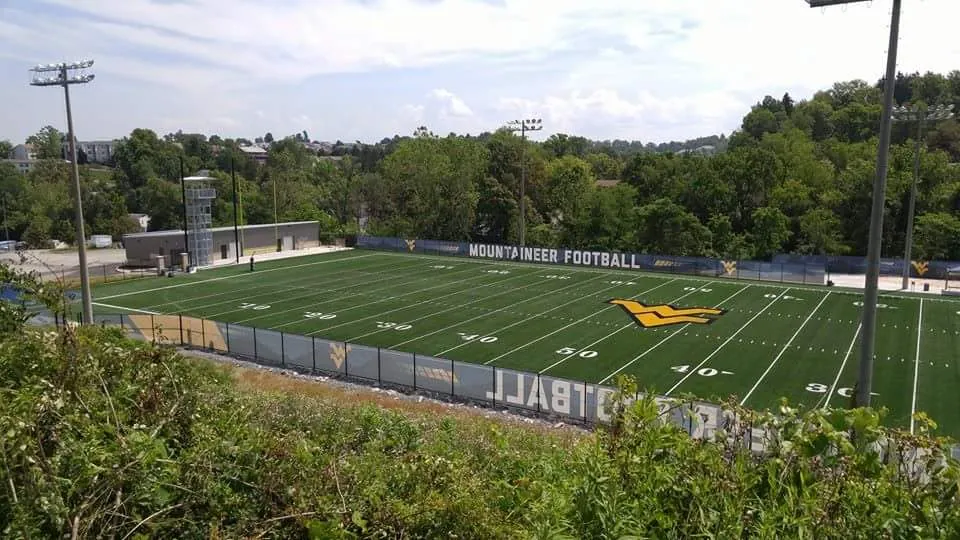
The West Virginia Mountaineers play their home games at Milan Puskar Stadium in Morgantown. The stadium opened in 1980 and currently has a seating capacity of 60,000. The stadium is known for its loud and passionate crowds, particularly during night games. A major press box structure that had stood for 46 years was demolished recently as part of ongoing stadium improvements. The venue has hosted numerous sellout crowds and is a key element of the game-day experience in Morgantown.
The stadium's construction coincided with the hiring of coach Don Nehlen. It replaced the original Mountaineer Field, which was located near the current site. Ongoing construction projects, including work on a west tower, periodically affect traffic and pedestrian access on game days. The atmosphere at Milan Puskar Stadium, fueled by the Mountaineer marching band known as The Pride of West Virginia, is a significant factor in the team's home-field advantage. The facility continues to be updated to maintain a modern environment for players and fans.
Heisman History and Notable NFL Players
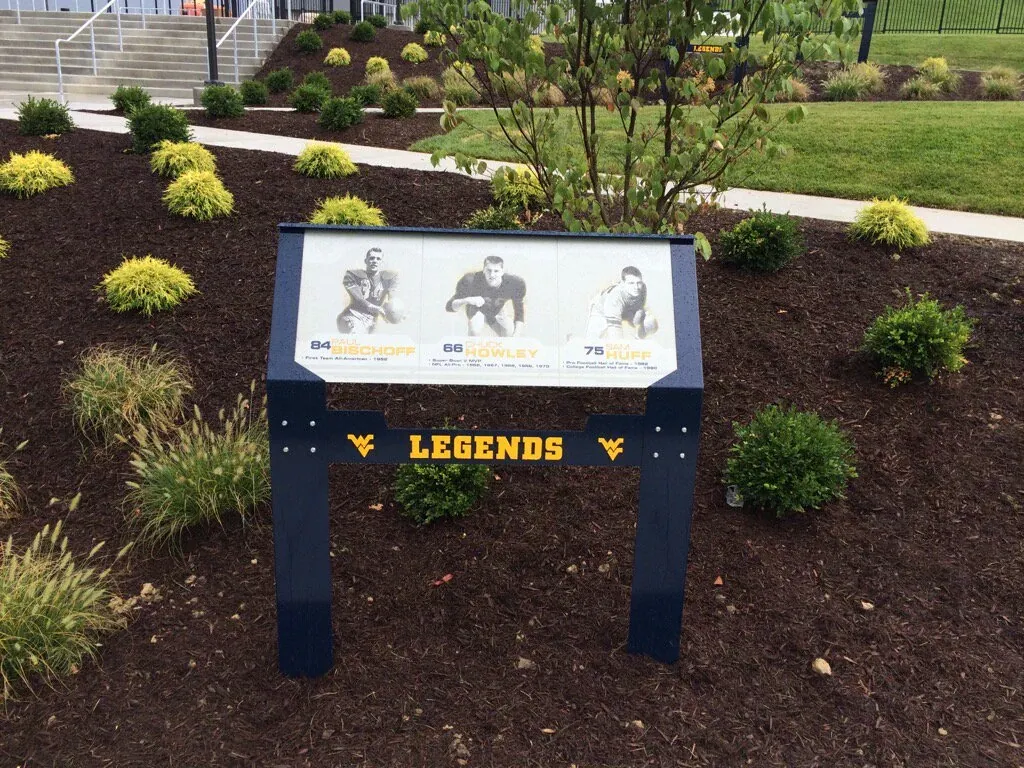
No West Virginia player has ever won the Heisman Trophy. The program has, however, produced 14 Consensus All-Americans and 189 NFL players since 1974. Of those, 102 were drafted, including nine first-round selections. Notable first-round NFL Draft picks include Adam Jones (2005), Bruce Irvin (2012), Tavon Austin (2013), and Karl Joseph (2016). The most recent first-round pick is Akheem Mesidor, selected 22nd overall by the Los Angeles Chargers in the 2026 NFL Draft. As of the 2026 season, 27 West Virginia alumni are on NFL rosters, including quarterback Geno Smith, offensive linemen Zach Frazier and Wyatt Milum, and defensive back Tykee Smith. Noted players like Sam Huff have been inducted into the College Football Hall of Fame. The program has a consistent record of producing professional talent, with at least one player drafted in most years since 2016, including five selections in both the 2016 and 2019 drafts.
NFL Draft Production and Current Pros
West Virginia has been a steady producer of NFL talent for decades. Since 1974, 189 Mountaineers have played in the league, with 102 of them being selected in the draft. The program has had nine players chosen in the first round of the NFL Draft. Draft activity has continued in recent years, with players selected in 2023, 2024, 2025, and 2026. The 2024 draft saw three West Virginia players chosen, while the 2026 draft produced a first-round selection in linebacker Akheem Mesidor. This consistent output demonstrates the program's ability to prepare athletes for the professional level.
| Recent Draft Year | Number of Players Drafted | Notable Pick(s) |
|---|---|---|
| 2016 | 5 | Karl Joseph (1st round) |
| 2026 | 1 | Akheem Mesidor (1st round) |
Recent Seasons and Current Era
As of November 2026, Rich Rodriguez is in his second season of his second stint as head coach. The team concluded its 2025 home schedule with a game against 20th-ranked Houston. The 2026 season schedule included a road game against No. 2 Utah. A West Virginia running back was named a semifinalist for the Doak Walker Award during the 2026 season. The program continues to develop NFL talent, with one player drafted in 2026 and three drafted in 2024. The Mountaineers' performance in the Big 12 remains competitive, as they seek their first conference championship in their current league.
The ongoing construction and updates at Milan Puskar Stadium signify the program's commitment to modern facilities and future growth. The team's official social media and sports information channels provide regular updates on games, such as the November 2026 matchup against Houston. The athletic department, led by athletic director Wren Baker, supports the football program's operations and strategic direction. The Mountaineers look to build on their historic success as they face the challenges of Big 12 competition. The program's future involves continuing to recruit and develop talent capable of winning at the highest level of college football.
NFL players from West Virginia
| Player | Pos | Years | Main team |
|---|---|---|---|
| Todd Sauerbrun | P | 1995–2007 | Chicago Bears |
| Geno Smith | QB | 2013– | Seattle Seahawks |
| Ron Wolfley | RB | 1985–1995 | Phoenix Cardinals |
| Adam Jones | DB | 2005–2018 | Cincinnati Bengals |
| Darryl Talley | OLB | 1983–1996 | Buffalo Bills |
| Patrick McAfee | P | 2009–2016 | Indianapolis Colts |
| Jeff Hostetler | QB | 1984–1998 | New York Giants |
| Marc Bulger | QB | 2001–2010 | St. Louis Rams |
| Renaldo Turnbull | LB | 1990–1997 | New Orleans Saints |
| Rich Braham | C | 1994–2006 | Cincinnati Bengals |
| Gary Stills | LB | 1999–2008 | Kansas City Chiefs |
| Mike Compton | G | 1993–2004 | Detroit Lions |
| Rasul Douglas | CB | 2017– | Philadelphia Eagles |
| Bruce Irvin | LB | 2012–2023 | Seattle Seahawks |
| Anthony Becht | TE | 2000–2011 | New York Jets |
Video
FAQ
What conference is West Virginia football in?
The West Virginia Mountaineers football team competes in the Big 12 Conference. Before that, the program was an independent from 1968 to 1990 and a member of the Southern Conference from 1950 to 1967. The move to the Big 12 marked a significant shift to a power conference with a national footprint. The Mountaineers have not yet won a Big 12 football championship.
Who is the current West Virginia football coach?
The current head coach of the West Virginia Mountaineers is Rich Rodriguez. As of the 2026 season, he is in his second season of his second stint leading the program. His overall record at West Virginia is 63 wins and 32 losses. Rodriguez is known for his innovative spread offense and has had a significant impact on the program's modern era.
What is the name and capacity of West Virginia's football stadium?
West Virginia plays its home games at Milan Puskar Stadium in Morgantown, West Virginia. The stadium opened in 1980 and has a seating capacity of 60,000. The stadium is undergoing updates, including the recent demolition of its 46-year-old press box structure. It is known for its energetic atmosphere, particularly during key conference games and rivalry matchups.
Has a West Virginia player ever won the Heisman Trophy?
No player from West Virginia University has ever won the Heisman Trophy. The program has produced 14 Consensus All-Americans, including noted players like Ira Errett Rodgers, Sam Huff, and Darryl Talley. The program's success has often been built on strong team performance. The program's success has often been built on strong team performance rather than a single superstar candidate for the sport's top individual honor.
How many West Virginia players are in the NFL?
West Virginia has a strong tradition of sending players to the NFL. Since 1974, 189 Mountaineers have played in the league, with 102 of them being drafted. As of the 2026 NFL season, 27 West Virginia alumni are on active rosters. Notable current NFL players include quarterback Geno Smith, offensive lineman Zach Frazier, and defensive back Rasul Douglas. The program produces a steady stream of professional talent, with at least one player drafted in most years, including a first-round selection in the 2026 draft.
When did the West Virginia Mountaineers football program begin?
The West Virginia Mountaineers football program began on November 28, 1891. Its first game was a 72-0 loss to Washington & Jefferson on a converted cow pasture. Despite this humble start, the program had a 25-23-3 record before the year 1900. This marked the beginning of over a century of Mountaineer football history.
Sources
- West Virginia Mountaineers football (Wikipedia) Wikipedia
- Football, West Virginia University.. wvusports.com
- nflverse game, roster and draft data nflverse (CC BY 4.0)