A football play is a planned action or strategy used to move the ball down the field during a game. It starts when the ball is put into action, either by the snap from the center or at the moment of a kickoff. The majority of plays happen during a down from the line of scrimmage following a snap. These planned actions can be simple or complex, and teams keep a record of them in a document called a playbook. The action of a play continues until the ball carrier is tackled, their forward progress is halted, they step out of bounds, or a forward pass hits the ground without being caught.
How a Football Play Works
A play from scrimmage officially starts when the center delivers the ball to a back, most often the quarterback. The action continues until one of several specific events occurs to end the down. The ball carrier is ruled down when any body part other than the hands or feet touches the ground, or when their forward progress is stopped in a stalemate where no further advance is possible. A play also ends if the ball carrier steps out of bounds or if a forward pass is not caught and touches the ground, which is ruled an incomplete pass. It is important to note that a fumble, where the ball touches the ground after being loose from a player's control, does not end the play, which continues until one of the other ending conditions is met. When the play concludes, officials spot the ball for the next down based on the point of maximum forward progress, except for an incomplete pass where the ball returns to the original line of scrimmage.
Offensive Formations and Requirements
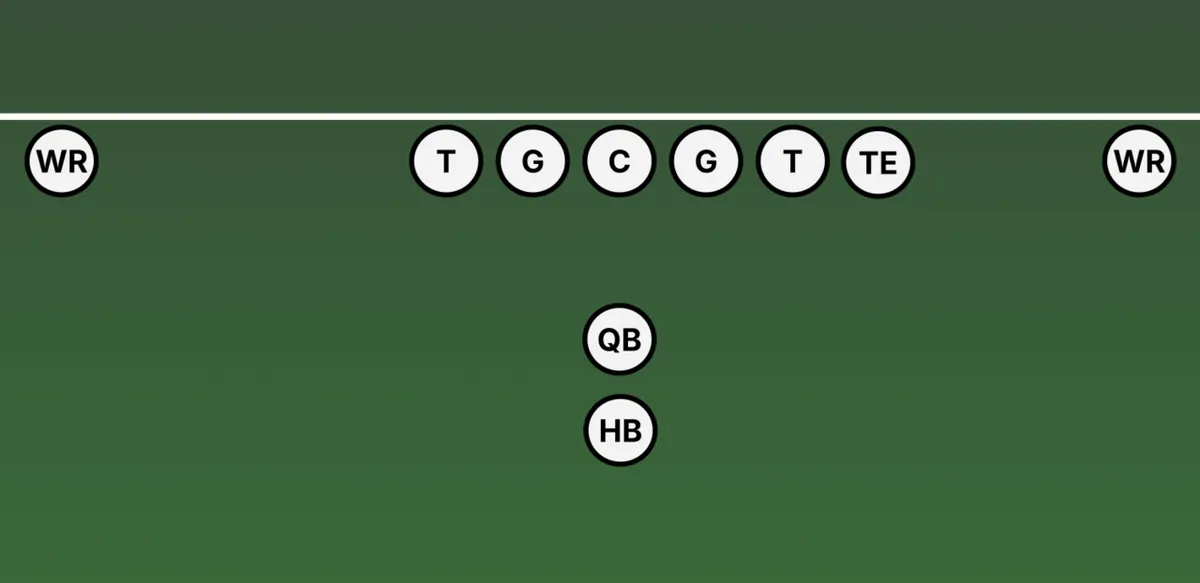
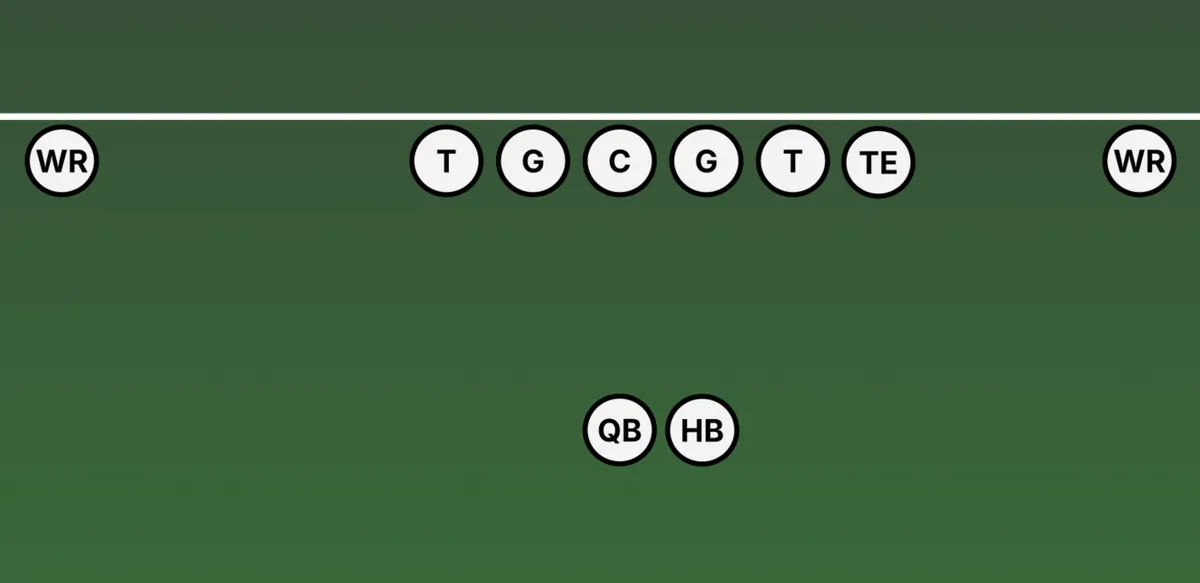
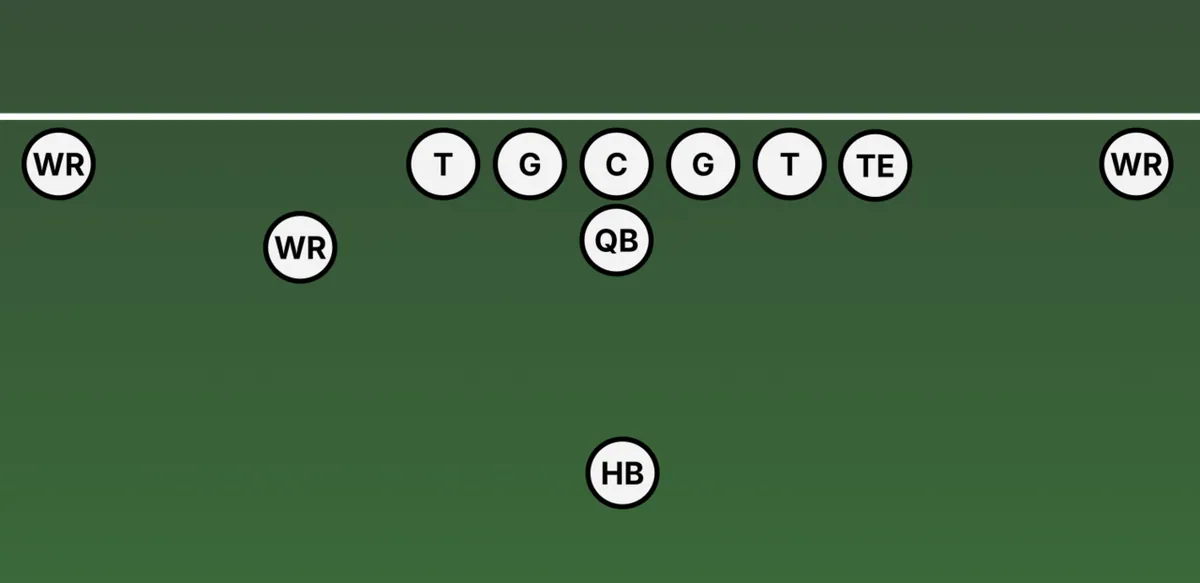
Before any play can begin, the offense must align in a formation. The rules require seven offensive players to be on the line of scrimmage at the snap, and these players can be positioned anywhere along that line which spans the width of the field. The defensive team may position up to all 11 of its players on the line, though typical alignments use between three and eight players there. Modern football commonly uses a few core formation categories to structure these alignments. The singleback formation, also called an ace or lone setback, features the quarterback under center with one running back lined up about five yards behind. The shotgun formation positions the quarterback five to seven yards behind the center, often with one or two halfbacks beside him, and is heavily used for passing. The pistol formation is a hybrid where the quarterback lines up about four yards deep, closer than in shotgun, with the halfback positioned directly behind him instead of beside him.
Formations are the stage from which all offensive plays are launched. The shotgun formation is one of the most common in the modern game, and while often considered a passing formation, teams increasingly run several types of plays from it. The pistol formation blends elements of the singleback and shotgun setups. These formations dictate the initial positioning of players and create the framework for the specific play action that follows the snap, whether it is a run, pass, or trick play.
Types of Running Plays
Running plays are designed to advance the ball by handing it to a ball carrier who attempts to gain yardage on the ground. A basic run is up the middle, also called a dive or plunge, where the running back aims for a hole between the center and guard (A gap) or guard and tackle (B gap). An iso or halfback lead play isolates the fullback on a linebacker to clear a path for the halfback. The off-tackle run, a staple of run-oriented offenses, directs the back to the spot just outside the offensive tackle, allowing for more improvisation in open space. A sweep involves the fullback heading toward the sideline, often with pulling guards leading the way, as famously used in Vince Lombardi's Packers sweep. A counter or misdirection play has the runner initially step away from the intended direction before cutting back to exploit over-pursuing defenders.
Other running plays use deception or quarterback involvement. A draw or delay play has the offensive line initially pass block to lure defenders forward before the quarterback hands off to a back charging through the vacated area. In a bootleg, the quarterback fakes a handoff and runs with the ball opposite the running back's path, sometimes without any blockers in a naked bootleg. The quarterback sneak is a short-yardage play where the quarterback takes the snap and immediately dives forward near the center. Trick runs include the end-around, where a wide receiver takes a direct handoff, and the reverse, where a running back hands off to a wide receiver going the opposite direction. The option play, more common in college football, gives the quarterback the choice to run or pitch based on a defender's reaction, with forms like the veer used at multiple levels.
- Up the Middle/Dive: Run through the A or B gap between linemen.
- Off Tackle: Run to the area outside the offensive tackle.
- Sweep: Run toward the sideline with pulling linemen leading.
- Counter: Misdirection play where the runner cuts back against the flow.
- Draw: Delayed handoff after a fake pass set.
- Bootleg: Quarterback run after a fake handoff.
- Option: Quarterback reads a defender and chooses to run or pitch.
- Reverse: Handoff from a running back to a wide receiver running the opposite direction.
Types of Passing Plays and Routes
Passing plays advance the ball through the air via a forward pass from behind the line of scrimmage. Success depends on the quarterback's protection and receivers running precise routes. Common deep routes include the go, seam, or fly, where the receiver runs straight downfield to outrun coverage. The post route has the receiver run deep then angle inward toward the center of the field, originally toward the goal posts. Shorter timing routes include the out, where a receiver runs 7-10 yards and cuts 90 degrees toward the sideline, and the in, drag, or dig, which is the same cut but toward the middle of the field. A slant route involves a hard cut after running straight for 5-8 yards. A hook or hitch route has the receiver stop and turn back toward the quarterback after a predetermined distance.
Other passing concepts are designed to create easy completions or deceive the defense. A screen pass is thrown behind the line to a receiver or back, allowing blockers to get out in front. A bubble screen is a quick throw to a receiver who started bunched with others, typically the one farthest behind the line of scrimmage. The play-action pass uses a fake handoff to draw defenders toward the line before the quarterback pulls the ball back to pass. In advanced offenses, receivers may run option routes, reading the defense and adjusting their pattern based on coverage. Trick passing plays include the halfback pass, flea flicker, hook and lateral, and double pass.
| Route Name | Description | Common Depth |
|---|---|---|
| Go/Fly | Straight deep route parallel to sideline | Deep |
| Out | 90-degree cut toward sideline | 7-10 yards |
| In/Dig | 90-degree cut toward middle | 7-10 yards |
| Slant | 45-degree cut left or right | 5-8 yards |
| Hitch/Hook | Stop and turn back to QB | Variable |
Key Football Play Terminology
Understanding play calls and diagrams requires knowledge of specific football terms. Blocking techniques are fundamental, with run blocking being an active push to move defenders and pass blocking a more passive step back to protect the quarterback. A lead block occurs when a player precedes the ball carrier to clear a path, while a pull is when an offensive lineman steps back and moves laterally to block elsewhere. The pocket is the protected area around the quarterback created by the offensive line. Gaps are the spaces between offensive linemen that defenders try to shoot through, while a hole is the space a ball carrier aims for on a run. The snap is the center's act of passing the ball to start the play. A forward pass moves toward the opponent's goal line, and a lateral or backward pass moves parallel or away from it. A handoff is a direct transfer of the ball from one player to another.
Formations and play types also have their own lexicon. The singleback, shotgun, and pistol describe how players line up. The pistol formation is popular for run-pass options (RPOs). The Packers sweep was the central play in Vince Lombardi's run-to-daylight offense. A trap play involves a guard pulling to blindside an unblocked down lineman. A counter play is also called a misdirection. A draw is also called a delay. A bootleg can be run naked, meaning without any blockers. The option play forces defensive players to commit to either preventing the pitch or tackling the quarterback. Mastery of this vocabulary allows players to execute complex playbooks and fans to better understand the strategic layers of the game.
Defensive Plays and Formations
While offensive plays aim to gain yards, defensive plays and formations are designed to stop them. A fundamental defensive tactic is the pass rush, where linemen and sometimes other defenders charge the quarterback to force a hurried throw. Defenses align in specific formations before the snap. Common defensive formations include the 4-3 defense, which uses four defensive linemen and three linebackers. In certain situations, defenses will use a nickel defense, a dime package, or a quarter package. Defenses may also employ a Bear Front alignment. These formations structure how the defense positions its players to counter the offensive play call.
The defensive formation chosen influences how the play develops. The 4-3 defense is a standard alignment with four players on the line. The 3-4 defense is another common defensive formation. The nickel defense adds an extra defensive back to the field for pass coverage. The dime and quarter packages involve substituting even more defensive backs onto the field. The Bear Front is a defensive formation. The choice of formation is a response to the offensive personnel and the game situation, setting the stage for whether defenders will primarily rush the passer or drop into coverage.
Play Usage Across Different Levels of Football
The complexity and prevalence of certain plays vary significantly between professional, college, and youth football. The option play is rarely seen outside of college football, as high school teams often lack the skill to execute it properly, and NFL defensive players are quick enough to disrupt it. College football teams West Virginia, Air Force, and Florida in the 2000s often employed this play style. The option requires a very fast and mobile quarterback to execute and carries considerable risk of a fumble or injury. In the NFL, there has been increased usage of read-option and RPO offenses since the 2010s with an increasing number of dual-threat quarterbacks, showing how plays evolve between levels.
Youth and flag football emphasize safety and learning, with plays designed to be simple and fun. Flag football formations for 5-on-5 or 7-on-7 use basic routes like hitches, slants, outs, posts, corners, and flies. Coaches at this level teach combination routes, such as pairing a slant with an out route to create crossing patterns that confuse defenders. The combination of a slant and an out is a classic, effective technique because as two players cross directions, their defenders are often unable to track them. The focus is on building a strong foundation of fundamentals before introducing more complex plays. Resources for flag football provide play diagrams and playbooks for these entry levels of the sport.
Historical Development and Notable Plays
Football plays have evolved from simple strategies into the complex systems seen today. The Packers sweep involved the fullback running towards the sideline with pulling guards leading the way, embodying a philosophy of precise execution. The shotgun formation, while one of the most common in the modern game, was once a less frequent sight but has become central to many passing attacks. The pistol formation is a more recent hybrid of the singleback and shotgun formations, developed to offer offensive flexibility.
Trick or gadget plays have a long history of catching defenses off guard. These plays are designed to appear to be one type of play while in reality being another. Common examples include the reverse, the halfback pass, the flea flicker, the hook and ladder, and the double pass. A notable example executed on the sport's biggest stage is the touchdown pass from Pittsburgh Steelers wide receiver Antwaan Randle El to Hines Ward in Super Bowl XL. The Seattle Seahawks' Jon Ryan threw a touchdown to Garry Gilliam in the 2014 NFC Championship Game. These plays demonstrate the creative and unpredictable elements that remain a part of football strategy at all levels.
Video
FAQ
What is a play in American football?
A play in American football is a planned action or strategy used to move the ball down the field. It begins at the snap from the center or at kickoff and involves all 11 offensive players executing specific assignments against the defensive alignment. The play continues until the ball carrier is down, forward progress stops, the ball carrier goes out of bounds, or a forward pass hits the ground incomplete. Teams document their collection of plays in a book called a playbook.
What are the most common types of football plays?
The most common types of football plays are running plays and passing plays. Basic running plays include dives up the middle, off-tackle runs, sweeps, and counters. Common passing plays involve routes like slants, outs, posts, and go routes. Play-action passes, which fake a run before throwing, and screen passes, which throw behind the line to set up blockers, are also frequently used. Trick plays like reverses or halfback passes are less common but designed to surprise the defense.
What is the difference between a formation and a play?
A formation is how the offensive or defensive players line up before the snap, setting the stage for the action. Common offensive formations include the singleback, shotgun, and pistol. A play is the specific action that occurs after the snap, detailing each player's assignment, such as which hole a running back attacks or which route a receiver runs. A single formation can be used to run many different plays, providing versatility and disguise.
What are some basic flag football plays for beginners?
Basic flag football plays for beginners focus on simple, clear routes. A hitch route has a player run seven yards straight then quickly pivot backwards toward the quarterback. A slant route involves a forward run of a couple yards then a 45-degree cut. An out route is a five-yard run followed by a 90-degree cut toward the sideline. A post route has a player run seven yards then cut at a 45-degree angle toward the center of the field. A fly route is simply running straight downfield as fast as possible.
What is a play-action pass in football?
A play-action pass is a play designed to look like a run in order to deceive the defense. The quarterback takes the snap and fakes a handoff to a running back, often while the offensive line initially acts as if they are run blocking. The quarterback then pulls the ball back and drops to pass. The goal is to make linebackers and safeties step forward to stop the perceived run, which opens up passing lanes behind them downfield. It is essentially the opposite of a draw play and is used to slow down the pass rush and create mismatches in the secondary.
What is the order of events that ends a play from scrimmage in American football?
A play from scrimmage ends when the ball carrier is down, when the ball carrier's forward progress is stopped, when the ball carrier steps out of bounds, or when a forward pass touches the ground before it is caught, which is an incomplete pass. The play begins with the snap from the center to a back, usually the quarterback. If the ball carrier is downed or forward progress is stopped, the ball is placed at the point of its maximum forward progress. For an incomplete pass, the ball returns to the previous line of scrimmage for the next down.
Sources
- American football plays (Wikipedia) Wikipedia
- NFL FLAG Football Plays & Formations | Best Flag Routes nflflag.com
- Football Plays and Formations Explained coversports.com