In American football, a position is the specific role a player takes on the field. The sport divides its players into three distinct units: the offense, which has possession of the ball and tries to score. The defense, which tries to stop the offense and regain the ball. And special teams, which handles all kicking plays. Each team fields 11 players at a time, and modern rules allow for unlimited substitutions between plays, leading to highly specialized roles. The rules strictly govern the offense's formation, requiring at least seven players on the line of scrimmage, while the defense has more flexibility in player alignment.
Offensive Positions and Formations
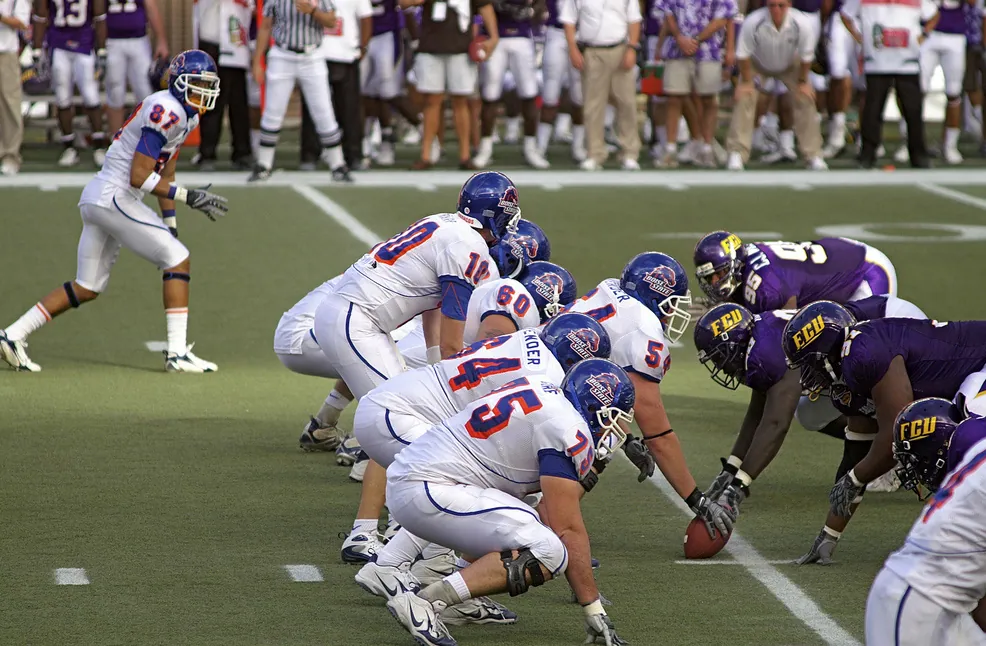
The offensive team's objective is to advance the ball toward the opponent's end zone to score points. The 11 offensive players are governed by a key formation rule: at least seven players must be on the line of scrimmage, with no more than four players, known as backs, positioned behind it. The players on the ends of the line and all backs are eligible to handle the ball, making them the skill positions, while the interior linemen are ineligible to catch forward passes. The offense is typically split into two groups: the five offensive linemen, whose primary duty is to block, and the backs and receivers, who are responsible for moving the ball.
The offensive line consists of the center, two guards, and two tackles. The center begins every play by snapping the ball to the quarterback and is responsible for calling blocking assignments. Guards line up on either side of the center and are key blockers on running and passing plays. They sometimes pull from their position to lead block on sweeps, traps, or screens. Tackles play outside the guards and are crucial for pass protection, with the left tackle often being the most skilled lineman to protect a right-handed quarterback's blind side.
The skill positions include the quarterback, running backs, wide receivers, and tight ends. The quarterback is the offensive leader, receiving the snap from the center and deciding whether to hand off, pass, or run the ball himself. Running backs, which include tailbacks and fullbacks, line up behind the offensive line and are primary ball carriers on rushing plays. Fullbacks are often larger and serve as lead blockers. Wide receivers are fast pass-catching specialists who line up split wide near the sidelines, with those on the line called split ends and those off the line called flankers. Tight ends are hybrid players who line up next to the tackles, serving as both blockers and receivers, with the H-back being a variation that lines up as a back.
Defensive Positions and Common Alignments
The defensive team's objective is to prevent the offense from scoring and to take possession of the ball by forcing turnovers, such as fumbles or interceptions, or by stopping the offense from gaining a first down. Unlike the offense, defensive players are not restricted by formation rules and may line up anywhere on their side of the line of scrimmage. Over time, standard defensive roles have emerged, organized into three groups: the defensive line, linebackers, and defensive backs, collectively known as the secondary. Defensive formations are often described by a numerical code, such as 4-3 or 3-4, where the first number indicates defensive linemen and the second indicates linebackers, with the number of defensive backs making up the remainder of the 11 players.
The defensive line consists of players who line up directly opposite the offensive line to stop the run and pressure the quarterback. Defensive tackles, including the nose tackle, line up in the center of the line to clog running lanes and rush the passer. The nose tackle is used in 3-4 formations or goal-line situations, lining up directly in front of the offense's center. Defensive ends line up outside the tackles and are responsible for containment of outside runs and rushing the quarterback, with the faster end often positioned on the quarterback's blind side. Defensive linemen often begin plays in a three-point or four-point stance with one or both hands on the ground.
Linebackers play behind the defensive line and are versatile defenders responsible for stopping the run, covering receivers, and blitzing the quarterback. The middle linebacker, often called the Mike linebacker, is frequently the primary defensive play caller and must react to a wide variety of offensive actions. Outside linebackers set the edge against outside runs and are tasked with covering tight ends or rushing the passer on blitzes. Defensive backs, the last line of defense, include cornerbacks and safeties. Cornerbacks primarily cover wide receivers, while safeties provide deep pass coverage and run support, with the strong safety playing closer to the line and the free safety being the deepest defender. Formations with five defensive backs are called a nickel package, and with six, a dime package.
- Defensive Tackle (DT): Functions include rushing the passer and stopping running plays directed at the middle.
- Nose Tackle (NT): Used in 3-4 formations, lines up directly opposite the center.
- Defensive End (DE): Functions include attacking the passer and stopping offensive runs to the outer edges.
- Middle Linebacker (MLB): Often the primary defensive play caller, capable of stopping runs, covering passes, and rushing.
- Outside Linebacker (OLB): A hybrid athlete who sets the edge on runs and either blitzes or drops into coverage.
- Cornerback (CB): Attempts to prevent successful passes by swatting the ball away or intercepting it.
- Safety (S): The last line of defense, with the free safety often the deepest player and the strong safety providing run support.
Special Teams and Specialist Roles
Special teams are the units on the field during all kicking plays, which include kickoffs, punts, field goals, and extra point attempts. While many players from the offensive and defensive platoons also participate on special teams, some roles are unique to the kicking game. These units are crucial for controlling field position and scoring points directly through field goals. The rules for player numbers and eligibility still apply during special teams plays, but the objectives and strategies are distinct from standard offensive or defensive downs.
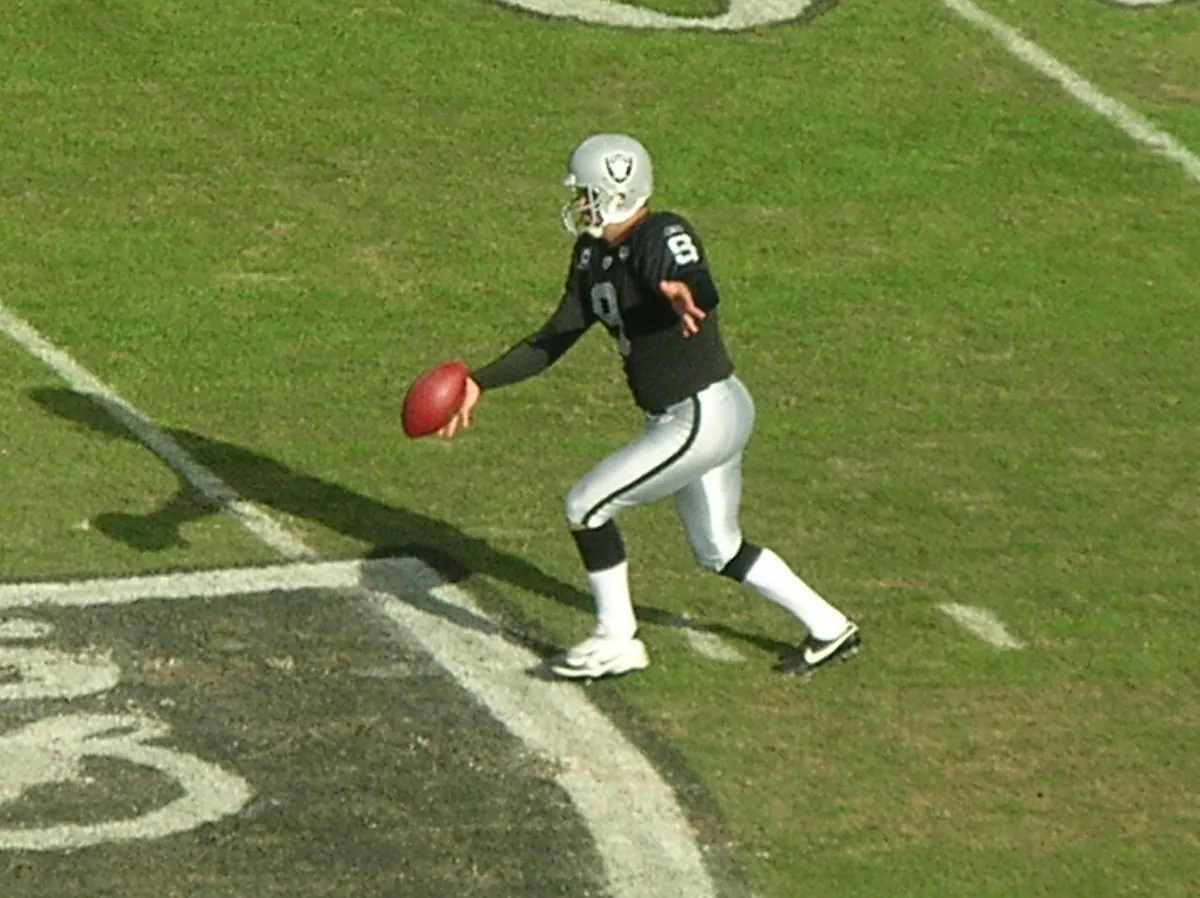
The primary specialist positions are the placekicker and the punter. The placekicker, often simply called the kicker, is responsible for kickoffs, field goals, and extra points. They must kick the ball off the ground, either from a holder's hands or a tee. Some teams employ two kickers, and kickoff specialists, used exclusively for kickoffs, are rare. The punter handles punting situations, kicking the ball to the opposing team to flip field position when the offense fails to gain a first down. While rare, the same player may serve as both kicker and punter.
Other special teams roles are filled by position players. On kickoffs and punts, coverage units consist of players who sprint downfield to tackle the returner. The return units feature players who catch the kick and attempt to advance it upfield. Blockers are used to protect the returner, while other players are tasked with quickly covering the kick. Long snappers are specialized centers who deliver accurate snaps for punts and field goals, while holders catch the snap and place it for the kicker. Successful special teams play requires precise timing and coordination.
NFL Numbering Rules and Position Eligibility
The NFL rulebook strictly governs the jersey numbers players may wear, and these numbers are directly tied to player eligibility. This rule is designed to help officials, players, and fans quickly identify a player's position and what they are legally allowed to do on the field. The numbering system is not a style choice but a functional part of the game's regulations. A player wearing a number outside his assigned range can be penalized, and these rules ensure clarity regarding which players are eligible to catch forward passes.
This eligibility rule is fundamental to offensive strategy. The five interior offensive linemen, wearing numbers 50-79, are ineligible receivers. Only the players on each end of the line of scrimmage and the four backs are eligible. This is why an offensive tackle catching a pass results in a penalty. The rulebook states that eligible pass receivers must be wearing numerals 0-49 or 80-89. Games are often won by the five linemen who never touch the ball, as they block for the quarterback and open gaps for runners. The numbering system provides the quickest visual cue for understanding the complex roles on the field before the ball is even snapped.
Evolution of Positions and Modern Trends
Football positions have evolved significantly from the sport's early days, driven by rule changes, strategic innovations, and the increasing specialization of athletes. The adoption of unlimited free substitutions was a major change, allowing teams to deploy separate offensive, defensive, and special teams units with players tailored for specific tasks. This shift away from two-way players led to the development of the complex platoon system seen today. Rule changes, such as the legalization of the forward pass and subsequent modifications to encourage passing, directly created the need for positions like wide receiver and safety.
Offensive formations have continuously evolved to exploit defensive weaknesses. For many years, a standard set consisted of the quarterback, two running backs, two wide receivers, and a tight end. The position known as the H-back is a modification of the tight end position that lines up behind the line of scrimmage. Slot-backs are usually only found in certain offensive alignments, such as the flexbone formation.
Defensive schemes have adapted in response to offensive trends. The two most common formations are the 3-4 defense and the 4-3 defense. Some defensive formations will directly indicate the number of defensive backs, such as the 3-3-5 defense, which has 3 defensive linemen, 3 linebackers, and 5 defensive backs. The rise of pass-heavy offenses has led to the increased use of nickel and dime packages, making the nickelback and dimeback common situational positions. Linebackers are versatile all-around defenders, doing a little bit of everything to help stop the offense. This ongoing strategic development ensures that the roles and responsibilities of football positions continue to be defined and refined.
Key Differences Across Levels of Play
While the basic positions and rules are consistent, there are notable differences in how positions are utilized and emphasized across different levels of competition. These differences stem from variations in player skill, coaching philosophy, and rule sets. College football teams often have larger rosters than high school teams, which can influence how players are deployed. High school teams often have smaller rosters, which can influence how players are deployed on both offense and defense.
One difference can be seen in offensive formations and the use of personnel. Modern NFL games often feature passing plays more commonly, though running plays remain integral. In college football, certain offensive alignments like the flexbone formation utilize slot-backs, a type of running back who lines up outside the tackle or tight end. The fullback position, which acts primarily as a blocker, may be used more frequently in some systems at the college level where run-heavy schemes are emphasized. The tight end position is considered a hybrid because it is a cross between a wide receiver and an offensive lineman, a role that is valued at all levels.
Defensive strategies also show variation based on the offensive threats presented. In the NFL, defensive formations like the 3-4 or 4-3 are standard, with coaches adjusting based on opponent personnel. At the college level, defenses must prepare for a wider range of offensive systems, from traditional pro-style attacks to option-based offenses. The use of specialty defensive backs, such as nickelbacks and dimebacks, is a tactic employed when there is a need to cover additional receivers, a situation that arises frequently in modern football. The outside linebacker is described as a versatile hybrid athlete, a role that requires adaptability regardless of the level of play.
Video
FAQ
What are all the positions in American football?
American football positions are divided into three units: offense, defense, and special teams. Key offensive positions include the quarterback, running back, wide receiver, tight end, center, guard, and tackle. Key defensive positions are defensive tackle, nose tackle, defensive end, linebacker, cornerback, and safety. Special teams features the placekicker and punter. Each team fields 11 players at a time, and players specialize in specific roles within these units, with modern rules allowing for unlimited substitutions between plays.
What does a quarterback do?
The quarterback is the leader of the offense and one of the most important positions on the field. He receives the snap from the center to start each play and then decides whether to hand the ball off to a running back, throw a forward pass, or run with the ball himself. The quarterback communicates the play called by the coaches to the team in the huddle and may change the play at the line of scrimmage based on the defensive alignment, an action called an audible. His success in reading defenses and executing plays directly determines his team's ability to move the ball and score points.
What is the difference between a safety and a cornerback?
Both safeties and cornerbacks are defensive backs, but they have different primary responsibilities. Cornerbacks line up on the wide parts of the field, usually directly across from the opposing wide receivers, and their main job is to prevent completed passes through coverage or interceptions. Safeties are the deepest players on defense and serve as the last line of defense. The free safety typically focuses on deep pass coverage, while the strong safety plays closer to the line of scrimmage to help stop the run. Safeties must be sure tacklers because they often face ball carriers who have broken through the first two levels of the defense.
Why do offensive linemen have specific jersey numbers?
In the NFL, jersey numbers are regulated by the rulebook and indicate a player's position and eligibility. Offensive linemen are assigned numbers 50 through 79. This numbering rule designates them as ineligible receivers, meaning they cannot legally catch a forward pass unless they report to the referee as eligible before the play. This system helps officials, players, and fans quickly identify who is allowed to be a receiver. The rule ensures clarity on the field, as only players wearing numbers 0-49 or 80-89 are eligible receivers by default, which includes quarterbacks, running backs, tight ends, and wide receivers.
What is a 3-4 defense versus a 4-3 defense?
A 3-4 defense and a 4-3 defense are two common defensive formations described by a numerical code. In a 4-3 defense, the first number (4) refers to the number of defensive linemen, and the second number (3) refers to the number of linebackers, implying four defensive backs to total 11 players. In a 3-4 defense, there are three defensive linemen and four linebackers. The 3-4 defense often uses a nose tackle directly over the center and relies on versatile outside linebackers to rush the passer or drop into coverage. The 4-3 defense typically features two defensive tackles and two defensive ends, with middle and outside linebackers behind them. The choice between schemes depends on a team's personnel and strategic preferences.
What are the skill positions in football?
Skill positions are offensive players primarily responsible for advancing the ball and scoring points by handling the football. They include the quarterback, running backs (halfbacks and fullbacks), wide receivers, and tight ends. These players are distinguished from the offensive linemen, whose main job is to block. Skill position players are the eligible receivers and ball carriers on most plays. They are often the fastest and most athletic players on the offense. The term highlights their direct involvement in the dynamic actions of passing, catching, and running with the ball, which are central to offensive production and scoring.
Sources
- American football positions (Wikipedia) Wikipedia
- NFL Positions 101 - Who Does What jaguars.co.uk
- American Football Positions Explained blog.networldsports.co.uk
- Player Positions in American Football dummies.com
- NFL Rules: Positions Decoded gridirondecoded.com