A defensive end is a defensive position in gridiron football. The player lines up on the outer edge of the defensive line, typically across from an offensive tackle. The primary responsibilities are to contain outside running plays and to rush the quarterback on passing downs. Defensive ends are among the most impactful players on defense, capable of disrupting offensive game plans through sacks, tackles for loss, and consistent pressure.
Role and Responsibilities
The defensive end has two core duties on every play, with the specific emphasis shifting based on the offensive formation and down. The first responsibility is to set the edge against the run, a concept known as keeping contain. This means the defensive end must prevent the ball carrier from getting outside of his position, forcing runs back inside toward the heart of the defense where more tacklers are located. The second primary duty is to rush the passer, using a variety of techniques to beat the offensive tackle and pressure the quarterback. On passing plays, the defensive end aims to record a sack, force a hurried throw, or bat down a pass. Very rarely, in certain zone blitz schemes, a defensive end may drop into shallow pass coverage to confuse the quarterback. The position requires constant diagnosis of the play, as the player must quickly determine whether it is a run or pass and react accordingly.
Alignment and Formations
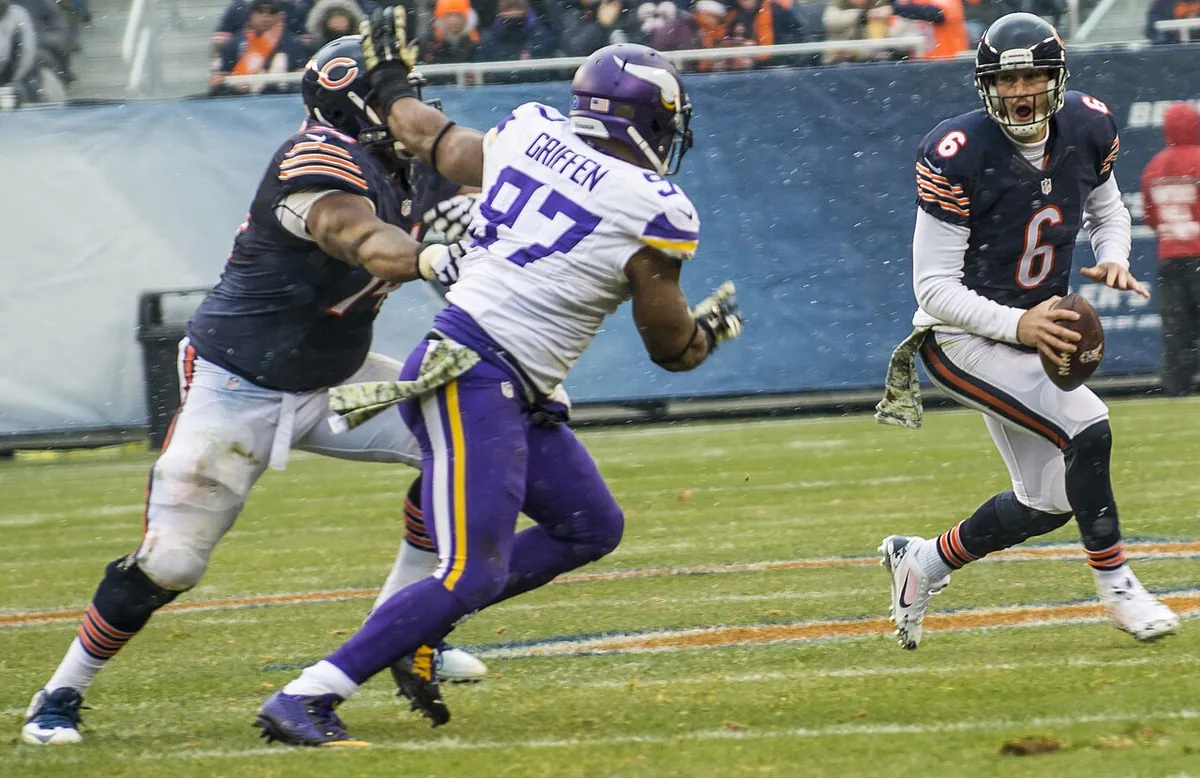
A defensive end lines up on the line of scrimmage at the end of the defensive formation, outside the defensive tackles. His alignment is typically head-up or just outside the opposing offensive tackle. The specific techniques and responsibilities vary significantly between the two most common defensive fronts, the 4-3 and the 3-4. In a traditional 4-3 defense, there are two defensive ends who are often the primary pass rushers. They are generally leaner and faster, focusing on beating the offensive tackle with speed and agility to pressure the quarterback. In a 3-4 defense, the two defensive ends are larger and play more like defensive tackles. Their primary job is to occupy multiple offensive linemen, control gaps against the run, and free up the outside linebackers to be the main pass rushers. This fundamental difference in scheme dictates the type of athlete and skill set required for the position.
Skills and Physical Traits
Successful defensive ends combine a rare blend of size, strength, and athleticism. Essential physical traits include explosive first-step quickness off the line of scrimmage, often called get-off, and the flexibility to bend around the corner while maintaining balance, known as running the arc. Core strength is vital for converting speed into power during a bull rush and for holding ground against double-team blocks. Effective hand-fighting technique is a critical skill, allowing the player to shed the blocker's grasp using moves like the rip, swim, or club. Pre-snap recognition and the ability to diagnose plays quickly are also key mental attributes. The typical size for a defensive end in a 4-3 scheme ranges from 6 foot 3 to 6 foot 5 inches tall and 270 to 290 pounds. Defensive ends in a 3-4 defense are generally bigger, averaging 6 foot 3 to 6 foot 8 inches and 285 to 315 pounds, as their role demands more two-gap control and power.
Techniques and Pass Rush Moves
To defeat offensive linemen, defensive ends employ a repertoire of pass rush moves and run-stopping techniques. A common move is the speed rush, where the end uses his quickness to sprint around the outside of the tackle. The bull rush involves driving straight into the blocker with power to collapse the pocket. Counters like the spin move, rip, and swim are used when the initial move is stopped. Against the run, the fundamental technique is stack and shed, where the end engages the blocker, controls him with his hands and strength, then disengages to make the tackle. The specific technique used on a given play depends on the defensive call, the offensive alignment, and the down and distance. Coaches drill these techniques relentlessly, emphasizing a primary move and a reliable counter to keep offensive tackles off balance.
The most effective defensive ends master a sequence of moves to defeat blockers. A player might start with a speed rush to force the tackle to overset to the outside, then counter with a powerful bull rush back to the inside. The spin move, famously used by Dwight Freeney, is a sharp inside counter to an offensive tackle who has successfully blocked an outside rush. Hand placement and the initial punch are critical to establishing control at the point of attack, whether the play is a run or a pass. Mastery of these techniques separates good defensive ends from great ones, allowing them to impact the game consistently.
Historical Evolution of the Position
The role of the defensive end has evolved alongside changes in offensive and defensive strategy over the decades. In early football with six- and seven-man defensive lines, the end was primarily a containment player tasked with stopping end runs. When the five-man line became standard, two styles emerged: crashing ends who aggressively rushed into the backfield and stand-up ends who played a more patient, containment style. The increased popularity of the 3-4 defense created a demand for larger, two-gapping defensive ends. The modern era, with its emphasis on spread offenses and passing, has made elite edge rushers who can pressure the quarterback without defensive help among the most valuable and highly paid non-quarterback players in the NFL.
The shift from seven-man to five-man lines fundamentally changed the end's role from pure containment to a mix of rush and contain. The creation of zone blitz defenses in the late 1990s introduced the occasional use of defensive ends in pass coverage. The widespread adoption of the 3-4 defense increased the value of larger defensive tackle prospects who could play end. The ongoing trend toward pass-heavy offenses has cemented the premium on athletic, speed-based edge rushers in 4-3 schemes.
- Early Era: Ends in six- and seven-man lines focused on stopping end runs.
- Late 1990s: Zone blitzes occasionally used ends in coverage.
- Modern Era: Spread offenses prioritize elite, athletic pass rushers.
Notable Players and Statistics
Several defensive ends have defined the position with Hall of Fame careers. Reggie White recorded 198 career sacks from 1984 to 2000. Dwight Freeney, known for his devastating spin move, was a dominant force for the Indianapolis Colts after being drafted in 2002. Statistics used to evaluate defensive ends go beyond traditional tackles. The most prominent metric is the sack, which credits a player for tackling the quarterback behind the line of scrimmage on a passing play. Other key stats include tackles for loss, which combine sacks and tackles on running backs behind the line, quarterback hits, and passes defended. For defensive ends in a 3-4 scheme, their impact is often measured less by raw sack numbers and more by their ability to occupy blockers and stop the run. Other noted players at the position include John Abraham and Jared Allen. The pursuit of Bruce Smith's sack record remains a major career goal for elite pass rushers. These players set the standard for combining pass-rush prowess with run-stopping ability, and their statistical achievements provide a benchmark for evaluating current and future talent at the position.
Variations and Modern Terminology
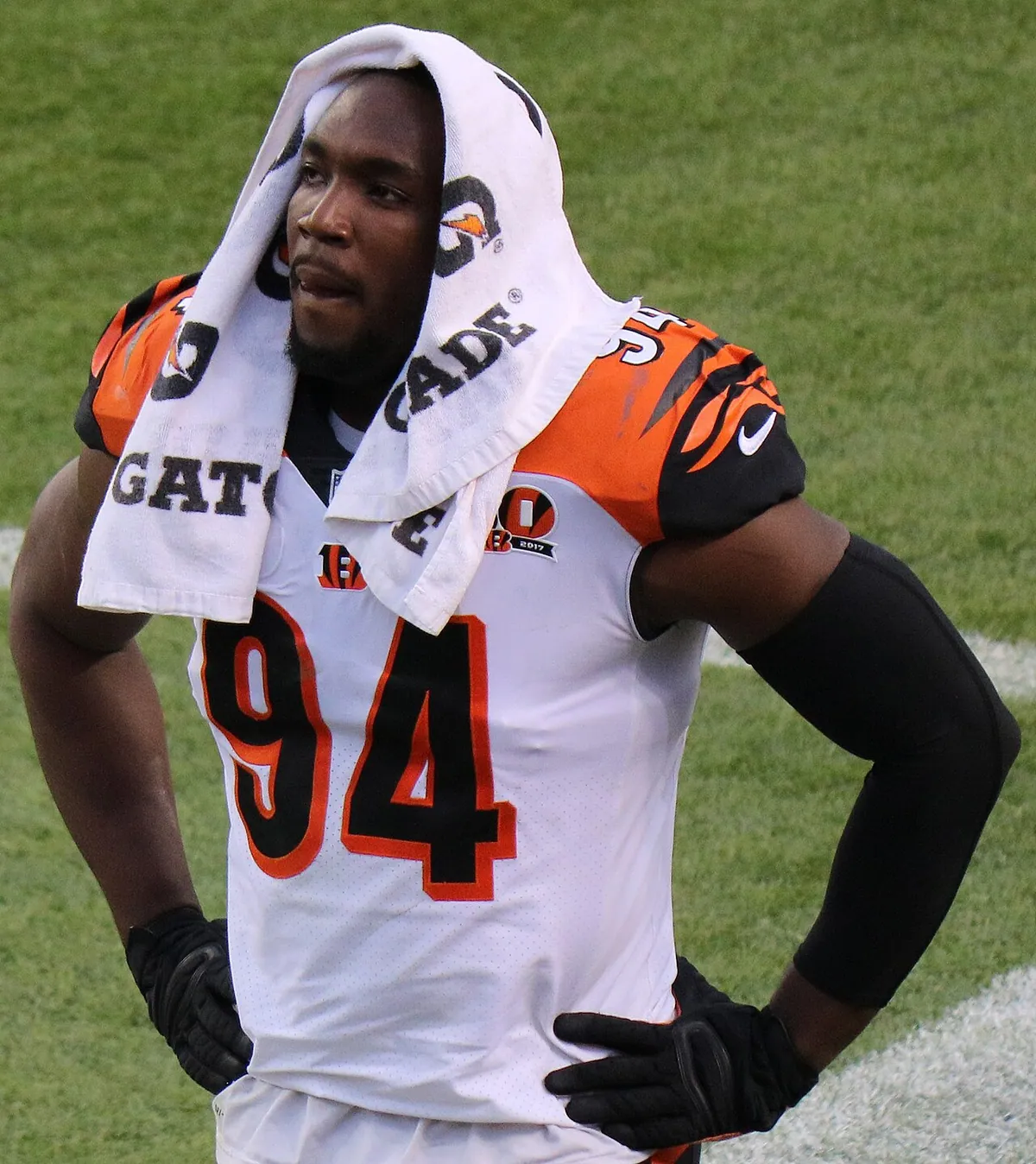
While defensive end is the traditional name, modern football vernacular often uses other terms that describe similar roles, particularly for pass-rush specialists. The term edge rusher is a broad category that includes both 4-3 defensive ends and 3-4 outside linebackers whose primary duty is to pressure the quarterback from the edge of the formation. In certain nickel or dime sub-packages designed to defend the pass, a team's best pass rusher might line up as a defensive end regardless of his base position. Some hybrid players, often labeled as edge defenders, possess the skills to play with their hand on the ground as a traditional end or stand up as a linebacker, providing defensive coordinators with schematic flexibility. This evolution in terminology reflects the increasing specialization of the pass rush role in contemporary defensive game planning.
The specific labels applied to a player often depend on the base defensive scheme of his team. In a 4-3 defense, the players on the edge are definitively called defensive ends. In a 3-4 defense, the primary pass rushers are usually designated as outside linebackers, while the players at the end of the three-man line are larger defensive ends. However, in passing situations, all these edge players converge on the same objective: beating the offensive tackle and getting to the quarterback. This functional similarity has led to the widespread use of the umbrella term edge rusher in scouting and analysis.
Defensive End in Different Schemes
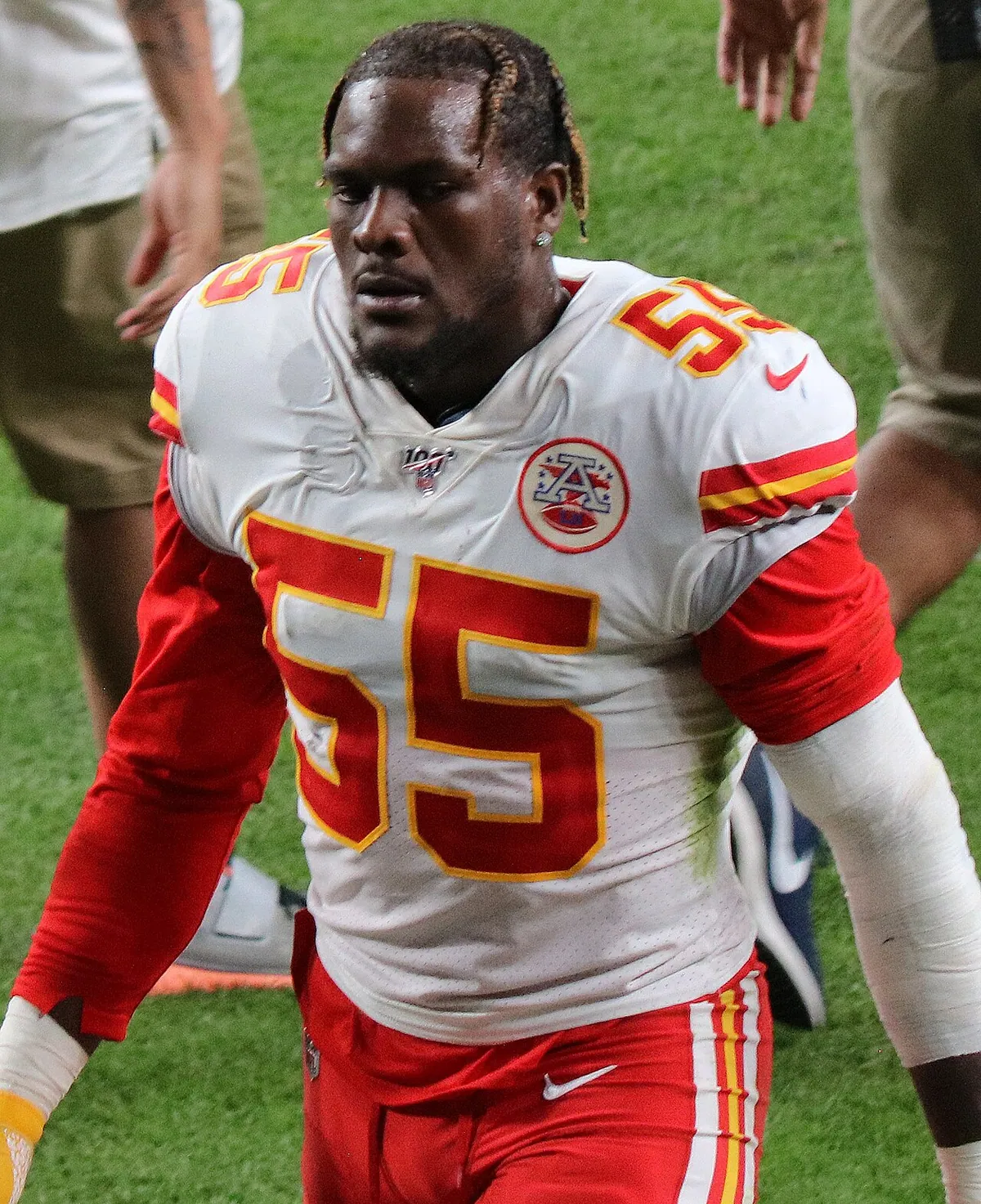
The responsibilities of a defensive end are not uniform and are heavily dictated by the defensive coordinator's scheme. The two primary systems, the 4-3 and the 3-4, demand different physical and mental skill sets from the player at the position. In a 4-3 front, the defensive end is often in a one-gap system, responsible for controlling a single lane between blockers. His main goal is to penetrate and disrupt plays in the backfield, making him a primary playmaker. In a 3-4 front, the defensive end operates in a two-gap system, responsible for controlling the spaces on either side of the offensive lineman he is engaged with. His primary goal is to read the play, shed the blocker, and make the tackle, often occupying multiple blockers so linebackers can flow freely to the ball.
The following list outlines the key distinctions for a defensive end in each major defensive scheme. In a 4-3 defense, the end is a primary pass rusher with an emphasis on speed and finesse moves. He typically lines up in a wide technique outside the offensive tackle. His main job is to get upfield quickly and pressure the quarterback. In a 3-4 defense, the end is a primary run stopper with an emphasis on strength and leverage. His main job is to control blockers and protect linebackers. These scheme differences explain the different roles for defensive ends in 4-3 and 3-4 systems.
- 4-3 Defense: Primary pass rusher, one-gap responsibility, uses speed and agility.
- 4-3 Defense: Lines up in a wide technique, aims to beat the tackle off the snap.
- 3-4 Defense: Primary run stopper, two-gap responsibility, uses strength and power.
- 3-4 Defense: Lines up in a 5-technique, aims to control and shed the blocker.
- 3-4 Defense: Occupies offensive linemen to keep linebackers clean for tackles.
Video
FAQ
What does a defensive end do in football?
A defensive end has two main jobs on every play. First, he must set the edge against the run, preventing ball carriers from getting outside of his position and forcing them back inside. Second, he rushes the quarterback on passing plays, using speed and power to record sacks or create pressure. He lines up on the outside of the defensive line, typically across from the offensive tackle, and must quickly diagnose whether the play is a run or a pass. Very rarely, he may also drop into short pass coverage as part of a designed zone blitz.
What is the difference between a defensive end and an edge rusher?
Defensive end is a specific position aligned on the defensive line. Edge rusher is a functional role describing any player, whether a defensive end or an outside linebacker, whose primary task is to pressure the quarterback from the edge of the formation. In a 4-3 defense, the defensive ends are usually the edge rushers. In a 3-4 defense, the outside linebackers typically fulfill the edge rusher role, while the defensive ends are larger players focused on stopping the run. The term edge rusher has become common to group together all players with that primary pass-rush function, regardless of their official position label.
What skills make a good defensive end?
A good defensive end needs explosive first-step quickness, core strength, and excellent hand-fighting technique to shed blockers. He must have the flexibility to bend around the corner when pass rushing and the power to hold his ground against run blocks. Mental skills like pre-snap recognition and the ability to diagnose plays quickly are equally important. A diverse repertoire of pass rush moves, such as the speed rush, bull rush, and spin move, is essential for beating offensive tackles. Consistent technique in stacking and shedding blockers is fundamental for run defense.
How big are defensive ends?
The size of a defensive end depends on the defensive scheme. In a 4-3 defense, ends are typically leaner and faster, commonly ranging from 6 foot 3 to 6 foot 5 inches tall and 270 to 290 pounds. In a 3-4 defense, ends are much larger, averaging 6 foot 3 to 6 foot 8 inches and 285 to 315 pounds, as their role requires them to occupy multiple offensive linemen and control gaps against the run more than purely rushing the passer. These players often have a lengthy, big, and athletic build that combines size with surprising agility for their weight.
What statistics are used to judge a defensive end?
The primary statistic for evaluating a defensive end's pass-rush ability is the sack, which is a tackle of the quarterback behind the line of scrimmage. Other important metrics include tackles for loss, which combine sacks and tackles on ball carriers in the backfield, quarterback hits, and passes defended. For defensive ends in run-stopping roles, such as in a 3-4 defense, their effectiveness is also measured by their ability to occupy blockers and disrupt running lanes, which may not show up directly on the stat sheet. Consistency in applying pressure, even without a sack, is a critical qualitative measure of a defensive end's impact.
Where does a defensive end line up on the football field?
A defensive end lines up on the outside edge of the defensive line, positioned on the line of scrimmage across from the offensive tackle. They are the players at each end of the defensive line formation. Their alignment is on the edge, next to the defensive tackles and opposite the opposition's offensive tackle. This positioning is fundamental to their role in setting the edge against outside runs and rushing the passer.
Sources
- Defensive end (Wikipedia) Wikipedia
- What is the defensive end's role in the NFL? dazn.com
- What Does a Defensive End Do? (DE Position Guide) lineplayfootball.com
- The Complete Guide to the Defensive End Position throwdeeppublishing.com