A fullback (FB) is one of the two running back positions in the offensive backfield of gridiron football, alongside the halfback. The fullback is typically a larger player whose duties are split among power running, pass catching, and blocking for the quarterback and the other running back. Historically, many great runners played the position, but in modern football the fullback's primary role is often as a lead blocker. The position saw a decline in usage in the late 2000s and early 2010s but has experienced a gradual resurgence and evolution since the 2017 NFL season, with most teams now using a designated or hybrid fullback.
Role and Responsibilities
The fullback's responsibilities combine physicality with a range of skills. The main duty in current offenses is blocking, where the fullback acts as a lead blocker for the halfback on common runs like the dive and blast. This involves clearing paths by engaging linebackers and defensive ends in space. Fullbacks are also used as power runners, particularly in short-yardage and goal-line situations where their size and strength help gain tough yards. As eligible receivers, fullbacks are deployed on passing plays, often running routes into the flat off play-action fakes, making them a safety valve for the quarterback. Some teams also use fullbacks in pass protection schemes to help block for the quarterback. This mix of tasks requires a player who can run, catch, and block effectively.
Alignment and Formations
The fullback's alignment on the field changes based on the offensive formation and scheme. In traditional I-formation sets, the fullback lines up directly behind the quarterback, with the halfback positioned behind the fullback. Variations like the strong I or weak I formation have the fullback offset to the side of the tight end or away from it. With the increased use of shotgun and pistol formations, fullback alignment has adapted. In pistol sets, the fullback frequently positions himself beside the quarterback while the running back sets up directly behind the passer. In shotgun formations, a fullback may be placed nearer the offensive line as a blocker or aligned parallel to the running back on either side of the quarterback. These starting spots determine the fullback's initial path and job on the play.
Skills and Physical Characteristics
Fullbacks are generally bigger and stronger than halfbacks, built to deliver and withstand contact. They combine the mass of a tight end with the agility of a running back. The essential skills for the position include effective run blocking, which requires technique, leverage, and a willingness to engage. As a runner, fullbacks need power, balance, and the ability to fall forward for extra yards rather than elite speed. Receiving skills are increasingly important, requiring reliable hands and the ability to run routes out of the backfield. Boise State player Tyler Crowe described the role as 55% running back, 35% tight end, and 10% offensive lineman, highlighting the hybrid nature of the position. Athleticism is critical, as fullbacks must move in space, catch passes, and sometimes line up as a wideout or play special teams.
- Blocking: Lead blocking for running backs and pass protection.
- Power Running: Gaining tough yards in short-yardage situations.
- Pass Catching: Running routes and serving as a check-down option.
- Versatility: Lining up in multiple alignments and executing various assignments.
Historical Evolution of the Position
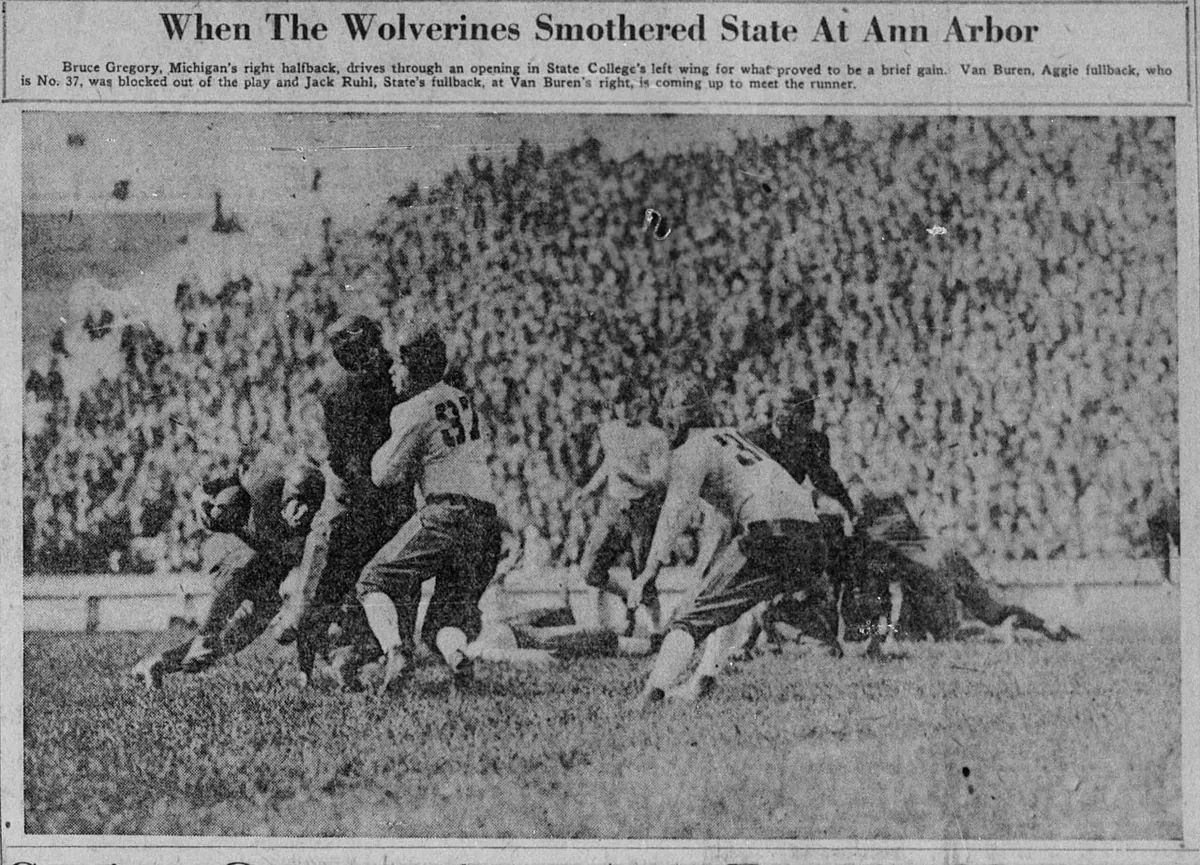
The fullback position has changed greatly since the early days of football. In the period before teams commonly used the T-formation, offenses typically deployed four backs, and the fullback was the deepest one, who also usually handled punting and drop-kicking duties. As offensive schemes changed, the halfback became the featured runner, and the fullback's job moved toward blocking. The term 'halfback' became interchangeable with 'running back' or 'tailback,' while 'fullback' became linked with blocking backs. This blocking-focused identity took hold through the late 20th century, though versatile players like Larry Centers, who caught 827 passes, showed the position's receiving ability.
The position faced a steep decline from the late 2000s through the mid-2010s, as the growth of spread offenses and pass-heavy schemes made a traditional lead blocker seem outdated. Many NFL teams removed the fullback entirely during the early 2010s. However, a shift began after the 2017 NFL season, with teams finding new value in a versatile fullback for both the run and pass game. By the early 2020s, a comeback was clear, with most NFL teams carrying a designated fullback, a hybrid player, or using a rotation at the position. This modern fullback is a more dynamic weapon, used in creative ways to create mismatches, marking a significant change from a pure power runner to a hybrid blocker-receiver.
Notable Players and Statistical Impact
Fullbacks have made significant marks on football history, both as noted runners and as key contributors in the modern game. Historical greats like Jim Brown, Franco Harris, and Larry Csonka were listed as fullbacks primarily due to their size and were the featured rushers of their times. In the modern, more specialized era, players are recognized for excelling in the hybrid role. Larry Centers has the most career catches by a running back with 827 receptions. Blocking specialists like Lorenzo Neal and Daryl Johnston were crucial to the success of star running backs. Players recognized for excelling in the hybrid role include Mike Alstott, a powerful runner and scorer. While fullbacks are rarely statistical leaders today, there are exceptions, such as Le'Ron McClain leading the 2008 Baltimore Ravens with 902 rushing yards and Peyton Hillis leading the 2010 Cleveland Browns with 1,177 yards.
Variations and Techniques
While the core fullback role is consistent, there are variations in how the position is deployed and the techniques used. In the flexbone offense, often used at the collegiate level, the fullback is frequently the primary rushing threat between the tackles. Some teams use 'Jumbo' or 'Heavy' packages where an offensive or defensive lineman reports as an eligible receiver to line up as a fullback for extra blocking power in short-yardage situations. The wing-back, common in Wing-T formations, is a variation where a player lines up on the edge of the offensive line, often acting as a decoy or ball carrier on sweeps. Techniques for fullbacks include the lead block on 'Iso' and 'Power' plays, where they must identify and engage the correct linebacker, and the 'fullback dive,' a quick-hitting run play designed to gain a few critical yards. Their role in the passing game involves both running routes and executing play-action fakes to draw in defenders before releasing.
The Fullback in the Modern Game
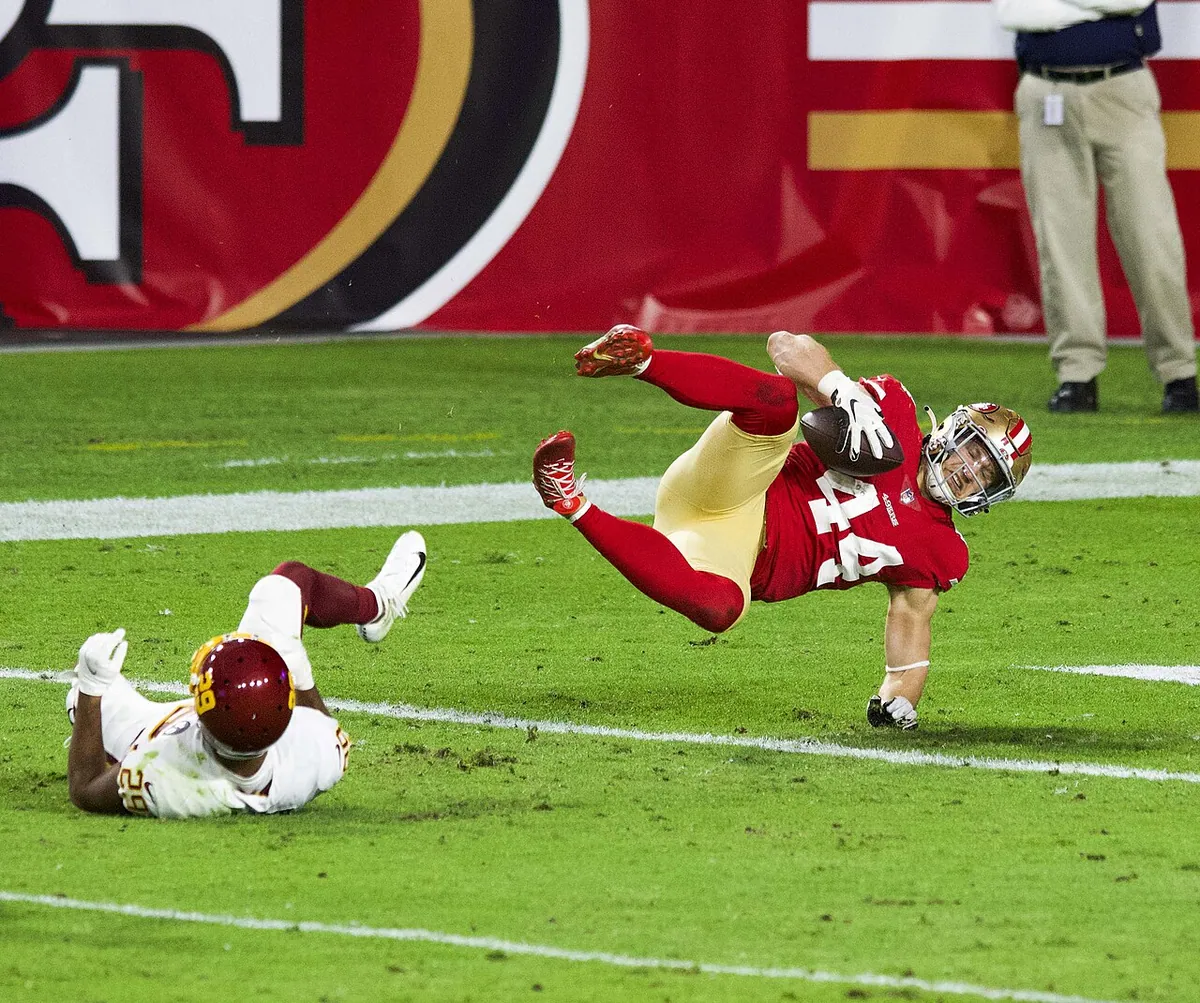
The fullback occupies a niche but stable role in professional and college football. The decline that peaked in the early 2010s has reversed, with the position evolving rather than disappearing. Most NFL teams now use a fullback in some way, valuing the strategic flexibility they provide. The modern prototype is a versatile athlete like Kyle Juszczyk, who lines up in the backfield, in the slot, or as an inline tight end, creating defensive mismatches. In college football, programs like Boise State continue to develop the position, as seen with player Tyler Crowe, who embraced the role by gaining weight while maintaining athleticism. The position's value lies in its ability to help both the run and pass game from a single roster spot, serving as an extra blocker in heavy sets or a surprise receiver in spread looks. This adaptability keeps the fullback a relevant part of offensive playbooks.
Video
FAQ
What is a fullback in football?
A fullback is an offensive backfield position and one of the two running back spots, alongside the halfback. The fullback is typically a larger player whose duties are split among blocking for the quarterback and other runners, power running in short-yardage situations, and catching passes out of the backfield. In modern football, the primary responsibility is often lead blocking, but the role requires a versatile skill set. Historically, many famous runners played the position, but today it is more specialized.
What does a fullback do in American football?
A fullback has three main responsibilities: blocking, running, and receiving. Their most common task is to act as a lead blocker, clearing a path for the halfback on running plays like dives and power runs. They also carry the ball, usually in short-yardage or goal-line situations where power is needed to gain a few yards. As an eligible receiver, fullbacks run routes, often on play-action passes, to serve as a safety valve for the quarterback. They may also assist in pass protection schemes.
Where does a fullback line up?
A fullback's alignment depends on the offensive formation. In traditional I-formations, they line up directly behind the quarterback, with the halfback behind them. In offset I-formations, they line up to the side of the quarterback. With the rise of shotgun and pistol formations, fullbacks may line up next to the quarterback or slightly in front of him, sometimes parallel to the running back. Their starting position is designed to optimize their angle for blocking or their path for a carry or route.
Is fullback still a position in football?
Yes, the fullback is still a position in football, though its usage has evolved. After a significant decline in the late 2000s and early 2010s where many teams phased it out, the position has seen a gradual resurgence since the 2017 NFL season. As of the early 2020s, most NFL teams use a fullback in some capacity, either as a designated player, a hybrid tight end/fullback, or in a rotation. The modern fullback is often a versatile weapon used creatively in both running and passing schemes.
Who are some notable fullbacks?
Notable fullbacks span different eras of football. Historical greats known as primary rushers include Jim Brown, Bronko Nagurski, Franco Harris, and Larry Csonka. Players who excelled in the modern hybrid role include Mike Alstott. And Larry Centers, who holds the running back record with 827 career receptions. Contemporary standouts include Kyle Juszczyk.
How has the fullback position changed over time?
The fullback position has changed dramatically. Originally, it was the deepest back and often the team's primary ball carrier and kicker. As formations changed, the halfback became the featured runner, and the fullback evolved into a blocking back. The position nearly became obsolete in the early 2010s with the rise of spread, pass-heavy offenses. However, it has experienced a resurgence since 2017, evolving into a versatile hybrid role where players block, run, and catch passes, making them valuable tactical pieces in modern offenses.
Sources
- Fullback (gridiron football) (Wikipedia) Wikipedia
- The Art of the Fullback broncosports.com
- How To Use A Fullback In Your Offense viqtorysports.com