The Cleveland Browns are a professional American football team based in Cleveland, Ohio, and a member of the AFC North division of the National Football League. Founded on June 4, 1944, by Paul Brown and businessman Arthur B. McBride, the club is named after Brown, its first coach, and began play in 1946 in the All-America Football Conference. The Browns won all four AAFC championships and then NFL titles in 1950, 1954, 1955 and 1964, but they are one of four teams that have never appeared in a Super Bowl. After owner Art Modell took the team's personnel to Baltimore to form the Ravens, the Browns returned in 1999 with their name, colors and history kept in Cleveland. Todd Monken became head coach in 2026, and the team was 6-4 through November 27.
Paul Brown and the AAFC Dynasty
The Browns were founded in 1944 when taxicab magnate Arthur B. (Mickey) McBride secured a Cleveland franchise in the newly formed All-America Football Conference. Paul Brown was the team's first coach and gave it his name. The club began play in 1946 and dominated the new league, compiling a 47-4-3 record over its four seasons and winning the championship in each one. Quarterback Otto Graham led the offense throughout those years under a coach known as a demanding taskmaster.
When the AAFC folded after the 1949 season, the Browns joined the NFL along with the San Francisco 49ers and the original Baltimore Colts. Many observers had considered the AAFC the weaker league, but Cleveland won the NFL championship in its very first season in 1950. The team went on to play in its league championship game in each of its first 10 years, winning seven of them, a feat unequaled in the North American major professional sports. McBride and his partners sold the club to a group of Cleveland businessmen in 1953 for a then unheard-of $600,000.
NFL Champions, Jim Brown and the Modell Years
Between 1950 and 1955 Cleveland reached the NFL championship game every year and won it three times. In 1961 the team was sold again, this time to a group led by New York advertising executive Art Modell. Modell fired Paul Brown before the 1963 season, but the team kept winning behind fullback Jim Brown. The franchise's championship seasons and its last title game appearance of the era are listed below.
- 1946 to 1949: AAFC champions in every season of that league
- 1950: NFL champions in their first NFL season
- 1954: NFL champions
- 1955: NFL champions for a second straight year
- 1964: NFL champions under Modell's ownership
- 1965: lost the NFL Championship Game to the Green Bay Packers
The 1964 championship remains the club's most recent league title. When the AFL and NFL merged before the 1970 season, Cleveland became part of the new American Football Conference and reached the playoffs in 1971 and 1972. The team then slipped into mediocrity through the middle of the 1970s. From 1965 to 1995 the Browns made the playoffs 14 times without winning another championship or reaching a Super Bowl.
Kardiac Kids, Kosar and the Move to Baltimore
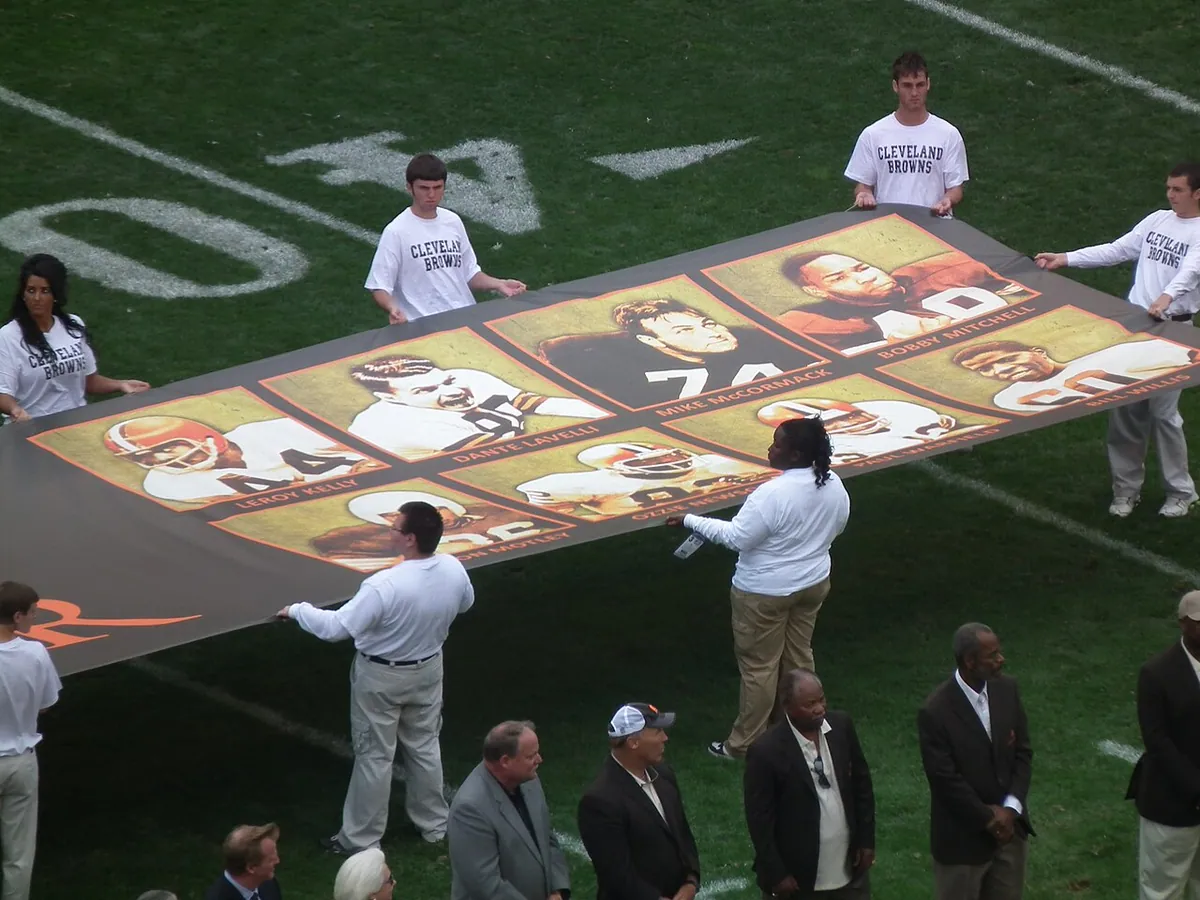
A revival came in 1979 and 1980, when quarterback Brian Sipe led a series of last-minute wins and the team became known as the Kardiac Kids. The orange pants the club wore from 1975 to 1983 became a symbol of that era, but under Sipe the Browns never advanced past the first round of the playoffs. Quarterback Bernie Kosar, drafted in 1985, led Cleveland to three AFC Championship Games in the late 1980s, and the Denver Broncos won all three. Bill Belichick was hired before the 1991 season, and his 1994 team beat the New England Patriots 20-13 in the Wild Card round before falling 29-9 to the Pittsburgh Steelers.
After a 5-11 season in 1995 Belichick was fired, and that year Modell announced he was moving the team to Baltimore. The plan drew outrage from the fan base, and after threats of legal action from the city of Cleveland and fans, a compromise was reached in early 1996. Modell was allowed to establish the Baltimore Ravens as a new franchise and keep the contracts of all Browns personnel, while the Browns name, colors, logos and history stayed in Cleveland in trust. The NFL regarded the franchise as suspended and guaranteed its return no later than the 1999 season, and in 1998 it confirmed an expansion draft that would give the league 31 teams.
The 1999 Return and the Long Struggle
During three years of inactivity Cleveland Stadium was demolished and a new stadium was built on its site. Opened in 1999 as Cleveland Browns Stadium, it was known as FirstEnergy Stadium from 2013 and is now Huntington Bank Field. The Browns resumed play that year under new owner Al Lerner and were restocked through an expansion draft, though they are not considered an expansion franchise. Under head coach Chris Palmer they went 2-14 in 1999 and 3-13 in 2000.
Since 1999 the Browns have gone 146-290-1 in the regular season through 2025, with a 1-3 playoff record. Butch Davis led them to the playoffs in 2002, where they lost 36-33 to Pittsburgh, and Romeo Crennel's 2007 team went 10-6 but missed the postseason. The Lerner family sold the team to businessman Jimmy Haslam in 2012, and the 2010s passed without a winning season. Coaching turnover was constant, as the records of the head coaches since the return show.
| Head coach | Seasons | Regular season |
|---|---|---|
| Chris Palmer | 1999 to 2000 | 5-27 |
| Butch Davis | 2001 to 2004 | 24-35 |
| Terry Robiskie | 2004 | 1-4 |
| Romeo Crennel | 2005 to 2008 | 24-40 |
| Eric Mangini | 2009 to 2010 | 10-22 |
| Pat Shurmur | 2011 to 2012 | 9-23 |
| Rob Chudzinski | 2013 | 4-12 |
| Mike Pettine | 2014 to 2015 | 10-22 |
| Hue Jackson | 2016 to 2018 | 3-36-1 |
| Gregg Williams | 2018 | 5-3 |
| Freddie Kitchens | 2019 | 6-10 |
| Kevin Stefanski | 2020 to 2025 | 45-56 |
| Todd Monken | 2026 | 6-4 |
The low point came in 2016 and 2017, when the Browns went 1-31, the worst two-year stretch in NFL history. The 2017 team finished 0-16, only the second winless 16-game season after the 2008 Detroit Lions. The two seasons earned the first overall draft pick each year, used on Myles Garrett and Baker Mayfield. Between 2003 and 2019 the club endured a 17-season playoff drought.
Stefanski, the 2020 Breakthrough and Todd Monken
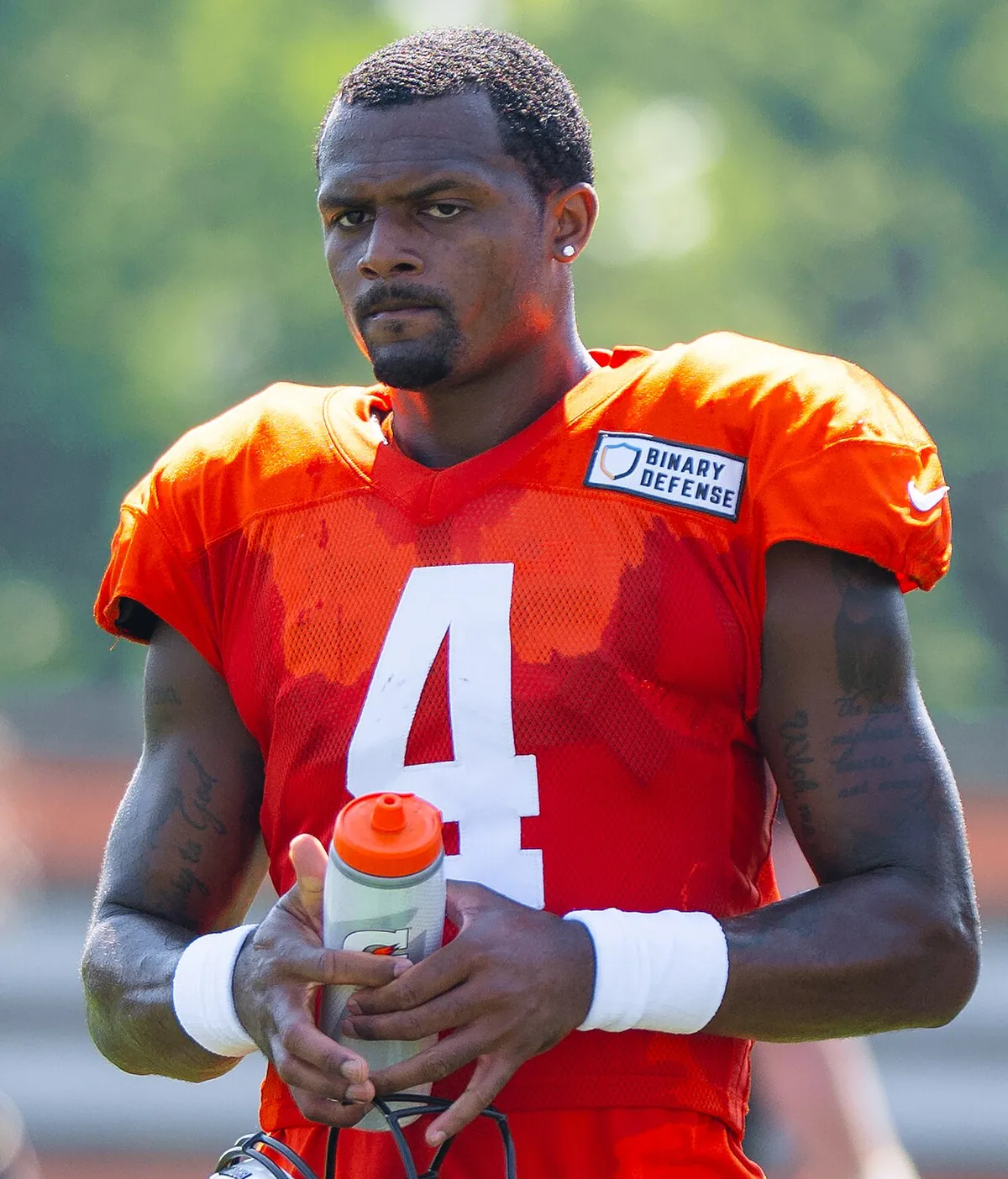
Kevin Stefanski was hired before the 2020 season, and his first team clinched the club's first playoff berth since 2002 by beating Pittsburgh in Week 17 to finish 11-5. In the Wild Card round the Browns beat the Steelers again, 48-37, for their first playoff win since 1994. Their season ended with a 22-17 Divisional round loss to the Kansas City Chiefs. The 2023 team returned to the playoffs at 11-6 but lost 45-14 to the Houston Texans in the Wild Card round.
The seasons that followed brought a 3-14 record in 2024 and 5-12 in 2025, and Todd Monken took over as head coach in 2026. Through November 27, 2026, his first team was 6-4, with several fourth-quarter comebacks along the way. After a bye week the Browns prepared to host the Las Vegas Raiders on Sunday night, November 29. General manager Andrew Berry and president David Jenkins lead the front office under owners Jimmy and Dee Haslam.
The Helmet, the Dawg Pound and the Steelers Rivalry
The Browns are the only NFL team without a logo on their helmets, so the plain orange helmet itself serves as the official logo. For most of their history it has carried a stripe of dark seal brown divided by a white stripe, a design used from 1961 to 1995 and again since 1999. The Brownie Elf, dropped by Modell in the mid-1960s as too childish, returned with the team in 1999 and was featured at midfield from 2022 to 2024 after a fan poll. The popularity of the Dawg Pound section led to dog imagery, and a secondary logo of a bull mastiff by graphic designer Houston Mark won a fan vote in 2023.
The rivalry with the Pittsburgh Steelers dates back decades, and at one point the Browns led the all-time series by 22 games. The Steelers overtook Cleveland in 2007 and now hold a 17-game edge. The two clubs have also met in the playoffs, with Pittsburgh winning after the 1994 and 2002 seasons and Cleveland winning after the 2020 season. Browns Backers Worldwide, the team's fan club, is one of the largest organized fan clubs in professional sports, with chapters around the world.
Video
FAQ
Why did the Cleveland Browns leave Cleveland?
Owner Art Modell announced in 1995 that he was moving the team to Baltimore. The plan drew outrage from fans and threats of legal action from the city of Cleveland. Under a compromise reached in early 1996, Modell formed the Baltimore Ravens as a new franchise and kept the contracts of the Browns personnel. The Browns name, colors and history stayed in Cleveland, and the team returned to play in 1999.
Have the Cleveland Browns ever been to the Super Bowl?
The Browns have never played in a Super Bowl. They are one of four NFL teams without an appearance. Their championships all came before the Super Bowl era, the last in 1964. The closest calls came in the late 1980s, when Bernie Kosar led them to three AFC Championship Games that were all lost to the Denver Broncos.
How many championships have the Cleveland Browns won?
The Browns won all four AAFC championships from 1946 to 1949. After joining the NFL they won league titles in 1950, 1954, 1955 and 1964. In their first 10 years they played in their league championship game every season and won seven of them. The 1964 title, won with fullback Jim Brown, is still the most recent.
How many playoff games have the Browns won since returning in 1999?
Since returning in 1999 the Browns have won one playoff game. It came after the 2020 season, a 48-37 Wild Card win over the Pittsburgh Steelers. That victory was the club's first in the playoffs since 1994. Their other postseason trips since the return came after the 2002 and 2023 seasons, and their playoff record in that span is 1-3.
Why do the Cleveland Browns have no logo on their helmets?
The plain orange helmet has been the team's trademark for most of its history and now serves as the official logo. Players' numbers were painted on the helmets from 1957 to 1960, and a CB logo created in 1965 was never used. The club has used promotional logos such as the Brownie Elf and a dog for the Dawg Pound. None of them has replaced the logo-free helmet, which makes the Browns unique in the NFL.
Who is the head coach of the Cleveland Browns?
Todd Monken is the head coach of the Browns, in his first season in 2026. His team was 6-4 through November 27, 2026. He replaced Kevin Stefanski, who coached from 2020 to 2025 and led the team to playoff trips after the 2020 and 2023 seasons. Monken works with general manager Andrew Berry.
Sources
- Cleveland Browns (Wikipedia) Wikipedia
- Cleveland Browns clevelandbrowns.com
- Cleveland Browns News, Scores, Stats, Schedule NFL
- Cleveland Browns: A Comprehensive History of the 1946 to 1955 Dynasty Bleacher Report
- Cleveland Browns Team History statmuse.com
- nflverse game, roster and draft data nflverse (CC BY 4.0)