Gregg
Williams
Head coaching record
Biography
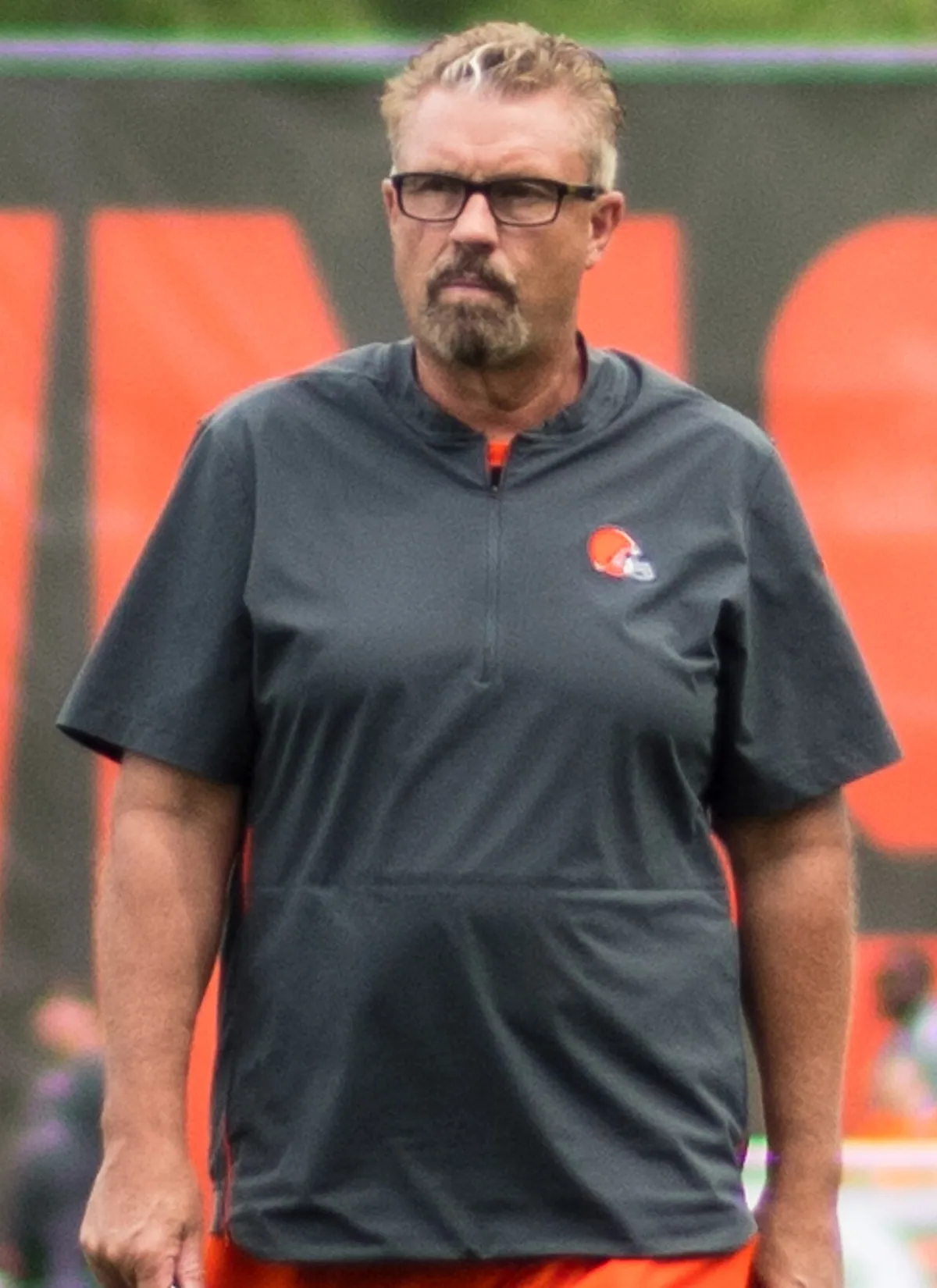
Gregg Williams is an American football coach born on July 15, 1958, in Excelsior Springs, Missouri. He began his NFL coaching career in 1990 and served as a head coach for the Buffalo Bills from 2001 to 2003 and as interim head coach for the Cleveland Browns in 2018. Williams is best known for his aggressive defensive coordinator roles, including with the Super Bowl XLIV champion New Orleans Saints, and for his central involvement in the NFL's bounty scandal. Williams was hired as defensive coordinator for Tennessee State University in 2025. He was inducted into the Missouri Sports Hall of Fame in 2016 and founded a charitable foundation in 2004 that has contributed over $2,000,000 to his hometown.
Early Life, Playing Career, and High School Coaching
Gregg Williams was born and raised in Excelsior Springs, Missouri, where he graduated from Excelsior Springs High School in 1976. He played quarterback at Northeast Missouri State University, which is now known as Truman State University, located in Kirksville, Missouri. His coaching career began immediately after college as an assistant football coach at his high school alma mater. In 1983, he was not selected for the head coaching position at Excelsior Springs High School, which led him to accept the head coaching job for the Belton High School Pirate football team in Belton, Missouri. Williams coached at Belton High School for four seasons, building his early resume before moving to the collegiate level in 1988.
Collegiate Start and Entry into the NFL
In 1988, Williams was hired as a graduate assistant coach at the University of Houston, working under former Washington Redskins head coach Jack Pardee. This position marked his entry into higher levels of football coaching and provided a direct connection to the professional ranks. After two seasons at Houston, Williams made the jump to the NFL in 1990 when he was hired as the special teams coach for the Houston Oilers. His first NFL boss was defensive coordinator Buddy Ryan, known for his aggressive defensive philosophies. His early NFL career included a role as special teams coach for the Houston Oilers.
Tennessee Titans Defensive Coordinator Tenure
Williams served as the linebackers coach for the Houston Oilers from 1994 through the 1996 season. Williams served as defensive coordinator for the Tennessee Titans from 1997 through the 2000 season. The Titans defense under Williams was statistically dominant, leading the league in total defense and allowing only 191 points, which was the third-fewest in the NFL since the adoption of the 16-game schedule in 1978. That defensive unit helped the team reach Super Bowl XXXIV, where they were defeated by the St. Louis Rams. During this period, Williams was involved in controversies regarding playbook acquisition, with former players later claiming he had obtained opponents' playbooks before games. Williams coached Jevon Kearse, who won the AP Defensive Rookie of the Year award under his guidance in 1999. The Titans' defensive success under Williams established his reputation as a top defensive mind in the league.
Head Coaching Tenure with the Buffalo Bills
Gregg Williams was hired as head coach of the Buffalo Bills in 2001, joining new team president and general manager Tom Donahoe. His first season resulted in a 3-13 record, finishing fifth in the AFC East. The 2002 season showed improvement with an 8-8 record, though the team still placed fourth in the division. In his third and final year, the Bills went 6-10 and finished third in the AFC East. Over his three-year tenure, Williams compiled a regular season record of 17 wins and 31 losses, for a .354 winning percentage. The team did not reach the playoffs during any of his seasons. Following the 2003 season, the Bills chose not to renew his contract, ending his first stint as an NFL head coach.
Washington Redskins Defensive Coordinator Role
After leaving Buffalo, Williams quickly signed with the Washington Redskins as defensive coordinator in 2004, attracted by head coach Joe Gibbs's offer of total autonomy over the defense. His unit ranked third in the NFL in total defense in 2004 and ninth in 2005. On January 3, 2006, Williams signed a three-year contract extension that made him the highest-paid assistant coach in the NFL. The defense struggled in 2006, ranking as low as 30th in the league at one point, but improved in 2007. That season, the Redskins finished 9-7 and lost in the wildcard round to the Seattle Seahawks. Williams formed a close relationship with safety Sean Taylor, calling him the best player he ever coached. Following Taylor's murder in November 2007, Williams ran an inspired defense that held opponents to historically low rushing totals in the final games.
Jacksonville Jaguars and New Orleans Saints Hire
Williams was not retained by Washington after Joe Gibbs retired, and he was hired as defensive coordinator for the Jacksonville Jaguars on February 6, 2008, replacing Mike Smith. On January 15, 2009, Williams was hired by the New Orleans Saints. Head coach Sean Payton was so impressed with Williams's interview that he voluntarily took a $250,000 pay cut to help facilitate the signing. Williams took over a Saints defense that had ranked 23rd in yards allowed and tied for 26th in points allowed in 2008. His aggressive scheme produced immediate results in the 2009 season, with the defense recording 35 takeaways, which was second in the league. This defensive performance was a major factor in the Saints' run to and victory in Super Bowl XLIV.
Super Bowl XLIV and Later Saints Seasons
As defensive coordinator, Williams helped the New Orleans Saints capture the NFC Conference Championship and win Super Bowl XLIV in the 2009 season. The team also won NFC South division titles in 2009 and 2011 under his coordination. However, the defense's turnover production declined in the 2010 and 2011 seasons. The Saints were eliminated from the 2011 playoffs in a 36-32 loss to the San Francisco 49ers, a game where the defense failed to hold a lead in the final minutes. Williams's relationship with Sean Payton deteriorated during this time, with Payton regarding him as a rogue coach. Williams's contract expired after the 2011 season, and he was set to join the St. Louis Rams before the bounty scandal revelations halted his plans.
Bounty Scandal Details and Fallout
The NFL's investigation found that Williams began the bounty system soon after arriving in New Orleans in 2009. The program paid players for "cart-offs" and "knockouts," with payments usually set at $1,000 and $1,500 during the regular season, and known to triple during the playoffs. The league determined that as many as 27 Saints defensive players were involved, and that Williams occasionally contributed his own money to the pool. Williams initially denied involvement but later admitted everything in a meeting with Commissioner Roger Goodell. Audio released in April 2012 captured Williams instructing his defense before a playoff game to target specific 49ers players, including trying to tear an opponent's ACL. The scandal also led to allegations that Williams ran similar systems with previous teams, though many former associates denied those claims.
Suspension, Reinstatement, and Rams Tenure
On March 21, 2012, the NFL suspended Gregg Williams indefinitely for his role in the bounty scandal and for lying to investigators. He had been formally introduced as the St. Louis Rams' defensive coordinator on February 3, 2012, but never worked a day for the team due to the suspension. The Rams fired him on January 2, 2013. Williams was reinstated by the NFL on February 7, 2013, after accepting responsibility and pledging to never be involved in another bounty system. He was immediately hired by the Tennessee Titans as a senior assistant defensive coach. Williams later returned to the Rams organization as defensive coordinator from 2014 to 2016. During a 2016 game against the Saints, his Rams defense allowed 555 yards in a 49-21 loss, which some viewed as revenge for his role in Bountygate.
Cleveland Browns Interim Head Coach and Coordinator
Williams was hired as defensive coordinator of the Cleveland Browns on January 7, 2017. On October 29, 2018, following the dismissal of head coach Hue Jackson, Williams was named the Browns' interim head coach, while Freddie Kitchens became interim offensive coordinator. Williams guided the team to a 5-3 record over the final eight games, which included a credible showing against the Kansas City Chiefs. He was also responsible for the emergence of quarterback Baker Mayfield during that period. There was support for Williams to become the permanent head coach, but the Browns instead hired Kitchens after the season. Williams's .625 winning percentage made him the first Browns head coach since Marty Schottenheimer in 1988 to leave with a winning record.
New York Jets and Spring Football Career
On January 16, 2019, Williams was hired as defensive coordinator for the New York Jets under head coach Adam Gase. In 2019, he led the Jets defense to a seventh-place ranking in the NFL overall and a second-place ranking against the run. On December 7, 2020, Williams was fired by the Jets following a 31-28 loss to the Las Vegas Raiders. The firing came after Williams called a controversial zero blitz on a Hail Mary play, which resulted in a game-winning touchdown for the Raiders with five seconds left. After his NFL career ended, Williams coached in spring professional football. He served as defensive coordinator for the DC Defenders of the UFL/XFL from 2023 through the 2025 season.
Tennessee State and Post-Coaching Activities
On April 9, 2025, Williams stepped down from the DC Defenders to accept the defensive coordinator position at Tennessee State University, reuniting with head coach Reggie Barlow. This marked his return to the collegiate ranks for the first time in over 30 years. He named his son, Blake Williams, as his successor with the Defenders for the remainder of the 2025 season. Reports indicate Williams was fired from Tennessee State on January 15, 2026, after the team finished the 2025 season with a 2-10 record. Since retiring from full-time coaching, Williams has worked as an executive leadership coach and keynote speaker through his firm, Championship Coaching and Consulting. He also co-hosted the Come Get Some TV show on the Big Play Network.
Honors, Foundation, and Personal Life
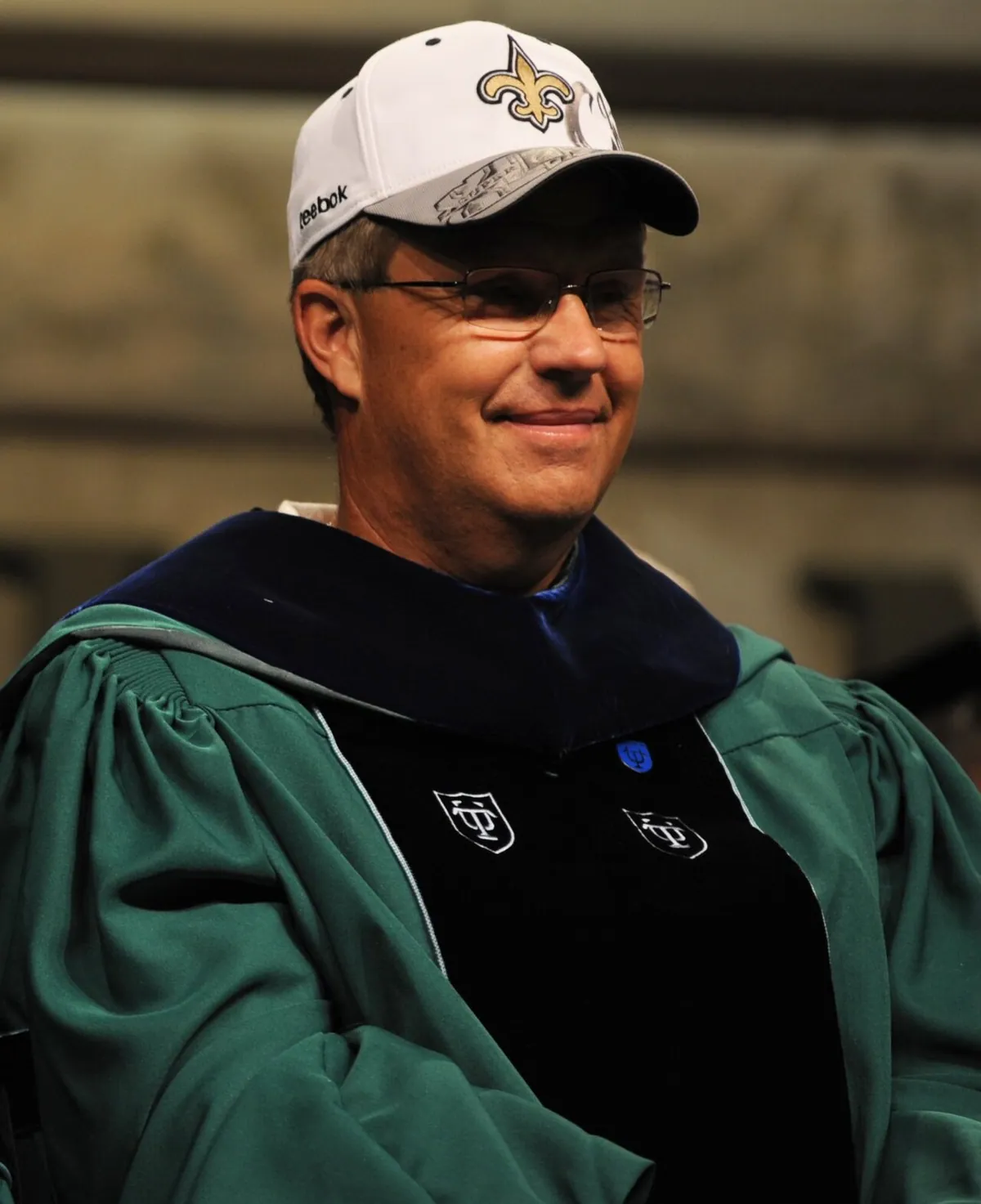
Gregg Williams received induction into the Missouri Sports Hall of Fame in 2016. In 2004, he created the Gregg Williams Foundation, a charity that benefits local schools and the community in Excelsior Springs, Missouri. The foundation has contributed more than $2,000,000 since its founding. Williams has been married twice and has three children from his first marriage, including his son Blake Williams who is also a football coach. His personal life and philanthropic efforts are separate from his professional coaching career, which spanned more than three decades at the NFL level.
FAQ
What was Gregg Williams's role in the Saints bounty scandal?
As the defensive coordinator for the New Orleans Saints, Gregg Williams administered an illegal bounty program that paid players for injuring opponents. The NFL investigation found he contributed money to the bounty pool and lied to league investigators. Commissioner Roger Goodell suspended him indefinitely on March 21, 2012, for conduct detrimental to the league. Williams was reinstated after nearly one year, on February 7, 2013.
Did Gregg Williams win a Super Bowl?
Gregg Williams won Super Bowl XLIV as the defensive coordinator for the New Orleans Saints in the 2009 season. His aggressive defensive scheme generated 35 takeaways that year, which ranked second in the NFL. The Saints won Super Bowl XLIV to win the championship. This Super Bowl victory is the only one of his coaching career.
Where did Gregg Williams play college football?
Gregg Williams played quarterback at Northeast Missouri State University, which is now known as Truman State University. He attended this university after graduating from Excelsior Springs High School in Missouri in 1976. Williams began his coaching career as an assistant at his high school alma mater. This early experience laid the foundation for his extensive professional coaching career in the NFL.
What charity did Gregg Williams help create?
Gregg Williams helped create the Gregg Williams Foundation in 2004. This charity benefits the local schools and community in his hometown of Excelsior Springs, Missouri. Since its founding, the charity has contributed over $2,000,000 to the Excelsior Springs community. This philanthropic work is part of his legacy off the football field.
What was Gregg Williams's overall NFL head coaching record?
Gregg Williams's overall record as an NFL head coach was 22 wins and 34 losses in the regular season, for a winning percentage of .393. He served as head coach of the Buffalo Bills from 2001 to 2003, compiling a 17-31 record over three seasons. He also served as the interim head coach for the Cleveland Browns in 2018, where he posted a 5-3 record. Across his entire head coaching career, he never coached in a playoff game.
Why was Gregg Williams suspended indefinitely by the NFL in March 2012?
Gregg Williams was suspended indefinitely by the NFL in March 2012 due to his admitted involvement in the New Orleans Saints bounty scandal. The league found that Williams administered a program that paid players for causing injuries to opponents. The NFL's investigation concluded that Williams lied to investigators and occasionally contributed his own money to the bounty pool. His suspension was lifted a year later after he cooperated with the league and pledged to never be involved in such a system again.
Sources
- Gregg Williams (Wikipedia) Wikipedia
- Gregg Williams, Defensive Coordinator, FOOTBALL Coaches, Tennessee State University tsutigers.com
- Greg Williams therams.com
- Gregg Williams terrificspeakers.com
- Gregg Williams Coaching Tree & Career History coaching-tree.app
- Gregg Williams Coaching Record footballdb.com
- nflverse game, roster and draft data nflverse (CC BY 4.0)