A linebacker is a defensive position in American football. These players position themselves a few yards behind the defensive line and in front of the defensive backs. They are among the most versatile players on defense, with responsibilities that include stopping the run, rushing the passer, and dropping into pass coverage. The position is divided into inside and outside linebackers, with the middle linebacker often serving as the leader or quarterback of the defense. Many of the most impactful defensive players in football history have been linebackers.
Role and Responsibilities
A key job of a linebacker is to stop the opposing offense's running attack. They are responsible for filling specific gaps along the line of scrimmage to force running backs to change direction. On passing plays, linebackers have coverage duties, which can include dropping into short or intermediate zones or matching up man-to-man against tight ends, running backs, and sometimes slot receivers. Linebackers are also frequently used to blitz the quarterback, adding an element of surprise to the pass rush. In many defensive systems, a linebacker is responsible for communicating the defensive play call from the sideline to the rest of the unit, acting as an on-field coach. This combination of run defense, pass coverage, and leadership makes the linebacker a central and demanding role on the defensive side of the ball.
Linebackers perform several specific tasks. They need to read the offensive formation and the blocking scheme to diagnose whether a run or pass is coming. They must be able to disengage from blockers, whether from an offensive lineman or a tight end, to make a tackle. In pass coverage, they are responsible for specific zones of the field or for following a specific receiver in man coverage. The complexity of these tasks requires linebackers to be among the most intelligent and instinctive players on the field. Their performance directly impacts a defense's ability to control the line of scrimmage and limit big plays.
Alignment and Formations
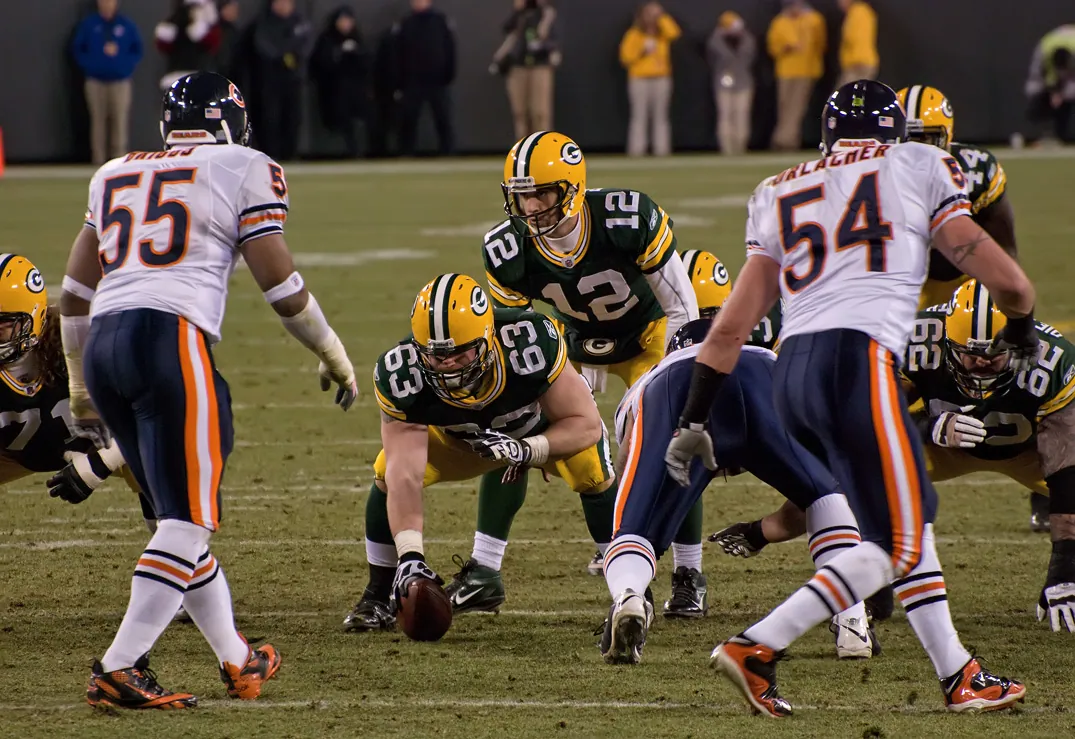
Where a linebacker lines up depends on the defensive formation and the offensive alignment. In the base 4-3 defense, there are three linebackers: the Sam (strongside), Mike (middle), and Will (weakside). The Sam linebacker typically aligns on the side of the offensive formation with the most players, often across from the tight end. The Will lines up on the side with fewer players, and the Mike positions himself in the middle. The 3-4 defense employs four linebackers: two inside linebackers and two outside linebackers. In this scheme, the outside linebackers often function as primary pass rushers, similar to defensive ends, while the inside linebackers are more versatile. Other formations like the 46 defense or the 4-4 defense adjust linebacker numbers for specific situations, such as short-yardage or goal-line stands. The Tampa 2 zone defense places a unique deep coverage responsibility on the middle linebacker, requiring exceptional speed and awareness.
The number of linebackers on the field can vary from none to seven, depending on the defensive call. Most common schemes use three or four, named for the number of defensive linemen and linebackers. The 46 defense, an exception to the naming rule, uses four linemen, three linebackers, and a safety moved up into a linebacker-like role. The 4-4 defense, often used in high school or short-yardage situations in the NFL, uses four linemen and four linebackers but only three defensive backs, making it strong against the run but vulnerable to the pass. These formations dictate the specific gaps and coverage areas for which each linebacker is responsible.
- The 4-3 defense has four defensive linemen and three linebackers.
- The 4-4 defense employs four linemen and four linebackers, sacrificing a defensive back.
- The Tampa 2 defense requires the middle linebacker to drop into a deep middle zone.
Skills and Physical Measurables
Linebackers require a rare blend of size, strength, speed, and intelligence. They must be strong enough to take on and shed blocks from offensive linemen and physical enough to deliver forceful tackles. Simultaneously, they need the athleticism, agility, and speed to cover receivers in space and pursue ball carriers from sideline to sideline. According to recruiting guidelines, a prototypical high school linebacker prospect might stand around 6 feet 2 inches tall and weigh approximately 220 pounds. Key physical and mental attributes include explosive power on contact, instinctive play recognition, the ability to play downhill against the run, loose hips for change of direction, and understanding of pursuit angles. The middle linebacker, in particular, must possess high football IQ and leadership qualities to direct the defense. The position demands players who are active, disruptive, and constantly around the football.
Recruiting evaluations for college linebackers highlight specific measurable traits and on-field production. Elite prospects are expected to be active players who cause disruption and visibly drive ball carriers backward on contact. They should be instinctive in the run game and athletic enough to play in coverage. Multi-year all-state selections with national recruiting recognition are at the top of the scale. Even players with less production can earn scholarships based on athletic potential that coaches believe they can develop. Defensive captains with experience calling signals are highly desirable, especially for inside linebacker roles. The ideal linebacker combines the physicality of a defensive lineman with the movement skills of a defensive back, a combination that is difficult to find.
- Typical size for a high school prospect is approximately 6'2" and 220 pounds.
- Key traits include explosive contact, instinctive play, and the ability to play downhill.
- Elite recruits are often multi-year all-state selections.
- Defensive captains with play-calling experience are highly valued.
- Players must display loose hips, good knee bend, and strong pursuit angles.
- Lower-tier prospects may still be recruited based on athletic upside.
Types and Techniques
Linebackers are categorized by their specific roles and alignment. The middle linebacker (MLB or Mike) is often considered the quarterback of the defense, responsible for play calls and adjustments. The strongside linebacker (SLB or Sam) lines up on the offense's strong side, often engaging with the tight end and focusing on run support and pass rushing. The weakside linebacker (WLB or Will) aligns on the offense's weak side and is frequently the fastest linebacker, used heavily in pass coverage and chasing plays from the backside. In a 3-4 defense, the two inside linebackers (ILB) may be differentiated as a run-stuffing Mike and a more coverage-oriented Will. The outside linebackers (OLB) in a 3-4 are often premier pass rushers, with hybrid roles sometimes called Jack, Joker, or Buck. Techniques vary from reading the guard's block to determine run or pass, then reacting accordingly.
The techniques employed by linebackers are highly specialized. In a 4-3 defense, the Sam linebacker often covers the tight end in man coverage or drops into a flat zone. The Will linebacker typically covers the first back out of the backfield on his side or handles the weak flat in zone coverage. The Mike linebacker has the broadest assignment, potentially covering a second back out of the backfield or dropping into a deep middle zone in a Tampa 2. In a 3-4 defense, the outside linebackers line up in front of the offensive tackles like defensive ends and must be skilled pass rushers. One inside linebacker is often larger to handle offensive linemen and stop the run, while the other is smaller and faster to excel in pass coverage. The design of the 3-4 aims to confuse blocking assignments and create complex reads for the quarterback.
Historical Development
The linebacker position originated in the early 20th century as football moved away from mass formations. Germany Schulz of the Michigan Wolverines is widely credited with inventing the position in 1904 when he stood up from his center position on the defensive line. Other early pioneers included Percy Given of Georgetown and Frank Juhan of Sewanee. In professional football, Cal Hubbard is recognized for pioneering the role, while the New York Giants' John Alexander is considered the first outside linebacker. The position evolved through players who defined eras, such as Chuck Bednarik, the last true two-way player, and Dick Butkus, who set a standard for ferocious middle linebackers. The 1970s featured stalwarts like Jack Lambert and Jack Ham of the Pittsburgh Steelers' Steel Curtain. In the modern era, offensive trends toward spread formations and passing attacks have increased the demand for versatile, athletic linebackers who excel in both run defense and pass coverage.
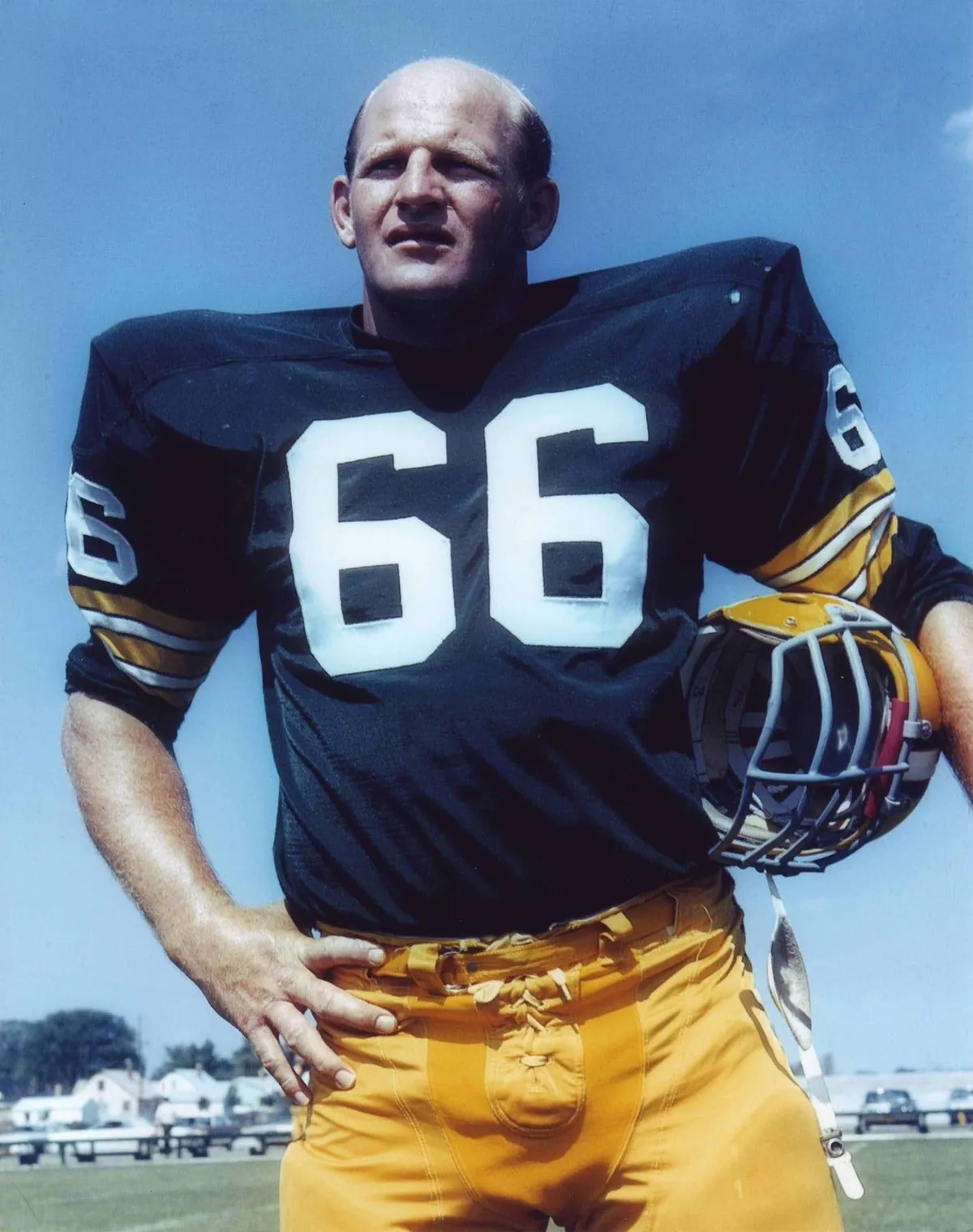
The position's development included several key milestones. Before separate offensive and defensive units, the center on offense often played linebacker on defense. Bednarik was selected first overall in the 1949 NFL draft. His tackle of Frank Gifford in 1960 is one of the most famous hits in NFL history. Detroit Lions linebacker Joe Schmidt was named the NFL's most valuable defensive player in 1960 and 1963. The 1960s and 1970s saw the rise of defensive legends like Ray Nitschke of the Green Bay Packers and Bobby Bell of the Kansas City Chiefs, one of the first black outside linebackers. Each decade introduced new styles and athletic benchmarks for the position.
- Germany Schulz of Michigan is credited with inventing the position in 1904.
- Cal Hubbard pioneered the linebacker role in professional football.
- Chuck Bednarik, the 1949 first overall pick, was the last full-time two-way player.
- Dick Butkus is viewed as the gold standard for middle linebackers.
- Lawrence Taylor revolutionized outside linebacker as a pass-rushing force in the 1980s.
- Ray Lewis holds the record for most Pro Bowl selections by a linebacker with 13.
- Luke Kuechly became the youngest AP NFL Defensive Player of the Year in 2013.
Notable Players and Records
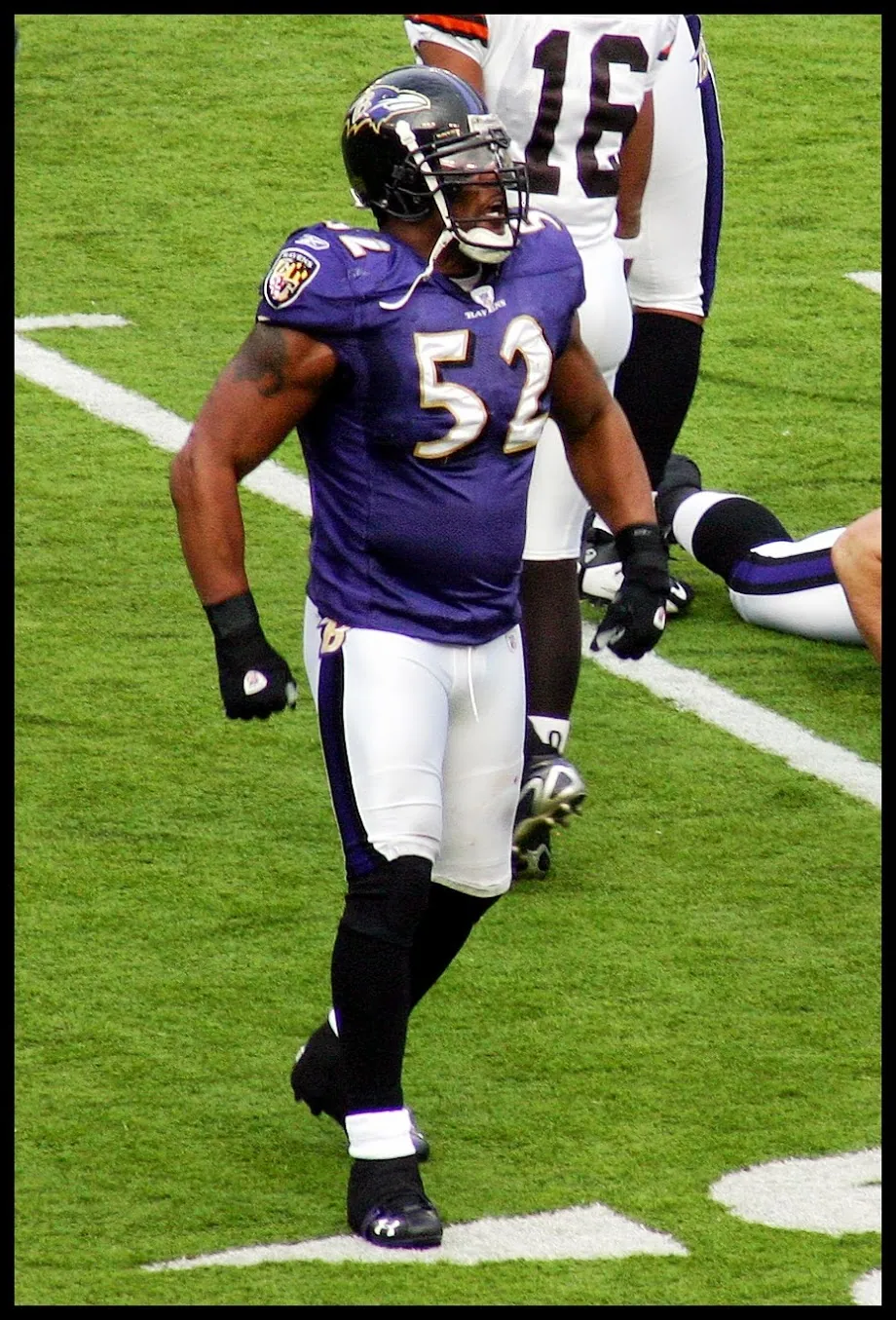
Ray Lewis, who played from 1996 to 2012, is often cited as one of the greatest, holding the record for most Pro Bowl selections by a linebacker with 13. Lawrence Taylor, who played from 1981 to 1993, revolutionized the outside linebacker position with his pass-rushing prowess and is frequently named the greatest defensive player of all time. Dick Butkus of the Chicago Bears is the standard for middle linebackers, renowned for his intimidating tackling. Other Hall of Fame linebackers include Chuck Bednarik, Mike Singletary, Derrick Brooks, and Brian Urlacher. These players exemplify the leadership, physicality, and versatility required at the position.
Statistical achievements further highlight the impact of top linebackers. Ray Lewis won two Defensive Player of the Year awards and was a Super Bowl MVP. Brian Urlacher led the Chicago Bears in sacks in 2000 and in interceptions in 2007, demonstrating his all-around ability. Junior Seau finished his career with 195 games played from 1990 to 2009. Derrick Brooks played 192 games from 1995 to 2008. The Chuck Bednarik Award is awarded annually to the best defensive player in college football.
| Player | Years Active | Key Accomplishments |
|---|---|---|
| Ray Lewis | 1996 to 2012 | 13 Pro Bowls, 2x DPOY, 2x Super Bowl Champ |
| Chuck Bednarik | 1949 to 1962 | 10x First Team All-Pro, 8 Pro Bowls |
| Junior Seau | 1990 to 2009 | 12 Pro Bowls, 195 games played |
| Derrick Brooks | 1995 to 2008 | 11 Pro Bowls, 192 games played |
| Brian Urlacher | 2000 to 2012 | Led team in sacks (2000) and INTs (2007) |
Statistics and Evaluation
Linebackers are judged by a combination of traditional and advanced statistics that measure their impact on the game. The most fundamental stat is total tackles, with middle linebackers frequently leading their teams in this category. Tackles for loss and sacks are critical for measuring a linebacker's ability to disrupt plays in the backfield, particularly for outside linebackers in pass-rushing roles. Pass coverage effectiveness is measured by passes defended, interceptions, and quarterback rating allowed when targeted. For example, Brian Urlacher led the Chicago Bears in sacks in 2000 and in interceptions in 2007, demonstrating his dual-threat capability. Modern analytics also evaluate a linebacker's range, missed tackle rate, and coverage snaps. While the value of traditional inside linebackers has been debated in the pass-heavy modern NFL, players who excel in these statistical areas remain crucial to defensive success.
Lawrence Taylor also played 192 games during his career from 1981 to 1993. Bobby Wagner is listed with 180 games as an inside linebacker from 2012 to 2025. These figures highlight the longevity required at the position. The ability to accumulate high tackle totals, generate sacks, and create turnovers over a long career defines the most successful linebackers. Teams use these metrics, along with film study, to assess a player's instincts, play speed, and consistency in executing their assignments within the defensive scheme.
Modern Trends and Value
The value and requirements of the linebacker position have shifted with offensive evolution over the last decade. The proliferation of spread offenses and passing attacks has placed a premium on speed and coverage ability over pure size and run-stopping strength. This has led to a decline in the perceived value of traditional off-ball inside linebackers in the NFL draft, with more resources allocated to edge rushers and defensive backs. However, linebackers with exceptional range and versatility who can blitz, cover tight ends, and play in space are still highly coveted. In a given draft cycle, there are anywhere from 3 to 6 linebackers selected in the first round of the NFL draft. The position remains a heartbeat of the defense, requiring players who can diagnose plays quickly, communicate adjustments, and match up against a wide variety of offensive personnel, ensuring its continued importance in defensive schemes.
The modern linebacker must be prepared for a wide array of offensive looks. They face schemes designed to confuse them or attack them directly with size and speed. The hybrid nature of the role means a player might be asked to take on a guard on one play and cover a running back on a wheel route the next. This demands not only physical traits but also intense film study and mental preparation. The green dot on an NFL linebacker's helmet signifies they have a direct communication link to the defensive coordinator, highlighting their role as a field general. Despite the shifting strategic landscape, having a player at the second level of the defense who can impact both the run and the pass creates significant mismatches and flexibility for a defensive coordinator.
Video
FAQ
What does a linebacker do in football?
A linebacker has multiple defensive responsibilities. Their primary job is to stop the run by filling gaps and tackling ball carriers. On passing plays, they drop into coverage to defend against tight ends, running backs, and sometimes receivers, or they blitz to pressure the quarterback. Linebackers also often relay the defensive play calls from the sideline to the rest of the team, making them key communicators on the field.
What are the three types of linebackers?
In a standard 4-3 defense, the three linebacker types are the strongside linebacker (Sam), the middle linebacker (Mike), and the weakside linebacker (Will). The Sam lines up on the offense's strong side, often across from the tight end, and focuses on run support and pass rushing. The Mike lines up in the middle, calls plays, and is a tackle leader. The Will lines up on the weak side and is typically the fastest, used extensively in pass coverage.
What is the Mike linebacker in football?
The Mike linebacker is another name for the middle linebacker. This player is frequently referred to as the quarterback of the defense because they often receive play calls from the sideline and communicate them to the unit. Positioned in the middle of the formation, the Mike is responsible for reading the offense, diagnosing plays, and making tackles. They must be versatile enough to stop the run, blitz on occasion, and drop into pass coverage.
Where does a linebacker line up?
Linebackers line up behind the defensive line, typically three to five yards from the line of scrimmage. Their exact alignment depends on the defensive formation and the offensive setup. In a 4-3 defense, three linebackers are spread across the field. In a 3-4 defense, four linebackers are used, with two outside linebackers often wider and closer to the line. The specific side (strong or weak) is determined by the offensive personnel.
What skills does a good linebacker need?
A good linebacker needs a combination of physical and mental skills. Physically, they require strength to shed blocks, size to tackle powerfully, and speed and agility to cover receivers and pursue plays. Mentally, they need high football intelligence to quickly diagnose plays, understand offensive schemes, and communicate effectively with teammates. Instincts, toughness, and the ability to react decisively are also essential for success at the position.
How has the linebacker position changed over time?
The linebacker position has evolved significantly from its origins as a roving center. It became more specialized with two-platoon systems, and players like Lawrence Taylor redefined outside linebacker as a premier pass-rushing role. In recent years, the rise of spread offenses and passing games has increased the demand for linebackers who are smaller, faster, and more adept in coverage compared to the larger, run-stuffing prototypes of the past. Versatility to handle multiple tasks is now the key modern requirement.
Sources
- Linebacker (Wikipedia) Wikipedia
- Linebacker | Football Positional Guidelines gobigrecruiting.com
- The Linebacker Position: An In-Depth Guide throwdeeppublishing.com
- Football 101: Linebacker Assignments and Alignment Bleacher Report
- What is the middle linebacker's role in the NFL? dazn.com
- How To Coach Linebackers (New Coach Guide) viqtorysports.com