A wide receiver, often abbreviated as WR, is a key offensive position in American football. The player's principal role is to catch forward passes thrown by the quarterback. Wide receivers line up split out wide near the sidelines, which is the origin of their name. They are among the fastest players on the field and are critical to a team's passing attack. The position has evolved from the historic ends and flankers into a central component of modern offenses.
Primary Role and Core Responsibilities
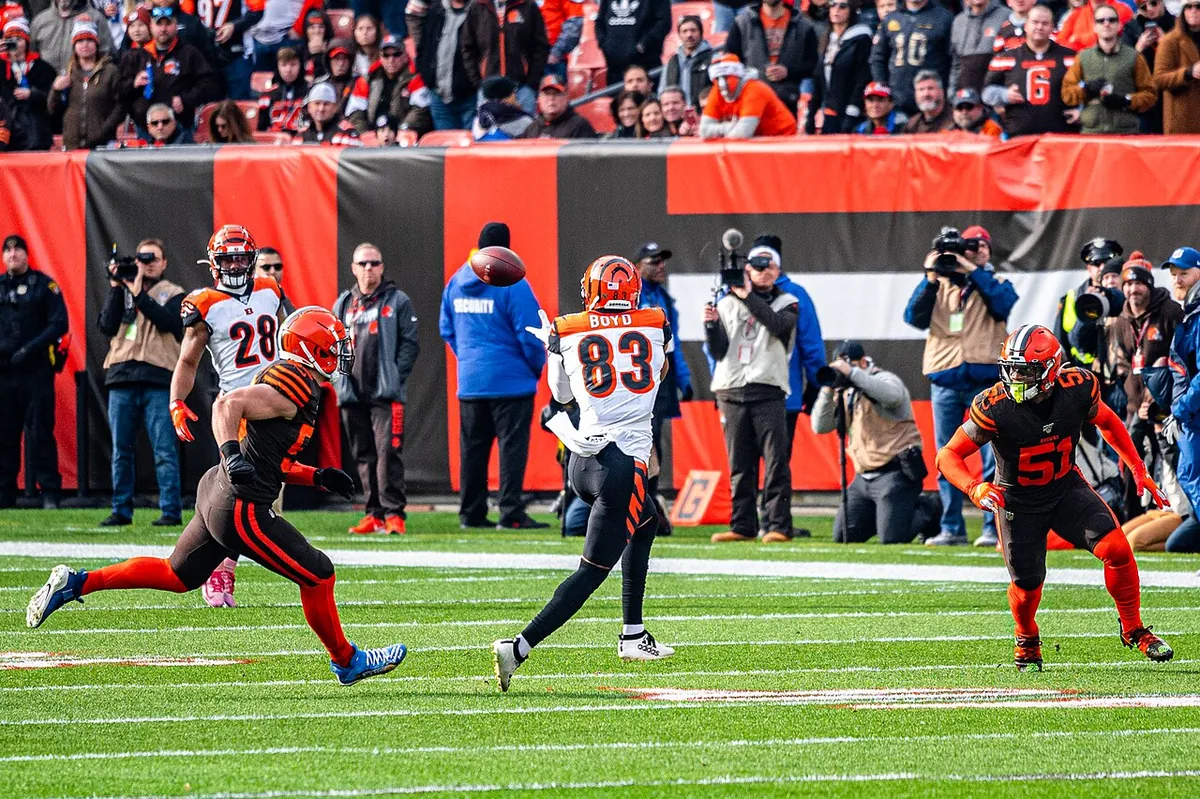
The wide receiver's fundamental task is to serve as the primary target in the forward passing game. On a passing play, the receiver executes a specific route designed to create separation from the defensive back assigned to cover them. Success requires catching the ball without it touching the ground, a completion, and then advancing it toward the opponent's end zone. Beyond receiving, wide receivers have a crucial blocking duty, especially on running plays, where they must engage cornerbacks or safeties to clear a path for the ball carrier. Players like Hines Ward of the Pittsburgh Steelers exemplified this dual role, gaining recognition for his blocking while also becoming one of 13 players in NFL history through 2009 with at least 1,000 receptions. In certain offensive schemes, receivers may be used as ball carriers on trick plays such as end-arounds or reverses.
Alignment and Formations
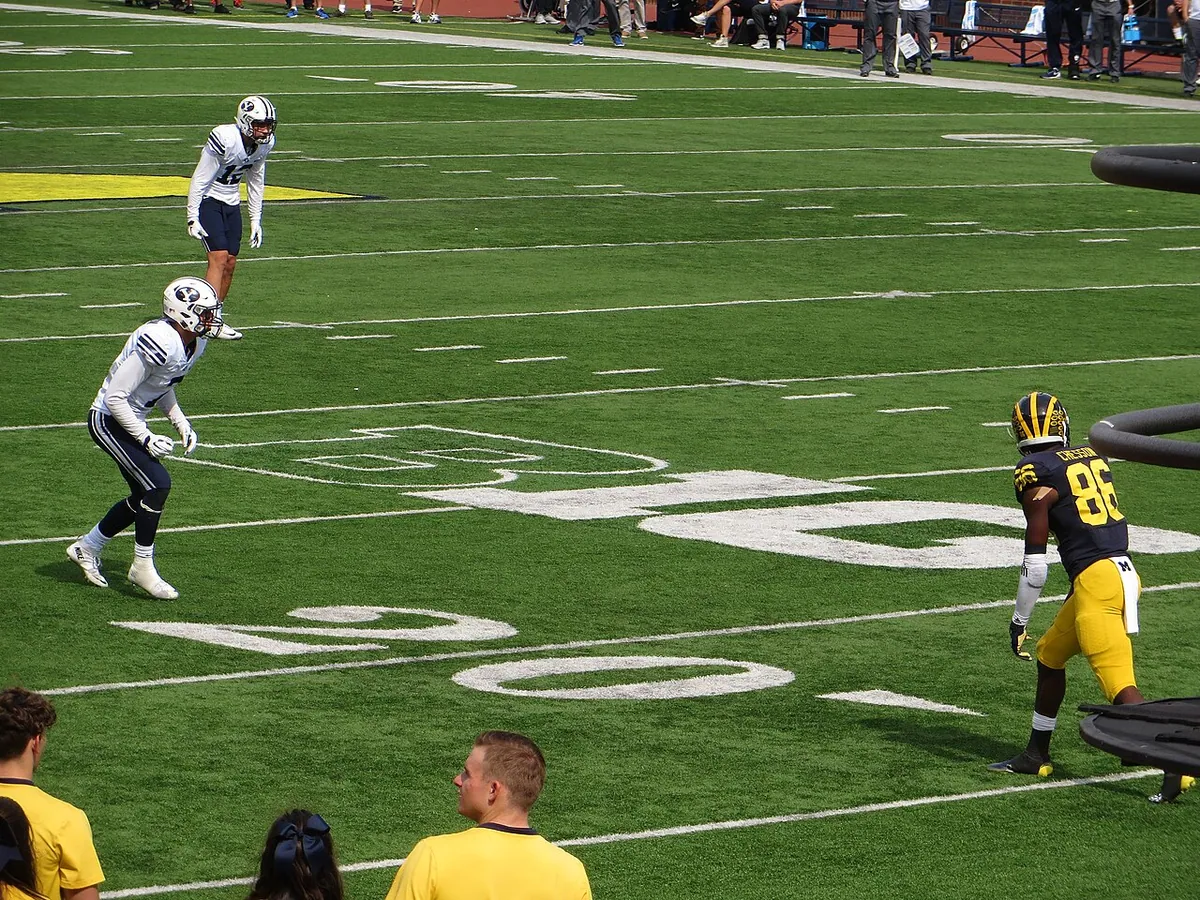
Wide receivers align on the offensive side of the ball, positioned at the edges of the formation near the sidelines. The specific alignment defines the receiver's designation and impacts their role on the play. The split end, also known as the X receiver, must line up on the line of scrimmage to satisfy the rule requiring seven offensive players on the line. The flanker, or Z receiver, positions themselves off the line of scrimmage, typically a yard behind it, which allows for pre-snap motion. The slot receiver lines up in the open area between the outermost receiver and the offensive line, usually also off the line of scrimmage. Modern offenses frequently deploy three or more wide receivers, making multi-receiver sets a standard rather than a specialty. By the late 2010s, NFL teams increasingly defaulted to three- and four-receiver sets, which in turn made the slot cornerback a de facto starter on defense.
Physical Skills and Technical Attributes
Excelling at wide receiver demands a rare blend of physical tools and refined technique. Elite speed is a premium asset, allowing a receiver to serve as a deep threat and run past defenders. Agility and body control are essential for making sharp cuts on routes and adjusting to poorly thrown passes in mid-air. Strong, reliable hands are the defining skill, with the ability to catch the ball in contested traffic being the highest standard, especially in the NFL where coverage is tight. Upper-body flexibility helps receivers extend to catch balls thrown behind them or outside their frame. Strength is vital for fighting through a defensive back's jam at the line of scrimmage and for winning jump-ball situations against defenders. Mental attributes include intense focus to catch the ball while anticipating contact and a high football IQ to read coverages and adjust routes on the fly. One study indicates that about 80 percent of wide receivers' peak seasons fall between the ages of 23 and 30.
Receiver Types and Specialized Roles
The wide receiver position is subdivided into types based on alignment, physical profile, and tactical use. The split end is typically the larger outside receiver who lines up on the line of scrimmage and often serves as the primary deep threat. The flanker lines up off the line, providing versatility in motion and route running. The slot receiver operates from the inside alignment, prized for quickness and reliability on shorter, timing-based routes over the middle. A possession receiver is valued for sure hands and the ability to convert critical third-down situations, often running crossing routes. A blocking receiver, while still a pass-catching threat, is particularly adept at engaging defenders to aid the running game. These roles are not always exclusive, as the best receivers can often perform multiple functions. The proliferation of these specialized roles is a direct result of offensive evolution, with the slot receiver becoming a fixture of formations. Charlie Joiner was the first slot receiver to be his team's primary receiver.
- Split End (X): Aligns on the line of scrimmage, often the primary outside target.
- Flanker (Z): Aligns off the line of scrimmage, versatile in motion and route running.
- Slot Receiver: Aligns between the offensive line and an outside receiver.
- Possession Receiver: Excels at securing catches in traffic to move the chains.
- Deep Threat: Uses superior speed to stretch the defense vertically.
- Blocking Receiver: Provides significant value as a perimeter blocker.
Route Running and Key Techniques
Route running is the technical craft that defines a receiver's ability to get open. Coaches implement a numbered route tree system, typically using digits zero through nine to designate specific patterns like the go route (deep vertical) or the hitch route (quick stop). The first critical technique is the release at the line of scrimmage, where a receiver must use footwork and fakes to defeat a cornerback's attempt to jam them. Stemming and stacking refers to the process of gaining leverage on a defender during the route to create separation before the break. Securing the ball in traffic requires strong hands and the concentration to catch while absorbing contact from defenders. After the catch, running in open space demands balance, vision, and acceleration to turn short gains into long plays. Effective blocking for a wide receiver involves engaging often larger defenders on the perimeter with proper technique and sustained effort until the whistle blows.
Historical Evolution of the Position
The wide receiver originated from the end, a position that originally lined up on the offensive line next to the tackle. In the 1930s, teams began splitting one end out wide near the sideline to spread the defense, creating the split end. Don Hutson of the Green Bay Packers was the first player to successfully exploit the potential of this split end role. The need for a second receiver was met by using a running back in a pass-catching capacity, who would line up a yard off the line of scrimmage in a flanking position, leading to the name flanker. Elroy Hirsch of the Los Angeles Rams was an early star at the flanker position during the 1950s. The use of three or more receivers began as an innovation by coaches like Sid Gillman in the 1960s. His assistant, Al Davis, brought the concept of the slot receiver to the Oakland Raiders. Offenses like Don Coryell's Air Coryell system in the late 1970s and early 1980s further popularized multiple-receiver sets, with Charlie Joiner becoming the first slot receiver to be his team's primary target. The 1990s saw the widespread adoption of three-receiver offenses through schemes like the run and shoot and the Buffalo Bills' K Gun.
Notable Players and Award Winners
Jerry Rice stands atop the history of the position, holding the NFL's all-time career records for receptions, receiving yards, and receiving touchdowns. He is a three-time Super Bowl champion and a ten-time All-Pro selection. Randy Moss is known for his exceptional athletic ability and is noted for his touchdown receptions. In the NFL, through 2026, only five wide receivers have won the Offensive Player of the Year award. Jerry Rice won the award in 1987 and again in 1993. No wide receiver has ever won the NFL's Most Valuable Player award. At the college level, five wide receivers have won the Heisman Trophy. Other historically significant figures include Don Hutson, the pioneer of the split end, and Hines Ward, celebrated for his complete play as a receiver and blocker.
| Player | Notable Fact |
|---|---|
| Jerry Rice | NFL career leader in receptions, yards, touchdowns, 3-time Super Bowl champion |
| Randy Moss | Holds a record for touchdown receptions in a season |
| Don Hutson | Green Bay Packers star who defined the split end role |
| Antwaan Randle El | First wide receiver to throw a touchdown pass in a Super Bowl (XL) |
| DeVonta Smith | Won the Heisman Trophy in 2020 |
| Cooper Kupp | Won NFL Offensive Player of the Year in 2021 |
Statistics for Evaluation and Scouting
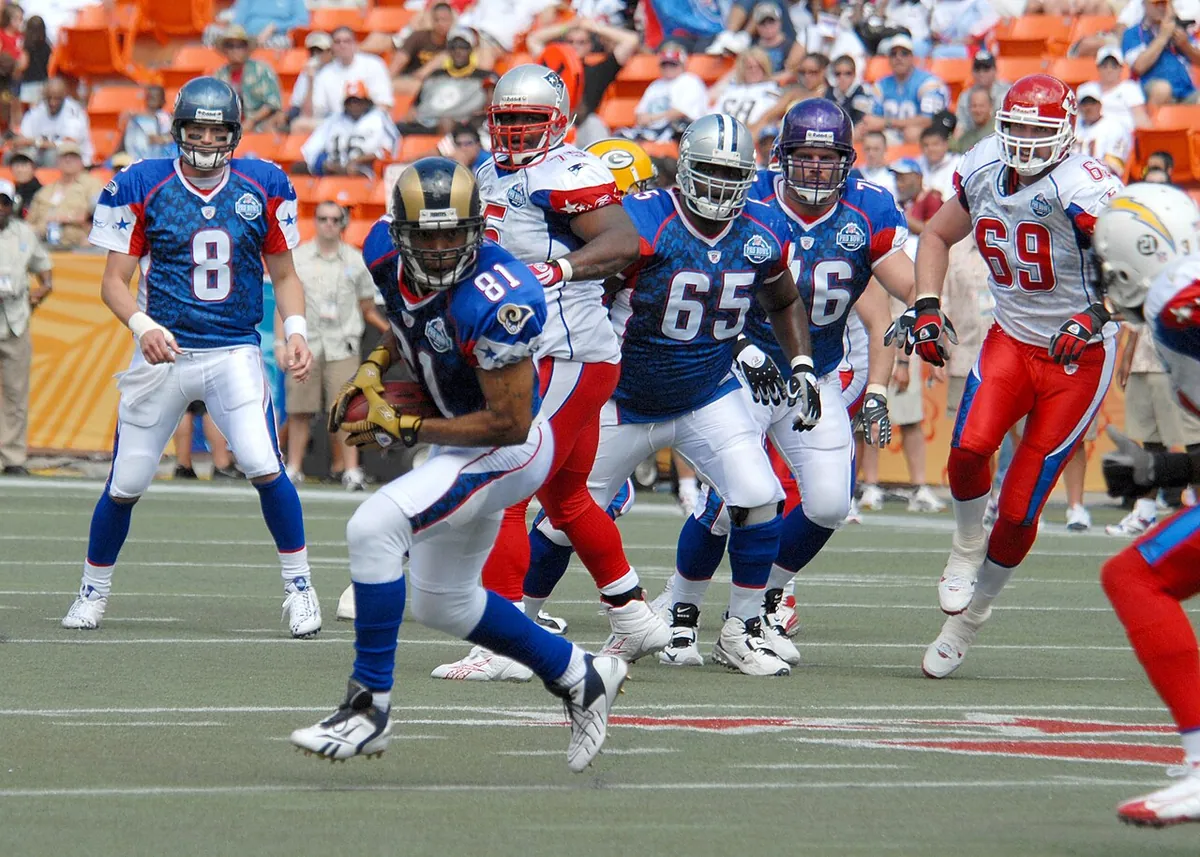
Wide receiver performance is quantified through a standard set of statistical measures. The primary counting stats are total receptions, receiving yards, and receiving touchdowns. Efficiency is often gauged by yards per reception, which indicates big-play capability, and catch percentage, which reflects reliability. In modern analytics, yards after catch (YAC) is a critical metric that measures a player's ability to gain additional yardage following the reception. First-down receptions and red-zone targets are situational stats that highlight a receiver's value in moving the chains and scoring. While individual statistics are prominent, a receiver's impact can also be seen in their ability to draw double coverage, thereby creating opportunities for teammates, and in their effectiveness as a blocker. The 2022 NFL Draft highlighted the position's escalating value, with a record six wide receivers selected within the first 20 picks, indicating how heavily teams now invest in premier pass-catching talent.
Special Teams and Other Duties
Beyond their offensive responsibilities, wide receivers are frequently key contributors on special teams units. Many serve as kickoff or punt returners, leveraging their speed, agility, and vision in the open field. Devin Hester, listed as a wide receiver for the Chicago Bears, is considered one of the greatest return specialists in NFL history. Other receivers act as gunners on punt coverage, using their speed to race downfield and tackle the returner. On kickoff coverage, they may be part of the hands team during onside kick attempts. Matthew Slater of the New England Patriots, a ten-time Pro Bowl selection and five-time All-Pro, built a career almost exclusively as a special teams gunner while being listed as a wide receiver, though he had only one career reception. This versatility makes the wide receiver position valuable for roster construction, as players can contribute in multiple phases of the game.
Video
FAQ
What is a wide receiver in football?
A wide receiver is an offensive position in American football whose primary role is to catch forward passes thrown by the quarterback. They line up split out wide near the sidelines, hence the name. Their main objectives are to run precise routes to get open, catch the ball, and then gain as many yards as possible, often aiming to score a touchdown. They also have responsibilities in blocking on running plays.
What does a wide receiver do?
On passing plays, a wide receiver runs a predetermined route to get separation from the defender covering them and catches the ball from the quarterback. After the catch, they attempt to run for additional yardage. On running plays, they are responsible for blocking defensive backs to help spring the ball carrier. They may occasionally run the ball themselves on trick plays like end-arounds and can sometimes be used to throw a pass. Many also play on special teams as returners.
What are the different wide receiver positions?
The three main wide receiver positions are the split end (X), the flanker (Z), and the slot receiver. The split end lines up on the line of scrimmage on the outside. The flanker lines up off the line of scrimmage, often on the same side as the tight end. The slot receiver lines up in the open space between the offensive line and an outside receiver. These positions utilize different skill sets, with outside receivers often being taller and faster, while slot receivers are frequently quicker and more elusive.
What skills are needed to be a wide receiver?
A successful wide receiver needs a combination of physical and mental skills. Key physical attributes include speed, agility, strong hands, body control, and upper body flexibility. They must be proficient in route running, using releases to beat press coverage at the line, and securing catches in traffic. Mental toughness, focus, and a high football IQ are essential for reading defenses, adjusting routes, and maintaining concentration while taking hits. Strength is also important for blocking and fighting for contested catches.
Is wide receiver a good position in football?
Wide receiver is a premier skill position that offers high visibility and the potential for game changing plays. It is a physically demanding role that requires elite athleticism and technical skill. The position's importance has grown tremendously as NFL and college offenses have become more pass oriented, making top receivers highly valued. The 2022 NFL Draft, where six wide receivers were taken in the first 20 picks, demonstrates the significant investment teams make in the position. It is a challenging but rewarding role for players with the requisite talent.
Who are some of the best wide receivers of all time?
Jerry Rice is universally regarded as the greatest, holding NFL career records for receptions, yards, and touchdowns. Randy Moss is celebrated for his exceptional athleticism and deep threat ability. Historical pioneers include Don Hutson, who defined the split end role, and Charlie Joiner, an early star slot receiver. In college football, Heisman Trophy winners include Johnny Rodgers, Tim Brown, Desmond Howard, DeVonta Smith, and Travis Hunter.
Sources
- Wide receiver (Wikipedia) Wikipedia
- The Wide Receiver Position: An In-Depth Guide throwdeeppublishing.com
- What is a wide receiver in the NFL? dazn.com
- Qualities of Wide Receivers us.humankinetics.com
- Wide Receivers Guide For New Coaches viqtorysports.com