A kickoff is a method of starting a drive in gridiron football, used to begin each half, overtime periods, and after scoring plays. In the NFL, the current procedure is governed by the dynamic kickoff rule, adopted permanently in 2025 after a trial in 2024. This rule significantly alters player alignment and movement to increase the frequency of returns while aiming to reduce high-speed collisions and injuries. The fundamental objective is for the kicking team to advance the ball to the receiving team, which then attempts a return until the ball carrier is tackled, goes out of bounds, or scores.
How the NFL Kickoff Rule Works
The NFL's dynamic kickoff rule, established for the 2024 season and made permanent in 2025, features a unique formation and strict movement restrictions. The ball is still kicked from the kicking team's 35-yard line. The kicker is prohibited from crossing the 50-yard line until the ball touches the ground or a player in the designated landing zone. On the receiving side, a maximum of two returners may position themselves in the landing zone between the goal line and the 20-yard line. The rest of the receiving team must align at least nine players in a five-yard setup zone between their own 30 and 35-yard lines, following specific rules about positioning near the hashmarks. Movement for all players in the setup zone and on the kicking team's front line is frozen until the ball is touched by a returner or lands in the landing zone. This design brings players closer together at the start of the play, reducing the distance and speed of collisions that were common under the old rules.
The rule creates three distinct zones that determine the outcome of a kick. The landing zone is the critical area between the goal line and the receiving team's 20-yard line. Any kick that is caught or lands in this zone must be returned by the receiving team. If a kick fails to reach the landing zone in flight, it is treated as a kick out of bounds, and the receiving team gets the ball at its own 40-yard line. These outcomes incentivize kickers to place the ball precisely within the landing zone to force a return and prevent advantageous field position for the opponent.
Onside kicks remain a part of the game but operate under specific declaration rules. For the 2026 season, a team may declare an onside kick at any point during a game. The kicking team must notify the officials of its plan, which allows the receiving team to set up a standard formation to defend it. Onside kicks under the dynamic kickoff rules operate under specific declaration rules and often use a more traditional formation. The standard rule that the ball must travel 10 yards before the kicking team can recover it still applies, with penalties for violations.
Differences in College and High School Football
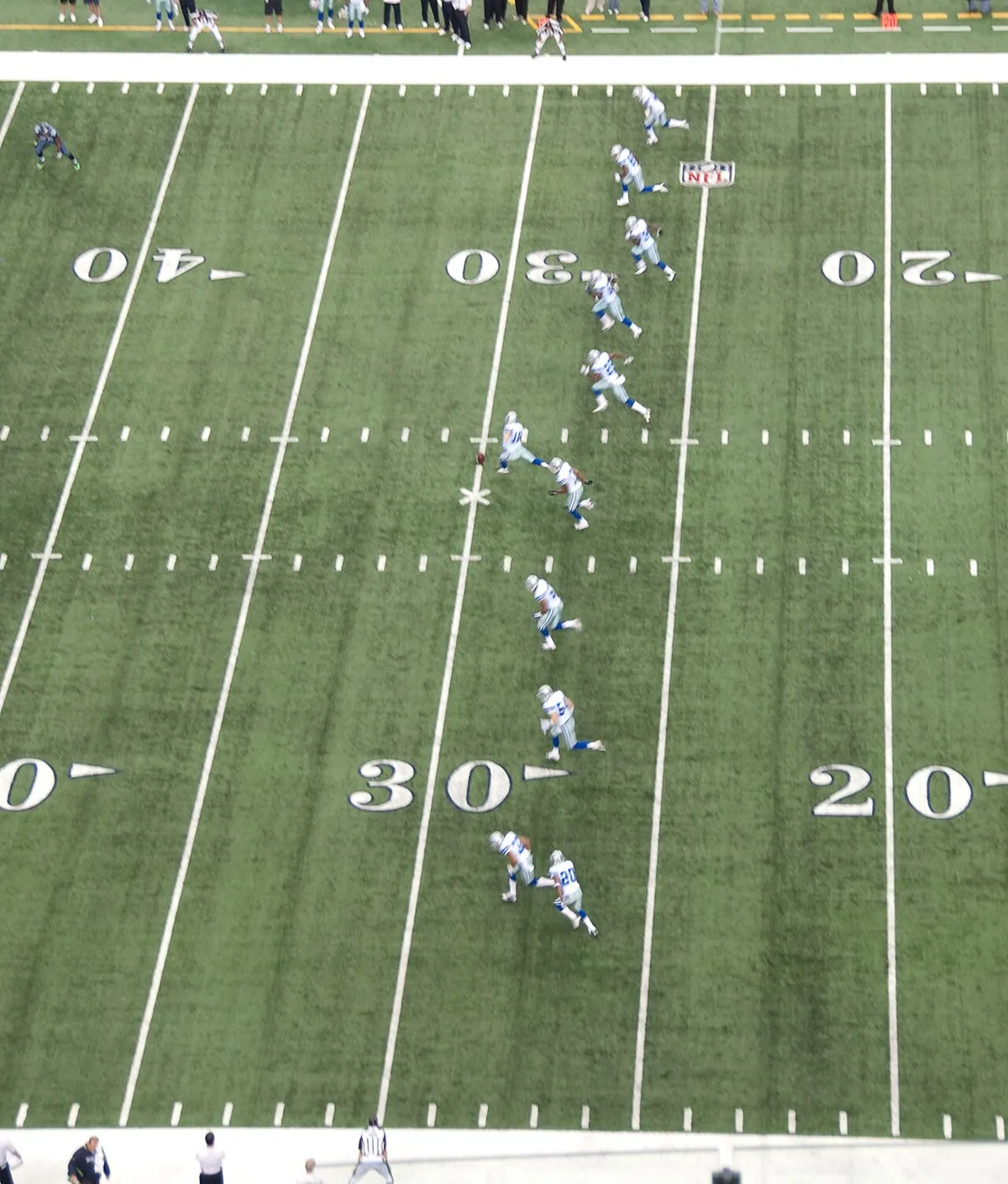
College football and high school football have not adopted the NFL's dynamic kickoff format and maintain more traditional procedures with their own distinct rules. In NCAA football, the kickoff takes place from the kicking team's 35-yard line, mirroring the NFL's starting point prior to 2024. The restraining line for the kicking team is at the 35, and players cannot cross it until the ball is kicked. A fair catch can be signaled by the receiving team in college football. In college football, a touchback on a kickoff results in the ball being placed at the receiving team's 25-yard line. The Ivy League experimented with moving the kickoff spot to the 40-yard line for the 2016 conference season, but this was not adopted nationally.
High school football, governed by the National Federation of State High School Associations (NFHS), uses a different spot for the kickoff. The ball is placed on the kicking team's 40-yard line. A key distinction in high school rules outside of Texas is that the ball is immediately ruled dead when it crosses the goal line on a kickoff. The touchback spot in high school is the receiving team's 20-yard line. Penalties also differ, such as the receiving team's only option for a kicking team offsides violation being to force a re-kick from five yards farther back.
Canadian football features further variations in its amateur and professional leagues. In amateur Canadian football, the kickoff spot is the kicking team's 45-yard line. A major difference in all Canadian rules is the concept of the single point, or rouge. If the ball goes into the end zone and out of bounds without being touched, the receiving team scrimmages from its 25-yard line with no points awarded.
History of NFL Kickoff Rule Changes
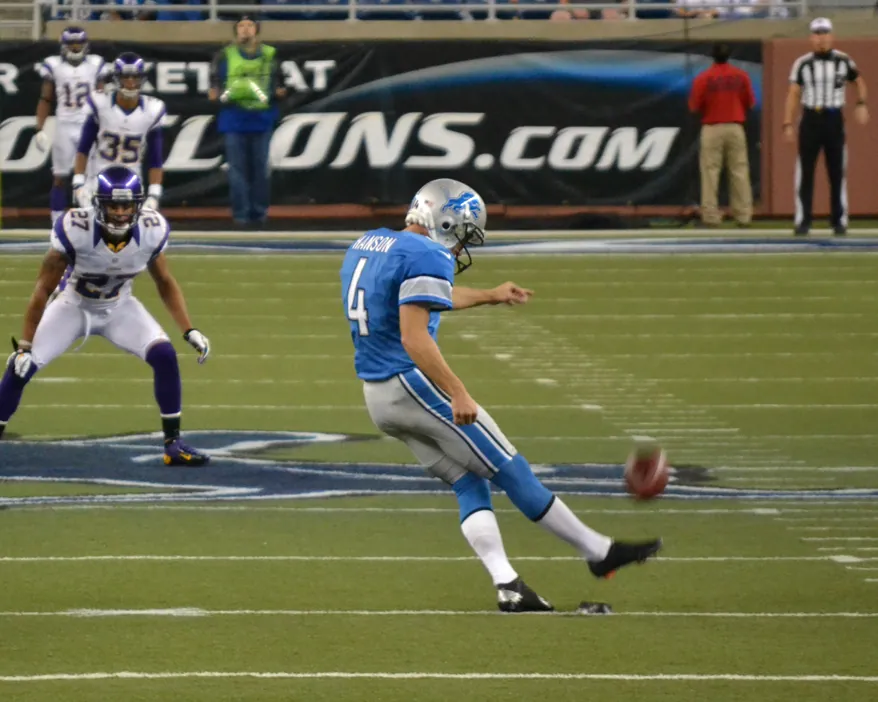
The NFL has repeatedly adjusted its kickoff rules over decades, primarily balancing player safety with the excitement of the return game. In 1974, the league moved the kickoff spot five yards forward, from the 40-yard line to the 35-yard line, to create more returns. This change successfully increased the kickoff return rate from 75 percent to 92 percent. The league began directly targeting safety in 2009 by banning the use of a three or more-player wedge on returns.
The most significant pre-2024 shift came in 2011, when the kickoff spot was moved to the 35-yard line in an effort to reduce high-speed collisions. This dramatically increased touchbacks, which jumped from 16 percent of all kickoffs in 2010 to almost 44 percent in 2011. While concussions on kickoffs reportedly dropped by 40 percent that year, the return rate fell from 80 percent to 50 percent. The average number of kickoff returns per team plummeted from 64 in 2010 to 43 in 2011. In 2016, the league further incentivized touchbacks by moving the spot after a touchback from the 20-yard line to the 25-yard line. This trend continued, and by the 2023 season, the average number of kickoff returns per team had fallen to only 18 for the entire year.
Seeking to revive the play, the NFL adopted the dynamic kickoff for the 2024 season. The rule was modeled after a procedure used by the second iteration of the XFL. The initial 2024 version increased the average number of returns per team to 29 and led to a 43 percent decrease in concussions compared to the 2021 to 2023 period. There were seven kickoffs returned for touchdowns in 2024, the most since 2021. In 2025, the league made the dynamic kickoff permanent and modified it further, moving the touchback spot to the 35-yard line to further discourage kicking for touchbacks. This change caused a major spike in returns, with the average number of kickoff returns per team soaring from 29 in 2024 to 65 in 2025. For the 2026 season, minor adjustments were made, including modifying the dead ball spot after a touchback when the kickoff is from the 50-yard line following a penalty.
Key Penalties and Infractions
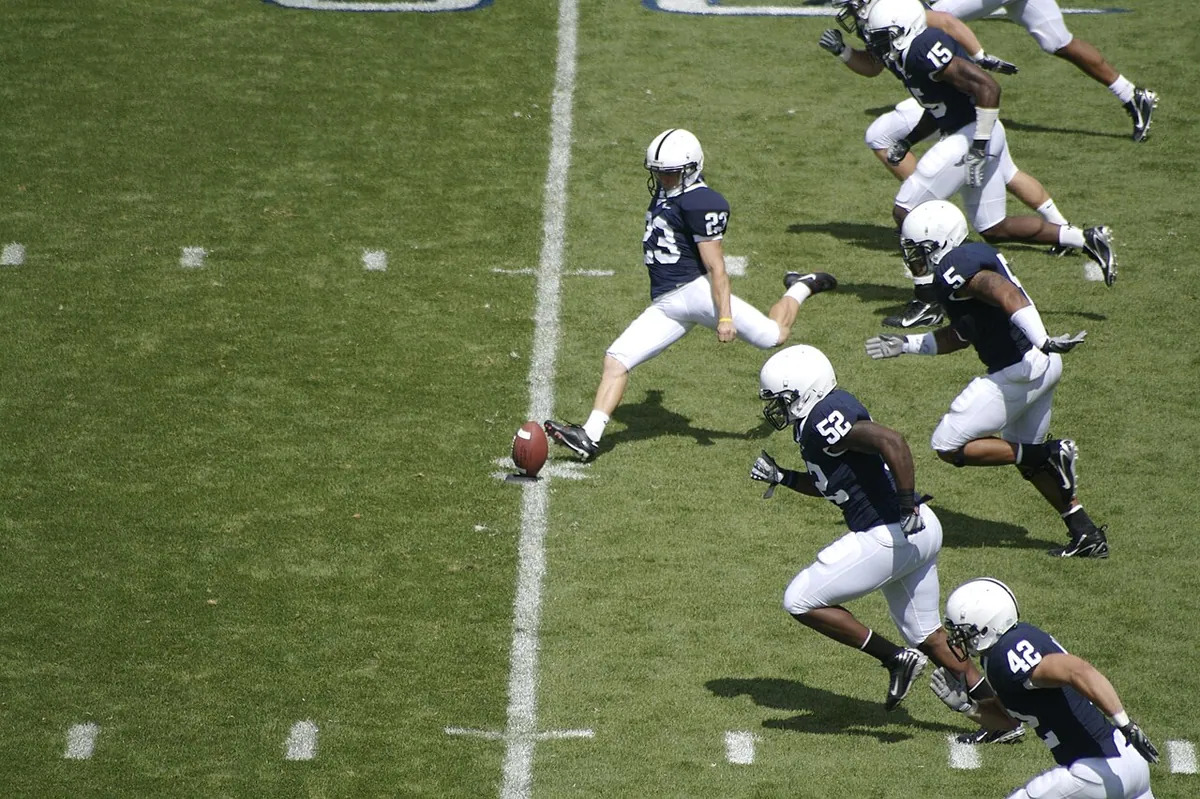
Various penalties govern the kickoff play to enforce alignment and fairness rules. If a player on the kicking team crosses the line of the kick (the 35-yard line in the NFL) before the ball is kicked, it is an offsides violation. The receiving team then has the option to either have the kicking team re-kick from five yards farther back or accept a five-yard penalty assessed from the end of the return. In high school football, the receiving team's only option is to force a re-kick. If a receiving team player crosses his restraining line before the kick, the ball is advanced five yards and the kick is repeated.
A critical penalty involves the ball going out of bounds. If a kickoff goes out of bounds before being touched by a player, the receiving team is awarded several choices. Under NCAA rules, the penalty is 30 yards from the kick spot, and under NFHS high school rules, it is 25 yards. The XFL and the current UFL have implemented more severe penalties for out-of-bounds kicks, allowing the receiving team to take the ball at the kicking team's 45-yard line or the 50-yard line, respectively.
On onside kick attempts, the primary rule is that the ball must travel 10 yards before the kicking team can legally recover it. If the kicking team recovers the ball before it goes 10 yards, they are penalized five yards and must re-kick. If the second attempt also fails to go 10 yards before recovery, the receiving team takes possession at the spot of the recovery. However, if a member of the receiving team touches the ball before it has gone 10 yards, it becomes a live ball that either team can recover without penalty. The new dynamic kickoff rules also include penalties for players moving before the ball is touched or hits the ground in the landing zone.
Types of Kickoffs and Strategic Uses
Teams employ different types of kickoffs based on game situation and strategy. The standard kickoff is aimed for maximum distance and hang time, ideally landing within the landing zone under current NFL rules to force a return while allowing coverage players time to tackle the returner deep. A squib kick is a low, bouncing kick often used in the final seconds of a half or game when a team is protecting a lead. While it typically gives the receiving team better field position, it is used to avoid a long return and to consume valuable time on the clock, as a squib kick cannot be fair caught. A line drive kick is a harder, lower-trajectory kick sometimes used with 20 to 50 seconds remaining to limit return options.
The onside kick is a high-risk, short-distance kick used when a team needs to regain possession quickly, typically when trailing late in a game. The kicking team attempts to kick the ball just over the required 10 yards and recover it before the receiving team can secure it. Under NFL rules for 2026, a team can declare an onside kick at any time, but must notify officials beforehand. A surprise onside kick, attempted without declaration using the traditional formation, is a rare but legal tactic if executed correctly. The fair catch kick is an obscure free kick option following a fair catch, but it is not a kickoff procedure.
- Standard Kickoff: Aimed for distance and hang time into the landing zone.
- Squib Kick: A low, bouncing kick used to run out the clock.
- Onside Kick: A short kick intended for the kicking team to recover.
- Line Drive Kick: A low-trajectory kick to limit return time.
- Directional Kick: Kicking to a specific corner or hash to pin the returner.
The strategic importance of the kickoff specialist has evolved with rule changes. Historically, the goal was pure leg strength to drive the ball as far as possible. Under the dynamic kickoff rules, precision and placement have become paramount. A kicker must now master hang time to allow coverage to converge and directional accuracy to place the ball within the confines of the landing zone. Kicking the ball into the end zone results in a touchback at the 30 or 35-yard line, often giving the opponent better field position than a well-covered return. Therefore, the modern kickoff is a tactical placement exercise rather than simply a test of power.
Notable Examples and Impact
The implementation of the dynamic kickoff rule has led to immediate and noticeable changes in NFL games. In the 2024 season, the first two kickoffs under the new rules were both returned to the 26-yard line, illustrating the rule's intent to generate returns. The season saw seven kickoffs returned for touchdowns, the highest total since 2021. The rule also introduced new scenarios for errors, such as an incident involving Pittsburgh Steelers player Kaleb Johnson, who failed to down the ball after it landed in the end zone, allowing the Seattle Seahawks to recover for a touchdown. This highlighted the live-ball nature of kicks that hit the landing zone before entering the end zone.
The rule's impact on safety statistics has been a key point of league emphasis. NFL data from the 2024 season showed a significant decrease in concussions on kickoffs, down 43 percent compared to the 2021 to 2023 average. This was attributed to the reduced average player speeds caused by the new alignment, which lessens the force of collisions. The return rate increased to 32.8 percent in 2024 from 21.8 percent in 2023, though coaches initially still largely preferred touchbacks. The 2025 modification, moving the touchback spot to the 35-yard line, successfully made touchbacks less desirable, causing the return rate and total returns to surge dramatically.
Historical rule changes have also had clear impacts on the game. The 2016 change to spot touchbacks at the 25-yard line continued this trend, contributing to the historic low of 18 returns per team in 2023. These shifts made the kickoff a largely ceremonial play for several years, which the 2024 overhaul directly sought to reverse. The evolution demonstrates the league's ongoing effort to find an equilibrium between an exciting, integral play and the welfare of its players.
Related Football Rules and Terms
Several related rules and terms are essential for understanding the full context of the kickoff. A touchback occurs when the ball becomes dead on or behind the receiving team's goal line, provided the impetus came from the kicking team, and results in the receiving team starting its drive at a designated yard line. A fair catch is a signal by a receiving team player to catch the kick without being tackled, after which the ball is dead at the spot of the catch. However, fair catches are prohibited on kickoffs under the NFL's current dynamic rules. The free kick is the broader category of kicks that includes kickoffs and kicks after safeties, distinguished from scrimmage kicks like punts and field goals.
The safety kick follows a safety score, where the team that was scored upon kicks the ball from its own 20-yard line. In the NFL, the use of a kicking tee is prohibited on safety kicks. The onside kick is a specific type of kickoff where the kicking team attempts to recover the ball after it travels the mandatory 10 yards. The landing zone, setup zone, and restraining line are all specific designations created for the NFL's dynamic kickoff format to govern player alignment and movement. The single, or rouge, is a scoring play unique to Canadian football that can occur on kickoffs that are not returned from the end zone.
| Term | Definition |
|---|---|
| Touchback | Ball dead in end zone, receiving team starts at designated spot. |
| Fair Catch | Signal to catch kick without being tackled, not allowed on NFL kickoffs. |
| Free Kick | Kick that starts a free down, includes kickoffs and safety kicks. |
| Safety Kick | Free kick from the 20-yard line after a safety is scored. |
| Onside Kick | Short kickoff intended for kicking team recovery after 10 yards. |
| Landing Zone | Area between goal line and 20 where ball must be returned. |
| Single (Rouge) | Canadian score when kick isn't returned from end zone. |
Video
FAQ
What is the new NFL kickoff rule?
The new NFL kickoff rule, known as the dynamic kickoff, was adopted for the 2024 season and made permanent in 2025. It changes player alignment drastically, with the kicking team lining up at the receiving team's 40-yard line and the receiving team stacking most players in a setup zone between their 30 and 35. Only the kicker and returners can move before the ball is touched or hits the ground in the landing zone. The rule aims to increase kickoff returns while reducing high-speed collisions, with touchbacks spotted at the 30 or 35-yard line depending on the kick's trajectory.
How does a kickoff work in football?
A kickoff is a free kick used to start each half, overtime, and after scoring plays. The kicking team kicks the ball from a designated spot (the 35 in NFL and college, the 40 in high school) toward the receiving team. The receiving team may attempt to return the ball by advancing it upfield until the ball carrier is tackled or goes out of bounds. Specific rules govern alignment, with players restrained from crossing certain lines until the ball is kicked. Outcomes include a return, a touchback if the ball is downed in the end zone, or an onside kick recovery if the kicking team regains possession after the ball travels 10 yards.
Why did the NFL change the kickoff rule?
The NFL changed the kickoff rule to address two primary issues: an unacceptably high injury rate on the play and a historically low return rate. By the 2023 season, the average number of kickoff returns per team had fallen to only 18. The league adopted the dynamic kickoff format in 2024 to make the play safer by reducing the distance and speed of collisions while also reviving it as an exciting part of the game. Early data showed a 43 percent decrease in concussions in 2024 compared to the 2021 to 2023 average and a significant increase in returns.
What is a touchback on a kickoff?
A touchback on a kickoff occurs when the ball becomes dead on or behind the receiving team's goal line, provided the impetus came from the kicking team. This results in the receiving team starting its next offensive drive from a predetermined spot without having attempted a return. Under current NFL dynamic kickoff rules, the touchback spot depends on how the ball entered the end zone. Under the NFL's dynamic kickoff rules, the touchback spot depends on the kick's trajectory and the season, with spots at the 20, 30, or 35-yard line. In college football, the touchback spot is the 25-yard line.
What happens if a kickoff goes out of bounds?
If a kickoff goes out of bounds before being touched by a player, a penalty is assessed against the kicking team. The receiving team is given several options. They can choose to take possession of the ball at the spot where it went out of bounds. Alternatively, they can take the ball 25 yards past the spot of the kick in the NFL, which from the 35-yard line places it at their own 40. They can also elect to have the kicking team re-kick from five yards behind the original spot. In college football, the penalty is 30 yards from the kick spot, and in high school, it is 25 yards.
What happens if a kickoff lands short of the landing zone in the NFL?
If a kickoff lands short of the landing zone, which is the area between the goal line and the 20-yard line, it is treated the same as a kickoff going out of bounds. The result is a touchback, and the receiving team is awarded possession at its own 40-yard line. This rule is designed to penalize poorly executed kicks and incentivize kickers to aim for the landing zone. It is part of the NFL's dynamic kickoff format implemented to increase returns while managing player safety.
Further reading
- Featured rules, including the Dynamic Kickoff NFL Football Operations. The league's explanation of the dynamic kickoff alignment and the latest rule changes.
Sources
- Kickoff (gridiron football) (Wikipedia) Wikipedia
- The NFL's kickoff rule explained and how, despite what Donald Trump says, it made the sport safer cnn.com
- 2024 NFL Season: Explaining rules for new dynamic kickoff NFL
- New NFL Kickoff Rules Explained: What Fans Need to Know sportsnaut.com
- How NFL Kickoff Rules Changed (And What Kickers Must Adjust) kickersofearth.com