A kickoff is a method of starting a drive in gridiron football, used to begin each half of play, overtime periods, and after scoring plays. In the procedure, the kicking team kicks the ball from a designated yard line to the receiving team, which may attempt to return it. The NFL rulebook has undergone significant changes, most recently adopting a dynamic kickoff format in 2024 to increase returns and improve player safety. Kickoff rules differ among the NFL, college football, and high school football, particularly regarding the spot of the kick and touchback placement. The play's history includes numerous adjustments to the kickoff line and touchback rules aimed at balancing excitement and injury reduction.
NFL Kickoff Procedure and Rules
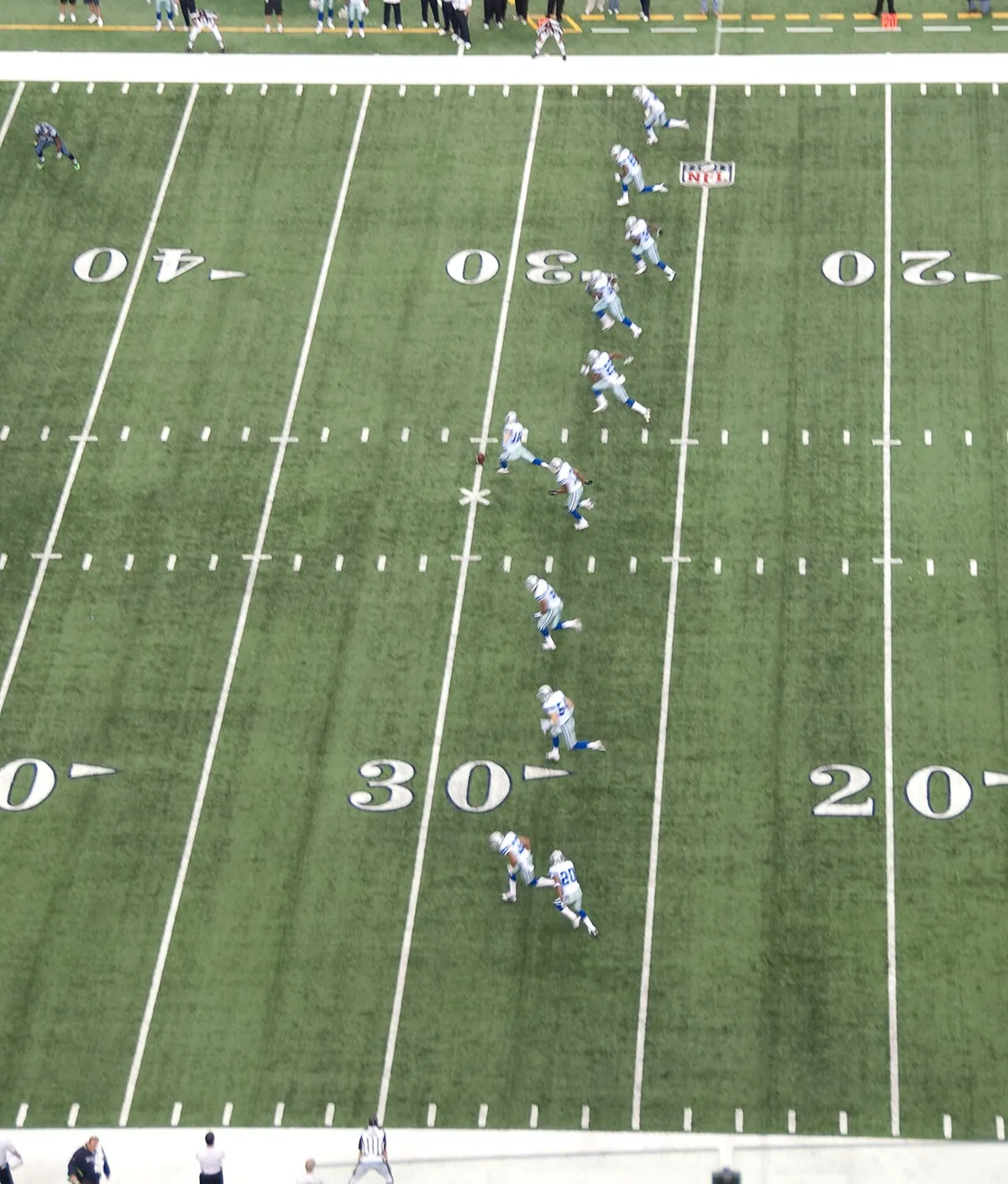
The NFL kickoff procedure is defined by specific alignment and movement rules designed for safety and competition. The ball is placed at the kicking team's 35-yard line for the kick. Under the dynamic kickoff rules adopted in 2024 and made permanent in 2025, only the kicker starts on the kicking team's side of the 50-yard line. The other 10 players on the kicking team must line up with one foot on the receiving team's 40-yard line. The return team is permitted to have up to two players positioned in the area between the goal line and the 20-yard line to field the kick. The remaining members of the return unit must align in a designated five-yard zone between their own 30 and 35-yard lines, and a minimum of seven of those players must have a foot on the 35-yard line. No player in the setup zone or on the kicking team aside from the returners is permitted to move until the ball hits the ground, touches a player in the landing zone, or touches the end zone. This alignment drastically reduces the running start and high-speed collisions that characterized previous kickoff formats.
The outcomes for non-returned kickoffs are determined by where the ball lands. If a kick lands in the landing zone and then goes into the end zone and is downed, it is a touchback spotted at the receiving team's 20-yard line. When a kickoff travels through the back of the end zone or is caught and downed within it, the result is a touchback with the ball placed at the 30-yard line. If a kick lands short of the landing zone, it is treated as a kickoff out of bounds, and the receiving team gets the ball at its own 40-yard line. The league also modified rules for onside kicks, allowing a team to declare an onside kick using the traditional formation at any point in the game as long as they are trailing their opponent, a change from the 2024 rule which restricted it to the fourth quarter.
Penalties on kickoffs enforce the procedural rules. If a player on the receiving team crosses the restraining line before the kick, the ball is advanced five yards and the kick is repeated. If a player on the kicking team crosses the line before the ball is kicked, the receiving team may choose a five-yard penalty on the kickoff or a five-yard penalty added to the end of the return. When a kicked ball goes out of bounds untouched, the receiving team has several options. They can accept a five-yard penalty and force a re-kick, take possession 25 yards from the spot of the kick, or take the ball at the point where it crossed the sideline. These penalties ensure that teams adhere to the formation and kicking requirements designed for safety.
Differences in College and High School Football
While the NFL kickoff originates at the 35-yard line, other levels of American football use different spots. College football follows the NCAA rulebook, which also places the kickoff at the kicking team's 35-yard line. High school football, governed by the National Federation of State High School Associations, places the kickoff at the 40-yard line. The Ivy League experimented with a 40-yard line kickoff for conference games during the 2016 season. Under traditional kickoff rules, the restraining line for the receiving team is 10 yards from the spot of the kick, meaning they line up at their own 45-yard line for an NFL or college kickoff from the 35, and at their own 50-yard line for a high school kickoff from the 40. However, the NFL's dynamic kickoff uses a different alignment.
Touchback rules also vary by level. In college football, a touchback typically results in the receiving team getting the ball at its own 25-yard line. NFL touchback rules have evolved and under the dynamic kickoff format involve multiple possible spots. The NFL's dynamic kickoff rules have created multiple touchback spots based on how the ball enters the end zone. In high school football outside of Texas, the ball is immediately ruled dead when it crosses the goal line on a kickoff, and it cannot be returned from the end zone or recovered there for a touchdown. Texas high school football follows NCAA-style rules where the ball can be returned from the end zone. Fair catches are generally allowed on kickoffs in American football, but they are prohibited under the NFL's dynamic kickoff format.
Penalty enforcement has minor differences. For a kickoff that goes out of bounds untouched, one option for the receiving team in college football is to take the ball 30 yards from the spot of the kick, while in high school that option is 25 yards. The option to take the ball where it went out of bounds exists at all levels. The onside kick rule, requiring the ball to travel 10 yards before the kicking team can recover it, is consistent across NFL, college, and high school football. If a member of the receiving team touches the ball before it travels the required 10 yards, possession is open for either team to recover with no penalty. The dramatic alignment changes of the NFL's dynamic kickoff are not used in college or high school, which retain the traditional spread formations with players lining up near their own restraining line.
History of NFL Kickoff Rule Changes
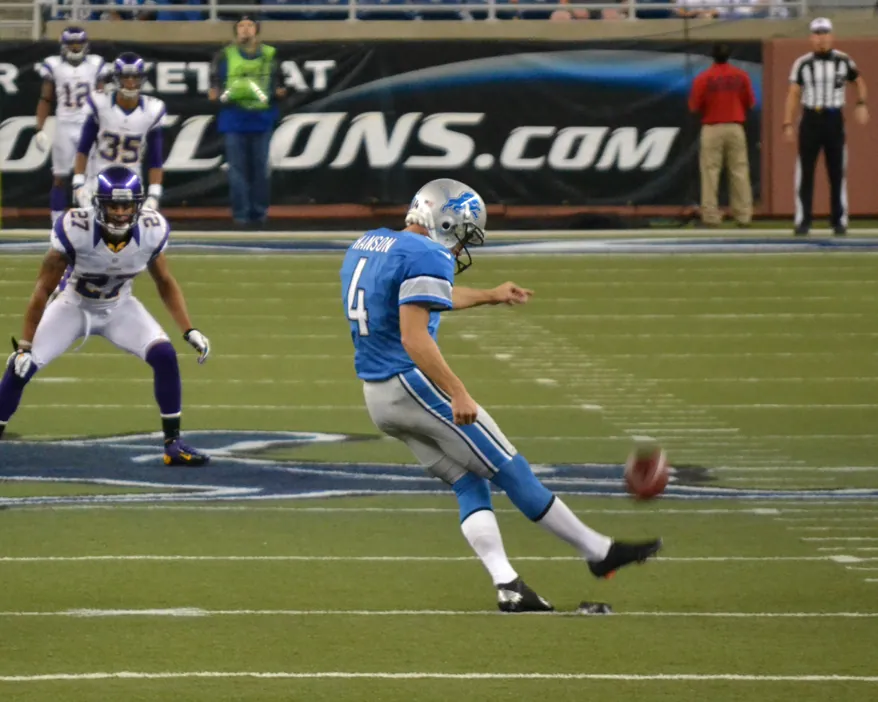
The NFL has repeatedly adjusted kickoff rules to influence the frequency of returns and address player safety concerns. Two decades later, in 1994, the spot was moved to the 30-yard line after only 68 percent of kicks were returned the prior year, a change that increased returns to 88 percent for the 1994 season. A major safety-driven change came in 2009 when the NFL banned three or more blockers from forming a wedge on kickoff returns to reduce high-impact collisions. This change aimed to reduce high-speed collisions by creating more touchbacks. It succeeded in that aim, as the touchback rate jumped from 16 percent in 2010 to nearly 44 percent in 2011. Reported concussions on kickoffs dropped by 40 percent in 2011, but the kickoff return rate fell from 80 percent to 50 percent. The average number of kickoff returns per team plummeted from 64 in 2010 to 43 in 2011.
Seeking to revive the play, the NFL adopted the dynamic kickoff format in 2024, inspired by a procedure used by the second XFL. The new alignment rules increased the average number of kickoff returns per team to 29 for the 2024 season. In 2025, the league made the dynamic kickoff permanent and moved the touchback spot to the 35-yard line. This change provided a strong incentive for kickers to avoid touchbacks, leading to a dramatic increase in returns. The average number of kickoff returns per team rose from 29 in 2024 to 65 in 2025. The 2025 rules also expanded onside kick eligibility to any time a team is losing, whereas the 2024 rule had restricted it to the fourth quarter.
The Dynamic Kickoff and Player Safety
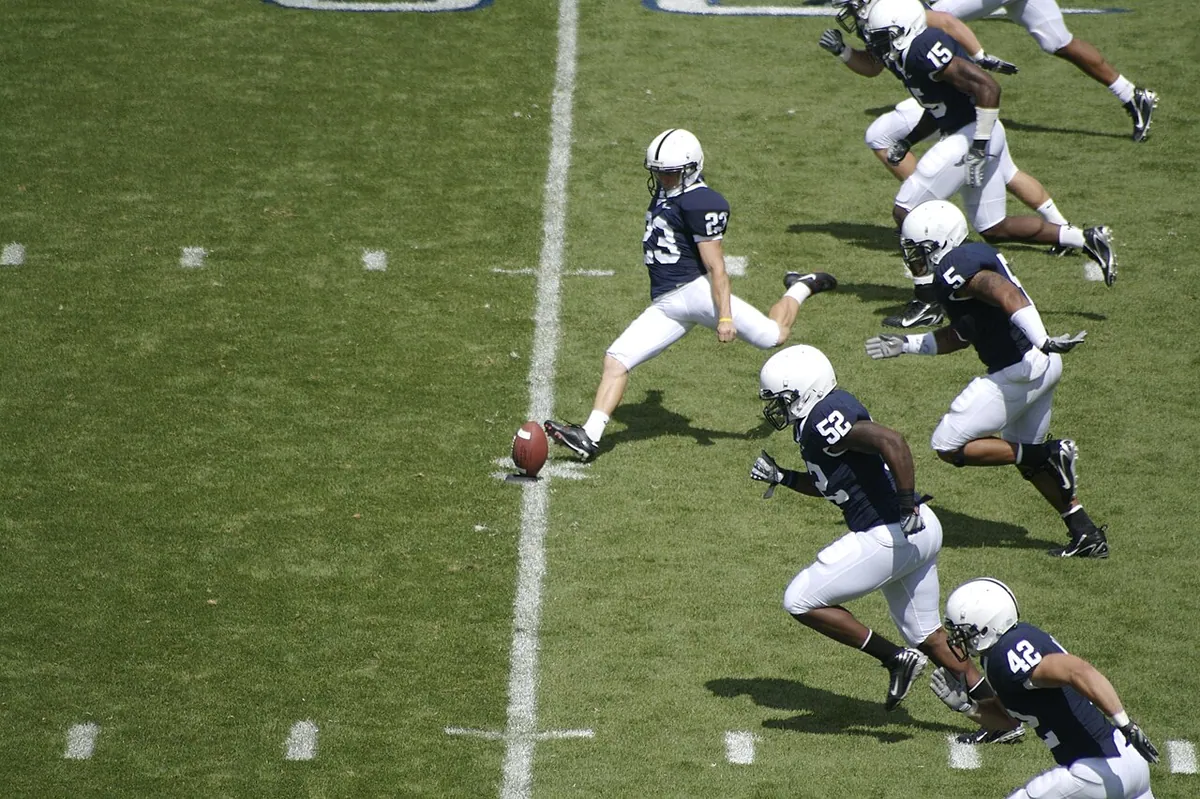
The NFL's dynamic kickoff, implemented in 2024, was a direct response to data showing kickoffs were one of the most dangerous plays in the game. Prior to the change, kickoffs were four times more likely to cause a concussion than a standard running or passing play. The new rules were designed to reduce both the space and speed between the opposing units by having players line up much closer together and restricting their movement until the ball is touched. In this formation, the members of the kicking team align at the opponent's 40-yard line, and the majority of the return team is positioned in a five-yard zone between their own 30 and 35-yard lines. This configuration means players are often only five yards apart at the moment of the kick instead of sprinting toward each other from much greater distances.
Early results from the 2024 season indicated the rule change achieved its safety goals. The NFL reported a significant decrease in concussions on kickoffs, with the concussion rate dropping 43 percent compared to the 2021 through 2023 seasons. Dr. Allen Sills, the NFL's chief medical officer, cited the slower average player speeds caused by the new alignment as a key factor in the reduced injury rate. Despite criticism from some public figures, the league's data supported the conclusion that the dynamic kickoff made the play safer while also making it more frequent and exciting. The number of kickoff returns increased by 57 percent in the 2024 regular season compared to the previous format, and there were seven kickoffs returned for touchdowns, the most since 2021.
Player and team adaptation to the new rules has been an ongoing process. The unique scenarios, such as a ball hitting in the landing zone and bouncing into the end zone, have led to occasional errors. For example, Pittsburgh Steelers player Kaleb Johnson failed to down a ball that landed in the end zone in a 2024 game, allowing the Seattle Seahawks to recover it for a touchdown. These incidents highlight the learning curve associated with the live-ball rules within the landing zone. However, the NFL has continued to tweak the rules, making the format permanent in 2025 and adjusting the touchback spot to further encourage returns, demonstrating a long-term commitment to this safer, more active version of the kickoff.
Types of Kickoffs and Special Plays
Several specialized types of kickoffs exist within the standard rules, each serving a distinct strategic purpose. The onside kick is a short kick intended to travel just the mandatory 10 yards, allowing the kicking team a chance to recover the ball and regain possession. Under NFL rules as of 2025, a team may declare an onside kick using the traditional formation at any point in the game if they are trailing their opponent. Prior to 2025, the declared onside kick was only allowed in the fourth quarter. If the ball does not travel 10 yards before the kicking team recovers, a five-yard penalty is assessed, and they may re-kick.
A squib kick is a low, bouncing kickoff typically aimed at the front line of the return team. It is often used in late-game situations when the kicking team has a narrow lead and wants to avoid a long return and consume time on the clock. Because a squib kick is difficult to field cleanly and cannot be fair-caught, it reduces the risk of a touchdown return but usually gives the receiving team better field position than a deep kick into the end zone. Teams generally use a squib kick when there are only a few seconds remaining, as a line-drive kick is more common with 20 to 50 seconds left. A hurry-up offense drive typically takes over a minute, making a squib kick a safer clock-management tool.
- Onside Kick: Short kick for recovery, requires 10-yard travel.
- Squib Kick: Low, bouncing kick to avoid long returns and burn clock.
- Touchback: Kick into the end zone resulting in a dead ball and possession at a designated spot.
- Fair Catch: Receiving player signals to catch the ball without being tackled, waiving the right to return. (Not allowed in NFL dynamic kickoff).
- Free Kick After Safety: Kick following a safety score. In the NFL, a kicking tee is prohibited.
The free kick after a safety follows similar procedural rules but with key distinctions. The use of a kicking tee is prohibited on this safety kick, differentiating it from a standard kickoff. In Canadian football, after a safety, the team that was scored upon kicks off. The dynamic kickoff alignment rules also apply to safety kicks in the NFL. Some alternative leagues have eliminated kickoffs entirely.
Kickoff Return Statistics and Impact
The frequency and success of kickoff returns have fluctuated dramatically with each major rule change. In the 2010 NFL season, before the kickoff line was moved to the 35-yard line, the average number of kickoff returns per team was 64. After the 2011 change, that average dropped to 43 returns per team. The touchback rate tells a similar story, rising from 16 percent in 2010 to nearly 44 percent in 2011 as kickers booted the ball deeper. The return rate continued to decline over the following decade, aided by the 2016 rule that moved touchbacks to the 25-yard line. By 2023, the average number of kickoff returns per team had reached a low of only 18 for the entire season, making the play a rare occurrence.
The introduction of the dynamic kickoff in 2024 immediately reversed this trend. The average number of returns per team increased to 29 for the 2024 season, a notable jump but still below historical levels. The more significant change came with the 2025 adjustment that moved the touchback spot to the 35-yard line. This gave kickers a strong incentive to place the ball in the landing zone rather than boot it through the end zone. As a result, the average number of kickoff returns per team skyrocketed to 65 in 2025, surpassing the 2010 average. The NFL reported that 77 percent of kickoffs were returned in 2025 under the new rules. The increase in returns also led to more big plays, with seven kickoff return touchdowns in the 2024 regular season, the highest total since 2021.
The strategic impact of these changes is profound. Teams now devote more practice time to kickoff return and coverage units, as the play has returned to being a common and consequential part of the game. The design of the dynamic kickoff, which resembles a scrimmage play with players aligned close together, has also changed the physical profile of players used on special teams. There is less need for players who can build up extreme speed over a long distance, and more emphasis on players who can block or shed blocks in confined spaces. The rule evolution demonstrates the league's ongoing effort to balance the excitement of a return with the imperative of protecting player health.
Related Football Terms and Concepts
Several key terms are directly associated with the kickoff play and its outcomes. A touchback occurs when the kicked ball becomes dead in the possession of the receiving team in its own end zone, or when the ball crosses the goal line and goes out of bounds. The resulting spot of the ball varies by league and rule iteration. A fair catch is a signal by a receiving team player that he will catch the kick without advancing, protecting him from being hit immediately. This is not allowed under the NFL's current dynamic kickoff rules. The restraining line is the line behind which the receiving team must be at the time of the kick, set 10 yards from the spot of the kick.
A fundamental component of the NFL's new format is the landing zone, which is the area spanning from the goal line to the receiving team's 20-yard line. Kicks that land in this zone must be returned. The setup zone is the area between the receiving team's 30- and 35-yard lines where nine of their players must align. The goal line marks the boundary of the end zone, and a kickoff that is recovered by the kicking team in the opposing end zone results in a touchdown. The end zone itself is the scoring area at each end of the field. A safety is a scoring play worth two points that results in the scored-against team performing a free kick, which has its own specific rules.
- Fair Catch: Signal for a catch without return, now prohibited on NFL kickoffs.
- Landing Zone: Area between goal line and 20 where ball must be returned (NFL).
- Setup Zone: Area between 30 and 35 where most return team players line up (NFL).
- Safety: Two-point score leading to a free kick.
Other related plays include the punt, which is a scrimmage kick used to change field position, not to start a half or after a score. A field goal is a scrimmage kick worth three points scored through the opponent's goalposts. The kickoff time refers to the scheduled start time of a game. The coin toss is the pregame procedure to determine which team kicks off or receives to begin the game. Overtime is an extra period that may begin with a kickoff, depending on the league's rules. These terms collectively define the context and execution of one of football's fundamental plays.
Video
FAQ
What is a kickoff in football?
A kickoff is a method of starting a drive in gridiron football. It is used to begin each half of play, start overtime periods, and restart play after a scoring play. The kicking team kicks the ball from a designated yard line to the receiving team, which may attempt to catch the ball and advance it by running. The play ends when the ball carrier is tackled, goes out of bounds, scores, or the ball is ruled dead. Special outcomes include touchbacks, fair catches, and onside kicks.
What are the NFL kickoff rules for 2026?
For the 2026 season, the NFL kickoff uses the dynamic kickoff format made permanent in 2025. The ball is kicked from the 35-yard line. The kicking team lines up with 10 players on the receiving team's 40-yard line. For the 2026 season, the receiving team must have at least five players at the restraining line on their own 35-yard line. Touchbacks on kickoffs from the 50-yard line, such as after a penalty, will be spotted at the 20-yard line. Teams may declare an onside kick at any time when trailing. Movement is restricted until the ball is touched in the landing zone or hits the ground.
How does a kickoff work in college football?
In college football, the kickoff takes place from the kicking team's 35-yard line, the same spot as the NFL. The receiving team must line up at least 10 yards away, at their own 45-yard line. College rules allow for fair catches on kickoffs. A touchback, where the ball is downed in the end zone, results in the receiving team starting possession at its own 25-yard line. If the kicked ball goes out of bounds, the receiving team has the option to take the ball 30 yards from the spot of the kick. College football does not use the NFL's dynamic kickoff alignment and movement rules.
What is the difference between a kickoff and a punt?
A kickoff is a free kick used to start a half or resume play after a score. It is kicked from a tee from a fixed spot (the 35-yard line in the NFL) with no defensive pressure. A punt is a scrimmage kick used during a down to relinquish possession and gain field position. It occurs on fourth down or in other strategic situations, is kicked from the spot where the ball was snapped, and can be blocked by the defense. Punts can be returned, fair-caught, or downed, similar to kickoffs, but they originate from line play rather than a set restart.
What happens on a kickoff touchback?
On a kickoff touchback, the ball becomes dead after entering the receiving team's end zone under specific conditions. If a kick hits in the landing zone and then bounces into the end zone and is downed, it is a touchback at the 20-yard line. In standard college rules and pre-2024 NFL rules, a touchback places the ball at the 25-yard line. In high school football, the ball is immediately dead upon crossing the goal line.
Why did the NFL change the kickoff rule?
The NFL changed the kickoff rule primarily to improve player safety while preserving an exciting element of the game. Data showed kickoffs were four times more likely to cause concussions than standard plays due to high-speed collisions. The 2011 move to the 35-yard line increased touchbacks but made the play less common. The 2024 dynamic kickoff reformatted player alignments to reduce closing speeds and space between players. This change lowered the concussion rate on kickoffs by 43 percent in 2024 compared to 2021 to 2023. It also successfully increased the number of returns, making the play more frequent and dynamic, with 65 returns per team on average in 2025.