The Miami Dolphins Cheerleaders are the professional cheerleading squad for the NFL's Miami Dolphins, established in 1978. The squad of 28 members performs for over 65,000 fans at Hard Rock Stadium on game days and serves as community ambassadors. The cheerleading tradition dates to the team's early years, with the original Dolphins Dolls performing from 1966 to 1977. Alongside the cheerleaders, the team's mascot T.D. and the fight song 'Miami Dolphins No. 1' are central to the game day atmosphere and fan culture.
Miami Dolphins Cheerleaders
The Miami Dolphins Cheerleaders (MDC) were founded as a professional squad in 1978 under owner Joe Robbie, initially sponsored by Starbrite Car Polish and known as the Dolphins Starbrites until 1983. The squad holds auditions every May and currently consists of 28 members who perform at every home game in Hard Rock Stadium. Beyond game day performances, the MDC engages in extensive community work, including mentoring a youth cheer squad, making USO trips, and sending a representative to the annual Pro Bowl. The squad's director is KaShara Garrett, and the team maintains a strong presence on social media platforms like Instagram, where they share behind-the-scenes content and game day photos.
The history of cheerleading for the Dolphins predates the professional squad, beginning with the Dolphins Dolls in 1966, a group of 125 girls aged 8 to 18 who performed at the Miami Orange Bowl. Founder June Taylor led the professional squad from its inception until her retirement in 1990, when she was succeeded by former cheerleader Kathy Morton Shashaty. In 1996, former Dallas Cowboys Cheerleader Dorie Braddy was brought in by coach Jimmy Johnson to manage the squad, a role she held until 2004. The MDC has produced several notable alumni who have gained fame in other fields, including television and politics.
- Nadia Turner, a 1996 squad member, was a contestant on Season 4 of American Idol.
- Brenda Lowe (2004 to 2005) later appeared on Survivor: Nicaragua and Survivor: Caramoan.
- Jaime Faith Edmondson (2004 to 2009) competed on The Race in 2009 and 2011.
- Jeanette Dousdebes (1997 to 1998) is married to former U.S. Secretary of State Marco Rubio.
- MJ Acosta-Ruiz is an anchor for the NFL Network.
- Mireya Mayor is a National Geographic wildlife correspondent.
- Pamela Silva Conde is a reporter and news anchor for Univision.
- Suzy Tavarez (1998 to 2000) became an on-air personality for Miami radio station Y100-FM.
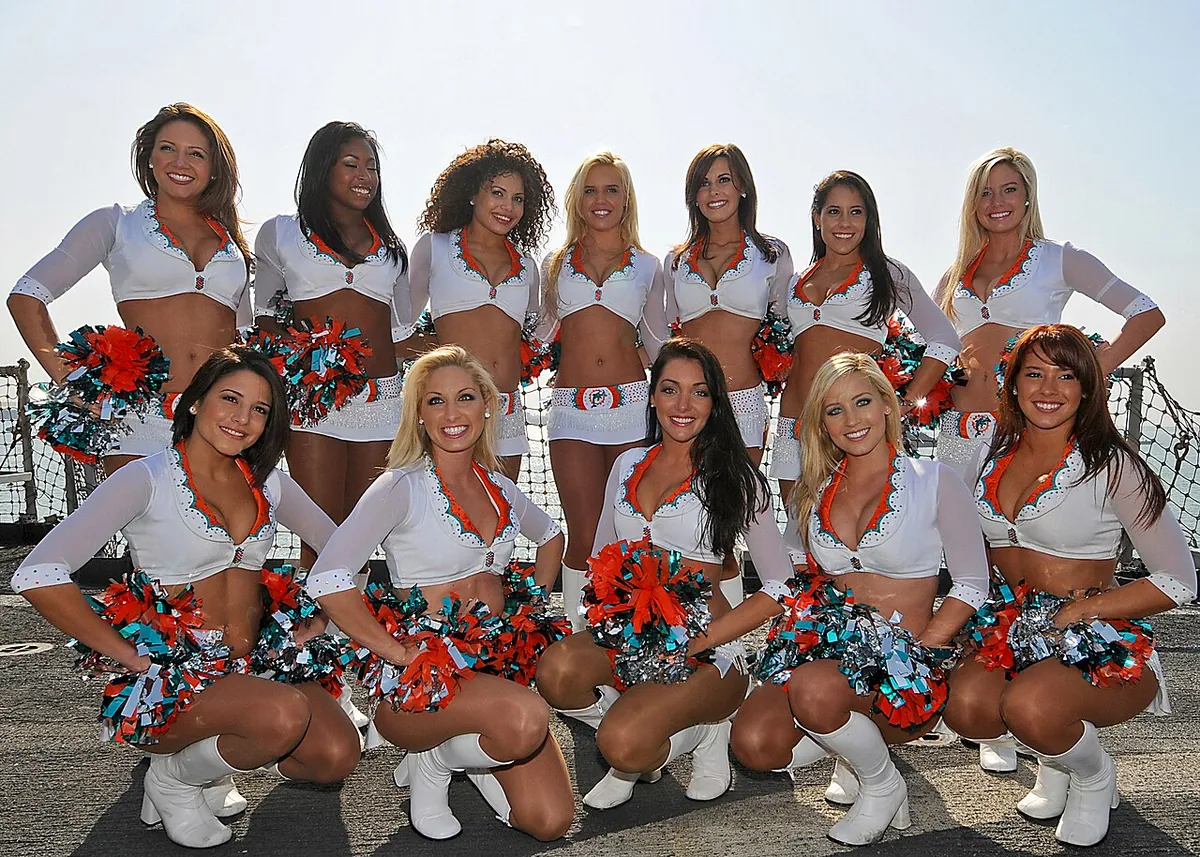
The squad's performances are not limited to Miami, as they have also traveled for NFL International Series games. Getty Images archives show the MDC performing at Wembley Stadium in London in 2017. Their uniforms use the team's colors of teal, orange, and white, and their choreography is a key component of the pre-game and halftime entertainment. The cheerleaders also participate in special events, such as posing with Miami Heat players during a game and appearing at the British Grand Prix in Silverstone.
Team Mascot: T.D. and Live Dolphin History
The official mascot of the Miami Dolphins is T.D., a human-sized dolphin character who wears the team's jersey and number 00. T.D. is responsible for energizing the crowd at Hard Rock Stadium, leading cheers, and interacting with fans of all ages during games. The mascot's activities extend beyond football, as seen in social media posts where T.D. attended a Miami Heat basketball game. The character is a modern evolution of the team's long history with mascots, which famously began with a live animal.
From 1966 to 1968, the Dolphins employed a live bottlenose dolphin named Flipper as their mascot. Flipper lived in a tank on the east side of the Miami Orange Bowl and was trained to jump after every Dolphins field goal and extra point. This unique mascot was named after the dolphin from the popular television series and represented the team's direct connection to its namesake. The use of a live dolphin was discontinued after the 1968 season, but it remains a memorable piece of franchise lore often recalled by long-time fans. Another notable sideline personality was Dolfan Denny, known for his enthusiastic antics during games in earlier decades.
Fan Culture and Traditions
Miami Dolphins fans, often collectively referred to as the 'Dolphins Family,' are known for their enduring loyalty through periods of both historic success and prolonged playoff droughts. The team annually recognizes an extraordinary supporter through the Miami Dolphins Fan of the Year program presented by Ticketmaster. Game day at Hard Rock Stadium involves several fan traditions, including coordinated chants and the wearing of the team's colors of aqua, orange, and white. A central tradition is the performance of the team's official fight song, 'Miami Dolphins No. 1.' The song is played after every Dolphins score and is a rallying cry for the crowd, with fans often singing along. The fight song has been a staple since the team's early years and contributes significantly to the stadium's acoustic atmosphere. Another tradition involves fan-led tailgating in the stadium parking lots, where supporters gather for food and festivities before kickoff. The Dolphins also engage their international fan base through the NFL International Series, having played games in London, where traveling fans and local expatriates create a distinct game day environment.
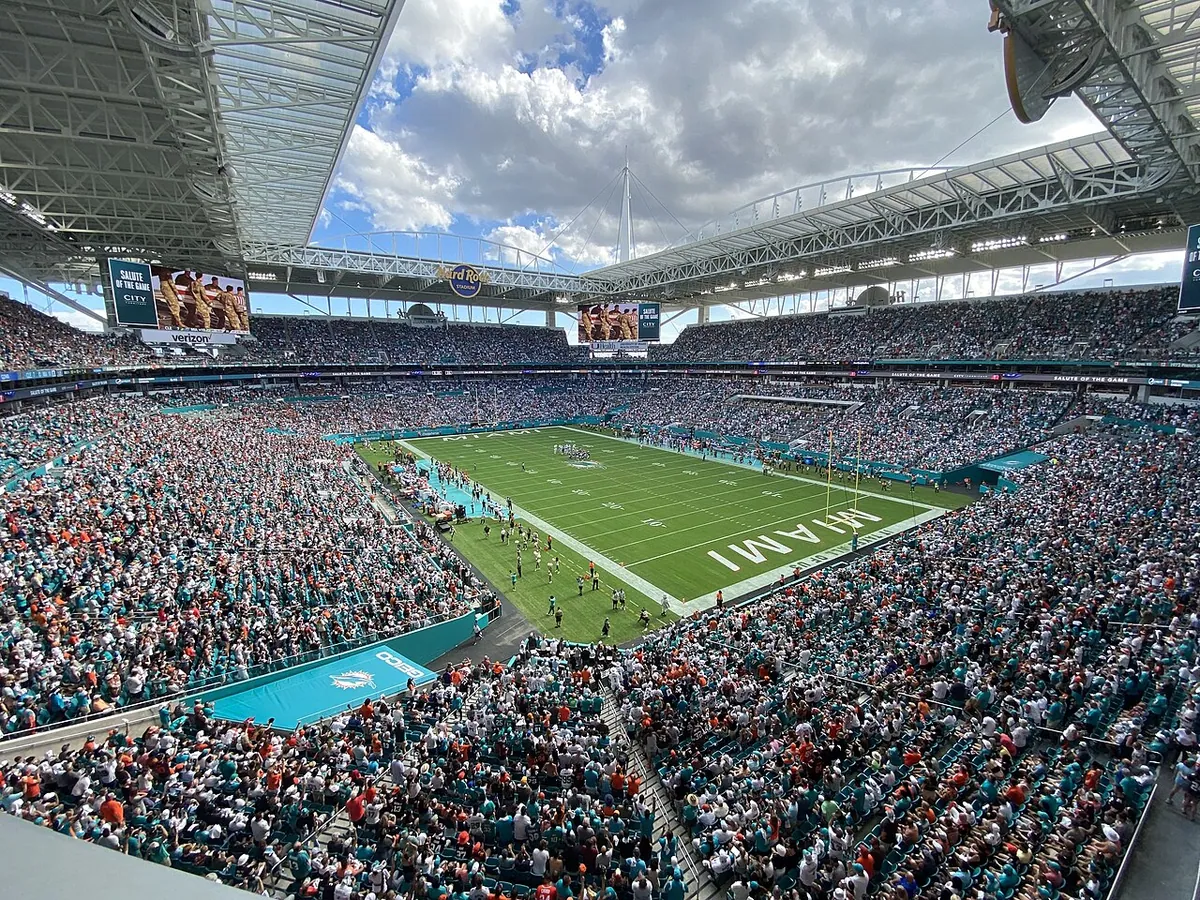
Game Day Atmosphere at Hard Rock Stadium
The Miami Dolphins have played their home games at Hard Rock Stadium in Miami Gardens, Florida since 2016. The stadium, which has had several names since 1999 including Pro Player Stadium, Dolphin Stadium, and Sun Life Stadium, seats over 65,000 fans. The game day production is designed to be a comprehensive entertainment experience, integrating the performances of the Miami Dolphins Cheerleaders, the antics of mascot T.D., music, and video board features. The cheerleaders perform choreographed routines on the sidelines and in the stands throughout the game, with specific performances during timeouts and breaks in the action.
Stadium traditions include the playing of the national anthem. The crowd's energy typically peaks after Dolphins scores with the playing of the fight song. The Dolphins organization has occasionally faced scrutiny over attendance issues, but dedicated fans continue to create a lively environment, particularly during rivalry games against AFC East opponents like the New York Jets and Buffalo Bills. The team's performance on the field has varied significantly since 1999, with a regular season record of 212 wins and 225 losses from 1999 through the 2025 season, and a 1-9 start to the 2026 season as of November 27, 2026.
Historical Context and Community Role
The cheerleaders and mascot are part of a broader entertainment and community outreach strategy for the Dolphins organization, which is owned by Stephen Ross. The team was founded on August 16, 1965, and began play in 1966, making it the oldest professional sports team in Florida. The Dolphins' most successful era was in the early 1970s under coach Don Shula, which included the NFL's only perfect season in 1972 and back-to-back Super Bowl victories. This history of excellence is a point of pride for the fan base.
The cheerleading squad and mascot program serve as key community ambassadors. The MDC's youth cheer squad mentors young girls in the Miami area, teaching dance and teamwork. The squad's USO trips support American troops overseas. Similarly, T.D. makes numerous community appearances throughout South Florida each year. These community efforts help maintain a strong bond between the team and its regional supporters, fostering a sense of family that transcends the team's win-loss record. The Dolphins' fight song and mascot imagery are ubiquitous in local sports culture, appearing on merchandise and in media, reinforcing the team's identity within the community.
Notable Cheerleader Appearances and Events
The Miami Dolphins Cheerleaders have been featured in numerous high-profile events beyond regular season games. They performed at Super Bowl XIX in Stanford, California on January 20, 1985, when the Dolphins played the San Francisco 49ers. In 2025, the MDC performed during an NFL game at Estadio Santiago Bernabéu in Madrid, Spain. These international appearances help promote the Dolphins brand globally and cater to an expanding international fan base.
The squad also makes appearances at other sporting and cultural events. They have been featured at other sporting events, such as being photographed outside the Williams garage at the Formula One British Grand Prix in Silverstone. They have been featured in preseason games, such as against the Atlanta Falcons, and in crossover events with other Miami teams, like posing with Miami Heat players. The MDC is regularly photographed by major agencies like Getty Images, with thousands of high-resolution images documenting their performances, poses, and community interactions from the 1980s through the present day. These images document their role as visual representatives of the franchise.
Video
FAQ
When were the Miami Dolphins Cheerleaders established?
The professional Miami Dolphins Cheerleaders squad was established in 1978. However, a cheerleading presence for the team dates back to its inception in 1966 with the Dolphins Dolls, a youth squad that performed at the Miami Orange Bowl. The professional squad was originally called the Dolphins Starbrites due to a sponsorship with Starbrite Car Polish, a name it used until 1983. Since then, it has been known as the Miami Dolphins Cheerleaders.
Who is the Miami Dolphins mascot?
The current official mascot of the Miami Dolphins is T.D., a human-sized dolphin character who wears a white jersey with the number 00. T.D. interacts with fans and leads cheers during home games at Hard Rock Stadium. Historically, the team's first mascot was a live dolphin named Flipper, who lived in a tank at the Orange Bowl and performed from 1966 to 1968. The live dolphin would jump after every Dolphins field goal and extra point.
What is the Miami Dolphins fight song?
The Miami Dolphins fight song is titled 'Miami Dolphins No. 1.' It is played at Hard Rock Stadium after every Dolphins score. The song serves as a rallying cry for fans, who often sing along. It has been a team tradition for decades, contributing to the identity and fan culture surrounding the franchise. The fight song is a key element of the game day audio experience.
How many members are on the Miami Dolphins Cheerleaders squad?
As of the 2026 season, the Miami Dolphins Cheerleaders squad consists of 28 members. The squad holds auditions every May to select new members. They perform in front of crowds of over 65,000 at Hard Rock Stadium during every home game. The cheerleaders also participate in community events, USO tours, and international NFL games.
Did the Miami Dolphins ever use a real dolphin as their mascot?
Yes, the Miami Dolphins had a live dolphin mascot named Flipper from 1966 to 1968. Flipper lived in a tank on the east side of the Orange Bowl stadium and was trained to jump after every field goal and extra point. This real dolphin mascot was named after the famous television dolphin. The team transitioned to a costumed mascot after this early period.
What is the history of the Miami Dolphins Cheerleaders before they became a professional squad?
Before the professional Miami Dolphins Cheerleaders were established in 1978, a youth squad known as the Dolphins Dolls performed for the team. The Dolphins Dolls consisted of 125 girls ranging from 8 to 18 years of age. This group performed at the Miami Orange Bowl from the team's inception in 1966 until 1977. The professional cheerleading squad was then formed under owner Joe Robbie in 1978.
Sources
- Miami Dolphins Cheerleaders (Wikipedia) Wikipedia
- Miami Dolphins (Wikipedia) Wikipedia
- 2.081 foto ad alta risoluzione su Miami Dolphins Cheerleaders gettyimages.it
- 2 024 Miami Dolphins Cheerleaders photos haute résolution gettyimages.fr
- nflverse game, roster and draft data nflverse (CC BY 4.0)