The New England Patriots are owned by Robert Kraft, who purchased the franchise on January 21, 1994, for $172 million. This acquisition set a record for an NFL team sale at the time and ended a period of ownership instability that included relocation threats. Under Kraft's leadership, the team has won six Super Bowls and its value has grown to an estimated $7.4 billion. The Kraft family, including team president Jonathan Kraft, is involved in the organization from its headquarters at Gillette Stadium in Foxborough, Massachusetts. This ownership has provided the franchise with notable stability and success over more than three decades.
Robert Kraft: The Current Owner
Robert Kraft has served as the owner, chairman, and CEO of the New England Patriots since January 21, 1994. His purchase of the team for $172 million set a new record for an NFL franchise sale. Kraft, a native of the Boston area, was a longtime season-ticket holder who famously sat on the metal bleachers of the old Sullivan Stadium before his ownership. His business career began in the paper and packaging industry, where he acquired control of the Rand-Whitney Group in 1968 and founded International Forest Products. These ventures formed the foundation of his wealth and the diversified holding company, the Kraft Group. Under his stewardship, the Patriots' valuation has grown significantly, and the team has sold out every home game since 1994. Kraft's net worth is estimated at $11.8 billion as of March 2025, according to Bloomberg and Forbes.
Kraft's tenure is defined by a hands-on approach and a commitment to keeping the team in New England. He has stated that his initial purchase was driven more by passion than pure business logic, noting it was not a great business decision to pay top dollar. His emotional connection to the region was tested during purchase negotiations when previous owner James Orthwein sought to move the team to St. Louis, a condition Kraft flatly rejected. Beyond the Patriots, the Kraft Group's holdings include the New England Revolution of Major League Soccer and extensive real estate development around Gillette Stadium. Kraft has received many honors, such as the Theodore Roosevelt Award and membership in the American Academy of Arts and Sciences.
Family succession is a key feature of the Patriots' ownership structure. Kraft's son, Jonathan Kraft, has served as the team's president for many years and is deeply involved in day-to-day operations. Robert Kraft has four adult sons: Jonathan, Daniel, Josh, and David. This setup ensures the franchise will likely remain under family control for the foreseeable future. In public remarks, Kraft has reflected on the cyclical nature of sports, calling recent losing seasons difficult after the team posted poor records. His major decisions include the hiring of head coach Bill Belichick in 2000, the construction of Gillette Stadium which opened in 2002, and more recently, the hiring of head coach Mike Vrabel.
Ownership History Before Robert Kraft
The period between Sullivan and Kraft was marked by rapid turnover and uncertainty. Orthwein's attempt to relocate the team was the most direct threat to the franchise's New England identity. Kraft's prior ownership of the stadium gave him crucial leverage in the final negotiations, allowing him to acquire the team and ensure it remained in Massachusetts. This history of instability makes the sustained success and continuity of the Kraft era particularly notable.
- Billy Sullivan (1960 to 1987): Sullivan was the founding owner, awarded the AFL franchise on November 16, 1959. He owned the team through its early years, including its move from Boston to Foxborough in 1971 and its Super Bowl XX appearance in the 1985 season. Financial troubles, partly due to losses from financing The Jacksons' 1984 Victory Tour using Sullivan Stadium as collateral, forced him to put the team and stadium up for sale in 1985.
- Victor Kiam (1988 to 1991): The Remington razor magnate purchased the Patriots from the Sullivan family in 1988. His tenure was short and is often associated with the team's on-field struggles, including a 1-15 season in 1990.
- James Orthwein (1992 to 1993): Orthwein, a heir to the Anheuser-Busch fortune, bought the team from Kiam in 1992. His period was controversial and brief. Orthwein hired Bill Parcells as head coach and oversaw a complete rebranding, introducing the "Flying Elvis" logo and changing team colors. His primary intention was to move the franchise to his native St. Louis, where it would have been renamed the St. Louis Stallions.
- Robert Kraft (1994 to present): Kraft, who had purchased Foxboro Stadium out of bankruptcy in 1988, bought the team from Orthwein in 1994, thwarting the move to St. Louis and beginning a new era.
Purchase Price and Franchise Valuation
The financial trajectory of the Patriots franchise under Robert Kraft illustrates one of the most successful investments in sports history. Kraft's purchase price of $172 million in 1994 was a record sum for an NFL team at the time. In the decades since, strategic management and on-field success have multiplied the team's worth exponentially. This growth reflects not only the general inflation of sports media rights but also the specific value created through brand building, consistent competitiveness, and stadium development.
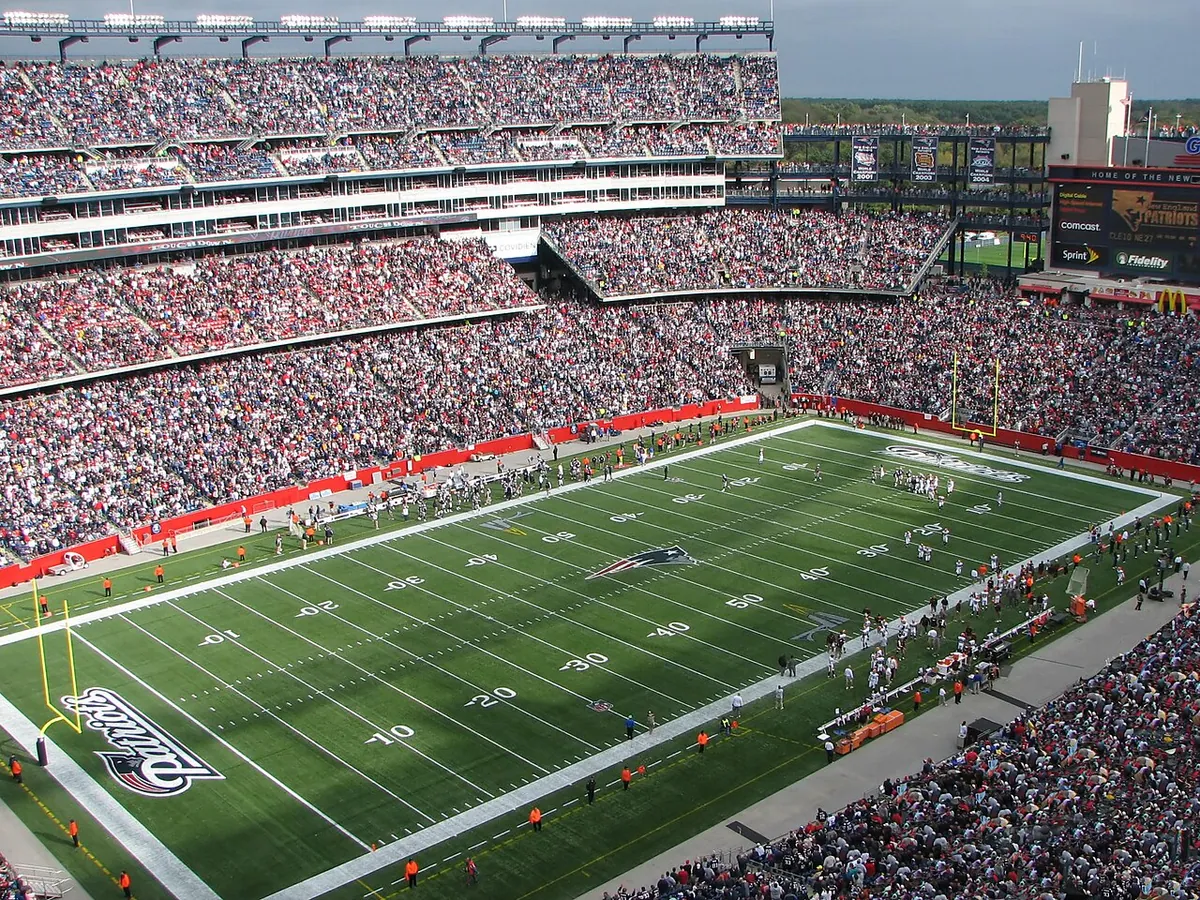
The construction of Gillette Stadium, which opened in 2002, was a major investment that unlocked new revenue streams. The modern facility replaced the outdated Foxboro Stadium and became the centerpiece of a larger real estate development known as Patriot Place. This complex includes retail, dining, and entertainment venues, creating a year-round destination that supplements game-day income. The stadium itself has hosted numerous other major events, including concerts, international soccer matches, and college football games, further diversifying the organization's earnings. The Patriots' consistent sellout streak since 1994 also demonstrates the strong demand and premium pricing the brand commands.
Kraft's initial comment that the purchase "may not look like a great deal" in the short term has been thoroughly disproven by the long-term financial outcome. The team's value increase from $172 million to over $7 billion represents a compound annual growth rate that far outpaces most traditional investments. This valuation makes the Patriots one of the crown jewels of the Kraft Group's portfolio and one of the most valuable sports franchises globally. The financial success is directly linked to the sporting success, with six Super Bowl championships greatly enhancing the brand's prestige and marketability.
Family Succession and Front Office Structure
Robert Kraft has established a clear family succession plan within the Patriots organization. His eldest son, Jonathan Kraft, has been the team's president for many years and is the heir apparent to the principal ownership role. Jonathan Kraft is deeply embedded in the franchise's operations, overseeing business strategy, stadium management, and league committee work. He represents the team at NFL owners' meetings and is a frequent public face of the organization alongside his father. This grooming for leadership ensures a smooth transition when Robert Kraft eventually steps back, maintaining continuity in the franchise's vision and culture.
The Kraft family owns the Patriots. Robert Kraft does not have any public minority partners, and former quarterback Tom Brady does not hold an ownership stake in the franchise. The ownership is held within the Kraft Group, the family's diversified holding company. This structure allows for consolidated control over all major decisions, from coaching hires and player personnel philosophy to large-scale capital projects. The family's other sons, Daniel, Josh, and David, are also involved in various aspects of the Kraft Group's businesses, which include the New England Revolution, manufacturing, and private equity.
This model of family ownership has provided the Patriots with a rare stability in the often-volatile world of professional sports. While the team has employed several general managers and head coaches, the ultimate direction has always come from the Kraft family. This was evident in the 2025 coaching change, when Robert Kraft introduced Mike Vrabel as the new head coach, and in the decision to part ways with longtime coach Bill Belichick after the 2023 season. The front office structure, with Jonathan Kraft as president and a general manager like Eliot Wolf reporting to ownership, is designed to execute the family's vision for the team.
Major Decisions Under Kraft's Ownership
Robert Kraft's ownership has been defined by several landmark decisions that transformed the Patriots from a mediocre franchise into a dynasty. The first and most consequential was the hiring of Bill Belichick as head coach in 2000. Kraft pursued Belichick aggressively, compensating the New York Jets with a first-round draft pick to secure his services. This move established the football leadership that would define the next two decades. The Belichick hire was followed by the fortuitous emergence of quarterback Tom Brady, but Kraft's commitment to building a top-tier organization around them was deliberate. He invested in facilities, analytics, and a large support staff, creating an environment geared toward winning.
Another monumental decision was the financing and construction of Gillette Stadium. Opened in 2002, the stadium was built with mostly private funding, a significant risk that Kraft believed was necessary for the team's long-term health. The project required complex financing and demonstrated Kraft's commitment to providing a first-class experience for fans and a modern workplace for the team. The stadium's success enabled further development of the surrounding Patriot Place, turning game days into a destination experience and creating a valuable real estate asset. This move away from the aging, revenue-poor Foxboro Stadium was essential for the franchise's financial growth.
Kraft has also made difficult decisions at critical junctures to steer the franchise forward. He managed the end of the Brady-Belichick era, overseeing Brady's departure in free agency in 2020 and later parting ways with Belichick after the 2023 season. In January 2025, he hired Mike Vrabel as head coach, a move that paid dividends with a 14-3 record and AFC East title in the 2025 season. Kraft has also been involved in league-wide decisions as a powerful NFL owner, influencing media contracts, labor agreements, and international expansion. His hands-on approach ensures the Patriots' interests are represented at the highest levels of the league.

The Patriots' Financial and On-Field Turnaround
The contrast between the pre-Kraft Patriots and the franchise he built is stark, both financially and competitively. Before 1994, the team was known for its instability, playing in multiple stadiums and suffering from uncertain ownership. The Patriots' regular season record from 1999 through 2025 was 292-145, a winning percentage that reflects the success of the Kraft era, particularly its peak. Their playoff record over that same span was 33-13 in 46 games. The team's on-field performance directly fueled its financial valuation, creating a cycle of investment and success.
The dynasty period from 2001 to 2019 saw the Patriots set numerous NFL records, including most Super Bowl wins (6), most consecutive division titles (11 from 2009 to 2019), and the only 16-0 regular season in 2007. This period of dominance, known as the Brady-Belichick era, transformed the team's national profile and global brand. The financial benefits were immense, from premium sponsorship deals to consistently high television ratings and merchandise sales. The team's ability to remain competitive for two decades provided a stable platform for all other business ventures.
The post-Brady transition proved challenging, with losing records in 2020 and a 4-13 finish in both 2023 and 2024. Kraft referred to those two years as the worst of his ownership. However, the 2025 season under new coach Mike Vrabel featured a dramatic turnaround, with a 14-3 record and an AFC Championship Game victory. The 10-game year-over-year improvement tied an NFL record. Although the team lost Super Bowl LX to the Seattle Seahawks, the rapid resurgence demonstrated the underlying strength of the organization built by Kraft. As of November 27, 2026, the Patriots hold a 5-5 record in the current season.
Video
FAQ
Who is the owner of the New England Patriots?
Robert Kraft is the owner of the New England Patriots. He bought the team on January 21, 1994, and holds the titles of Chairman and CEO. Kraft is a businessman who also founded the Kraft Group, a company with investments in many different industries. His son Jonathan Kraft works as the team's president and helps run the franchise.
How much did Robert Kraft pay for the Patriots?
Robert Kraft paid $172 million to buy the New England Patriots in 1994. This amount was higher than any previous sale price for an NFL team. Kraft later said the deal might not have seemed smart at first, but it turned out to be a very good investment over time. The team's value has increased dramatically since then.
What is the history of Patriots owners before Robert Kraft?
Three main owners controlled the Patriots before Robert Kraft. Billy Sullivan founded the team and owned it from 1960 to 1987. Victor Kiam owned the team from 1988 to 1991. James Orthwein then bought the Patriots in 1992 and planned to move them to St. Louis. Kraft purchased the team from Orthwein in 1994 and stopped the relocation.
How much are the New England Patriots worth?
The New England Patriots are worth an estimated $7.4 billion, according to Forbes. This figure makes the franchise one of the most valuable in all of professional sports. The value has grown enormously from the original purchase price of $172 million. The team's success and the development of Gillette Stadium have driven this increase in worth.
What major decisions has Robert Kraft made as owner?
Robert Kraft made several important decisions as owner. He hired Bill Belichick as head coach in 2000, which started the team's championship era. He built Gillette Stadium, which opened in 2002. He also refused to let the team move to St. Louis when he bought it. More recently, he hired Mike Vrabel as head coach in 2025.
Who was the original owner of the Boston Patriots when the franchise was founded?
The original owner of the Boston Patriots was business executive Billy Sullivan, who was awarded the franchise on November 16, 1959. Sullivan was instrumental in the team's founding as the eighth and final charter member of the American Football League. He selected the Patriots name based on popular fan submissions and oversaw the creation of the original Pat Patriot logo. Sullivan remained the principal owner of the franchise through its early years, including its move to Foxborough and name change to the New England Patriots.
Sources
- New England Patriots (Wikipedia) Wikipedia
- Who is Patriots owner Robert Kraft? Here's what to know about him Yahoo Sports
- New England Patriots owner Robert Kraft's net worth: How rich is he? bolavip.com
- New England Patriots Owners 1960 to 2021 (62 seasons) retroseasons.com
- nflverse game, roster and draft data nflverse (CC BY 4.0)