The Wisconsin Badgers football program represents the University of Wisconsin-Madison and competes in the NCAA Division I Football Bowl Subdivision as a member of the Big Ten Conference. The Badgers have played since 1889 and have an all-time record of 748 wins, 524 losses, and 53 ties. The program has won 14 Big Ten championships and produced two Heisman Trophy winners, Alan Ameche and Ron Dayne. The University of Wisconsin fielded its first football team in 1889, losing both games it played that inaugural season. The program's first victory came the following year in 1890, a 106-0 win over Whitewater Normal School that remains the most lopsided victory in school history. The very next week, Wisconsin suffered its most lopsided defeat, a 63-0 loss to Minnesota, in what became the most-played rivalry in FBS history. The team's nickname, the Badgers, originates from the state's early lead miners in the 1820s and 1830s who were said to live like badgers in tunnels during winter. Wisconsin became a charter member of the Big Ten Conference in 1896 and won the league's first championship that same season with a 7-1-1 record. Wisconsin won or shared further Big Ten titles in 1897, 1901, 1906, and 1912, and the 1901 team went 9-0 for the program's first undefeated season.
Conference Membership and Championship History
Wisconsin's conference affiliation has been exclusively with the Big Ten since 1896. The Badgers have won 14 Big Ten football championships. Their early dominance yielded titles in the conference's first two decades. A 40-year championship drought followed the 1912 title until the program resurged in the 1950s. The modern era of success began under Barry Alvarez in the 1990s and continued through the 2010s. The program lists unclaimed national championships for the 1912 and 1942 seasons. The 1942 team finished 8-1-1, ranked third by the Associated Press, but was selected as the national champion by the Helms Athletic Foundation after a season that included a victory over a top-ranked opponent.
Head Coaching History and Records
Ivy Williamson led the program in the 1950s to a Rose Bowl and a Heisman winner. Milt Bruhn succeeded him and took the 1959 and 1962 teams to the Rose Bowl. A long period of struggle followed until Barry Alvarez was hired in 1990. Alvarez inherited a program with over $2 million in debt and low attendance, but he rebuilt it by focusing on recruiting within Wisconsin. His 16-year tenure resulted in a 118-73-4 record and three Big Ten titles. Defensive coordinator Bret Bielema succeeded Alvarez and compiled a 68-24 record from 2006 to 2012, winning three consecutive Big Ten championships. Gary Andersen coached for two seasons (19-7) before Paul Chryst took over. Luke Fickell became head coach in 2023, and his record at Wisconsin stands at 22-23 during the 2026 season.
| Coach | Years | Record | Notable Achievements |
|---|---|---|---|
| Barry Alvarez | 1990 to 2005 | 118-73-4 | 3 Big Ten titles, Rose Bowl victories |
| Bret Bielema | 2006 to 2012 | 68-24 | 3 Big Ten titles, 4 seasons with 10+ wins |
| Gary Andersen | 2013 to 2014 | 19-7 | First place in Big Ten West in 2014 |
| Luke Fickell | 2023 to present | 22-23 | Hired in 2023 |
Bowl Game Appearances and Results
Wisconsin has participated in 35 bowl games, compiling a record of 19 wins and 16 losses. The Badgers returned to the Rose Bowl after the 1959 season, losing to Washington, and again after the 1962 season in a narrow 42-37 defeat to top-ranked USC. The Badgers won the Hall of Fame Bowl in 1994 and the Copper Bowl in 1996. Under Bret Bielema, the Badgers played in the Rose Bowl following the 2010 and 2011 seasons. Paul Chryst's tenure featured a victory in the 2017 Cotton Bowl Classic. Wisconsin won its first Rose Bowl by beating UCLA 21-16 after the 1993 season and then won back-to-back Rose Bowls over UCLA and Stanford after the 1998 and 1999 seasons.
Historic Rivalries
Wisconsin's main rivals are Minnesota, Iowa and Nebraska, all members of the Big Ten Conference. The most significant is the battle with the Minnesota Golden Gophers , which is the most-played rivalry in Football Bowl Subdivision history with 135 meetings. A 6-0 loss to the Iowa Hawkeyes in 1942 ended Wisconsin's national championship hopes that season. Wisconsin beat the Nebraska Cornhuskers 70-31 in the 2012 Big Ten Championship Game. In 2014, Melvin Gordon briefly held the FBS single-game rushing record with 408 yards in a 59-24 win over Nebraska.
Camp Randall Stadium History and Features
The stadium is the third-oldest stadium in college football. The current seating capacity is 76,057. The playing surface is named Barry Alvarez Field. By the end of the 1989 season, the program was drawing only 30,000 fans to the then 77,000-capacity stadium.
Heisman Trophy Winners
Two Wisconsin Badgers have won college football's most prestigious individual award, the Heisman Trophy. Fullback Alan Ameche won the Heisman in 1954 following a 7-2 season for the Badgers. Ameche was the first Badger to win the Heisman Trophy. Running back Ron Dayne won the award in 1999 after breaking the NCAA career rushing yardage record. Dayne's Heisman season was part of a year where Wisconsin won the Big Ten championship and the Rose Bowl . These remain the only Heisman Trophy winners in program history.
NFL Draft History and Notable Professional Players
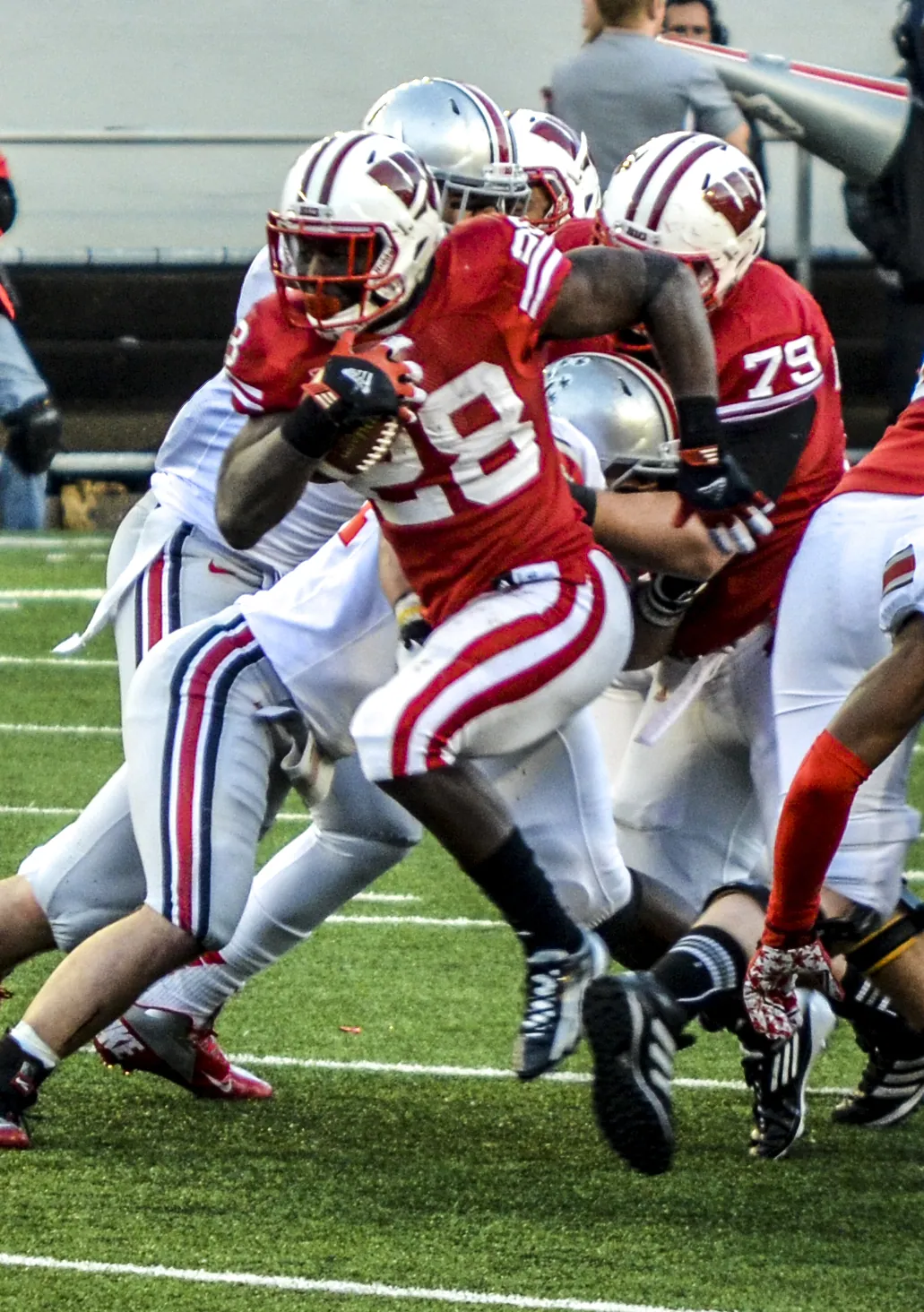
Wisconsin has a strong pipeline to the National Football League. Since 1974, 276 players from Wisconsin have reached the NFL, with 162 of those players being selected in the draft. The program has produced 23 first-round draft picks. Notable first-round selections include offensive tackle Joe Thomas (3rd overall in 2007), defensive end J.J. Watt (11th overall in 2011), running back Melvin Gordon (15th overall in 2015), and linebacker T.J. Watt (30th overall in 2017). Other prominent first-rounders were center Travis Frederick in 2013 and offensive tackle Ryan Ramczyk in 2017. The program has consistently sent players to the league, averaging over three draftees per year since the 2016 NFL Draft. In the 2026 NFL season, 51 Wisconsin alumni are on rosters, including running back Jonathan Taylor (Colts), linebacker T.J. Watt (Steelers), offensive lineman Joe Tippmann (Jets), and tight end Jake Ferguson (Cowboys).
The Alvarez Era and Modern Resurgence
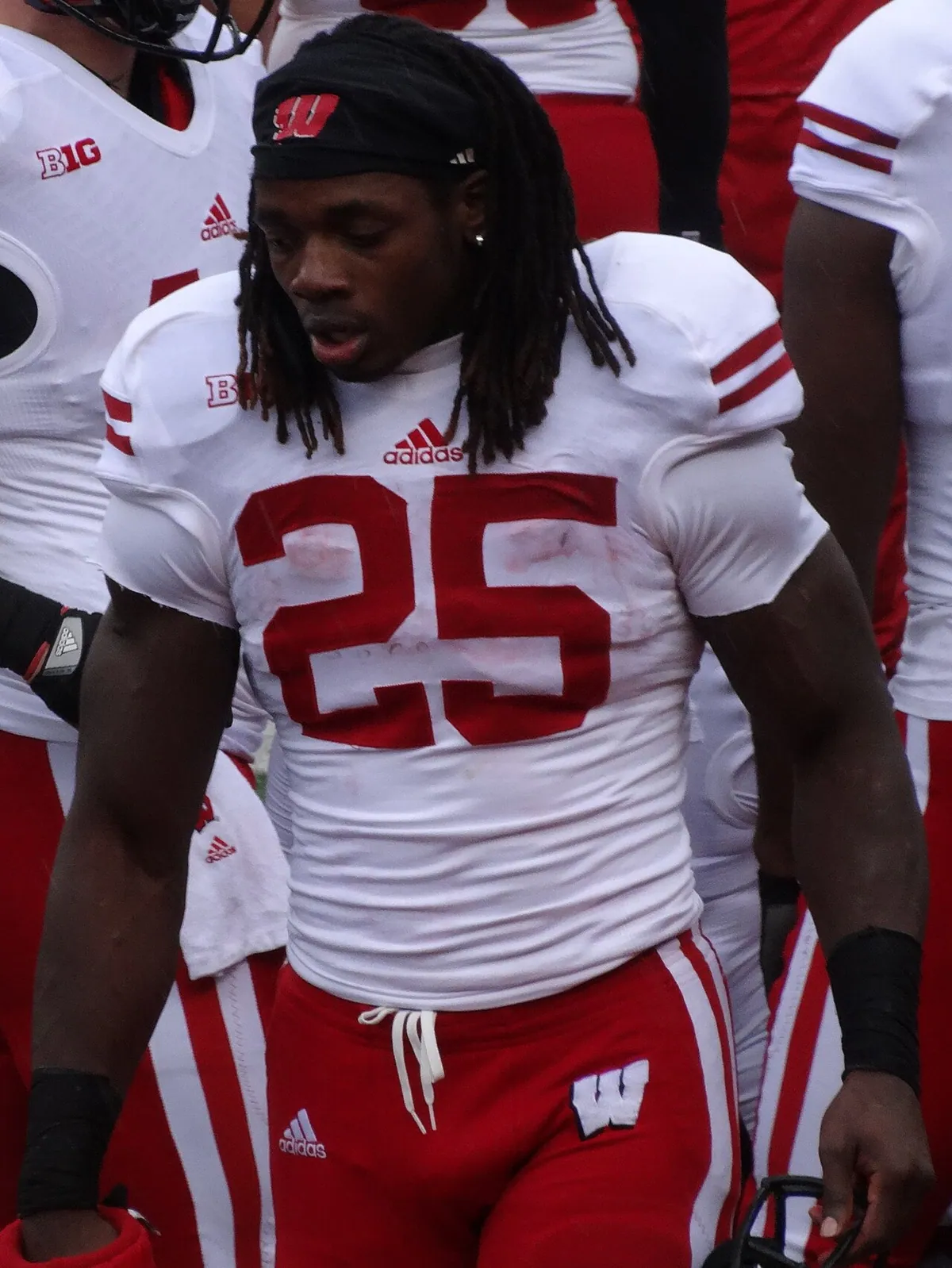
The hiring of Barry Alvarez in 1990 marked the definitive turning point for modern Wisconsin football. He took over a program that was over $2 million in debt and drawing only 30,000 fans to a 77,000-seat stadium. Alvarez's strategy focused on building a wall around the state of Wisconsin to keep top high school talent home and encouraging walk-ons. After a 1-10 first season, the plan culminated in a breakthrough 1993 campaign where the Badgers went 10-1-1 and won the Big Ten. His 1998 and 1999 teams, led by running back Ron Dayne, won back-to-back Big Ten titles and Rose Bowls. He stepped down as head coach after the 2005 season with a 118-73-4 record and stayed on as athletic director, a post he had taken in 2004.
The 1942 Season and National Championship Claim
On October 24, 1942, the No. 6 Badgers defeated the No. 1 Ohio State Buckeyes at Camp Randall. That victory propelled Wisconsin to the No. 2 spot in the Associated Press poll. The team's national championship hopes were dashed the following week in a 6-0 loss to Iowa. Wisconsin won its remaining games to finish the season with an 8-1-1 record and a No. 3 ranking in the final AP poll. The Helms Athletic Foundation selected Wisconsin as its vote for National Champion for that season. The AP national champion that year was Ohio State , whom Wisconsin had defeated during the season.
Periods of Struggle and Rebuilding
Following the successful 1962 season that ended with a No. 2 ranking, Wisconsin football entered a prolonged period of limited success. Coach Milt Bruhn resigned in 1966 after three straight losing seasons. His replacement, John Coatta, oversaw one of the program's lowest points, as the Badgers endured a 23-game winless streak from 1967 to 1969. John Jardine brought stability from 1970 to 1977, posting a 37-47-3 record and developing future NFL stars like center Mike Webster . Dave McClain led the team to a string of seven-win seasons and three bowl appearances from 1981 to 1984. After McClain's death in 1986, the program declined sharply, winning only nine total games from 1986 to 1990 under Jim Hilles and Don Morton. This era of struggle set the stage for the hiring of Barry Alvarez.
Notable Seasons and Achievements Since 1990
The 1993 season under Barry Alvarez ended a 31-year Big Ten championship drought. The 1998 team set a school record with 11 wins. The 1999 season featured Ron Dayne's Heisman Trophy and an outright Big Ten title. Bret Bielema's first season in 2006 resulted in a 12-1 record and a Capital One Bowl win. The 2010 and 2011 teams won Big Ten championships and played in the Rose Bowl. The 2012 team, despite a 7-5 regular season, won the Big Ten Championship Game 70-31 over Nebraska.
Recent Seasons and Current Outlook
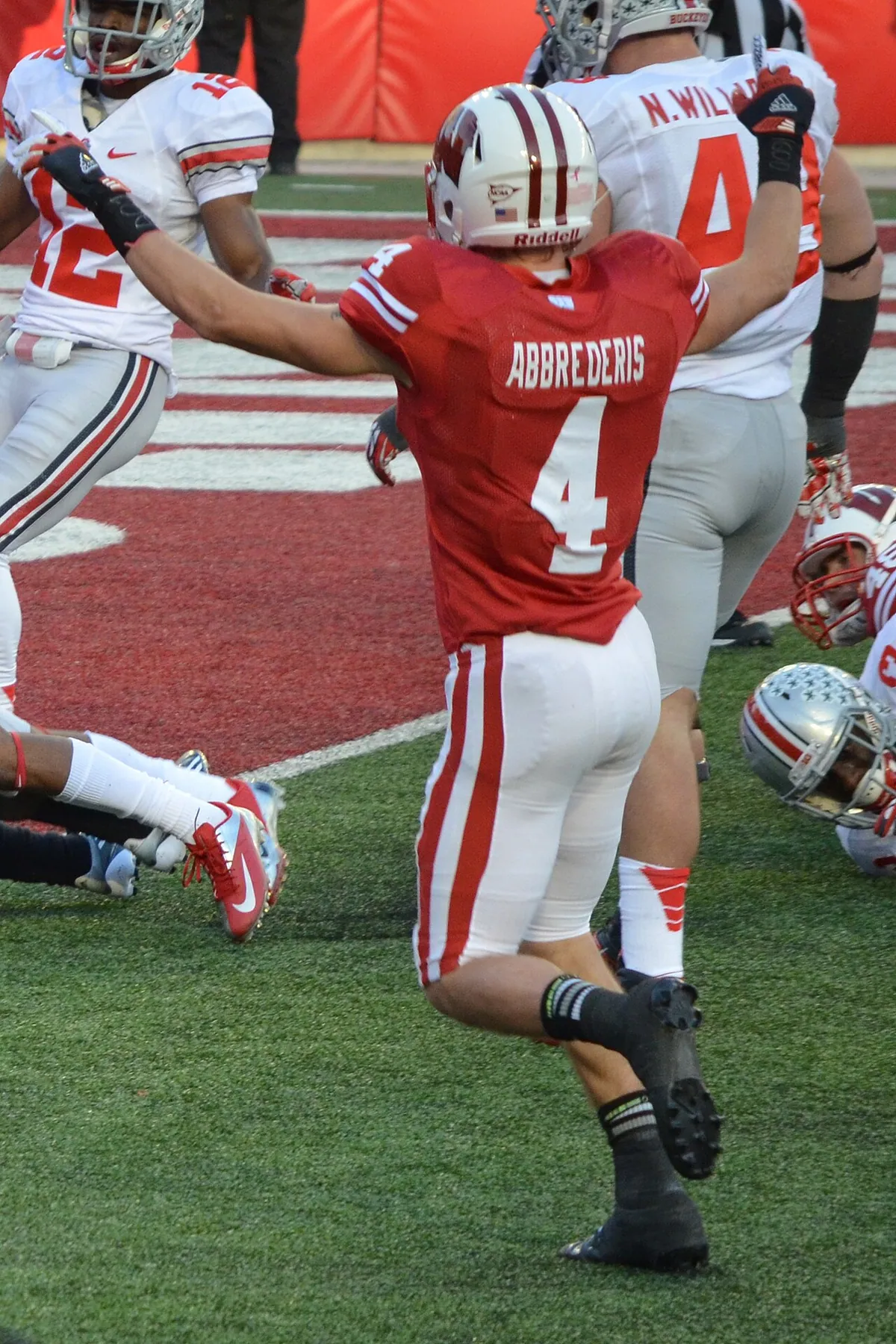
Following the Alvarez era, Bret Bielema, Gary Andersen, and Paul Chryst maintained Wisconsin's status as a Big Ten contender. Chryst's tenure from 2015 to 2022 included a 13-1 season in 2017 that ended with an Orange Bowl win over Miami. Luke Fickell was hired as head coach prior to the 2023 season. During the 2026 season, Fickell's record at Wisconsin stands at 22-23. Wisconsin is one of 26 college football programs with 700 or more wins. Wisconsin had 51 former players on NFL rosters in 2026, and 3 Badgers were selected in the 2026 NFL Draft.
NFL players from Wisconsin
| Player | Pos | Years | Main team |
|---|---|---|---|
| Joe Thomas | OT | 2007–2017 | Cleveland Browns |
| T.J. Watt | OLB | 2017– | Pittsburgh Steelers |
| J.J. Watt | DE | 2011–2022 | Houston Texans |
| Russell Wilson | QB | 2012–2025 | Seattle Seahawks |
| Troy Vincent | S | 1992–2006 | Philadelphia Eagles |
| Travis Frederick | C | 2013–2020 | Dallas Cowboys |
| Tim Krumrie | DT | 1983–1994 | Cincinnati Bengals |
| Jonathan Taylor | RB | 2020– | Indianapolis Colts |
| Al Toon | WR | 1985–1992 | New York Jets |
| Zack Baun | LB | 2020– | New Orleans Saints |
| Kevin Zeitler | G | 2012– | Cincinnati Bengals |
| Jim Bakken | K | 1962–1978 | St. Louis Cardinals |
| Owen Daniels | TE | 2006–2016 | Houston Texans |
| Mike Webster | C | 1974–1990 | Pittsburgh Steelers |
| Nate Odomes | CB | 1987–1996 | Buffalo Bills |
Video
FAQ
How many national championships has Wisconsin Badgers football won?
The Wisconsin Badgers football program has unclaimed national championships for the 1912 and 1942 seasons. The 1942 team finished 8-1-1 and was ranked No. 3 by the Associated Press. The Helms Athletic Foundation selected that Wisconsin team as its vote for National Champion. The program's national titles are not officially claimed.
Which Wisconsin Badgers have won the Heisman Trophy?
Two Wisconsin Badgers players have won the Heisman Trophy. Fullback Alan Ameche won the award in 1954. Running back Ron Dayne won the Heisman in 1999 after setting the NCAA career rushing yardage record. That 1999 season also brought Wisconsin an outright Big Ten title and a Rose Bowl win over Stanford.
What is Wisconsin's record in bowl games?
The Wisconsin Badgers have an all-time bowl game record of 19 wins and 16 losses. Their first bowl appearance was in the 1953 Rose Bowl. The program has been to the Rose Bowl multiple times, with notable victories coming in the 1990s. Wisconsin lost its first three Rose Bowls before beating UCLA 21-16 after the 1993 season.
When was the first season of Wisconsin Badgers football?
The Wisconsin Badgers football program played its first season in 1889. That inaugural team played only two games and lost both of them. The program has a long history, competing in its first game 137 years ago. Wisconsin has been a member of the Big Ten Conference since the league's formation in 1896.
How many Big Ten championships has Wisconsin Badgers football won?
The Wisconsin Badgers have won 14 Big Ten championships. Their conference titles came in 1896, 1897, 1901, 1906, 1912, 1952, 1959, 1962, 1993, 1998, 1999, 2010, 2011, and 2012. The program has been a member of the Big Ten since its formation in 1896, and it won the first-ever conference championship that year. The Badgers experienced a resurgence in the 1990s and early 2010s, winning multiple titles during those periods.
What is the capacity of Camp Randall Stadium?
Camp Randall Stadium has a capacity of 76,057. It is the home field for the Wisconsin Badgers football team and is the third oldest stadium in college football. The playing surface is named Barry Alvarez Field. The stadium is located in Madison, Wisconsin, and has been the site of many historic games throughout the program's long history.
Sources
- Wisconsin Badgers football (Wikipedia) Wikipedia
- Wisconsin Badgers College Football Scores and Schedules college-football-results.com
- Wisconsin National Championships uwbadgers.com
- nflverse game, roster and draft data nflverse (CC BY 4.0)