The Bowl Championship Series (BCS) was a postseason selection system in NCAA Division I Football Bowl Subdivision (FBS) college football that operated from the 1998 to 2013 seasons. Its primary purpose was to match the nation's top two ranked teams in a designated national championship game to crown a single, undisputed champion. The system also created matchups for four other prestigious bowl games: the Rose Bowl, Sugar Bowl, Orange Bowl, and Fiesta Bowl. The BCS used a combination of human polls and computer selection methods to determine relative team rankings. It was replaced in 2014 by the College Football Playoff.
Origins and Predecessor Systems
Before the BCS, college football's national champion was determined by various polls, often leading to split championships where different organizations crowned different winners. This problem was exacerbated by the traditional bowl system, where conference champions were contractually tied to specific games, preventing the top two teams from meeting. The issue was highlighted in 1991 when undefeated Miami and Washington, locked into different bowls, each won their games and split the national title. To address this, the Bowl Coalition was formed in 1992, followed by the Bowl Alliance in 1995. These systems aimed to force a championship game but were incomplete as they excluded the Big Ten and Pac-10 conferences, which were bound to the Rose Bowl. The need to include these major conferences and the Rose Bowl itself led to the creation of the Bowl Championship Series, with former SEC commissioner Roy Kramer often credited as its architect.
Structure and Selection Process
The BCS format initially featured four bowl games involving eight teams from the 1998 through 2005 seasons. Starting with the 2006 season, it expanded to five games involving ten teams, with the national championship game becoming a separate event. For the first eight seasons of the BCS contract, the championship game rotated among the four BCS bowls. The system relied on a combination of polls and computer selection methods to determine team rankings and narrow the field to two teams for the championship game. A set of rules governed team selection for all BCS games. The top two teams in the final BCS standings earned automatic berths in the BCS National Championship Game. Champions from the six Automatic Qualifying (AQ) conferences-the ACC, Big 12, Big East (later The American), Big Ten, Pac-10 (later Pac-12), and SEC-were guaranteed spots in a BCS bowl. Independent Notre Dame received an automatic bid if it finished in the top eight of the BCS standings. Starting in 2006, a champion from a non-AQ conference earned an automatic bid if it was ranked in the top 12, or ranked in the top 16 and higher than at least one AQ conference champion. The remaining at-large berths were filled from a pool of eligible teams, chosen by the individual bowl committees.
The contract signed by each conference required them to recognize this winner as the official and only champion. This arrangement was designed to end split championships. Under the BCS, the AP poll's number one and two teams met in a bowl game 13 out of the 16 seasons the system was in place, a significant increase from the pre-BCS era. The system's selection criteria, particularly the automatic qualifying status for six conferences, was a central feature and a major source of controversy throughout its existence.
BCS National Championship and Coaches
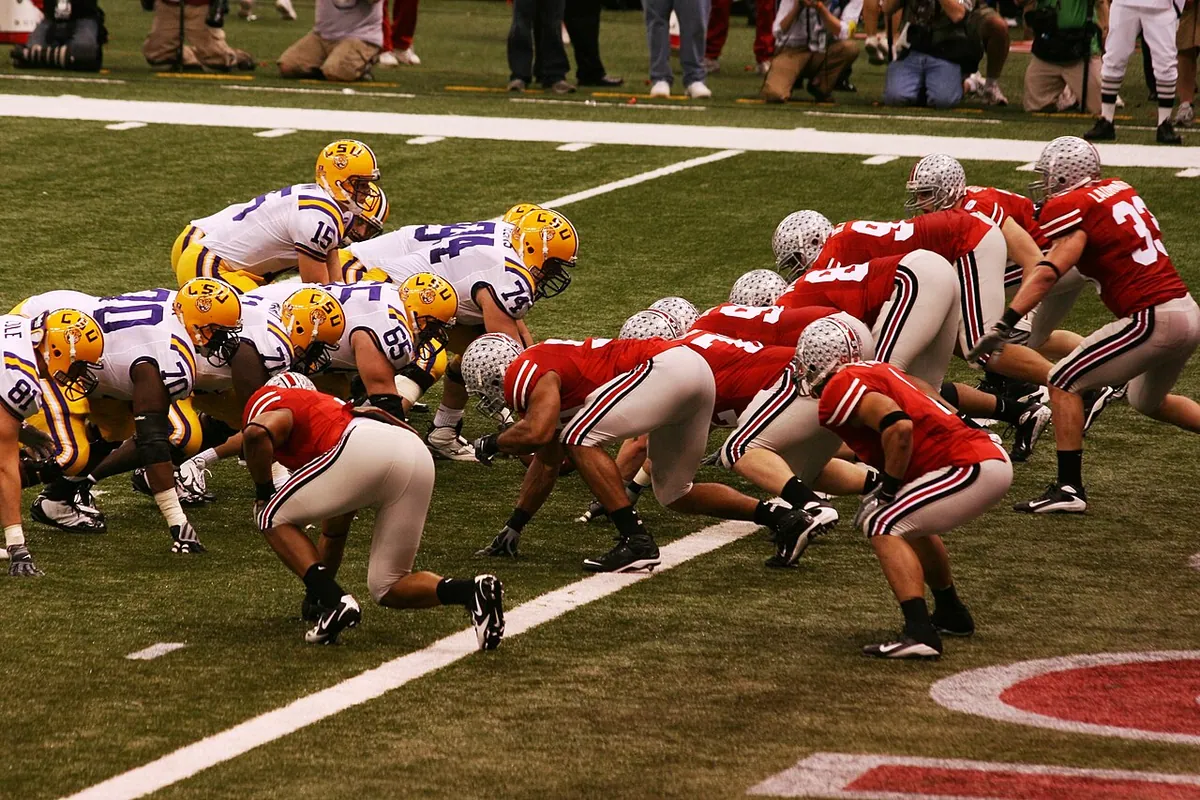
The BCS National Championship Game was held each season from 1998 through 2013. The Southeastern Conference (SEC) dominated the era, winning nine of the 16 championships. Alabama led all programs with three BCS titles. Florida State, Florida, and LSU each won two championships during the BCS era, while Alabama led with three. The championship game rotated among the Rose, Sugar, Orange, and Fiesta Bowls for the first eight seasons before becoming a separate event played at the site of a host bowl. According to available records from the BCS era, Alabama scored 42 points against Notre Dame in the 2013 championship, while LSU was shut out by Alabama in the 2012 title game.
Nick Saban won championships with two different SEC schools, LSU and Alabama. Bob Stoops of Oklahoma made four appearances in the title game. Bobby Bowden of Florida State and Jim Tressel of Ohio State each made three appearances. Other coaches who reached the game include Frank Beamer of Virginia Tech and Chip Kelly of Oregon. The performances of these coaches in the championship game became a significant part of their legacies. Notably, both of USC's appearances under Pete Carroll in 2004 and 2005 were later vacated due to NCAA sanctions.
Notable Teams and Conference Performance
Certain teams and conferences defined the BCS era through consistent success. Oklahoma and Ohio State are the only programs to appear in all five distinct BCS bowl games. The Big Ten Conference had the most total BCS appearances by its members with 28. The Southeastern Conference was the most successful, compiling 17 BCS game wins and winning nine national championships. The dominance of the AQ conferences, particularly the SEC, was a defining feature. The system's structure heavily favored the established power conferences, which became a central point of controversy.
The performance of non-Automatic Qualifying conferences, often called mid-majors, was a notable subplot. Mid-major teams had a 4-1 record against teams from the six AQ conferences in the BCS bowl games they were allowed to play in. This demonstrated competitive parity on the field. Teams like Boise State and Texas Christian had perfect records that fueled controversy over their exclusion from the championship game. Despite this success, no team from a non-AQ conference ever played in the BCS National Championship Game. The selection criteria and polling bias made it nearly impossible for them to reach the top two spots in the final standings, even with perfect records.
Key Controversies of the BCS Era
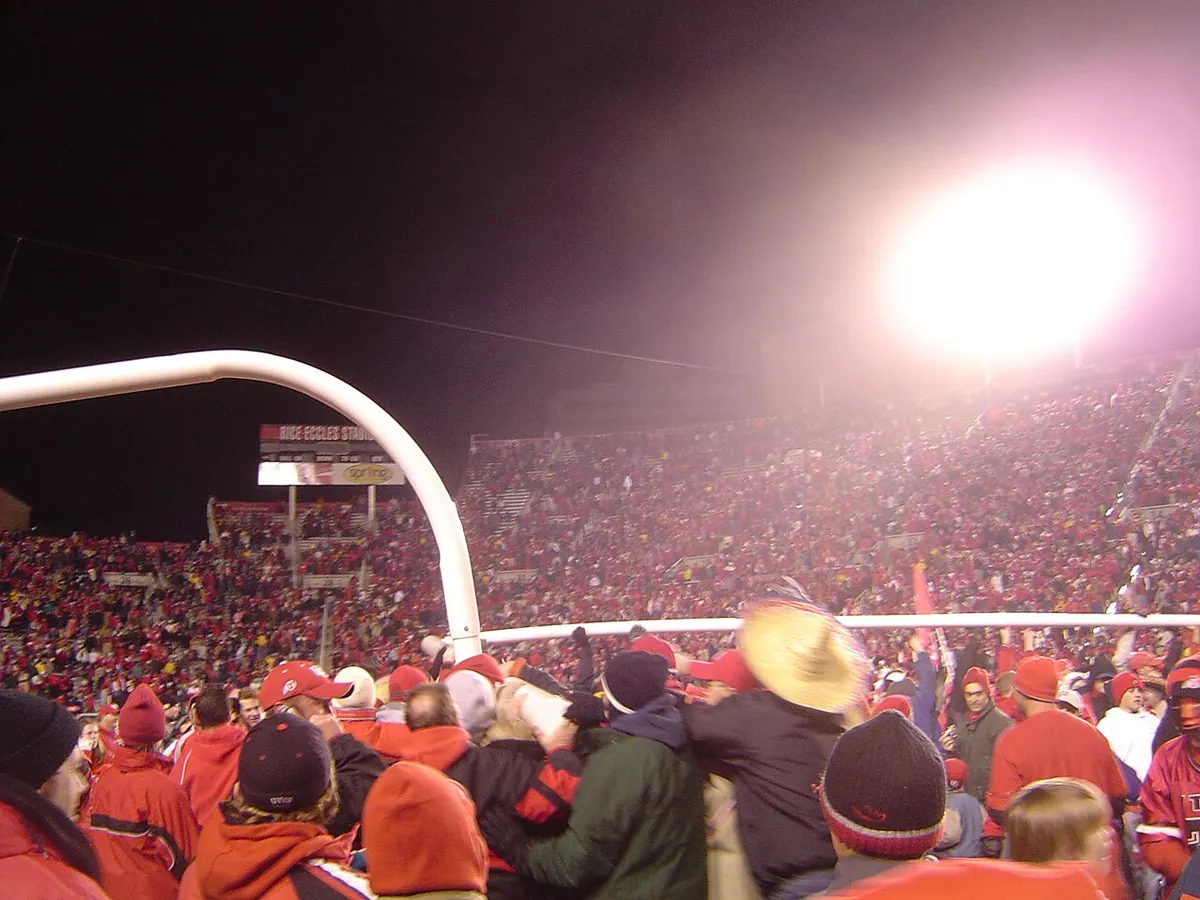
The BCS was consistently criticized for its perceived lack of fairness and inclusivity. A primary complaint was the system's inherent bias toward the six Automatic Qualifying conferences, making it nearly impossible for a team from a non-AQ conference to play for the national championship. Controversial championship game selections also fueled public discontent. There were instances where a team reached the title game without winning its conference. The 2003 season ended with a split national championship. The 2011 season culminated with a championship rematch between LSU and Alabama, two teams from the same division of the SEC, which many felt excluded other worthy contenders. These controversies, combined with fan frustration, created significant pressure to adopt a playoff format.
Specific seasons became case studies for the system's flaws. The performances of undefeated teams from non-AQ conferences highlighted the access problem. Furthermore, the American Football Coaches Association was contractually obligated to vote the winner of the BCS title game as its national champion, which critics argued removed independent judgment. The system also faced criticism for the role of computer rankings in the selection process. These repeated controversies eroded public and media confidence in the system, making its eventual replacement inevitable. The acknowledged controversies, fans' complaints, and declining game viewership were among the factors that led the major conferences to institute the College Football Playoff.
Transition to the College Football Playoff
Mounting criticism and the desire for a more definitive championship process led to the dissolution of the BCS after the 2013 season. The CFP introduced a four-team playoff where two semifinal games, hosted by rotating bowl sites, determine the participants for the College Football Playoff National Championship Game. A key difference from the BCS is the selection method: a 13-member committee chooses and seeds the four playoff teams, moving away from the BCS's formula of polls and computer rankings. The four former BCS bowls-Rose, Sugar, Orange, and Fiesta-were incorporated into the new system as part of the 'New Year's Six' rotation. The playoff expanded to 12 teams starting in the 2024 season.
The legal entity that managed the BCS, BCS Properties LLC, continues to control the College Football Playoff, ensuring a degree of institutional continuity. The CFP addressed several core BCS criticisms by creating a multi-team bracket and opening access to any conference champion. However, the fundamental tension between the bowl tradition and a true national tournament persisted, as the playoff semifinals remained tied to existing bowl games. The move to a playoff system represented the culmination of decades of debate over how to best crown a champion in the absence of an NCAA-run tournament in the Football Bowl Subdivision.
All-BCS Era Team and Legacy
The BCS era from 1998 to 2013 featured numerous players whose careers were defined within that window. An all-BCS era team highlights standout performers. At quarterback, USC's Matt Leinart won two national titles and the 2004 Heisman Trophy. The running backs are Wisconsin's Ron Dayne, the NCAA's career rushing leader, and Oklahoma's Adrian Peterson. Receivers include Pittsburgh's Larry Fitzgerald and Oklahoma State's Justin Blackmon, a two-time Biletnikoff Award winner. The offensive line features Outland Trophy winners like Wisconsin's Joe Thomas and Miami's Bryant McKinnie. Tight end Kellen Winslow Jr. of Miami won the Mackey Award. This team exemplifies the individual talent that thrived during the BCS period.
The BCS succeeded in its primary goal of creating a designated championship game, leading to the top two ranked teams meeting in the postseason 13 times in 16 seasons. It also integrated the major bowls and conferences into a unified selection structure. The system's flaws, however, ultimately catalyzed the move to a playoff, cementing the BCS's legacy as a transitional, albeit influential, chapter in college football history. It demonstrated both the possibility and the limitations of using a formula to determine a national champion in a sport with a deep-rooted bowl tradition. The debates it sparked directly shaped the structure of the College Football Playoff that followed.
- QB: Matt Leinart, USC (2003-05)
- RB: Ron Dayne, Wisconsin (1998-99)
- RB: Adrian Peterson, Oklahoma (2004-06)
- WR: Larry Fitzgerald, Pittsburgh (2002-03)
- WR: Justin Blackmon, Oklahoma State (2009-11)
- OT: Joe Thomas, Wisconsin (2003-06)
- OT: Bryant McKinnie, Miami (2000-01)
- TE: Kellen Winslow Jr., Miami (2001-03)
Video
FAQ
What does BCS stand for in football?
BCS stands for Bowl Championship Series. It was the system used in college football from 1998 to 2013 to determine the national champion and the participants for the major bowl games. The BCS used a combination of polls and computer selection methods to select the top two teams to play in the BCS National Championship Game. It also automatically qualified champions from six major conferences for other premier bowls like the Rose and Sugar Bowls.
When did the BCS run?
The Bowl Championship Series was in operation for 16 college football seasons. It began with the 1998 season, culminating in the first BCS National Championship Game. The system concluded after the 2013 season, with the final BCS National Championship Game played in January 2014. The College Football Playoff then took effect for the 2014 season.
Which college football team had the most BCS championship wins?
The University of Alabama won the most BCS championships with three titles. Alabama secured three BCS championships. The Southeastern Conference (SEC) as a whole led all conferences with nine BCS championships during the system's operation from 1998 to 2013. This dominance was part of the SEC's overall record of 17 BCS game wins, the most of any conference.
Which conferences and teams participated the most in BCS bowl games?
The Big Ten Conference had the most BCS appearances with 28. The teams with the most individual BCS appearances were Ohio State with 10 and the most BCS wins were shared by Ohio State and USC with six each. The Southeastern Conference (SEC) had the most game wins with 17. The system guaranteed automatic berths to champions from six Automatic Qualifying conferences: the ACC, Big East (now The American), Big Ten, Big 12, Pac-10/Pac-12, and SEC.
What were the television networks that broadcast the BCS games over the years?
The television partners for the BCS changed over its history. ABC held the rights from 1999 to 2006, broadcasting all four original BCS games. Fox then held the rights from 2006 to 2009 for most games, though the Rose Bowl remained with ABC due to its existing contract. From 2009 until the BCS ended in 2014, ESPN had the exclusive rights to broadcast all BCS games. ESPN continued to broadcast the major bowls after they became part of the College Football Playoff.
What was the main goal of the Bowl Championship Series?
The main goal of the Bowl Championship Series was to select the two best teams in the country to play in a national championship game to decide a single national champion. This system was created to end split championships where different polls named different winners, ensuring the champion was decided on the field. It used a combination of polls and computer selection methods to determine team rankings and narrow the field to two contenders. The BCS aimed to provide a clear title matchup that had been rare before its implementation.
Sources
- Bowl Championship Series (Wikipedia) Wikipedia
- Bowl Championship Series Facts for Kids kids.kiddle.co
- The national all-BCS-era team abcnews.com
- College Football: Power Ranking Every BCS Championship Game Head Coach Ever Bleacher Report