The Minneapolis Miracle was the final play of the 2017 NFC Divisional playoff game between the Minnesota Vikings and New Orleans Saints on January 14, 2018. With 10 seconds remaining and trailing 24-23, Vikings quarterback Case Keenum threw a 27-yard pass to wide receiver Stefon Diggs, who then ran for a 61-yard touchdown as time expired. The play gave the Vikings a 29-24 victory and marked the first time in NFL playoff history a game ended in regulation with a game-winning touchdown as the clock hit zero. The dramatic finish, immortalized by the radio call of Paul Allen, became an instant classic in NFL lore.
Background and Season Context
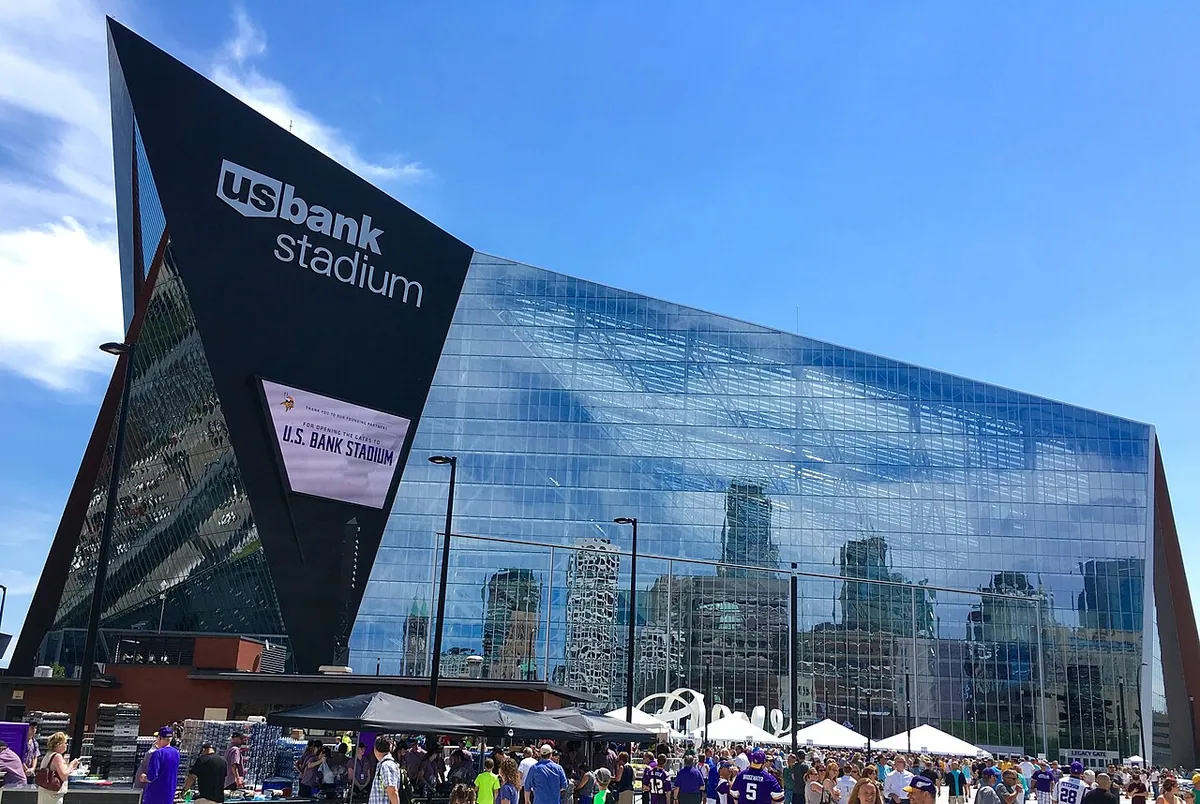
The 2017 season was one of resilience for both the Minnesota Vikings and New Orleans Saints. The Vikings began the year with Sam Bradford as their starting quarterback, but he suffered a knee injury in Week 1 against the Saints. Case Keenum, a journeyman quarterback, took over and led the team to a 13-3 record, the NFC North title, and the conference's number two seed. Key offensive contributors included running back Latavius Murray, tight end Kyle Rudolph, and wide receiver Stefon Diggs, each of whom scored eight touchdowns during the regular season. The Saints, after an 0-2 start, finished 11-5 to win the NFC South behind a potent offense featuring rookie Alvin Kamara, veteran Mark Ingram, and second-year receiver Michael Thomas. The two teams had met in the season opener, with Minnesota winning 29-19 at U.S. Bank Stadium, setting the stage for a playoff rematch with the Vikings favored by 5.5 points.
The playoff game also carried historical weight from a previous postseason meeting. The 2009 NFC Championship game between the franchises was marred by the Saints' 'Bountygate' scandal, where players were accused of excessive roughness, and ended with a Vikings interception near field goal range. Some Minneapolis sportswriters later framed the game as a chance for atonement. Furthermore, the Vikings' playoff path was uniquely positioned as U.S. Bank Stadium was set to host Super Bowl LII. No team had ever played a Super Bowl in its home stadium, and Minnesota's seeding gave them a potential path to achieve that historic feat, a narrative the team promoted with a 'Bring It Home' campaign.
Game Summary and Dramatic Lead-Up
The game began as a defensive show for the Minnesota Vikings. They built a 17-0 halftime lead with a touchdown run by Jerick McKinnon, a field goal from former Saints kicker Kai Forbath, and a one-yard score from Latavius Murray. The New Orleans offense was completely stifled in the first half, failing to convert a single third down while quarterback Drew Brees threw two interceptions. The Saints had not been shut out in a first half in over three years. The momentum shifted dramatically after halftime. The Saints engineered a 12-play drive capped by a 14-yard Brees touchdown pass to Michael Thomas late in the third quarter. Early in the fourth quarter, Saints safety Marcus Williams intercepted a Case Keenum pass, setting up another Brees-to-Thomas touchdown that cut the deficit to 17-14.
The back-and-forth final quarter featured multiple lead changes. The Vikings extended their lead to 20-14 on a Forbath field goal, but the Saints blocked a punt to gain field position. With 3:01 left, Brees threw a 14-yard touchdown pass to Alvin Kamara to give New Orleans its first lead at 21-20. Forbath answered with a 53-yard field goal to put Minnesota back ahead 23-21 with 1:29 remaining. Brees then led a rapid 64-second drive, setting up a 43-yard field goal by Wil Lutz to reclaim a 24-23 lead with just 25 seconds on the clock. After the kick, Saints head coach Sean Payton mocked the home crowd by imitating the Vikings' 'Skol' chant. Following a touchback and a false start penalty, Keenum completed a pass to Diggs to the Minnesota 39-yard line. Two incomplete passes then set up a third-and-10 situation with 10 seconds left, at which point ESPN's win probability model gave the Vikings only a 4 percent chance of victory.
The Final Play: Buffalo Right, Seven Heaven
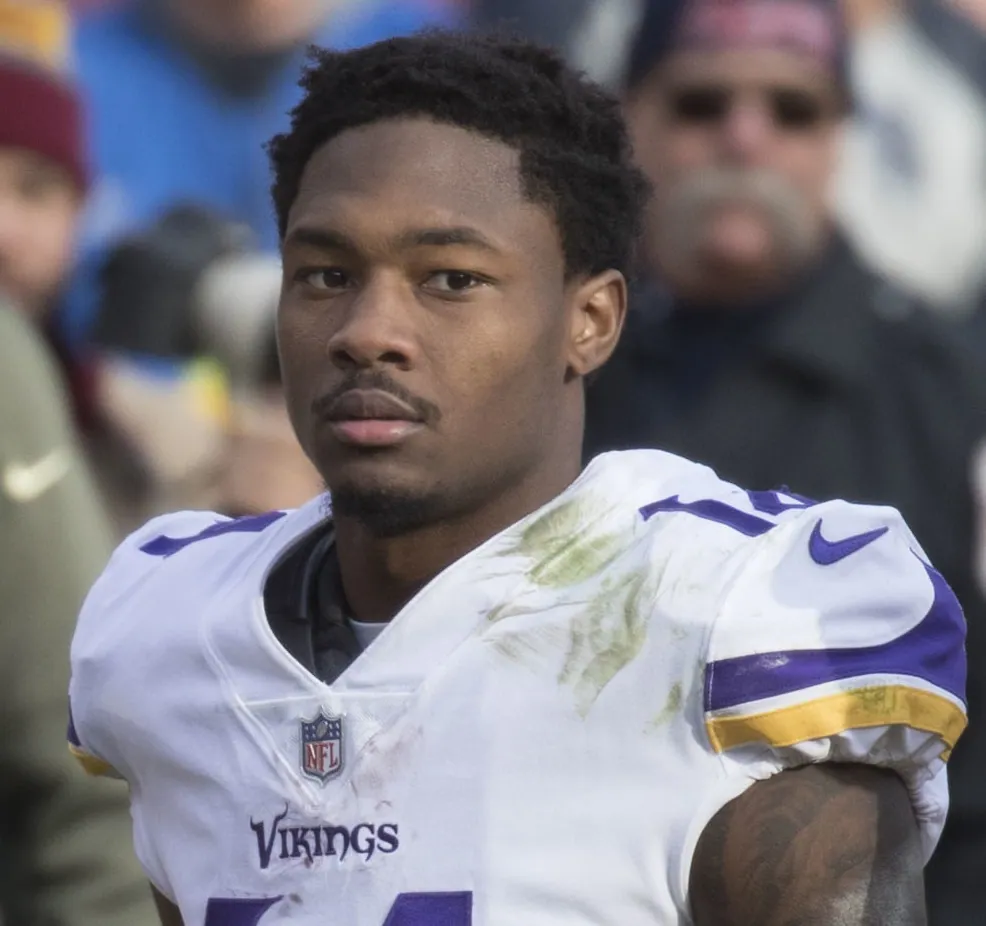
With the season on the line, Vikings offensive coordinator Pat Shurmur called the play 'Buffalo Right, Seven Heaven.' The formation featured three receivers in a bunch to the right, with the 'Seven' routes designed as corner routes toward the sideline. The primary objective was for a receiver to catch the ball and immediately step out of bounds to stop the clock, allowing for a potential game-winning field goal attempt. The Saints deployed an outside zone defense intended to protect the sidelines and prevent exactly that scenario. Case Keenum took the shotgun snap and, with good protection from his offensive line and running back Jerick McKinnon, set his feet and launched a 27-yard pass toward the right sideline where Stefon Diggs was running his corner route.
The pass was slightly high, forcing Diggs to leap to make the catch at the New Orleans 34-yard line. Saints safety Marcus Williams, attempting a diving tackle, misjudged his angle and dove underneath the airborne Diggs, colliding with his own teammate, cornerback Ken Crawley. This catastrophic missed tackle left Diggs untouched as he landed. Diggs stumbled but used his left hand to regain balance and stay in bounds. Seeing no defenders between him and the end zone, Diggs abandoned the plan to step out and instead turned upfield, sprinting down the sideline for a 61-yard touchdown as time expired.
Immediate Aftermath and Celebration
Chaos and confusion ensued immediately after the touchdown. Assuming the game was over, many Saints players headed to the locker room and stadium crews began packing the field. Following a mandatory scoring review, both teams were required to return for an extra point attempt. Only eight Saints players, including just three defensive players, took the field for the final play, with punter Thomas Morstead being the first to return in a display of sportsmanship later praised by Vikings fans. Case Keenum led the stadium in the 'Skol' chant and then took a knee on the two-point conversion attempt to officially end the game. Keenum then led the stadium in the 'Skol' chant, a moment of collective catharsis for the home crowd. The victory sent the Vikings to the NFC Championship Game in Philadelphia, but their storybook run ended there with a 38-7 loss to the Eagles, who would go on to win Super Bowl LII at U.S. Bank Stadium.
The play generated memorable media calls that helped define its legacy. On the Vikings' radio broadcast, announcer Paul Allen screamed, 'Are you kidding me?! It's a Minneapolis Miracle!' His phrase quickly went viral and became the official name for the play. The Fox television call by Joe Buck and Troy Aikman was also noted for capturing the shock and excitement. Buck later stated it was the most exciting singular moment he had ever been part of in his broadcasting career. The Vikings' social media team, which had positioned a sideline camera perfectly, captured the play from a unique angle.
Rule Changes and Lasting Honors
One direct consequence of the Minneapolis Miracle was a change to the NFL rulebook. The rule had been in place because point differential was a potential tiebreaker for playoff seeding, though it was unlikely to be used. The anticlimactic and confusing scene of teams returning to the field after such a dramatic finish, as seen in Minneapolis, was deemed unnecessary. The new rule stated the try must still be attempted only if it could affect the game's outcome, such as if the scoring team was ahead by one or two points, allowing for a potential defensive return.
The play received numerous accolades in the years that followed. It won the NFL Play of the Year award at the 7th NFL Honors ceremony. At the 2018 ESPY Awards, it won the Best Moment ESPY Award. Stefon Diggs' cleats from the game were placed in the Pro Football Hall of Fame in Canton, Ohio. In 2019, as part of the NFL's 100th season celebration, the 'NFL 100 Greatest' series ranked the Minneapolis Miracle as the ninth-greatest play in league history.
Player Aftermath and Subsequent Meetings
The careers of the key participants took divergent paths after the 2017 season. Case Keenum left Minnesota in free agency, signing a two-year, $36 million contract with the Denver Broncos. The Vikings' other quarterbacks, Sam Bradford and Teddy Bridgewater, also departed, leading the team to sign Kirk Cousins to a fully guaranteed three-year, $84 million deal. Stefon Diggs received a five-year, $81 million extension from the Vikings but was traded to the Buffalo Bills in March 2020. Saints safety Marcus Williams faced intense criticism for his missed tackle but stated before the 2018 season that he had made peace with the error. Saints coach Sean Payton later admitted he used the play as motivation and expressed regret over a conservative play call on the Saints' final drive that gave Minnesota possession with time remaining. The two franchises met again in notable games in subsequent seasons. In a Week 8 rematch during the 2018 regular season at U.S. Bank Stadium, the Saints won 30-20. The following postseason, in the 2019 NFC Wild Card round, the Vikings returned to New Orleans and won 26-20 in overtime on a walk-off touchdown pass from Kirk Cousins to Kyle Rudolph.
- Case Keenum signed with the Denver Broncos in 2018.
- Stefon Diggs was traded to the Buffalo Bills in 2020.
- The Saints won a 2018 regular season rematch 30-20.
- The Vikings won a 2019 Wild Card playoff game 26-20 in overtime.
- Kirk Cousins joined the Vikings in 2018.
Legacy and Cultural Impact
The Minneapolis Miracle is remembered as one of the most dramatic and improbable finishes in NFL history. It instantly entered the pantheon of great playoff moments, with analysts and fans labeling it an 'instant classic.' For the Minnesota Vikings and their long-suffering fan base, the play was seen as a break from a history of postseason heartbreak, providing a moment of unadulterated joy. The play's legacy is preserved through continuous rebroadcasts, its high ranking on 'greatest play' lists, and the enduring popularity of the radio and television calls. The sideline video captured by the Vikings' digital media team, which exceeded 10 million views, ensured the moment would be relived by fans indefinitely.
The play also had a significant impact on the individuals involved and the league's operations. It propelled Case Keenum and Stefon Diggs into national spotlight, though their careers later diverged. It prompted a logical change to NFL rules regarding post-touchdown procedures. Furthermore, the sportsmanship displayed by Saints punter Thomas Morstead resonated deeply. Vikings fans donated more than $221,000 to his charity in recognition of his actions. The Minneapolis Miracle remains a powerful example of the unpredictable nature of football, where a season can turn on a single, perfectly executed play marred by a single defensive mistake, creating a memory that transcends the sport itself.
Video
FAQ
How is the Minneapolis Miracle remembered in NFL history?
The Minneapolis Miracle is remembered as one of the greatest plays in NFL history. It was ranked the ninth-greatest play in the league's 'NFL 100 Greatest' series. The play won the NFL Play of the Year award and a Best Moment ESPY Award. Stefon Diggs' cleats are in the Pro Football Hall of Fame. The play is celebrated for its dramatic timing, the reversal of fortune, and its status as the first playoff game to end on a regulation walk-off touchdown.
Who threw the pass that resulted in the Minneapolis Miracle?
Minnesota Vikings quarterback Case Keenum threw the pass that resulted in the Minneapolis Miracle. On the final play of the game, Keenum threw a 27-yard pass to wide receiver Stefon Diggs, who then ran it in for a 61-yard touchdown as time expired. Keenum had taken over as the starting quarterback earlier in the 2017 season after Sam Bradford suffered a knee injury. He led the Vikings to a 13-3 regular season record and was lauded for his efforts on this game-winning score.
Which player caught the Minneapolis Miracle touchdown?
Minnesota Vikings wide receiver Stefon Diggs caught the Minneapolis Miracle touchdown. Diggs caught a 27-yard pass from Case Keenum near the sideline, and after Saints safety Marcus Williams missed a tackle, he sprinted to the end zone to complete a 61-yard game-winning touchdown as time expired. Diggs was one of three Vikings to score eight touchdowns during the regular season. Following the play, he received widespread praise and later signed a five-year contract extension with the Vikings.
What was the final score of the Minneapolis Miracle game?
The final score of the Minneapolis Miracle game was Minnesota Vikings 29, New Orleans Saints 24. The game was an NFC divisional playoff contest played on January 14, 2018. The Saints had taken a 24-23 lead with just 25 seconds remaining before the Vikings executed the final play. Stefon Diggs's touchdown as time expired provided the winning points, making the final score 29-24 in favor of Minnesota.
Which Saints player missed the tackle on Stefon Diggs during the Minneapolis Miracle?
Saints safety Marcus Williams missed the tackle on Stefon Diggs during the Minneapolis Miracle. Attempting to make a diving tackle on the airborne Diggs, Williams instead dove under the receiver and collided with his own teammate, cornerback Ken Crawley. This allowed Diggs to regain his balance and run unimpeded to the end zone. Williams, who had earlier intercepted a pass to help the Saints' comeback, received widespread criticism for this missed tackle after the game.
Where was the Minneapolis Miracle game played?
The Minneapolis Miracle game was played at U.S. Bank Stadium in Minneapolis, Minnesota. The stadium, which was selected to host Super Bowl LII on May 20, 2014, became the first Super Bowl host stadium to also host a Divisional Playoff Game in the same season. The attendance for the game on January 14, 2018, was 66,612. The Vikings were the NFC's number two seed that year.