Roger Stokoe Goodell is an American businessman who has served as the commissioner of the National Football League since 2006. He is the eighth chief executive in the league's history, succeeding Paul Tagliabue. Goodell began his NFL career in 1982 as an administrative intern and rose through the ranks, becoming the league's executive vice president and chief operating officer in 2001. His tenure has been marked by significant revenue growth, international expansion, and numerous high-profile controversies involving player conduct, labor disputes, and game integrity.
Early Life and Entry into the NFL
Roger Goodell was born on February 19, 1959, in Jamestown, New York, to United States Senator Charles Goodell and Jean Goodell. The family moved to Bronxville, New York, in 1971. At Bronxville High School, Goodell was a three-sport star in football, basketball, and baseball, captaining all three teams as a senior and being named the school's athlete of the year. He attended Washington and Jefferson College, graduating magna cum laude in 1981 with a degree in economics and receiving the school's Walter Hudson Baker Prize for excellence in economics. Determined to work for the NFL, he wrote letters to the league office and every one of the 28 teams at the time. This effort led to a three-month administrative internship in Commissioner Pete Rozelle's office in 1982. He spent the 1983 season as an intern with the New York Jets before returning to the league headquarters in 1984 for a position as an assistant in the public relations department.
Rise to Executive Vice President and Chief Operating Officer
Goodell's abilities were quickly recognized within the NFL organization. Working under Commissioner Paul Tagliabue, Goodell took on a series of increasingly senior roles in both football and business operations. His career reached a major milestone in December 2001 when he was named the NFL's executive vice president and chief operating officer. In this capacity, he was responsible for the league's football operations and officiating departments while also supervising all major business functions. He led NFL Ventures, which managed the league's media properties, marketing, sales, stadium development, and strategic planning. Goodell was a central figure in several major league projects before becoming commissioner. He helped direct the launch of the NFL Network and played a lead role on the team that negotiated the league's television contracts. In football operations, he contributed to a 1994 rules initiative to boost offensive production and oversaw the administration of the instant replay system.
Selection as NFL Commissioner
When Paul Tagliabue announced his retirement, Goodell emerged as a leading candidate to succeed him. The selection process involved multiple rounds of voting by NFL team owners. After the fourth ballot, Goodell's lead increased to 21 votes against Levy's 10, falling just one vote short of the necessary two-thirds majority for election. On the fifth round of voting on August 8, 2006, two owners swung their votes to Goodell, giving him a 23 to 8 victory. The Oakland Raiders abstained from voting in each round. Goodell officially assumed the office of commissioner on September 1, 2006, the date Tagliabue was required to step down.
Major Initiatives and League Growth
He has focused on international development, shutting down the NFL Europe spring league after the 2007 season and launching the NFL International Series with regular season games in London starting that same year. The league's global strategy includes plans for nine international games across four continents in a single year. Goodell created the first NFL Player Advisory Council and strengthened the league's policies on player health and safety. He has also emphasized the use of technology, including artificial intelligence, to improve officiating, fan experiences, and player safety research. In 2014, he was awarded the Department of the Army's Outstanding Civilian Service Award for his contributions to the US Army community. Major actions under Goodell's leadership include.
- Launch of the NFL International Series in 2007.
- Strengthening of the league's anti-steroids policy.
- Creation of the NFL Player Advisory Council.
- Implementation of innovative new television contracts.
- Advancement of data-driven research in player safety and equipment.
High-Profile Controversies and Discipline
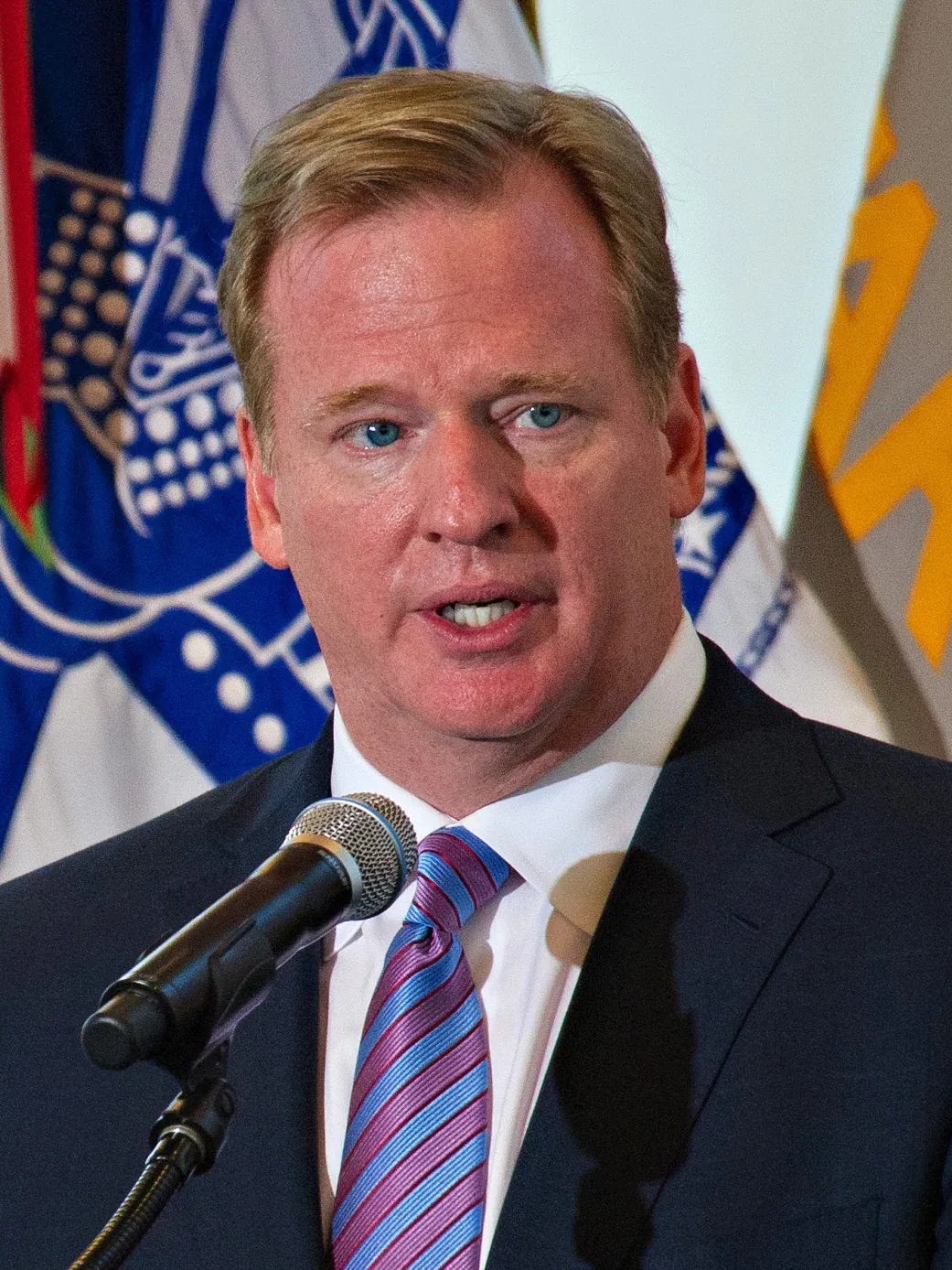
Goodell's tenure has been defined by his aggressive use of the commissioner's disciplinary powers, leading to several major controversies. In April 2007, he announced a new NFL Personal Conduct Policy following a year of off-field player scandals. The first suspensions under this policy were given to Tennessee Titans cornerback Pacman Jones for the entire 2007 season and Cincinnati Bengals wide receiver Chris Henry for the first eight games of 2007. Other notable suspensions included Chicago Bears defensive lineman Tank Johnson, Atlanta Falcons quarterback Michael Vick, Cleveland Browns wide receiver Donté Stallworth, and Pittsburgh Steelers quarterback Ben Roethlisberger. Goodell has also fined players for on-field misconduct, such as the fines issued to Pittsburgh Steelers linebacker James Harrison and others in 2010 for controversial hits. His handling of domestic violence cases, particularly the initial two-game suspension of Baltimore Ravens running back Ray Rice in 2014, drew widespread criticism and led to petitions from advocacy groups calling for the league to address its domestic violence problem.
League Investigations and Labor Disputes
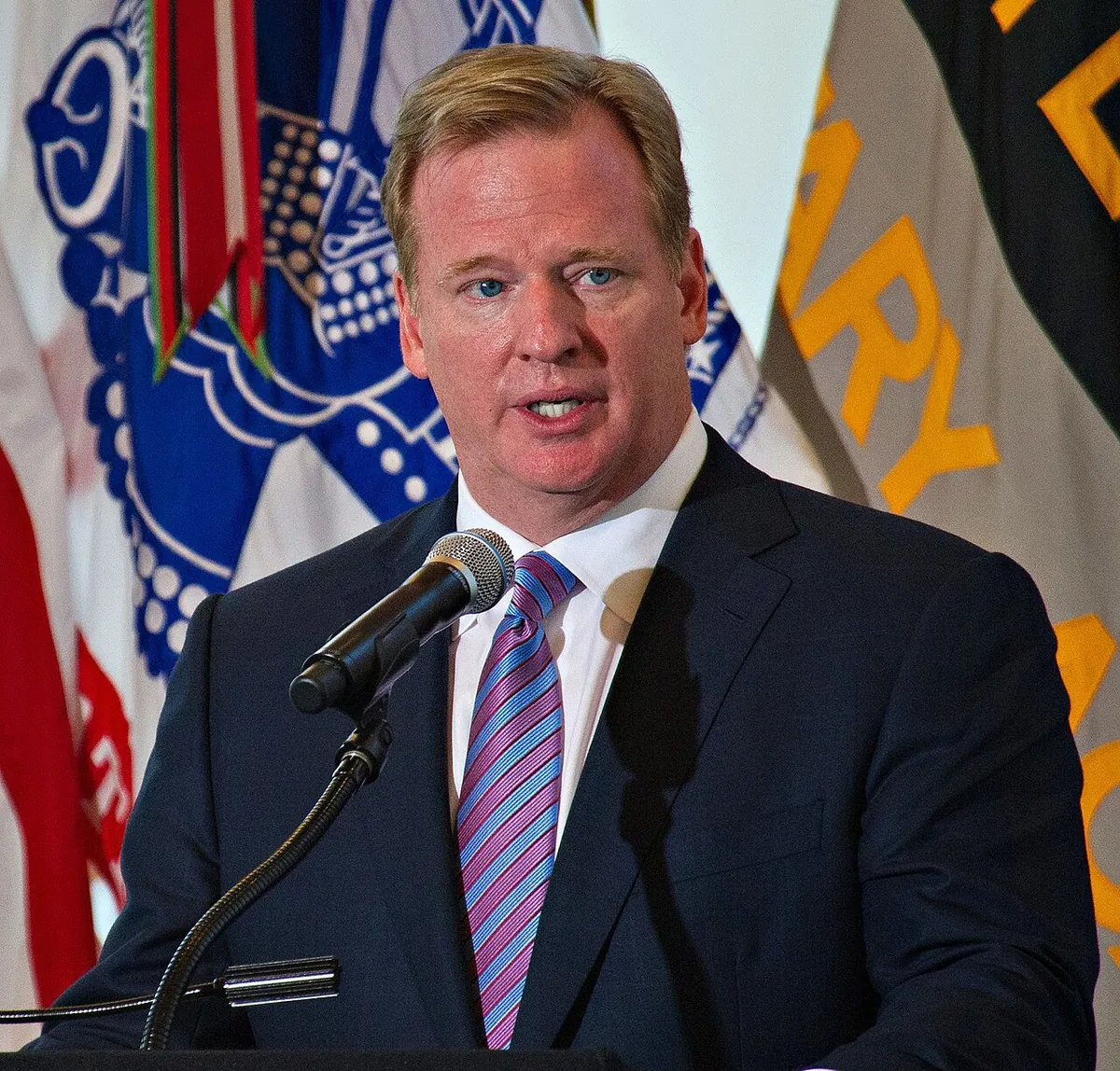
Goodell has presided over several major investigations that resulted in severe penalties for teams. In 2007, he disciplined the New England Patriots and coach Bill Belichick for videotaping opponents' defensive signals, an incident known as Spygate. Belichick was fined $500,000, the team was fined $250,000 and forfeited a first-round draft pick, and league officials destroyed the tapes. In 2012, Goodell revealed evidence of a bounty program with the New Orleans Saints, where players were paid for injuring opponents. Goodell played a central role in the 2011 NFL lockout, working with owners and the NFL Players Association to settle the labor dispute that lasted from March 11 to August 5, 2011. In 2012, a lockout of the regular game officials led to the use of replacement referees, culminating in the highly controversial 'Fail Mary' call in a Seattle Seahawks vs. Green Bay Packers game, which intensified pressure to resolve the dispute.
| Incident | Year | Key Actions |
|---|---|---|
| Spygate | 2007 | Fined Patriots $250,000 and Belichick $500,000, forfeited 2008 first-round pick, ordered tapes destroyed. |
| Bountygate | 2012 | Suspended Sean Payton for full season, suspended Gregg Williams indefinitely, fined Saints $500,000, forfeited 2012 and 2013 second-round picks. |
| 2011 Lockout | 2011 | Worked to settle labor dispute from March 11 to August 5. |
Deflategate and Legal Challenges
The investigation into underinflated footballs used by the New England Patriots, known as Deflategate, became one of the most protracted controversies of Goodell's tenure. In 2015, following the Wells Report, Goodell suspended Patriots quarterback Tom Brady for four games for his alleged awareness of the scheme. The NFLPA appealed, but Goodell presided over the appeal hearing himself and upheld the suspension on July 28, 2015. He cited Brady's destruction of his cell phone as critical evidence. On September 3, 2015, U.S. District Judge Richard M. Berman vacated the suspension, citing a lack of fair due process. The league appealed Berman's ruling, and on April 25, 2016, the United States Court of Appeals for the Second Circuit reinstated the four-game suspension for the 2016 season. The legal battle highlighted criticisms of Goodell's broad disciplinary powers and the arbitration process under the league's collective bargaining agreement. Separately, under Goodell's leadership, the NFL reached a $765 million settlement in 2013 with former players over head injury lawsuits, though the initial settlement was rejected by a judge who feared the funds were insufficient.
Leadership Philosophy and Current Status
Goodell describes his ultimate responsibility as serving 'the game' itself, a mandate broader than any single constituency of owners, players, or fans. He emphasizes that major league decisions are built through consultation, committees, and consensus among the 32 team owners rather than by decree. This approach is designed to create ownership among stakeholders for durable outcomes. Goodell has managed numerous crises, including the COVID-19 pandemic, by adhering to a principle of doing what he believes is right for the league's long-term health, even at the cost of short-term popularity. He has cited the example of his father, Senator Charles Goodell, who opposed the Vietnam War despite political cost, as shaping his view that leadership requires standing by principle. He lives in the New York City area with his wife Jane and their twin daughters.
Video
FAQ
What did Roger Goodell do before he became NFL commissioner?
Roger Goodell started with the NFL in 1982 as an administrative intern in Commissioner Pete Rozelle's office. Following a 1983 internship with the New York Jets, he returned to the league office for a public relations role. He advanced to become assistant to the president of the American Football Conference in 1987. Working under Commissioner Paul Tagliabue, he took on various senior roles and was named the NFL's executive vice president and chief operating officer in December 2001. In that final role before becoming commissioner, he oversaw football operations, officiating, and major business functions.
Why is Roger Goodell often criticized by fans and players?
Roger Goodell draws criticism for his aggressive use of disciplinary power, which many perceive as inconsistent or overly harsh. High-profile cases like the suspensions of Tom Brady in Deflategate, the initial light penalty for Ray Rice in a domestic violence case, and the severe punishments in the Saints' Bountygate scandal have fueled controversy. Players and the NFLPA have criticized his broad authority to both issue punishments and preside over appeals. Decisions like the use of replacement referees in 2012, which led to blatant officiating errors, and his handling of labor disputes have also contributed to a perception among some fans and players that he prioritizes league business interests over the game's integrity and participant welfare.
Did Roger Goodell ever play football?
Roger Goodell did not play professional or college football. He was a multi-sport athlete in high school, captaining the football, basketball, and baseball teams at Bronxville High School in New York and being named the school's athlete of the year. Injuries prevented him from playing college football at Washington and Jefferson College, where he graduated in 1981 with a degree in economics. His football career has been entirely administrative and executive, beginning with his NFL internship in 1982.
What are some of Roger Goodell's major accomplishments as commissioner?
Under Roger Goodell's leadership, NFL annual revenues have grown from about $6 billion to over $23 billion. He has overseen significant international expansion, moving from the defunct NFL Europe to a robust International Series with regular-season games abroad. Goodell helped negotiate major television agreements and launched the NFL Network. He has implemented a stronger focus on player health and safety through rule changes and research initiatives. Goodell also created the NFL Player Advisory Council and worked to resolve major labor agreements, including the 2011 lockout. His tenure has seen the NFL maintain its status as the most financially successful sports league in the world.
How is the NFL commissioner selected?
The NFL commissioner is selected by a vote of the league's team owners. A candidate must receive a two-thirds majority of votes from the team owners to be elected, as was the case when Goodell won 23 votes on the fifth ballot in 2006. The commissioner serves under an employment contract negotiated with the owners. Goodell's position has been renewed multiple times by the owners, most recently in 2026 through the 2030 season, demonstrating their continued support for his leadership.
How did Roger Goodell secure his first job with the NFL?
Roger Goodell secured his first NFL job through a determined letter-writing campaign. After graduating from Washington and Jefferson College in 1981, he wrote letters to the NFL's central office and each of its then 28 teams seeking an internship. Despite receiving many rejections, his persistence paid off, and he landed a three-month administrative internship in 1982 under Commissioner Pete Rozelle in the league's New York office. This initial position launched his long career with the NFL, which included only a brief departure for an internship with the New York Jets in 1983 before returning to the league office in 1984.
Sources
- Roger Goodell (Wikipedia) Wikipedia
- Roger Goodell through the years NFL
- Roger S Goodell, Washington & Jefferson College washjeff.edu
- How NFL Commissioner Roger Goodell Leads at the Top of the.. som.yale.edu
- Roger Goodell, GENYOUth genyouthnow.org