The Cincinnati Bengals are a professional American football team based in Cincinnati, Ohio, that plays in the North division of the American Football Conference (AFC) in the National Football League (NFL). The franchise was founded by former Cleveland Browns coach Paul Brown, whose group received approval from the American Football League on May 23, 1967, as its 10th and final team. The Bengals began play in 1968 and joined the NFL with the merger in 1970. They won the AFC championship in 1981, 1988 and 2021 and lost each of the Super Bowls that followed. Home games are played at Paycor Stadium in downtown Cincinnati, the team is controlled by Paul Brown's son Mike Brown, and Zac Taylor is the head coach.
Paul Brown and the Founding of the Bengals
Paul Brown had coached the Cleveland Browns for 17 seasons before Art Modell, who had bought a majority interest in that team in 1961, dismissed him in January 1963. In 1965 Brown met with Ohio governor Jim Rhodes, and they agreed that the state could support a second pro football team. Brown chose Cincinnati over Columbus after the city, Hamilton County and the Cincinnati Reds agreed on a multipurpose stadium for baseball and football, and the city council approved the 60,389-seat Riverfront Stadium in 1966. The merger agreement between the AFL and the NFL that year allowed the AFL one more franchise, and the AFL set the expansion fee at $10 million, 400 times the $25,000 its original owners had paid in 1960. Brown had openly regarded the AFL as inferior, but he joined once he learned the team was guaranteed a place in the NFL after the merger, and his group received the franchise on May 23, 1967.
Brown named the team the Bengals to link it with earlier Cincinnati pro teams of that name, which had played in 3 American Football Leagues from 1937 to 1942. He used the exact shade of orange worn by his former Cleveland team, added black, and chose a simple logo of the word BENGALS in black letters. The Bengals played their first 2 seasons at the 28,000-seat Nippert Stadium of the University of Cincinnati, and their 3-11 record in 1968 was the most wins by an expansion team of the 1960s. Running back Paul Robinson rushed for 1,023 yards and was named AFL Rookie of the Year, and Brown was named AFL Coach of the Year in 1969.
Ken Anderson and the 1980s Super Bowl Teams
In 1970 the Bengals moved into Riverfront Stadium and won the AFC Central, becoming the first expansion team to win a championship of any kind within 3 years. Quarterback Ken Anderson, a third-round pick from Augustana College in 1971, led the offense for 16 seasons and won 4 AFC passing titles. Cincinnati won the division again in 1973, and the 1975 team went 11-3, still the best winning percentage in franchise history at .786, before losing a divisional playoff game to the Oakland Raiders 31-28. Brown retired as coach after that season but remained general manager until his death in 1991.
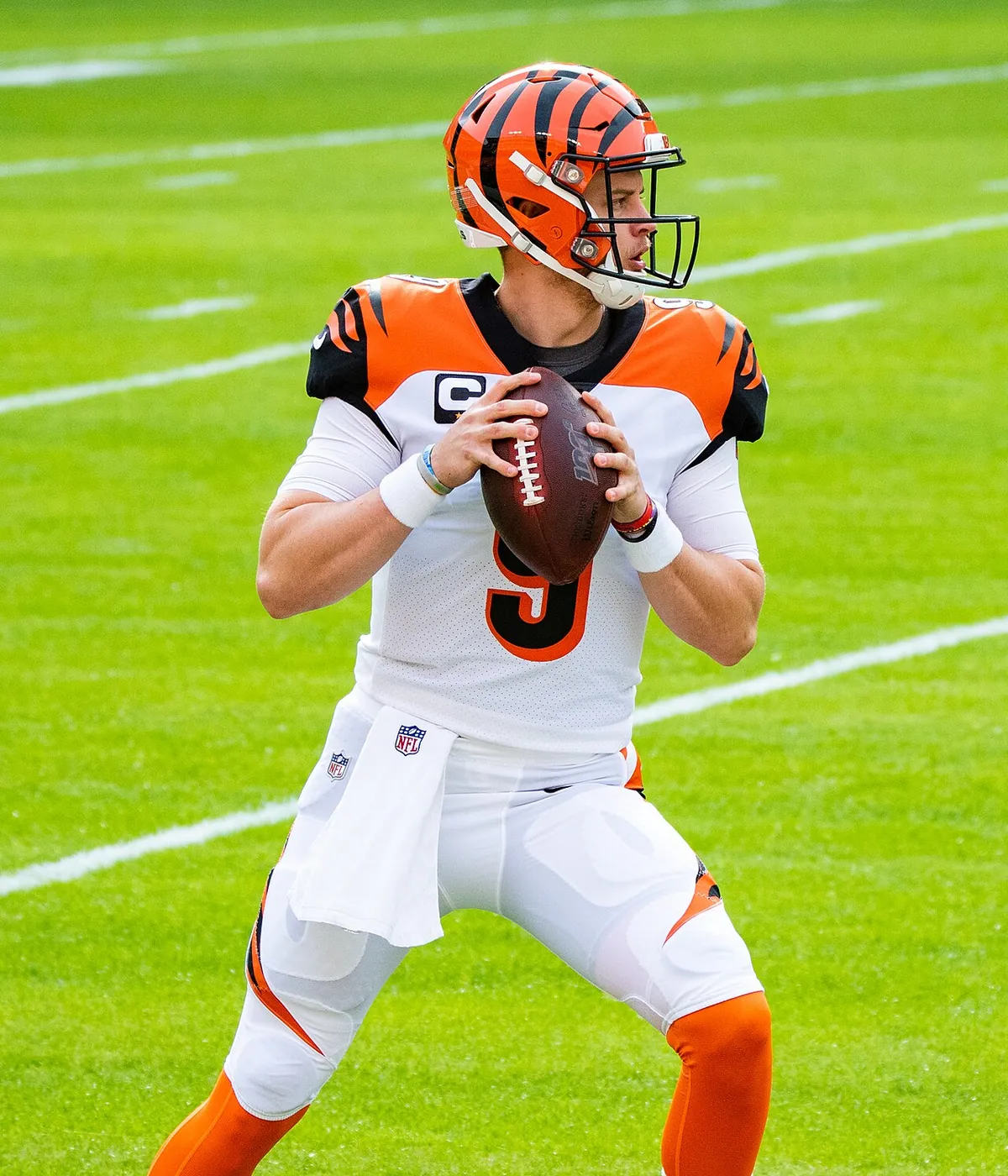
In 1981 the team introduced tiger-striped helmets, jerseys and pants, and under coach Forrest Gregg it went 12-4 and beat San Diego 27-7 in the AFC Championship Game before losing Super Bowl XVI to the San Francisco 49ers 26-21. Tackle Anthony Muñoz, a first-round pick that year, played in 11 straight Pro Bowls from 1982 to 1992 and entered the Pro Football Hall of Fame in 1998. Under coach Sam Wyche and quarterback Boomer Esiason the Bengals improved from 4-12 in 1987 to 12-4 in 1988 and beat Buffalo 21-10 for the AFC title. In Super Bowl XXIII they lost 20-16 to the 49ers on a last-minute touchdown pass by Joe Montana.
The Lean Years and the Marvin Lewis Era
The Bengals reached the second round of the playoffs after the 1990 season and lost to the Los Angeles Raiders. Paul Brown died at 82 before the next season, having already passed control to his son Mike Brown because of declining health. The team then went 14 consecutive seasons without a winning record, several head coaches came and went, and many top draft picks did not pan out. In that period the Bengals were sometimes called the Bungles, a term coined by Steelers broadcaster Myron Cope, and the 2002 team went 2-14, the worst record in team history.
Marvin Lewis was hired in 2003 and coached the team through 2018, going 131-122-3 in the regular season and 0-7 in the playoffs. Carson Palmer, drafted in 2003, took over at quarterback in 2004, and in 2005 the 11-5 Bengals made the playoffs for the first time since 1990 before a 31-17 Wild Card loss to Pittsburgh. The 2009 team swept its division for the first time in franchise history, beating both the Steelers and the Ravens twice, and Lewis was named NFL Coach of the Year. After Palmer demanded a trade following a 4-12 season in 2010, the Bengals drafted receiver A. J. Green and quarterback Andy Dalton in 2011, and the pair connected 65 times for 1,057 yards as rookies.
Dalton and Green started a run of playoff seasons from 2011 to 2015, and 2014 marked the first time the franchise had made the playoffs 4 straight years. The 2015 team opened 8-0, a franchise best, and tied the team record with a 12-4 finish, but Dalton was injured in Week 14 and A. J. McCarron started the rest of the way. Every one of those trips ended in the Wild Card round, making the Bengals the first franchise in NFL history to lose 5 straight opening-round playoff games. The losses came in these games.
- 2011 season: lost 31-10 to the Houston Texans.
- 2012 season: lost 19-13 to the Houston Texans.
- 2013 season: lost 27-10 to the San Diego Chargers.
- 2014 season: lost 26-10 to the Indianapolis Colts.
- 2015 season: lost 18-16 to the Pittsburgh Steelers in the final minute.
The end of the Lewis era brought 3 straight losing seasons. The 2016 team went 6-9-1 and played a 27-27 tie with Washington in London, and the 2017 team finished 7-9. The 2018 team started 4-1 but finished 6-10 and last in the AFC North after injuries to Green and Dalton. Lewis and the Bengals parted ways on December 31, 2018.
Zac Taylor, Joe Burrow and Super Bowl LVI
Zac Taylor was hired in 2019, and his first team started 0-11 and finished 2-14, tying the 2002 team for the worst record in franchise history. That record earned the No. 1 overall pick in the 2020 draft, and Joe Burrow and Tee Higgins arrived as rookies that year. Burrow suffered a season-ending knee injury in Week 11 of his rookie season, and the 2020 team finished 4-11-1. Taylor's record through November 27, 2026, stands at 59-66-1 in the regular season and 5-2 in the playoffs.
With Burrow back for his first full season, the 2021 team won the AFC North at 10-7, swept the Steelers and Ravens and won its first playoff game in 31 years. It beat the Kansas City Chiefs 27-24 in overtime in the AFC Championship Game and reached Super Bowl LVI, the first Super Bowl appearance for the club in 33 years. On February 13, 2022, at SoFi Stadium, the Bengals lost 23-20 to the Los Angeles Rams. The 2022 team went 12-4, won 10 straight games from November 6, 2022, to January 22, 2023, the longest streak since 1999, and lost the AFC title game to the Chiefs 23-20.
Since the 1999 season the Bengals have gone 199-233-4 in the regular season through 2025 and 5-9 in 14 playoff games. The 2023 and 2024 teams each went 9-8 and the 2025 team went 6-11, a season that included a win over the Ravens on Thanksgiving night. The 2026 team stood at 7-3 through November 27, 2026, and Burrow threw for 300 yards and 2 touchdowns in a Monday night game against the Washington Commanders on November 23. Ja'Marr Chase, Tee Higgins, Chase Brown and Mike Gesicki are among his targets, and the Week 12 game brought the New Orleans Saints to Paycor Stadium.
Nippert, Riverfront and Paycor Stadium
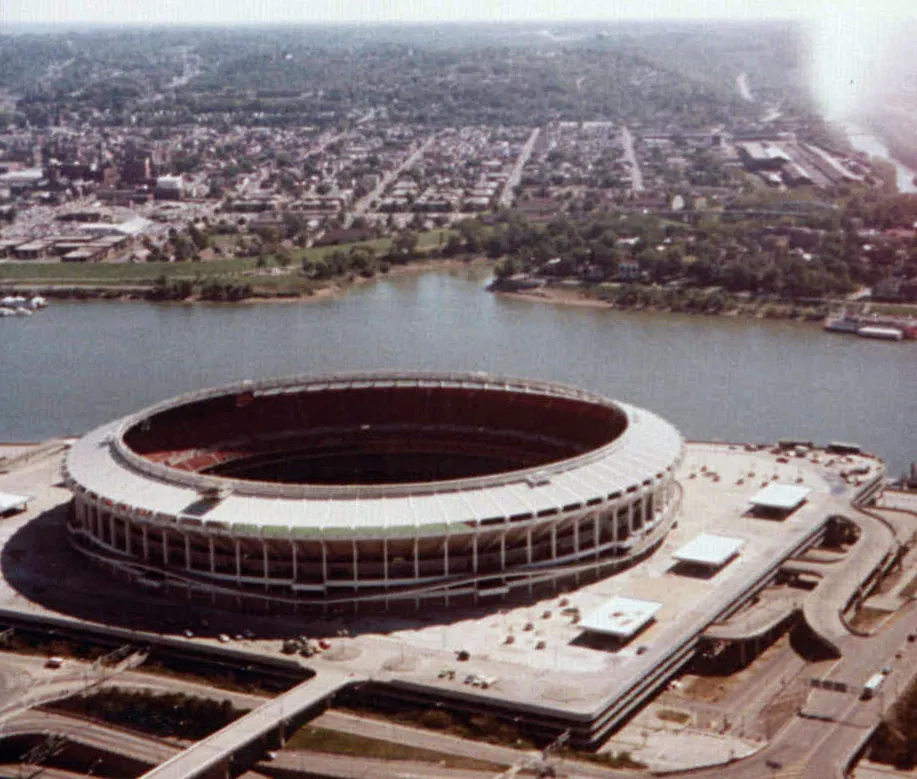
After 2 seasons at Nippert Stadium, the Bengals played at Riverfront Stadium from 1970 to 1999, sharing it with the Reds. The city had agreed to build the multipurpose stadium on a rundown section of the riverfront to replace Crosley Field, the aging park the Reds had used since 1912, and it had to be ready for the 1970 NFL season. New York City had courted the Reds after losing the Dodgers and Giants in 1957, but owner Powel Crosley insisted that the team stay in Cincinnati. The Bengals first played at Riverfront on August 8, defeating Washington in a preseason game.
In 2000 the team moved to Paul Brown Stadium in downtown Cincinnati, which was renamed Paycor Stadium in 2022. The stadium also serves as the team headquarters, and the team practices at the CBTS Field House. Home games are promoted as games in The Jungle, with dates such as Fan Dey for supporters. The biggest win since 1999 came there, a 49-9 victory over the New York Jets on October 27, 2013, and the Bengals also beat the Chicago Bears 45-10 at the stadium on October 25, 2009.
Rivalries, Fans and Ownership
The Cleveland Browns became an instant rival when they joined the Bengals in the AFC Central in 1970, a rivalry first fueled by the feud between Paul Brown and Art Modell. The Bengals scored their most points in a game since 1999 against Cleveland, 58 on November 28, 2004, and the 2026 regular season ends with a home game against the Browns. Since 2002 the team has played in the AFC North, where the Pittsburgh Steelers and the Baltimore Ravens are division rivals. Pittsburgh ended Cincinnati's playoff runs after the 2005 and 2015 seasons.
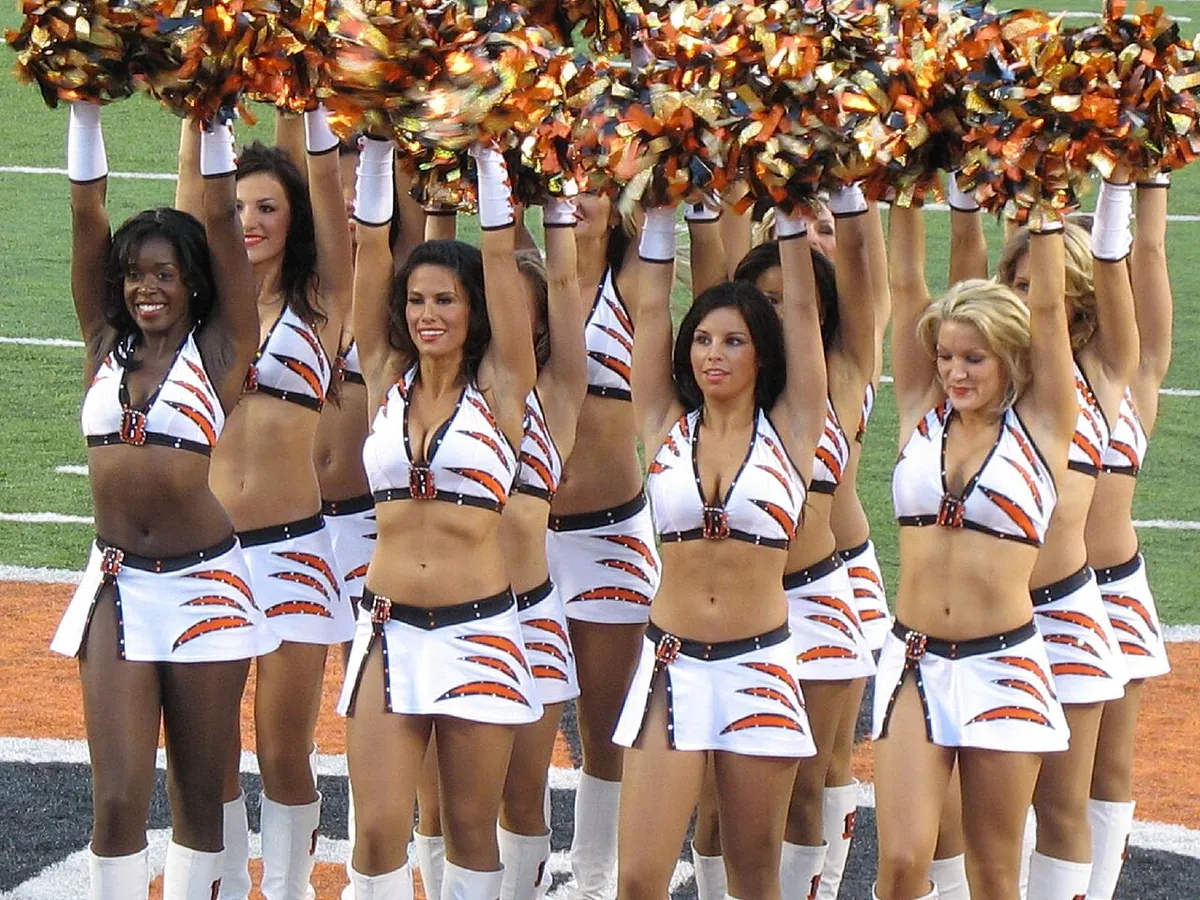
The team colors are black, orange and white, the fight song is The Bengals Growl and the mascot is Who Dey. Cincinnati is one of the smallest markets in the NFL, and the Bengals and the Reds are the city's 2 professional sports franchises. Hall of Famers from the club include Anthony Muñoz and Ken Riley. Players take part in the My Cause My Cleats campaign each season, and Chase Brown, Ted Karras and Barrett Carter were among those representing charities in 2026.
Mike Brown became majority owner in 2011 by buying the shares held by the estate of co-founder Austin Knowlton. The club has no official general manager, and Duke Tobin handles most personnel decisions as its de facto general manager. In a 2011 survey Mike Brown was rated among the worst team owners in American professional sports. In August 2022 the Bengals ranked last among NFL teams in value at $3 billion.
Video
FAQ
Have the Cincinnati Bengals ever won a Super Bowl?
No, the Bengals have played in 3 Super Bowls and lost all of them. They lost Super Bowl XVI to the San Francisco 49ers 26-21 after the 1981 season and Super Bowl XXIII to the 49ers 20-16 after the 1988 season. Their third appearance, Super Bowl LVI on February 13, 2022, ended in a 23-20 loss to the Los Angeles Rams at SoFi Stadium. Each of those trips followed an AFC championship, in 1981, 1988 and 2021.
Who founded the Cincinnati Bengals?
The Bengals were founded by Paul Brown, who had coached the Cleveland Browns for 17 seasons. After Art Modell dismissed him in January 1963, Brown worked with Ohio governor Jim Rhodes and the city of Cincinnati to bring a second pro team to the state. His group received an AFL franchise on May 23, 1967, as the 10th and final team in that league. Brown coached the Bengals for their first 8 seasons and served as general manager until his death in 1991.
Why are the Cincinnati Bengals called the Bengals?
Paul Brown chose the name to give the team a link with past professional football in Cincinnati. Earlier teams called the Cincinnati Bengals had played in 3 American Football Leagues from 1937 to 1942. The city's zoo was also home to a rare white Bengal tiger. The tiger theme reached the uniforms in 1981, when the team introduced its striped helmets, jerseys and pants.
Where do the Cincinnati Bengals play their home games?
The Bengals play at Paycor Stadium in downtown Cincinnati, which opened as Paul Brown Stadium in 2000 and took its current name in 2022. Before that the team played at Riverfront Stadium from 1970 to 1999, sharing it with the Cincinnati Reds. The first 2 seasons, 1968 and 1969, were played at Nippert Stadium on the University of Cincinnati campus. The stadium also houses the team headquarters.
Who owns the Cincinnati Bengals?
Mike Brown, the son of founder Paul Brown, owns the Bengals. He inherited control of the team after his father died in 1991. In 2011 he bought the shares held by the estate of co-founder Austin Knowlton and became the majority owner. The franchise has no official general manager, and Duke Tobin handles most personnel decisions.
Who is the head coach of the Cincinnati Bengals?
Zac Taylor has been the head coach since 2019. Through November 27, 2026, his teams are 59-66-1 in the regular season and 5-2 in the playoffs. He led the Bengals to Super Bowl LVI after the 2021 season and to the AFC Championship Game again after the 2022 season. His predecessor, Marvin Lewis, coached the team from 2003 to 2018.
Sources
- Cincinnati Bengals (Wikipedia) Wikipedia
- Cincinnati Bengals bengals.com
- Bengals Team History Pro Football Hall of Fame
- Cincinnati Bengals | Sports and Leisure | Research Starters | EBSCOhost ebsco.com
- Cincinnati Bengals on the Forbes NFL Team Valuations List Forbes
- nflverse game, roster and draft data nflverse (CC BY 4.0)