An offensive lineman is a football player who specializes in play at the line of scrimmage as part of the offensive line. The unit consists of five primary positions: the center, two guards, and two tackles. Their fundamental role is to block defensive players, protecting the quarterback on passing plays and creating space for running backs on rushing plays. Offensive linemen are typically the largest and strongest players on the field, combining size with agility and balance. They are ineligible to receive forward passes and their movement downfield is restricted on passing plays.
Role and Responsibilities on the Field
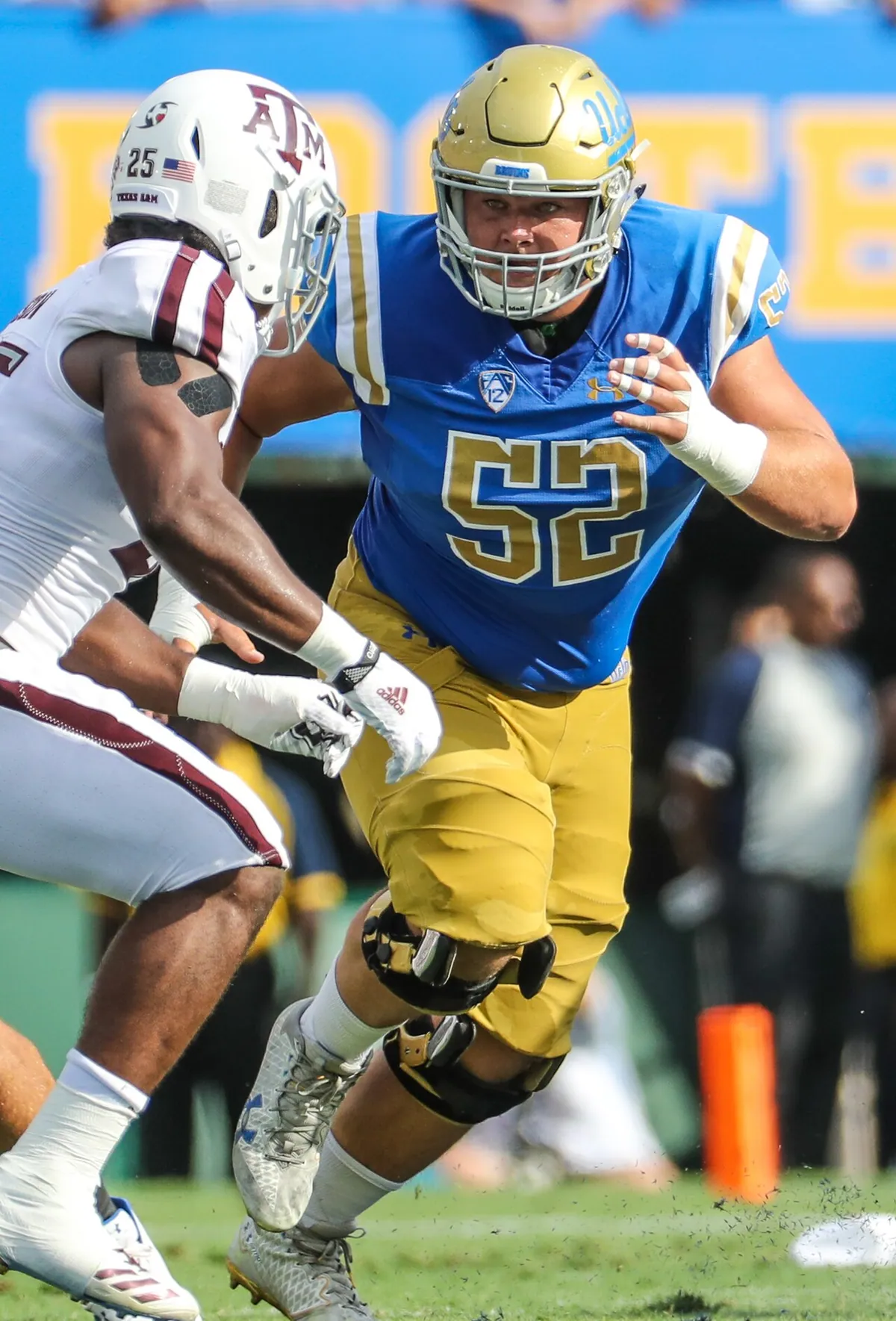
The offensive lineman's duties are divided between pass protection and run blocking. On passing plays, the line forms a protective pocket around the quarterback, aiming to slow down or stop defensive pass rushers long enough for the quarterback to throw. The objective is not necessarily to block indefinitely, but to provide a critical few seconds of protection. On running plays, the offensive line's job is to move defensive players to create clear paths, or lanes, for the ball carrier. This involves either driving defenders backward off the line of scrimmage or sealing them to the side. A specific and celebrated blocking technique is the pancake block, where an offensive lineman knocks a defender onto his back. Offensive linemen also execute pulls, where a guard backs out of his stance and runs behind the line to block a defender in a different area, a key tactic for outside runs.
Positional Breakdown and Alignment
The five offensive linemen line up shoulder-to-shoulder at the line of scrimmage. From left to right, their order is left tackle, left guard, center, right guard, and right tackle. The center has the unique responsibility of snapping the ball to the quarterback to start each play. Guards line up on either side of the center and are often involved in interior blocking and pulling plays. Tackles line up on the outer edges of the line and are primarily responsible for blocking defensive ends and outside linebackers. The left tackle is a critical pass protector, especially for a right-handed quarterback, as he defends the quarterback's blind side. An offensive line is described as a balanced line when it has an equal number of players on each side of the center. The interior offensive line refers specifically to the center and the two guards.
- Center (C): Snaps the ball, makes blocking calls.
- Left Guard (LG): Blocks on the left side of the center, often pulls on runs.
- Right Guard (RG): Blocks on the right side of the center.
- Left Tackle (LT): Protects the quarterback's blind side (for right-handed QBs).
- Right Tackle (RT): Blocks the right edge of the defensive line.
Required Skills and Physical Attributes
Successful offensive linemen require a specific blend of physical traits and skills. They are almost always the largest players on the field in terms of both height and weight, as their role demands immense strength for engaging in blocks. Despite their size, they need excellent agility, footwork, and balance to mirror the movements of quicker defensive players, particularly in pass protection. Their motion during a play is often limited to a few quick steps from a three-point stance, followed by sustained contact resembling a wrestling match. This makes straight-line speed and long-distance stamina less critical than short-area explosiveness and power. Key characteristics for the position include intelligence for recognizing defensive schemes, toughness for repeated physical combat, a strong work ethic, and overall athletic ability. The left tackle position demands a combination of size, strength, and athleticism to handle pass rushers.
Techniques and Strategic Variations
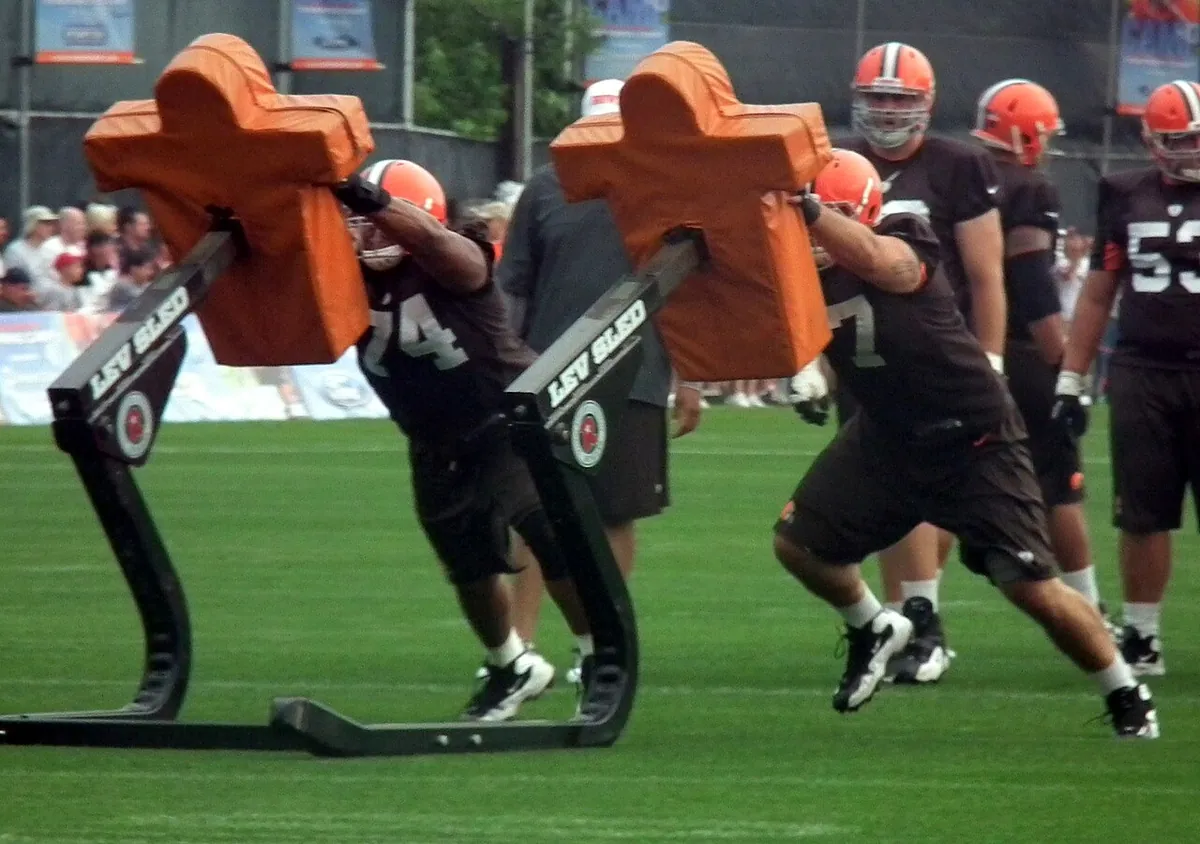
Offensive line play involves specialized techniques that vary by down, distance, and play call. In pass protection, linemen use sets and slides to maintain a protective pocket, using their hands and leverage to redirect rushers. For running plays, drive blocking focuses on moving a defender straight backward, while zone blocking involves linemen working in unison to control specific areas. The pull is a signature technique where a guard, and sometimes a tackle, leaves his initial position to lead a run play to the outside, requiring exceptional speed and timing for a player of his size. Offensive linemen must also master combo blocks, where two linemen work together to handle a single defensive player before one moves to block at the second level of the defense. The specific techniques used are heavily influenced by the offensive scheme, whether it is a power-running system, a zone-blocking scheme, or a pass-heavy spread offense.
Evolution of the Position Over Time
The role of the offensive lineman is to block for pass protection and run plays. Offensive linemen block on running plays and passing plays. Pass protection is a key duty of the offensive line. Left tackles such as Anthony Muñoz and Joe Thomas are highly valued players. Offensive linemen need agility and balance for pass protection.
Rules and Restrictions Governing Play
National Football League rules include specific restrictions and requirements for offensive linemen that define their role on the field. Offensive linemen are not eligible to receive forward passes under any circumstance, which distinguishes them from tight ends, running backs, and receivers. During a pass play, they cannot go more than two yards beyond the line of scrimmage when the ball is thrown, regardless of if they are blocking a defender. This limitation prevents them from acting as downfield blockers on pass plays. Their primary function is governed by blocking rules, which prohibit holding, or illegally impeding a defender by grabbing his jersey or body outside the frame. Rules for defensive linemen are the same as for all defensive players, concentrating on legal methods of tackling and contact.
Notable Players and Hall of Fame Members
Offensive linemen such as Anthony Muñoz and Joe Thomas are celebrated players. Left tackle Anthony Muñoz, who played for the Cincinnati Bengals, is a famous example of an offensive lineman. Other noted tackles include Walter Jones of the Seattle Seahawks and Joe Thomas of the Cleveland Browns. Centers like Mike Webster of the Pittsburgh Steelers and Dwight Stephenson of the Miami Dolphins are players at the position. These players are examples of offensive linemen.
| Player | Position | Primary Team(s) |
|---|---|---|
| Anthony Muñoz | Left Tackle | Cincinnati Bengals |
| Joe Thomas | Left Tackle | Cleveland Browns |
| Walter Jones | Left Tackle | Seattle Seahawks |
| Mike Webster | Center | Pittsburgh Steelers |
Statistics and Performance Evaluation
Unlike skill positions, offensive linemen are not traditionally judged by mainstream statistics like yards or touchdowns. Their performance is measured through specialized metrics and observational grading. Pancake blocks, where a defender is driven onto his back, are a celebrated but unofficial statistic. In professional scouting and coaching, linemen are graded on every play for execution of their assignment, with points awarded for successful blocks and deducted for missed blocks, penalties, or allowing pressure on the quarterback. Pass protection involves preventing sacks and pressures on the quarterback. For run blocking, the offensive line's work contributes to the success of running plays. Penalties, especially false starts and holding calls, are negative indicators of a lineman's discipline and technique. Ultimately, the success of the unit is reflected in team offensive rankings for rushing yards, sacks allowed, and overall scoring.
Comparison to Defensive Line Responsibilities
The offensive line works directly against the defensive line on every play, with each unit having opposing objectives. The defensive line consists of defensive ends and defensive tackles who aim to break through the offensive line. On running plays, the defensive line tries to tackle the ball carrier and maintain their formation to prevent offensive linemen from engaging linebackers. On passing plays, the defensive line attempts to reach and sack the quarterback, with defensive ends often being the primary pass rushers. Defensive linemen, particularly ends, are typically lighter and faster than offensive linemen, with defensive tackles averaging between 260 and 310 pounds. The offensive line must account for various defensive alignments, such as the 4-3 defense with four down linemen or the 3-4 defense with three down linemen and a nose tackle. This constant strategic battle at the line of scrimmage is a fundamental aspect of football.
Video
FAQ
What does an offensive lineman do?
An offensive lineman's primary job is to block defensive players. On passing plays, they protect the quarterback from being sacked by forming a protective pocket. On running plays, they push defensive players backward or to the side to create open lanes for the running back to advance the ball. They execute specific techniques like drive blocks, pass sets, and pulling maneuvers to accomplish these goals on every down.
What are the positions on the offensive line?
The standard offensive line consists of five positions. The center lines up in the middle and snaps the ball to the quarterback. Two guards flank the center, one on the left and one on the right. Two tackles line up on the outside of the guards. From left to right, the order is left tackle, left guard, center, right guard, and right tackle. A tight end may also align next to a tackle, functioning as a hybrid blocker and receiver.
What skills does a good offensive lineman need?
A good offensive lineman requires a combination of size, strength, agility, and intelligence. They must have the power to engage and move defensive players, along with the footwork and balance to mirror pass rushers. Intelligence is crucial for recognizing defensive alignments and making split-second blocking adjustments. Key characteristics also include toughness for repeated physical contact, a strong work ethic, and the athletic ability to execute pulls and blocks in space.
Why is the left tackle considered so important?
The left tackle is often considered the most important offensive lineman, especially when protecting a right-handed quarterback. This is because the left side is the quarterback's blind side when he drops back to pass. The quarterback cannot see pressure coming from that direction, so the left tackle must reliably block the defense's best pass rusher. A failure on the left side can lead to a blindside hit, often resulting in a sack, fumble, or injury.
What statistics are used to judge an offensive lineman?
Offensive linemen are evaluated through game film grading rather than traditional stats. Coaches assign positive or negative points on each play based on successful blocks, missed assignments, and penalties. Allowed sacks and quarterback pressures are tracked for individual pass protectors. Team metrics like rushing yards per attempt and sacks allowed reflect the line's overall performance. Unofficial stats like pancake blocks highlight dominant individual moments, but consistency over hundreds of snaps is the true measure of success.
What is a balanced line in football?
A balanced line in football refers to an offensive line that has an equal number of men on either side of the center. This configuration is a standard alignment for the five primary offensive linemen. The interior offensive line consists of the center and the two guards, with the tackles flanking them. This balanced setup is fundamental for providing symmetrical protection on passing plays and creating running lanes.
Sources
- Lineman (gridiron football) (Wikipedia) Wikipedia
- Offensive Positions in Football (All Positions Explained) throwdeeppublishing.com
- NFL: Offensive and defensive football positions explained dazn.com
- Football Offensive Line Positions: Every Role Explained wikihow.com
- Football: Offensive Line ducksters.com