The Astrodome, officially known as the Reliant Astrodome, is the world's first multi-purpose, domed sports stadium. Located in Houston, Texas, it opened in 1965 at a cost of $35 million. The stadium was famously nicknamed the 'Eighth Wonder of the World' and pioneered features like artificial turf and an animated scoreboard. It served as the home of the NFL's Houston Oilers from 1968 to 1996. The Astrodome has been closed to the public since 2008 and its future remains uncertain.
Conception and Financing
The idea for a covered stadium in Houston was championed by former mayor Roy Hofheinz as early as 1952. Hofheinz believed a domed facility was essential for a major league sports team to succeed in the city's hot, humid, and rainy subtropical climate. His vision gained traction when Major League Baseball awarded Houston an expansion franchise in October 1960. To secure the team, Hofheinz and his group promised to build a revolutionary covered stadium. Voters in Harris County subsequently approved an $18 million bond issue to help finance the project. The total construction cost eventually reached $35 million. Hofheinz claimed inspiration from the ancient Roman Colosseum and its velarium, a giant awning used to shield spectators from the sun.
Design and Construction Details
Architects Hermon Lloyd & W. B. Morgan and the firm Wilson, Morris, Crain and Anderson designed the Astrodome, with structural engineering by Walter P Moore. Construction began on March 18, 1963, and was completed in November 1964, six months ahead of schedule. The dome stands 18 stories tall, spans 710 feet in diameter, and covers 9.5 acres. The playing field was sunk 25 feet below street level, with the ceiling rising 208 feet above it. The system was engineered to manage visibility issues and acoustics, with sound-absorbing materials covering half the roof area. The stadium also featured a luxurious seven-floor apartment for Hofheinz, which included a bowling alley, shooting gallery, and chapel.
- Groundbreaking ceremony: January 3, 1962.
- Construction start: March 18, 1963.
- Construction completed: November 1964.
- Official opening: April 9, 1965.
- Dome diameter: 710 feet.
- Ceiling height: 208 feet.
Opening Day and Early Technical Problems
The Astrodome opened to the public on April 9, 1965, with a sold-out exhibition baseball game between the Houston Astros and New York Yankees. President Lyndon B. Johnson, Governor John Connally, and Mayor Louie Welch were in attendance for the historic event. The first hit and first home run in the new stadium were both hit by the Yankees' Mickey Mantle. The stadium's original design included translucent Lucite roof panels intended to allow sunlight for a natural grass field. This design immediately failed, as the glare made it impossible for outfielders to see fly balls. To solve the problem, roughly 30 percent of the roof panels were painted over, which then killed the grass. This led directly to the development and installation of a new synthetic surface in 1966, which was named AstroTurf.
Stadium Capacity and Seating Evolution
The Astrodome's seating configuration was designed for multiple sports. For its opening in 1965, it featured six levels of multicolored, cushioned seats with a baseball capacity of 42,217. The stadium also included 53 luxury suites, an early innovation for professional sports venues. To convert the venue for football, sections of the lower deck along the baselines could be moved to create the rectangular field. A major renovation from 1988 to 1989 expanded seating by adding approximately 10,000 new seats and more luxury suites. This brought the final football capacity to over 60,000. The renovation also replaced the original outfield scoreboard with modern video displays in the upper deck and added cylindrical pedestrian ramps for accessibility.
| Period | Key Feature |
|---|---|
| 1965 Opening | Cushioned seats, 53 suites |
| Post-1989 Renovation | Added seats, new video boards |
| Record Event | 68,266 (2002 concert) |
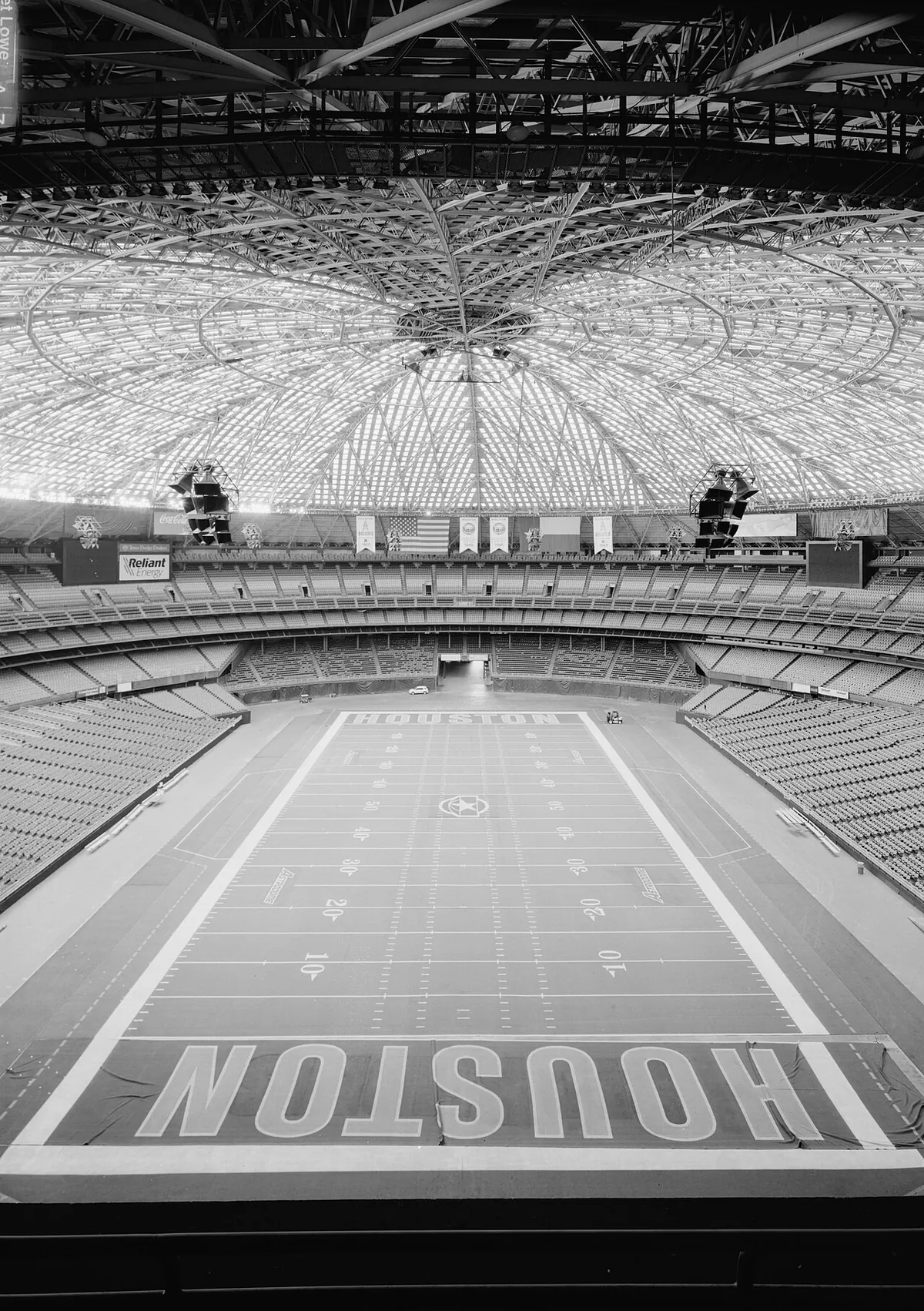
NFL Tenancy: The Houston Oilers Era
The Houston Oilers of the American Football League began playing at the Astrodome on September 9, 1968, after using other local stadiums. They remained the primary football tenant for 29 seasons through 1996. The relationship between the team and the stadium deteriorated in the 1990s. Owner Bud Adams demanded a new, publicly funded stadium, even offering $85 million toward construction in 1993. When these efforts failed and the facility's condition declined, the team's future in Houston became untenable. A preseason game in 1995 against the San Diego Chargers was canceled due to the poor state of the field. After the 1996 season, Adams moved the franchise to Nashville, Tennessee. The Oilers played their final game at the Astrodome on December 21, 1996.
- First Oilers game: September 9, 1968.
- Tenure length: 29 seasons.
- Owner's 1993 stadium offer: $85 million.
- 1995 preseason game canceled due to field condition.
- Team relocated to Tennessee after 1996 season.
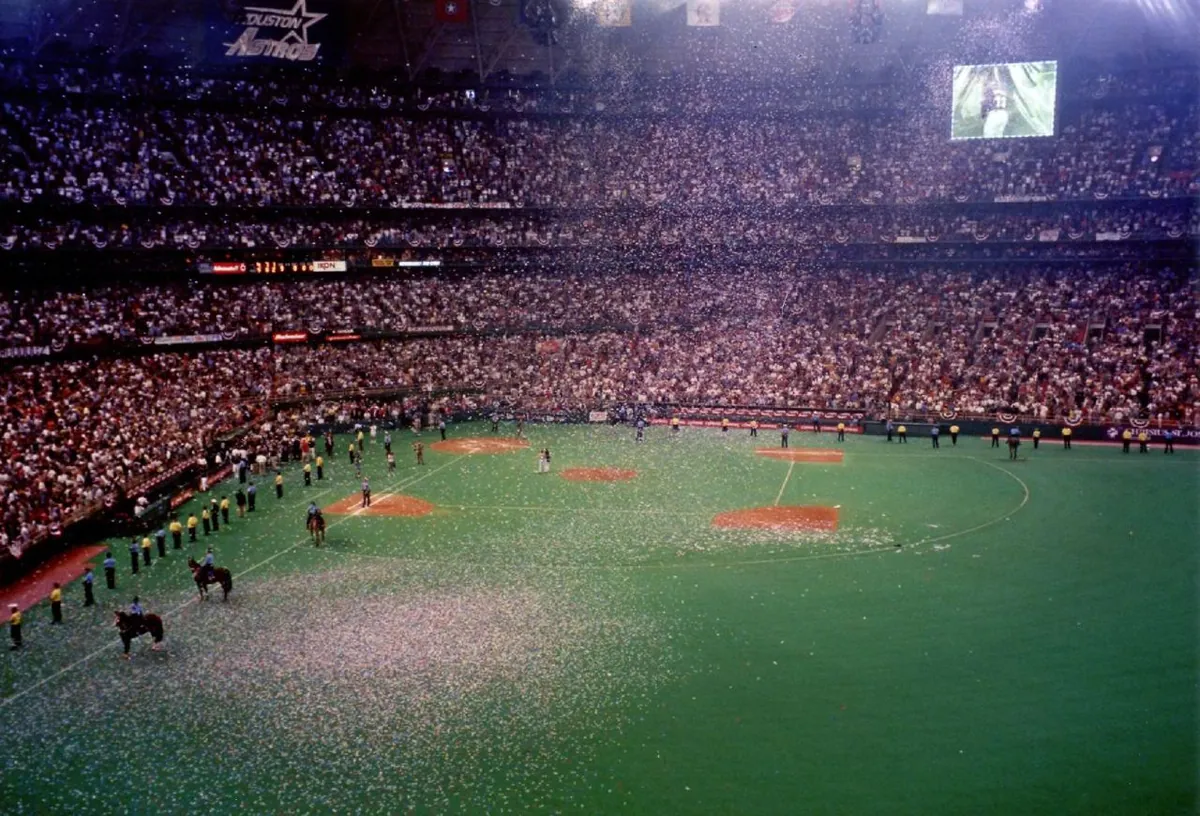
The Scoreboard and Technological Firsts
The Astrodome was celebrated for several technological innovations that changed spectator sports. The most famous was the 'Astrolite,' a massive 474-foot animated scoreboard and display system designed by Fair Play Scoreboards. It cost $2.1 million and was the first of its kind, capable of showing cartoons and animations to entertain the crowd. The stadium was also the first major sports venue to install a full artificial playing surface, AstroTurf, in 1966. Its advanced air conditioning system maintained a constant indoor temperature regardless of Houston's external weather. The design also incorporated considerations for acoustics and air quality, setting a new standard for comfort and experience in large indoor arenas.
Final Years and Use as Emergency Shelter
After the departure of the Oilers and Astros, the Astrodome's primary use was for the Houston Livestock Show and Rodeo until 2002. The last major concert was performed by George Strait in 2002 before a record crowd of 68,266. In August 2005, the stadium found a new purpose when it was used as an emergency shelter for victims of Hurricane Katrina. Over 25,000 evacuees from New Orleans were housed in the dome and the surrounding Reliant Park complex. A field hospital was set up in the adjacent Reliant Arena to care for the displaced community. The evacuees were moved out by mid-September 2005 to make way for Houston Texans games. This humanitarian effort was the last large-scale public use of the Astrodome.
Code Violations and Closure
In 2008, the Houston Fire Department found the Astrodome in violation of numerous fire codes. This declaration meant the facility could no longer safely host public events. Since that year, only maintenance workers and security guards have been permitted inside the building. The city council rejected early demolition plans due to environmental concerns about damaging the dense development surrounding the structure. The official closure was in 2008. This action effectively ended any regular use of the stadium, which had already been without a major tenant for several years. The code violations centered on occupancy and safety standards that the aging building could not meet without a massive, costly renovation.
Partial Demolition and Historic Designation
After years of disuse, partial demolition of the Astrodome occurred in 2013. On December 8, 2013, three of the exterior pedestrian ramp towers were demolished. The ramp bridges were disconnected from the main structure, and surrounding grass berms were lowered. Ticket booths and nearly all of the interior seats were also removed during this period. Despite this dismantling, the main dome structure was left standing. In a significant turn for its preservation, the Astrodome was listed on the National Register of Historic Places on January 15, 2014. This federal designation provided protection against complete demolition.
Naming Rights History
The stadium's official name has changed several times due to corporate sponsorship agreements. It opened as the Harris County Domed Stadium but was instantly known as the Astrodome. From 2000 to 2014, it was called the Reliant Astrodome following a naming rights deal. The name changed to NRG Astrodome from 2014 until July 2026. From August 2026, the name reverted to Reliant Astrodome. These changes reflect the commercial evolution of sports venues, though the public has consistently referred to the building simply as the Astrodome. The naming rights did not prevent the stadium's decline, as the core issues were related to its aging infrastructure and the desire of teams for newer, more modern facilities.
Failed Redevelopment Proposals
Since its closure, numerous plans to redevelop the Astrodome have been proposed and rejected. Early ideas included converting it into a luxury hotel or a movie production studio. Houston's bid to host the Summer Olympics included a plan to renovate the dome for use as the Olympic Stadium. In June 2013, a comprehensive $200 million plan was unveiled to transform it into a multi-purpose event and convention facility. This plan went to a public vote in November 2013 as a $213 million bond referendum. Voters rejected the measure, with 53.5 percent opposed. After that failure, a 2014 proposal from an expert panel suggested creating the 'Astrodome Indoor City Park,' a massive indoor public park with lawns, trees, and recreational spaces. As of 2026, no plan has been implemented.
- Proposed uses: Luxury hotel, movie studio, Olympic stadium.
- 2013 bond referendum amount: $213 million.
- 2013 referendum result: Rejected by 53.5% of voters.
- 2014 proposal: 'Astrodome Indoor City Park' indoor park.
- 2016 status: Interior seats and fixtures largely removed.
- 2026 status: Used as a storage facility, future undecided.
Legacy and Current Status
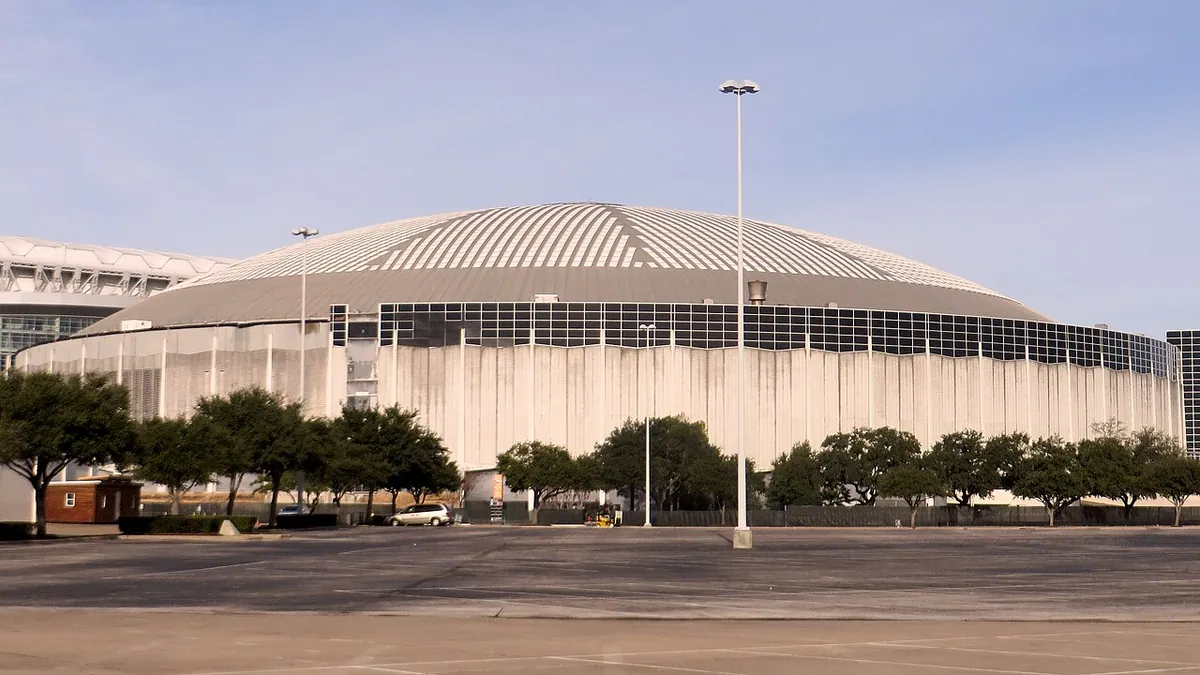
The Astrodome's legacy is that of a revolutionary sports venue that changed stadium design forever. It proved the feasibility of large-scale domed, multi-purpose facilities and artificial playing surfaces. Its design influenced the construction of other domed stadiums like the Caesars Superdome in New Orleans and the now-demolished Pontiac Silverdome and Kingdome. As of 2026, the structure is still standing adjacent to NRG Stadium but is closed to the public. It is used as a storage facility for the Reliant Park complex. Its placement on the National Register of Historic Places ensures it will likely not be fully demolished. However, with no active renovation project and a history of failed proposals, the future of the world's first domed stadium remains an open question for the city of Houston.
Video
FAQ
When did the Astrodome open and close?
The Astrodome officially opened on April 9, 1965. The Houston Fire Department declared it non-compliant with fire codes in 2008, leading to its closure to the public. The last NFL game was played there in 1996, and the last Major League Baseball game was in 1999. Parts of the structure were demolished in 2013, but the main building was still standing as of 2026, listed on the National Register of Historic Places.
Which NFL team played at the Astrodome and why did they leave?
The Houston Oilers were the NFL team that called the Astrodome home from 1968 through the 1996 season. Team owner Bud Adams sought public funding for a new stadium throughout the 1990s, even offering $85 million toward construction in 1993. When these efforts failed and the condition of the Astrodome deteriorated, including a canceled 1995 preseason game due to the field, Adams moved the franchise to Nashville, Tennessee after the 1996 season. The team later became the Tennessee Titans.
Why is the Astrodome famous for AstroTurf?
The Astrodome is famous for AstroTurf because it was the first major sports venue to install this type of artificial playing surface. The original natural grass died after the stadium's translucent roof panels were painted to reduce glare for players. In 1966, a new synthetic surface was installed to replace the dead grass. This product was named AstroTurf after the stadium and the Houston Astros baseball team, and its use spread to stadiums worldwide.
What is the current status and future of the Astrodome?
As of 2026, the Astrodome is closed to the public and used as a storage facility for the Reliant Park complex. It was added to the National Register of Historic Places in 2014, which protects it from full demolition. Various redevelopment plans have been proposed and rejected, including a failed $213 million voter referendum in 2013 and a 2014 plan to create an indoor city park. The structure remains standing, but its long-term future use is still undetermined, with no active renovation project underway.
What were some of the innovative features of the Astrodome when it opened?
When it opened in 1965, the Astrodome featured several groundbreaking innovations. It was the world's first fully enclosed, air-conditioned, multi-purpose domed sports stadium. It also debuted the 'Astrolite,' the first animated scoreboard, which cost about $2.1 million. These features earned it the nickname the 'Eighth Wonder of the World' and ushered in the era of other fully domed stadiums.
What was the Astrodome's original name and why was it changed?
The Astrodome's original name was the Harris County Domed Stadium when it opened in 1965. It was financed and built by Harris County, which is why it had that official name. However, the stadium quickly became popularly known as the Astrodome, a nickname that eventually became its official name. The name change reflected the public's association of the venue with its pioneering role and its primary tenant, the Houston Astros. Over the years, it also carried corporate names like Reliant Astrodome and NRG Astrodome due to sponsorship agreements.
Sources
- Astrodome (Wikipedia) Wikipedia
- Houston Astrodome baike.baidu.com
- Astrodome, History, Photos & More of the former home of the Houston Oilers stadium Stadiums of Pro Football
- Astrodome, history, photos and more of the Houston Astros former ballpark ballparksofbaseball.com