Shea Stadium was a multi-purpose stadium located in Flushing Meadows, Corona Park in Queens, New York City. Opened in 1964, it served as the home of the New York Mets of Major League Baseball from 1964 to 2008. The stadium also hosted the New York Jets of the American Football League and later the National Football League from 1964 through 1983. Shea Stadium was demolished in 2009 following the opening of the adjacent Citi Field, and its former footprint is now part of the ballpark's parking lots. The stadium was named for William A. Shea, the lawyer who led the effort to bring National League baseball back to New York.
Planning and Construction
The need for Shea Stadium arose after the Brooklyn Dodgers and New York Giants baseball teams left New York for California in 1957. City official Robert Moses pushed for a stadium in Flushing Meadows, but initial efforts failed with Walter O'Malley of the Dodgers. In 1960, the National League agreed to grant a New York expansion franchise on the condition a new stadium be built. Mayor Robert F. Wagner Jr. personally assured league owners the city would construct it. A 30-year lease was signed with the new Mets franchise on October 6, 1961, setting rent at $450,000 for the first year. Groundbreaking occurred on October 28, 1961, for a facility originally budgeted at $9 million. Construction delays, including a severe winter and contractor bankruptcies, forced both the Mets and the Jets to spend the 1963 season at the Polo Grounds. The final construction cost ballooned to $28.5 million after 29 months of work.
Opening and Early Years
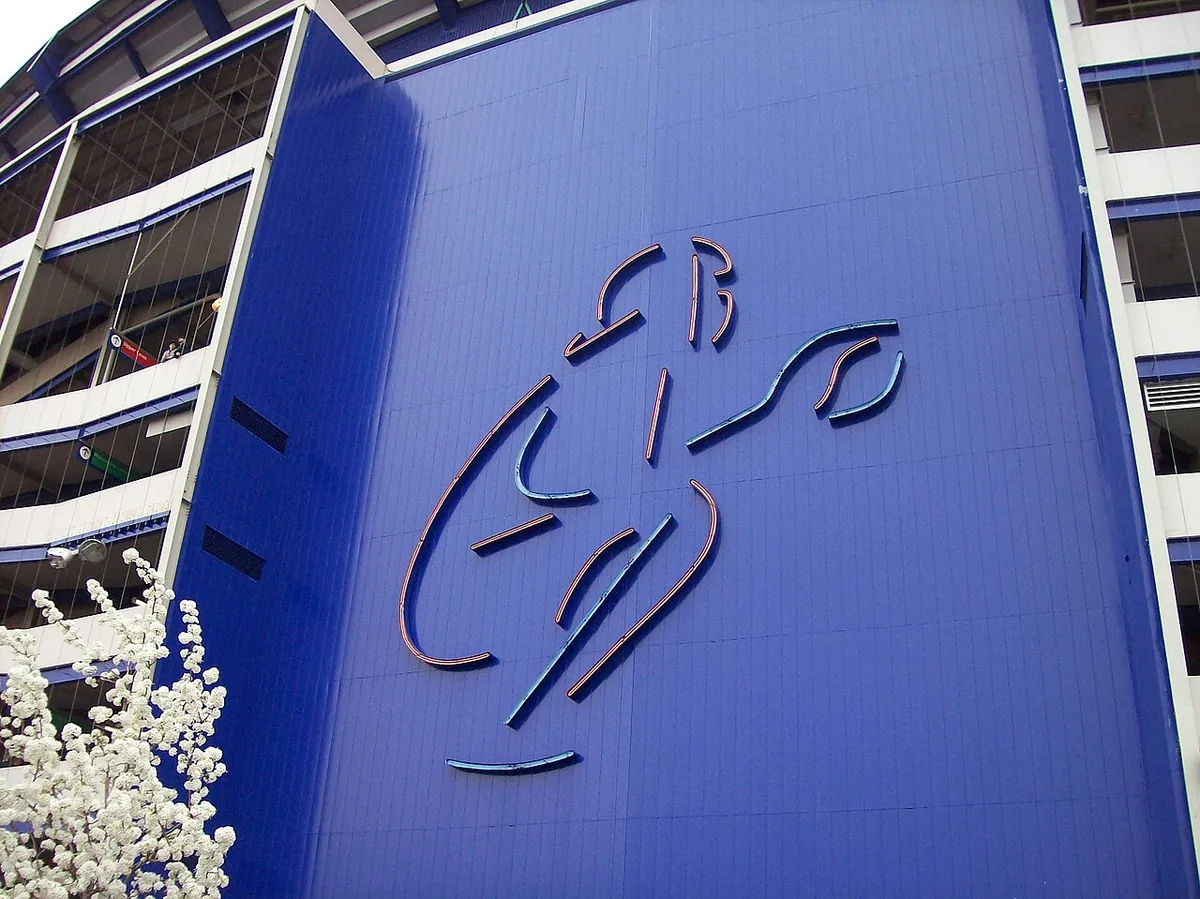
Shea Stadium opened on April 17, 1964, without any prior exhibition games or events. The Pittsburgh Pirates defeated the New York Mets 4-3 in the inaugural game before a crowd of 50,312. A jurisdictional labor dispute left the telephone and telegraph wiring unfinished on opening day. The stadium opened just five days before the 1964-65 New York World's Fair began across Roosevelt Avenue. Its exterior featured steel panels in the fair's blue and orange colors, which matched the Mets' team colors. The New York Jets played their first football game at Shea on September 12, 1964, against the Denver Broncos. The stadium's original name, Flushing Meadow Park Municipal Stadium, was changed to honor William A. Shea.
Stadium Design and Features
Shea Stadium was a five-tiered structure noted for several innovative features. It was the first stadium of its size to have an extensive escalator system installed for fan access. The design included a conversion system for baseball and football, utilizing two motor-operated stands that could swivel into position. This rotating mechanism meant every seat was directed at the center of the field, but it also placed lower boxes farther from the action during baseball games. The stadium was designed to be fully enclosed, though this feature was never completed, which contributed to limited outfield seating. The playing surface was natural Kentucky Bluegrass, unlike several contemporary multi-purpose stadiums that used artificial turf. The exterior colored panels were removed in 1980, altering the stadium's original appearance. Key stadium specifications included.
- Football capacity: 60,372 spectators.
- Baseball capacity: 57,333 spectators.
- Field size: Left field was 338 feet from home plate.
- Surface: Kentucky Bluegrass.
- Cost: $28.5 million upon completion.
- Construction time: 29 months from groundbreaking to opening.
New York Jets Football Tenancy
The New York Jets called Shea Stadium home for 20 seasons, from 1964 through 1983. Their lease terms, imposed by the Mets, were notably restrictive for most of that period. The Jets could not play home games before the Mets' season concluded, which often led to a heavy road schedule early in the football season. This arrangement lasted until 1978. Despite these challenges, the team experienced significant success at Shea, including their 1968 AFL Championship season. The Jets hosted three playoff games at the stadium during their tenure. Their final game at Shea was on December 10, 1983. After failing to secure funding for stadium renovations, owner Leon Hess moved the team to Giants Stadium in East Rutherford, New Jersey. Notable Jets games at Shea Stadium.
- December 29, 1968: AFL Championship Game, Jets defeat Oakland Raiders 27-23.
- December 20, 1969: AFL Inter-Divisional Playoff, loss to Kansas City Chiefs 13-6.
- December 27, 1981: AFC Wild Card Playoff, loss to Buffalo Bills 31-27.
Other Football and Major Events
Beyond the Jets, Shea Stadium hosted other football tenants and major sporting events. The New York Giants of the NFL played their 1975 home schedule at Shea while Giants Stadium was under construction. Its primary identity for major events was built around baseball, hosting four World Series. The stadium also held boxing matches in the mid-1960s. For a brief period, it even served as the home for the New York Yankees baseball team. The Yankees played their 1974 and 1975 seasons at Shea during the renovation of Yankee Stadium. On April 15, 1998, the Yankees also played a single regular-season home game at Shea against the Anaheim Angels after a beam collapsed at their own stadium.
- 1969 World Series: Mets defeat Baltimore Orioles 4-1.
- 1973 World Series: Oakland Athletics defeat Mets 4-3.
- 1986 World Series: Mets defeat Boston Red Sox 4-3.
- 2000 World Series: New York Yankees defeat Mets 4-1.
- 1964 MLB All-Star Game: featured a walk-off home run by Johnny Callison of the Philadelphia Phillies.
- 1974 to 1975: Temporary home of the New York Yankees.
Financial and Lease Issues
The financial structure of Shea Stadium created long-term problems for its primary tenants. New York state law at the time prohibited a city from borrowing money to build a stadium unless it could demonstrate the facility would pay for itself. This led to the Mets signing a 30-year lease with rent set at $450,000 for the first year, decreasing by $20,000 annually until reaching $300,000. The Mets never met the original financial commitments required to pay off the city's 30-year construction bonds, which caused the team financial difficulties for years. The Jets' lease was similarly unfavorable, limiting their control over scheduling and ancillary revenues. These financial constraints were a key factor in the Jets' eventual departure after the 1983 season. The inability to fund major renovations in the 1980s sealed the stadium's fate as a dual-purpose facility.
Final Seasons and Demolition
The Mets played their final season at Shea Stadium in 2008. Their last game was a 4-2 loss to the Florida Marlins on September 28, 2008. Following the game, a farewell ceremony called "Shea Goodbye" featured former Mets stars. Tom Seaver threw a final pitch to Mike Piazza before they walked out of the centerfield gate. Demolition preparations began immediately, with a company given two weeks to salvage memorabilia like seats, signage, and foul poles. Physical demolition started on October 14, 2008, with the scoreboard in right field among the first structures to fall. The last standing section of ramps was torn down on February 18, 2009, at 11:22 AM. The stadium was dismantled piece by piece rather than imploded, in compliance with New York City regulations. Demolition Timeline.
- September 28, 2008: Final Mets game played.
- October 14, 2008: Demolition begins.
- October 18, 2008: Right field scoreboard demolished.
- November 10, 2008: Field, dugouts, and field level seats removed.
- January 31, 2009: Final fan farewell event held.
- February 18, 2009: Last structural piece demolished.
Legacy and Site Redevelopment
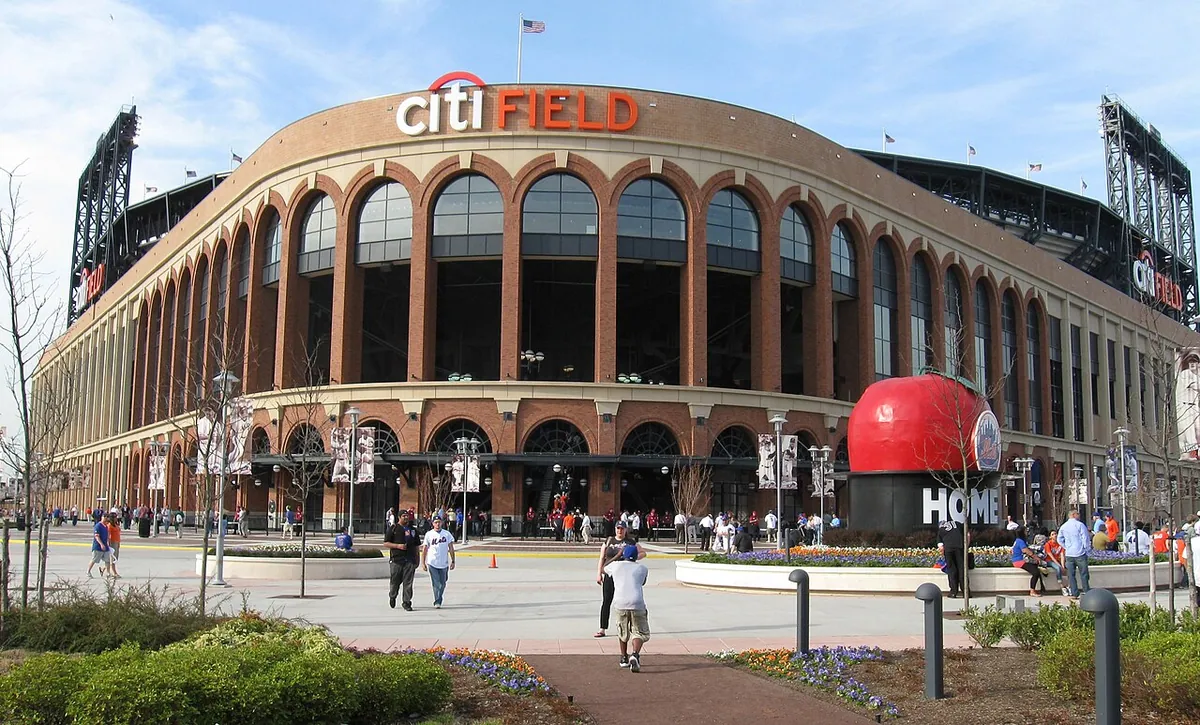
The former footprint of Shea Stadium became part of the parking lot for Citi Field. Plaques in the asphalt mark the locations of home plate, the pitcher's mound, and the bases. Since the demolition, the site has been the subject of redevelopment proposals. As of 2025, Mets owner Steve Cohen is advocating for a project called Metropolitan Park. This plan includes a park, a casino, and an entertainment complex featuring a Hard Rock Hotel & Casino. The proposal received support from the New York City Council and then-mayor Eric Adams. The plan must be approved by the New York State Legislature and the New York State Gaming Commission. A local coalition called Fed Up opposes the plan, advocating instead for a public green space called the "Phoenix Meadows Vision Plan" over the parking lot.
Shea Stadium Football Records and Statistics
Shea Stadium holds a distinct statistical place in professional football history. Shea Stadium is noted in some sources for a poor home winning percentage during the Jets' tenure. This record reflects the on-field struggles often faced by the New York Jets during their two-decade tenure. The Jets' most significant football achievement while based at Shea was winning the 1968 AFL Championship. The stadium's multi-purpose design ultimately proved less than ideal for football, contributing to the league-wide shift toward sport-specific venues by the end of the 20th century.
Video
FAQ
What was the capacity of Shea Stadium for football games?
Shea Stadium could hold 60,372 fans for football games. The five-tiered design included rotating stands to switch between baseball and football configurations. It featured an extensive escalator system, a novelty for large stadiums at the time of its opening. The playing surface was natural Kentucky Bluegrass throughout its operational life. The stadium was one of the first of its size to incorporate such a comprehensive escalator network for fan circulation.
When did the New York Jets play at Shea Stadium?
The New York Jets used Shea Stadium as their home field for 20 seasons. Their tenure spanned from 1964 through the 1983 NFL season. The team's first game at the venue was on September 12, 1964, against the Denver Broncos. They played their final game there on December 10, 1983, before relocating to Giants Stadium in New Jersey. The Jets were part of the American Football League before the AFL-NFL merger.
Why was Shea Stadium demolished?
Shea Stadium was torn down to provide additional parking for Citi Field, the new ballpark built directly next to it. The Mets played their last game at Shea in September 2008. Demolition work began in October 2008 and finished in February 2009. The structure was taken apart piece by piece in accordance with New York City law, not imploded. The site of the old stadium is now part of the parking area for the new facility.
Did Shea Stadium host any Super Bowls?
Shea Stadium did not host a Super Bowl. It did host the 1968 AFL Championship Game, which the New York Jets won. That victory sent the Jets to Super Bowl III, played at the Orange Bowl in Miami. The stadium's football events were limited to regular season and playoff games for its primary tenants. It also hosted the New York Giants for one season in 1975.
What is planned for the Shea Stadium site now?
As of 2025, a redevelopment plan called Metropolitan Park is proposed for the site. The project would include a park, a casino, and an entertainment complex with a Hard Rock Hotel. The plan has support from city officials but requires state legislative and gaming commission approval. Local opposition groups are advocating for the creation of public green space instead of the proposed development. The proposal's future depends on decisions by the New York State Legislature and the New York State Gaming Commission.
What was the original name of Shea Stadium before it was renamed?
Shea Stadium was originally called Flushing Meadow Park Municipal Stadium when it first opened. This name reflected the public park, Flushing Meadows, Corona Park, in which the stadium was built. A movement to rename the stadium in honor of William A. Shea, the lawyer instrumental in bringing National League baseball back to New York, was successful, and it became William A. Shea Municipal Stadium. The name was shortened to Shea Stadium in common usage. The stadium opened under its original name in 1964.
Sources
- Shea Stadium (Wikipedia) Wikipedia
- Shea Stadium, History, Photos & More of the former NFL.. Stadiums of Pro Football
- Shea Stadium, Stubnac stubnac.com