The official mascot of the Buffalo Bills is Billy Buffalo, a 7-foot-2-inch tall blue American bison who joined the team in 2000. The team's sideline cheerleading squad, the Buffalo Jills, operated from 1967 until their suspension in 2014 following a lawsuit over wages. Bills fans are known for a passionate game day culture centered at Highmark Stadium in Orchard Park, New York, featuring traditions like the "Shout! Song and a raucous atmosphere. The franchise's fight songs include "Shout! And "Mr. Brightside," which is played during the fourth quarter of home games.
Billy Buffalo: The Official Mascot
Billy Buffalo, whose full name is William "Billy" the Buffalo, has served as the Bills' official mascot since the 2000 season. He is depicted as a 7-foot-2-inch tall blue American bison, a creature synonymous with the team's identity and logo. According to team lore, Billy was drawn east from the western plains by an echoing shout in the wind, eventually settling in Orchard Park, New York, where the sound of the stadium crowd reminded him of a thundering herd. His primary role involves rallying fans on game days at Highmark Stadium, posing for photographs, and making community appearances at schools and local events. In a 2020 ranking by The Athletic, Billy Buffalo placed seventh among NFL mascots evaluated for their appeal and presence.
The mascot's biography on the team website states his uniform number is BB, and he was effectively "drafted" in the year 2000. Billy Buffalo's favorite song is "Shout!," which aligns with a key fan tradition during games, and he is known to enjoy Buffalo chicken wings with blue cheese dressing. While the Pro Bowl is noted as his favorite vacation destination, the mascot has yet to appear at a Super Bowl. The character is a sanctioned and team-controlled figure, distinguishing him from earlier, unofficial mascot appearances in the franchise's history.
History of the Buffalo Jills Cheerleaders
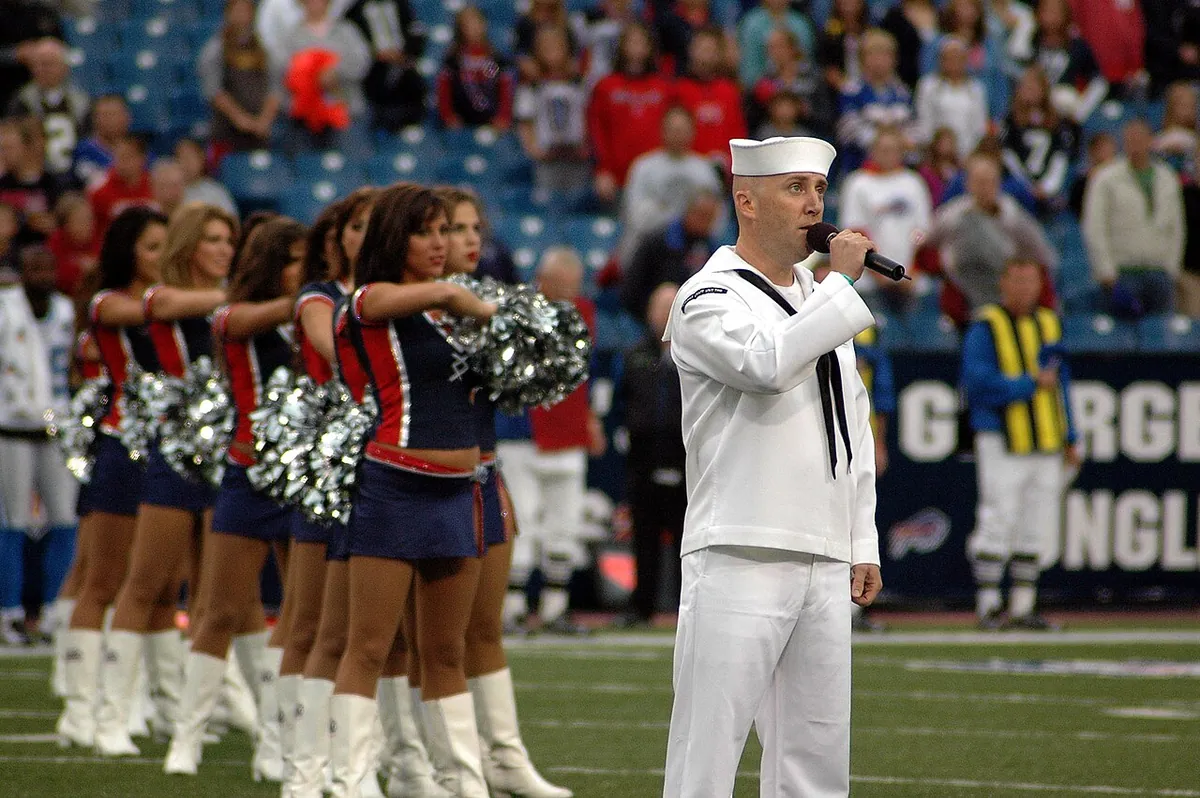
The Buffalo Jills served as the official cheerleading squad for the Bills from their founding in 1967 until operations were suspended in 2014. The squad originated from a group of eight Buffalo State College cheerleaders who performed for the team from 1960 to 1965 simply known as the Buffalo Bills Cheerleaders. After a year without cheerleaders in 1966, Jo Ann Gaulin founded the Jills in 1967, evolving the squad from a few members in wool uniforms to a group of 36 in more contemporary attire. The Jills were known for their community involvement, annual swimsuit calendar sales starting in the 2000 to 2001 season, and visits to U.S. troops, including a 2007 tour to Iraq that made them the only NFL squad on that particular trip.
The relationship between the Bills and the Jills changed in 1986 when the team discontinued its official employment ties and began contracting the squad out to third-party sponsors, starting with the fast-food chain Mighty Taco. In 1995, the Jills made NFL history by forming the league's first cheerleaders union in an effort to gain better pay and working conditions. The squad's structure expanded in 2002 with the creation of an Ambassador Squad, a group of 8 to 12 Jills who handled public appearances but did not perform on the field, allowing more women to participate. In 2008, the Jills performed at both the team's home games in Orchard Park and its annual regular-season games in Toronto, Ontario, becoming the first multi-national NFL cheerleading squad.
- 1960: Buffalo Bills Cheerleaders debut with eight Buffalo State College cheerleaders.
- 1967: Buffalo Jills are founded by Jo Ann Gaulin.
- 1986: Bills end direct employment, contracting squad to third parties.
- 1995: Jills form the first NFL cheerleaders union.
- 2002: Ambassador Squad is created for non-performing members.
- 2008: Squad performs for games in both the U.S. and Canada, becoming the first multi-national NFL cheerleading squad.
- 2014: Operations suspended following a wage lawsuit.
Lawsuit and End of the Jills
The suit led to a protracted legal battle that questioned the employment status of the Jills and the Bills' role as their employer. In December 2014, Justice Timothy Drury of the New York Supreme Court found the Bills organization established and approved the contractual terms for the cheerleaders. The legal proceedings involved high-profile figures, including NFL Commissioner Roger Goodell, who was subpoenaed in July 2014 after a document bearing his signature was presented in the Bills' defense. A major ruling came in May 2017 when a New York State Court determined the Jills were non-exempt employees, not independent contractors, though it left the question of whether the Bills were their direct employer to a jury. A settlement was reached on March 3, 2022. Despite the settlement, the Bills, under owners Terry and Kim Pegula who purchased the team in 2014, have not revived the Jills squad, though they maintain cheerleaders for their other sports properties like the Buffalo Bandits. Former Jills have organized an alumni association that holds reunions and conducts community service.
Fan Culture and Game Day Atmosphere
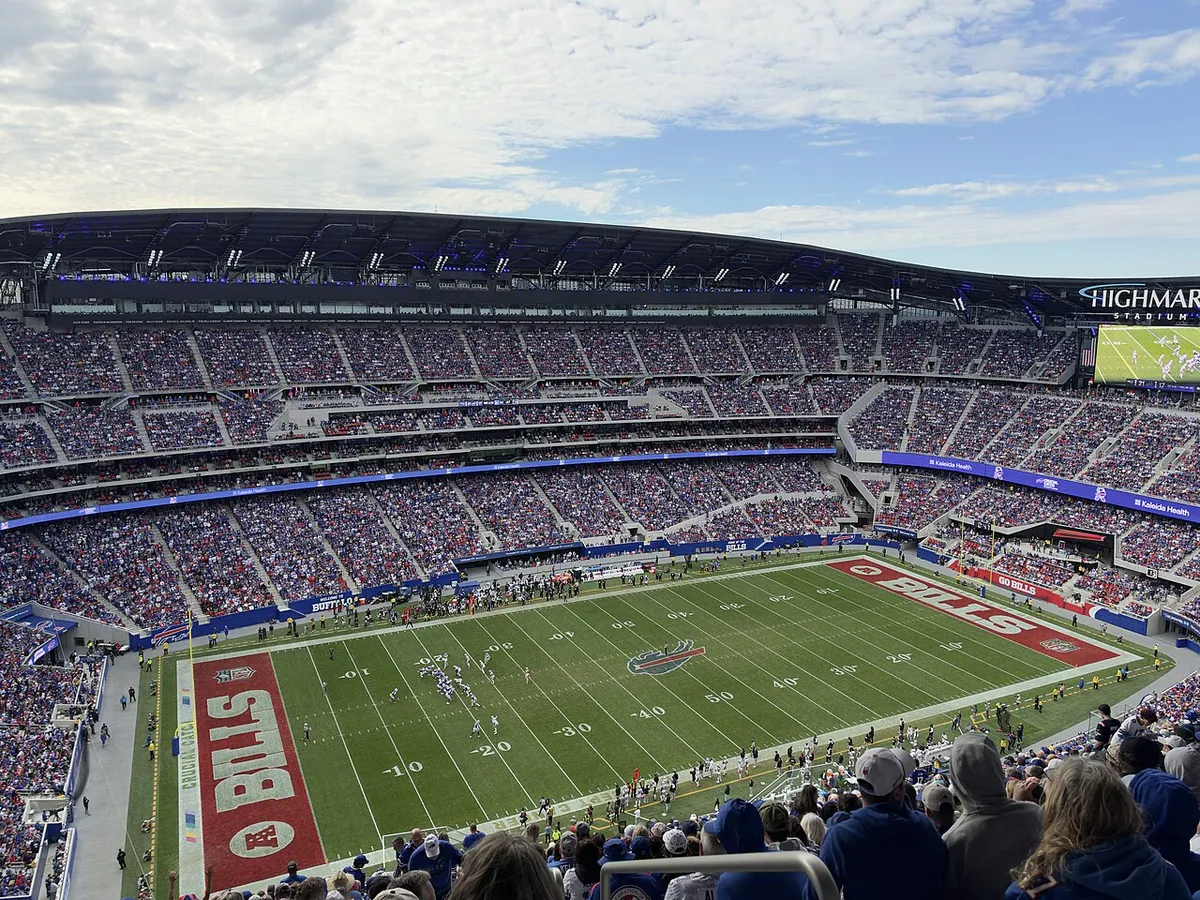
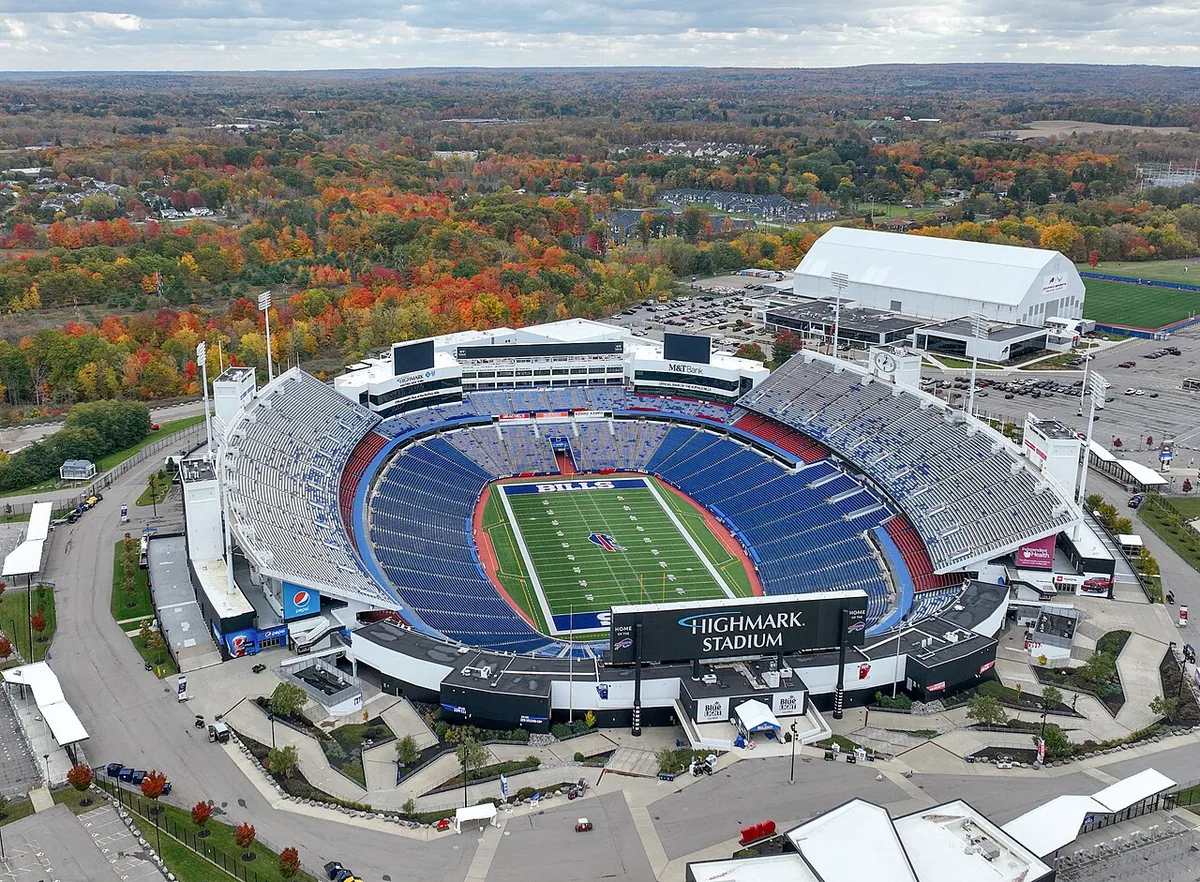
Buffalo Bills fans, drawing from western New York and southern Ontario, are renowned for creating one of the most passionate and loudest environments in the NFL at Highmark Stadium. The team's home stadium has undergone several name changes, operating as Ralph Wilson Stadium until 2015, New Era Field from 2016 to 2025, and is currently known as Highmark Stadium. The fanbase endured a 17-year playoff drought from 2000 to 2016, the longest in major North American sports at the time, but has remained fiercely loyal. Since the 1999 season through 2025, the Bills compiled a regular season record of 221 wins and 215 losses, with an 8-9 playoff record over that span.
The game day experience is defined by several key traditions, most notably the playing of the song "Shout! Which serves as one of the team's official fight songs and a stadium-wide participation event. During the fourth quarter of home games, the Bills also play "Mr. Brightside" by The Killers as an additional fight song to energize the crowd. Tailgating in the stadium parking lots is a noted pre-game ritual, often involving harsh winter weather conditions that fans embrace. The collective noise generated by fans, often referred to as the "12th man," is considered a significant home-field advantage, particularly during defensive stands.
Fight Songs and Stadium Traditions
The Buffalo Bills have two primary fight songs that are integral to the game day soundtrack at Highmark Stadium. The Isley Brothers' "Shout! Is a longstanding anthem played during games, often inciting a coordinated fan reaction where the entire stadium participates in the song's shouts and movements. This tradition is so deeply embedded that the team's mascot, Billy Buffalo, lists it as his favorite song. The second fight song, "Mr. Brightside" by The Killers, is specifically reserved for the fourth quarter of home games, serving as a modern rallying cry for fans as the game reaches its climax.
These musical traditions contribute to an atmosphere that has been consistently challenging for opposing teams. The Bills' home record and fan support have been pillars as the team built a successful on-field product. The team's colors of royal blue, red, white, and navy blue are displayed ubiquitously throughout the stadium, creating a sea of blue in the stands. The vocal fan support persists regardless of the team's historical challenges, including the franchise's record of four consecutive Super Bowl losses from 1990 to 1993, a record they share with the Minnesota Vikings for the most Super Bowl appearances without a victory.
Historical Context and Mascot Evolution
The Bills' nickname originates from a 1947 fan contest winner, James F. Dyson, who suggested it as an homage to the noted frontiersman Buffalo Bill Cody. Early team branding featured a caricature of Cody from 1959 to 1962 before shifting to a standing bison logo on the helmet. This historical connection to the American bison is why the mascot is a bison, not a bull, despite the common misconception. Before the official Billy Buffalo, there were unofficial mascot appearances, including a two-person buffalo suit that breached security at a Monday Night Football game.
The franchise's journey has shaped its fan culture. The team was a charter member of the American Football League in 1960 and joined the NFL in the 1970 merger. Periods of success, like the AFL championships in 1964 and 1965 and the four consecutive AFC championships from 1990 to 1993, are central to community identity. The long playoff drought from 2000 to 2016 was followed by the team's return to consistent postseason contention under head coach Sean McDermott and quarterback Josh Allen. The current ownership group, led by Terry Pegula since 2014, has overseen this resurgence and the team's financial evolution, including a 2024 sale of a 20.6% minority stake to private equity investors at a $5.6 billion valuation.
Video
FAQ
What is the name of the Buffalo Bills mascot?
The official mascot of the Buffalo Bills is named Billy Buffalo, also referred to as William "Billy" the Buffalo. He is an 8-foot-tall blue American bison who first joined the team in the 2000 season. Billy Buffalo's role involves rallying fans during home games at Highmark Stadium, making community appearances, and posing for photographs. According to team lore, he was drawn from the western plains to Orchard Park, New York, by the sound of the crowd, which reminded him of a thundering herd.
What songs do the Buffalo Bills use as fight songs?
The Buffalo Bills have two primary fight songs played during home games. The first is "Shout! By the Isley Brothers, which is a longtime tradition that prompts a coordinated fan reaction throughout the stadium. The second fight song is "Mr. Brightside" by The Killers, which is specifically played during the fourth quarter of games to rally the crowd. The mascot Billy Buffalo lists "Shout! As his favorite song, linking the mascot directly to this key fan tradition.
Why did the Buffalo Jills cheerleading squad end?
The Buffalo Jills squad was suspended in April 2014 following a lawsuit filed by five former cheerleaders alleging they were not paid for hours worked. The legal battle questioned whether the Jills were employees and if the Bills were their direct employer. A ruling in May 2017 determined the Jills were employees, not independent contractors. A settlement was reached in March 2022, with the Bills agreeing to pay $3.5 million and a sponsor paying $4 million. The Bills' current ownership has not revived the squad since the suspension.
What is the game day atmosphere like for Buffalo Bills fans?
The game day atmosphere at Highmark Stadium in Orchard Park is known for being exceptionally loud and passionate, with fans creating a significant home-field advantage. Key traditions include the playing of the fight songs "Shout! And "Mr. Brightside," extensive tailgating in the parking lots regardless of weather, and a sea of the team's royal blue, red, and white colors. The fanbase, which draws from western New York and southern Ontario, has remained loyal through a 17-year playoff drought and the team's four Super Bowl losses in the early 1990s.
When did Billy Buffalo become the Bills mascot and what does he do?
Billy Buffalo became the official mascot of the Buffalo Bills in the 2000 season. He is a blue bison whose activities include rallying fans on game days, dancing to "Shout!", making appearances at local schools and weddings, and participating in community events. His biography states he was drawn to Orchard Park by the sound of the stadium crowd. In a 2020 ranking by The Athletic, Billy Buffalo ranked seventh out of 28 NFL mascots.
What was the history of the Buffalo Bills cheerleading squad before it became the Buffalo Jills?
The Buffalo Bills initially had cheerleaders from 1960 to 1965, known simply as the Buffalo Bills Cheerleaders. This original squad was a group of eight cheerleaders from Buffalo State College. The team went without cheerleaders for the 1966 season. In 1967, the Buffalo Jills were founded by Jo Ann Gaulin, marking the beginning of the more formal and larger squad that would continue for decades.
Sources
- Buffalo Jills (Wikipedia) Wikipedia
- Buffalo Bills (Wikipedia) Wikipedia
- Billy Buffalo turns 25 this year: What to know about the Bills towering mascot Yahoo Sports
- nflverse game, roster and draft data nflverse (CC BY 4.0)