Barry Layne Switzer is an American former college and professional football coach. He served as head football coach at the University of Oklahoma from 1973 to 1988, and his overall college record is 157-29-4. Switzer later became head coach of the Dallas Cowboys from 1994 to 1997, winning Super Bowl XXX in the 1995 season. He achieved a distinction shared by only two other coaches in football history, as he, Jimmy Johnson, and Pete Carroll are the only men to win both a college national championship and a Super Bowl. Switzer was inducted into the College Football Hall of Fame in 2002 and remains a prominent figure in Oklahoma sports.
Early Life and Playing Career
Barry Switzer was born on October 5, 1937, in Crossett, Arkansas. His father, Frank Mays Switzer, was tried and convicted for bootlegging, serving five months in prison after a raid in 1954. Switzer's mother, Mary Louise Switzer, died by suicide in 1959. He played high school football in Crossett before accepting an athletic scholarship to the University of Arkansas. Switzer played center and linebacker for the Razorbacks, serving as a team captain during his senior season in 1959. That Arkansas team finished with a 9-2 record, shared the Southwest Conference championship, and won the 1960 Gator Bowl. After graduation, Switzer served a brief stint in the U.S. Army before returning to Arkansas as an assistant coach under Frank Broyles.
Assistant Coaching and Rise to Head Coach
Barry Switzer began his coaching career as an assistant at his alma mater, the University of Arkansas, from 1961 to 1965. He worked under head coach Frank Broyles during this period. In 1966, Switzer moved to the University of Oklahoma as an assistant under new head coach Jim Mackenzie. After Mackenzie's death following spring practice in 1967, Switzer remained on staff under Chuck Fairbanks. Switzer was named offensive coordinator and later assistant head coach under Chuck Fairbanks. He made a significant impact by perfecting the wishbone offense, which became the most prolific rushing attack in college football. The 1971 Oklahoma team set an NCAA rushing record of 472 yards per game under his direction. When Fairbanks left to coach the New England Patriots after the 1972 season, Switzer was named the head coach at Oklahoma in 1973.
University of Oklahoma Head Coaching Tenure
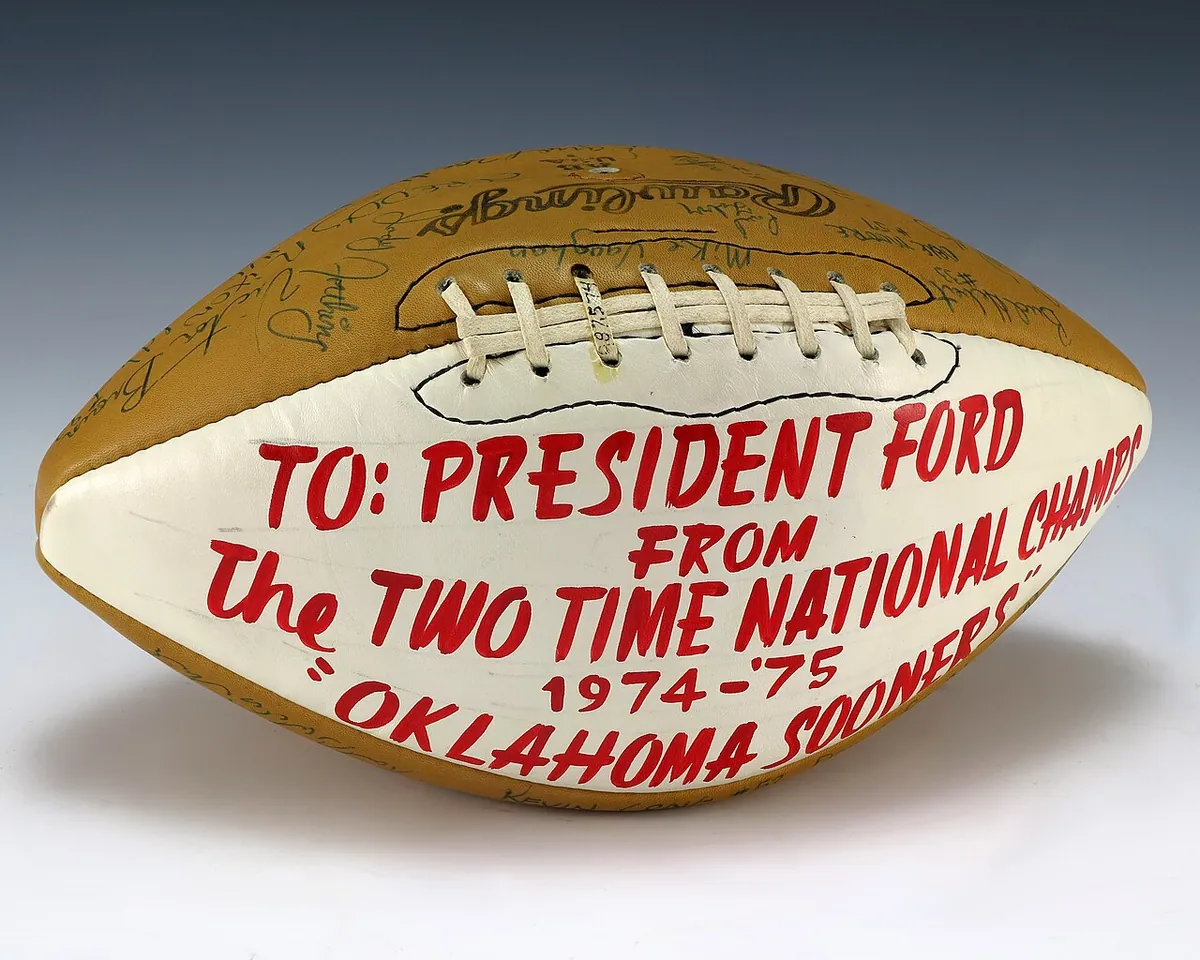
Barry Switzer's 16-year tenure as head coach at the University of Oklahoma began in 1973. His teams immediately achieved success, starting with a 37-game unbeaten streak that included the final games of the 1972 season under Fairbanks and continued into his own tenure. Oklahoma posted undefeated seasons in 1973 (10-0-1) and 1974 (11-0). The Sooners won national championships in 1974, 1975, and 1985 under his leadership. Oklahoma won or shared the Big Eight Conference championship every single year from 1973 to 1980, and 12 times in total during Switzer's 16 seasons. His overall record at Oklahoma was 157 wins, 29 losses, and 4 ties, for a .837 winning percentage. That percentage ranks among the highest in NCAA Division I-A history. Switzer's teams scored 6,093 points while allowing 2,429, averaging a score of 32.1 to 12.8 per game.
Oklahoma played in 13 bowl games under Switzer, compiling an 8-5 record in those postseason contests. Oklahoma played in multiple Orange Bowls during his tenure, winning several of them. Switzer coached 54 players who were selected as All-Americans. He was known as an outstanding recruiter, particularly in the state of Texas. His record against the Texas Longhorns was 9 wins, 5 losses, and 2 ties. Switzer succeeded against several prominent coaching contemporaries, including a 12-5 record against Nebraska's Tom Osborne and a 3-0 record against Bobby Bowden. He is one of four coaches, along with Bennie Owen, Bud Wilkinson, and Bob Stoops, to win over 100 games at Oklahoma.
| Year | Overall Record | Conference Record |
|---|---|---|
| 1973 | 10-0-1 | 7-0 |
| 1974 | 11-0 | 7-0 |
| 1975 | 11-1 | 6-1 |
| 1976 | 9-2-1 | 5-2 |
| 1977 | 10-2 | 7-0 |
| 1978 | 11-1 | 6-1 |
| 1979 | 11-1 | 7-0 |
| 1980 | 10-2 | 7-0 |
| 1981 | 7-4-1 | 4-2-1 |
| 1982 | 8-4 | 6-1 |
| 1983 | 8-4 | 5-2 |
| 1984 | 9-2-1 | 6-1 |
| 1985 | 11-1 | 7-0 |
| 1986 | 11-1 | 7-0 |
| 1987 | 11-1 | 7-0 |
| 1988 | 9-3 | 6-1 |
NCAA Probation and Resignation from Oklahoma
Barry Switzer's tenure at Oklahoma included significant NCAA violations and probation. In 1989, the Oklahoma football program was placed on probation by the NCAA following multiple scandals. Key players involved included Charles Thompson, who was arrested for soliciting the sale of cocaine to undercover FBI agents. The violations centered on illegal payments to players. A booster, Bill Lambert, illegally paid between 100 and 150 Oklahoma football players. Recruiting coordinator Shirley Vaughan ran a ticket-scalping scheme that paid dozens of players. Switzer himself admitted in his autobiography to paying star running back Joe Washington $100 per hour. Other prominent players from the 1985 national championship team, including Keith Jackson, Jamelle Holieway, and Brian Bosworth, openly admitted to accepting illegal payments. The probation terms were severe, stating that Oklahoma would have received the "death penalty" if it committed one more violation in any sport over the next five years. Switzer chose to resign in 1989, concluding his 16-year run as head coach.
Dallas Cowboys Head Coaching Career
Barry Switzer was hired as head coach of the Dallas Cowboys on March 30, 1994, one day after Jimmy Johnson announced his departure. Owner Jerry Jones cited Switzer's leadership, charisma, and proven winning record as reasons for the hire. Switzer did not hire his own staff, instead retaining the assistant coaches from Johnson's tenure. His first season in 1994 was successful, with the Cowboys finishing 12-4 and advancing to the NFC Championship Game. Dallas lost that game 38-28 to the San Francisco 49ers, a contest where Switzer incurred a 15-yard penalty for bumping an official while arguing a call. The 1995 season saw the Cowboys again finish 12-4, clinching home-field advantage throughout the playoffs. Dallas defeated the Philadelphia Eagles and the Green Bay Packers in the NFC playoffs to reach Super Bowl XXX.
In Super Bowl XXX, the Cowboys faced the Pittsburgh Steelers. Dallas never trailed in the game, turning three interceptions into 14 points. The Cowboys won 27-17, giving Switzer a Super Bowl championship. This achievement placed him in a rare category alongside Jimmy Johnson. The 1996 Cowboys finished 10-6, won a Wild Card playoff game against the Minnesota Vikings 40-15, but lost in the Divisional round to the Carolina Panthers 26-17. He resigned on January 9, 1998. His four-year NFL regular season record was 40 wins and 24 losses, with a 5-2 postseason record. Switzer's .625 winning percentage is the highest of any head coach in Dallas Cowboys history.
| Year | Regular Season |
|---|---|
| 1994 | 12-4 |
| 1995 | 12-4 |
| 1996 | 10-6 |
| 1997 | 6-10 |
Coaching Philosophy, Schemes, and Tree
Barry Switzer's coaching philosophy was fundamentally offensive and grounded in the wishbone formation. As an offensive coordinator and head coach, he perfected this system, which emphasized a dominant rushing attack. His Oklahoma teams consistently led the nation in scoring, rushing offense, and total offense throughout his tenure. Switzer was also renowned as a premier recruiter, especially in the talent-rich state of Texas. His approach with the Dallas Cowboys was often described as a "players' coach," which contrasted with the more disciplined style of his predecessor, Jimmy Johnson. This difference in philosophy reportedly led to friction with quarterback Troy Aikman, who felt the team lacked structure under Switzer's leadership. Switzer's coaching tree includes several coaches who worked under him and later became head coaches. His own mentors were Frank Broyles, Jim Mackenzie, and Chuck Fairbanks. Assistants from his staffs at Oklahoma and Dallas went on to lead major programs and NFL teams.
- Mack Brown: Head coach at Appalachian State and later at major programs, winning a national championship.
- John Blake: Head coach at Oklahoma from 1996 to 1998.
- Dave Campo: Head coach of the Dallas Cowboys from 2000 to 2002.
- Butch Davis: Head coach of the Cleveland Browns and at the University of North Carolina.
- Mike Zimmer: Head coach of the Minnesota Vikings.
- Tim Billings: Head coach at Southeast Missouri State and Southern Mississippi.
Honors and Awards
Barry Switzer has received numerous honors for his coaching achievements. In 2004, he was awarded the Jim Thorpe Lifetime Achievement Award. The University of Oklahoma dedicated a major athletic facility in his honor, naming it the Barry Switzer Center on April 24, 1999. He was elected to the Oklahoma Sports Hall of Fame. In 2000, the Oklahoma Kappa chapter of the Sigma Alpha Epsilon fraternity initiated Switzer as an honorary member. His .837 winning percentage at Oklahoma ranks among the highest in history among Football Bowl Subdivision coaches. He is one of only three head coaches to have won both a college football national championship and a Super Bowl, a group that includes Jimmy Johnson and Pete Carroll.
Controversies and Legal Issues
Several legal and disciplinary issues occurred during Barry Switzer's career. In 1983, the U.S. Securities and Exchange Commission sued him for alleged insider trading. Switzer defended himself by stating he had innocently overheard information at a stadium. The federal court dismissed the case after the government presented its evidence, ruling it had not demonstrated that any purposeful disclosure of inside information had been made to Switzer. The major NCAA probation in 1989 involved widespread illegal payments to Oklahoma players, as detailed in the section on his resignation. During his time with the Dallas Cowboys, Switzer was arrested in August 1997 at Dallas/Fort Worth International Airport. A loaded .38-caliber revolver was found in his luggage as he returned to training camp. Switzer stated he had placed the gun in his bag to hide it from children at his home and forgot to remove it. He pleaded guilty to the charge, was fined $3,500, and received a one-year deferred adjudication sentence. Cowboys owner Jerry Jones subsequently fined him an additional $75,000. These incidents contributed to the narrative of a lack of institutional control that critics associated with his programs.
Post-Coaching Career and Current Role
After resigning from the Dallas Cowboys, Barry Switzer remained active in business, media, and philanthropy. He ventured into acting, playing the head coach in the 1998 movie "Possums" and guest-starring on an episode of TNT's "Saving Grace" in 2008. In 2006, he co-founded First Liberty Bank in Oklahoma City with country music star Toby Keith. Switzer owns several businesses in the Norman area, including Switzer's Locker Room and Switzer's Vineyards. He worked as a television analyst, joining the Fox NFL Pregame show in September 2007 and contributing to XMSN's college sports coverage. Switzer has been deeply involved in charitable work for decades. For over four decades, he has held the position of honorary head coach for Oklahoma's Special Olympics program. He also founded and ran an annual golf tournament called Swing for Sight, which raised funds for the Society for the Prevention of Blindness. Switzer resides in Norman, Oklahoma, with his wife Becky, a former U.S. Olympic team coach and University of Oklahoma gymnastics coach from 1984 to 2001. He remains a public figure associated with Oklahoma football and his various business and philanthropic endeavors.
Video
FAQ
How many Super Bowls did Barry Switzer win?
Barry Switzer won one Super Bowl as a head coach. He led the Dallas Cowboys to a victory in Super Bowl XXX at the conclusion of the 1995 NFL season. The Cowboys defeated the Pittsburgh Steelers by a score of 27-17 in that game. This championship made Switzer part of an exclusive group of coaches who have won titles at both the collegiate and professional levels.
What is Barry Switzer's record as a head coach?
Barry Switzer's complete head coaching record includes his college and professional tenures. At the University of Oklahoma from 1973 to 1988, his record was 157 wins, 29 losses, and 4 ties. With the Dallas Cowboys from 1994 to 1997, his regular season record was 40 wins and 24 losses. His combined NFL record including playoffs was 45 wins and 26 losses. He never had a losing season in college football.
Where does Barry Switzer live today?
Barry Switzer lives in Norman, Oklahoma. He has resided there for many years with his wife, Becky Switzer. His home is located near the University of Oklahoma campus. The university's athletic complex, named the Barry Switzer Center in his honor in 1999, is also situated in Norman.
Did Troy Aikman get along with Barry Switzer?
Troy Aikman and Barry Switzer had a reportedly strained working relationship during their time with the Dallas Cowboys. Aikman publicly expressed concerns about a lack of discipline and poor practice habits under Switzer's leadership. He reflected on these disagreements in later interviews, stating he felt the team was "kind of hanging on" in the post-Jimmy Johnson era. Aikman characterized Switzer's approach as that of a "players' coach," which contrasted with his own preferences for structure.
What championships did Barry Switzer win at Oklahoma?
Barry Switzer won three national championships as head coach at the University of Oklahoma. The Sooners claimed the national title in 1974, 1975, and 1985. His teams also won or shared the Big Eight Conference championship 12 times during his 16-year tenure. This included a run of eight consecutive conference titles from 1973 through 1980.
Are Jimmy Johnson and Barry Switzer friends?
Jimmy Johnson and Barry Switzer have a long history that dates back to their time at the University of Arkansas. Both were associated with the 1964 Arkansas Razorbacks team, Johnson as a player and Switzer as an assistant coach. Their professional paths later crossed when Switzer replaced Johnson as head coach of the Dallas Cowboys in 1994. While their relationship has been marked by professional rivalry, particularly surrounding the Cowboys job, they share the unique distinction of being the first two coaches to win both a college national championship and a Super Bowl.
Sources
- Barry Switzer (Wikipedia) Wikipedia
- Barry Switzer, Coaches pro-football-history.com
- Inductee | Barry Layne Switzer 2001 College Football Hall of Fame
- Barry Switzer: OU Football Coach, Dallas Cowboys Coach voicesofoklahoma.com
- Barry Switzer Coaching Record footballdb.com
- Barry Switzer, Class of 1999 oklahomahof.com