The Philadelphia Eagles are a professional American football team based in Philadelphia and a member of the NFC East division of the National Football League. The franchise was founded in 1933, when a group led by Bert Bell and Lud Wray secured the rights to an NFL team in Philadelphia to replace the bankrupt Frankford Yellow Jackets. The Eagles won 3 NFL championships before the merger, in 1948, 1949 and 1960, and have won 2 Super Bowls, LII after the 2017 season and LIX after the 2024 season. They play their home games at Lincoln Financial Field in the South Philadelphia Sports Complex. Jeffrey Lurie has owned the team since 1994, when he bought it for $185 million.
Bert Bell, the Blue Eagle and the Early Years
Philadelphia had an NFL team before the Eagles. The Frankford Yellow Jackets, which grew out of the Frankford Athletic Association organized in 1899, joined the league in 1924 and won the NFL championship in 1926. That club went bankrupt midway through the 1931 season, and after more than a year of searching the league granted a new franchise to a group headed by Bert Bell and Lud Wray, who also received the assets of the defunct Yellow Jackets. Bell and Wray named the team after the Blue Eagle logo of the National Recovery Administration, a centerpiece of the New Deal of President Franklin D. Roosevelt, and both the club and the NFL regard the Eagles and the Yellow Jackets as separate franchises.
The Eagles joined the NFL in 1933 as one of three expansion teams, along with the Pittsburgh Pirates, now the Steelers, and the Cincinnati Reds. Wray, a former teammate of Bell at Penn, became the first head coach. The first game came on October 15, 1933, a 56-0 loss to the New York Giants at the Polo Grounds, and the Eagles never won more than four games in any of their first 10 seasons. In 1935 Bell proposed the annual college draft, with teams choosing in inverse order of their finish, a practice the league still follows. On October 22, 1939, the Eagles also played in the first televised NFL game, a 24-13 loss to the Brooklyn Dodgers at Ebbets Field.
Greasy Neale, the Steagles and Back-to-Back Titles
By 1936 the team had suffered heavy losses and was sold at public auction, where Bell was the only bidder and became sole owner. In December 1940 Bell stopped the sale of the Steelers to Alexis Thompson, and in the swap known as the Pennsylvania Polka, Bell and Art Rooney traded the Eagles roster and Philadelphia rights to Thompson for the Steelers roster and the rights in Pittsburgh. Thompson took over the Eagles and hired Greasy Neale as head coach. Player shortages during World War II then led the Eagles and Steelers to merge for the 1943 season as the Phil-Pitt Combine, better known as the Steagles, and the combined team finished 5-4-1 under Neale and Walt Kiesling.
Led by Neale and running back Steve Van Buren, the Eagles finished second in the Eastern division in 1944, 1945 and 1946. They reached the NFL Championship Game for the first time in 1947 and lost 28-21 to the Chicago Cardinals at Comiskey Park. A year later, in a blinding snowstorm at home, they beat the Cardinals 7-0 on a 5-yard touchdown run by Van Buren in the fourth quarter. In 1949 they won a second straight title game by shutout, 14-0 over the Rams, as Van Buren ran for 196 yards on 31 carries.
Before the 1949 season Thompson sold the team to a syndicate of 100 buyers led by Philadelphia businessman James P. Clark, each of whom paid $3,000 for a share. The Eagles also made Chuck Bednarik, an All-American linebacker from the University of Pennsylvania, the first overall pick of the 1949 draft. Van Buren, center and linebacker Alex Wojciechowicz, end Pete Pihos and Bednarik led those teams and later entered the Pro Football Hall of Fame. The run ended in 1950, when the Cleveland Browns, newly arrived from the AAFC, beat the Eagles 35-10 in the season opener and Philadelphia finished 6-6.
The 1960 Champions and the Long Wait
Buck Shaw became head coach in 1958, and a trade with the Los Angeles Rams brought quarterback Norm Van Brocklin to Philadelphia. Bert Bell, by then NFL commissioner, suffered a heart attack while watching the Eagles play the Steelers from the stands at Franklin Field on October 11, 1959, and died later that day. In 1960 Shaw, Van Brocklin and Bednarik, each in his last season before retirement, led a team known more for grit than talent to a 10-2 record and the Eastern division title. On December 26, 1960, the Eagles beat the Green Bay Packers 17-13 for the NFL championship, handing Vince Lombardi the only championship game loss of his career, and Bednarik ended the game by tackling Jim Taylor on the final play.
Bednarik played both center and linebacker in that title game. Earlier that season, on November 20, 1960, at Yankee Stadium, his tackle of Frank Gifford of the New York Giants became known as The Hit, and the NFL later ranked it the 44th greatest play in league history. Gifford was knocked unconscious, and the deep concussion kept him out of the game for 18 months. The 1960 team was also aided by 2 Pro Bowl receivers, wide receiver Tommy McDonald and tight end Pete Retzlaff.
After falling a half-game short of the Eastern Conference title in 1961, the Eagles did not reach the playoffs again until 1978. Jerry Wolman bought the club in 1963 for $5.505 million, and Leonard Tose paid a then record $16.155 million for it in 1969. Coach Dick Vermeil took the team to 4 straight postseasons from 1978 to 1981, and the 1980 team won a then club record 12 games and the NFC championship. Starting with a division title in 1988, the Eagles, who were especially strong on defense, won 10 or more games for five straight years.
From the Baker Bowl to Lincoln Financial Field
The Eagles have moved several times within Philadelphia. After the 1957 season the team moved to Franklin Field at the University of Pennsylvania, which held 60,000 compared with 39,000 at Connie Mack Stadium. In 1969 Franklin Field became the first NFL stadium with artificial turf when its grass was replaced by AstroTurf. Each home of the franchise is listed below in order.
- Baker Bowl, the home of the Philadelphia Phillies: the first home field in 1933
- Municipal Stadium, South Philadelphia: 1936 to 1939
- Shibe Park, renamed Connie Mack Stadium in 1954: 1940 through the 1957 season
- Franklin Field, University of Pennsylvania: 1958 to 1970
- Veterans Stadium: 1971 to 2002
Veterans Stadium was new when the Eagles arrived in 1971 and was first hailed as a triumph of modern sports engineering. About 25 years later it was already considered dated. The Eagles rank among the best teams in the league for attendance, and since 1999 every home game has been sold out, first at Veterans Stadium and from 2003 at Lincoln Financial Field. The team trains at the Jefferson Health Training Complex in Philadelphia.
Rivals, Fly Eagles Fly and the Fans
The rivalry with the New York Giants dates to 1933 and is the oldest in the NFC East, which the Eagles joined with the Giants, Washington and Dallas after the 1970 merger. Against Dallas, the Eagles won 44-6 at Lincoln Financial Field on December 28, 2008. Philadelphia also met Dallas in the NFC Championship Game after the 1980 season and won 20-7 to reach its first Super Bowl. Against Washington, the Eagles scored 59 points on November 15, 2010, the most in any of their games since 1999.
The fight song is "Fly, Eagles Fly," the mascot is Swoop and the team colors are midnight green, silver, black and white. Eagles fans greet each other with "Go Birds" or "Fly Eagles Fly," and more than 160 verified Eagles Landings around the world give supporters outside Philadelphia a place to celebrate the team. The losing seasons under coach Joe Kuharich in the 1960s produced the Santa Claus incident, when fans pelted a Santa Claus with snowballs during a halftime Christmas pageant. Philadelphians have long treated the team with genuine affection, and the Eagles have been a Philadelphia institution since their first season in 1933.
Andy Reid to Nick Sirianni: Two Super Bowl Titles
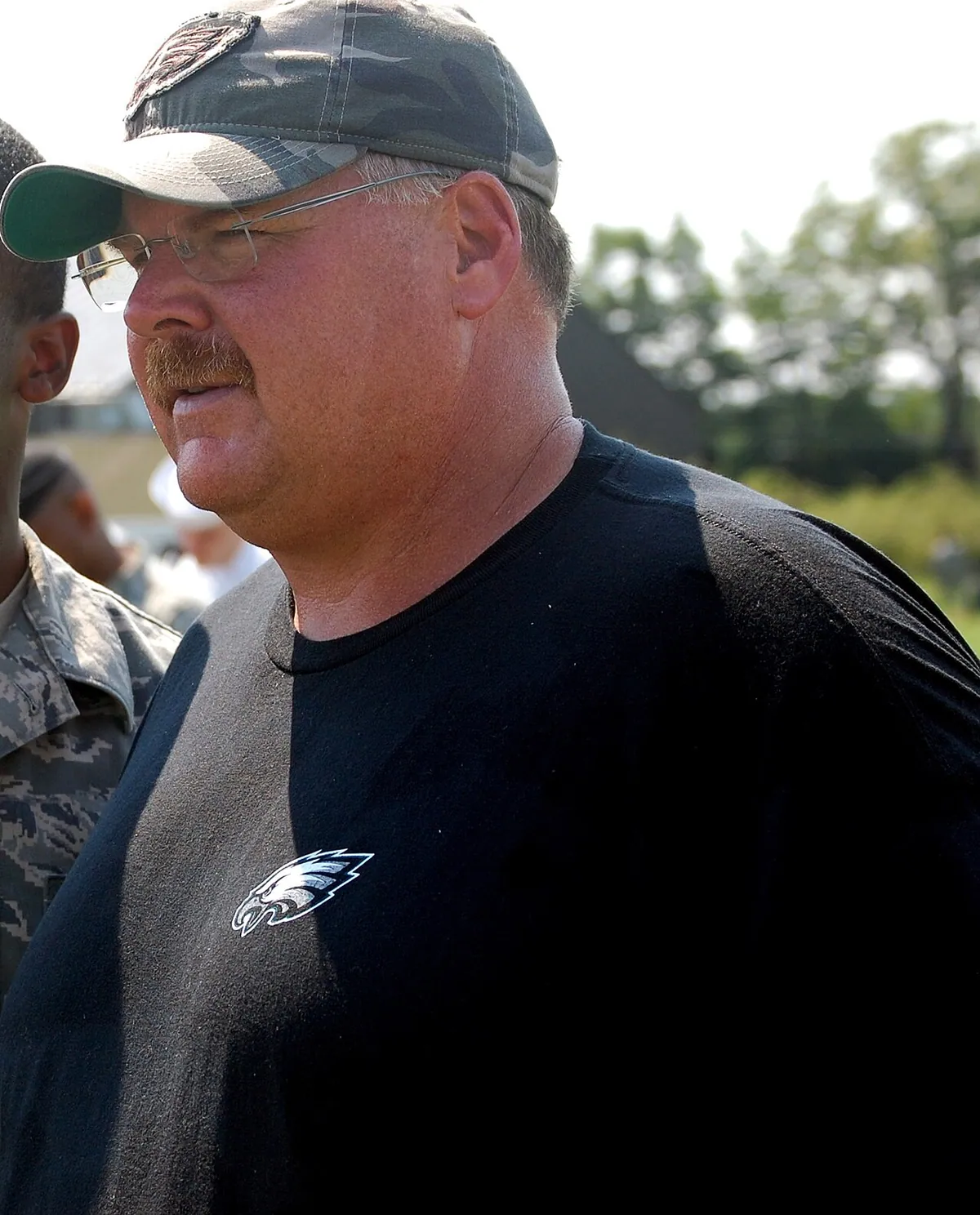
Andy Reid became head coach in 1999 and stayed 14 seasons, the longest tenure of any coach in franchise history, with a 130-93-1 regular season record. Beginning in 2000 his teams won the division six times and reached the postseason nine times. They lost the NFC Championship Game after the 2001, 2002 and 2003 seasons before beating the Atlanta Falcons 27-10 after the 2004 season to reach Super Bowl XXXIX. Chip Kelly, hired from the University of Oregon in 2013, won the NFC East in his first season.
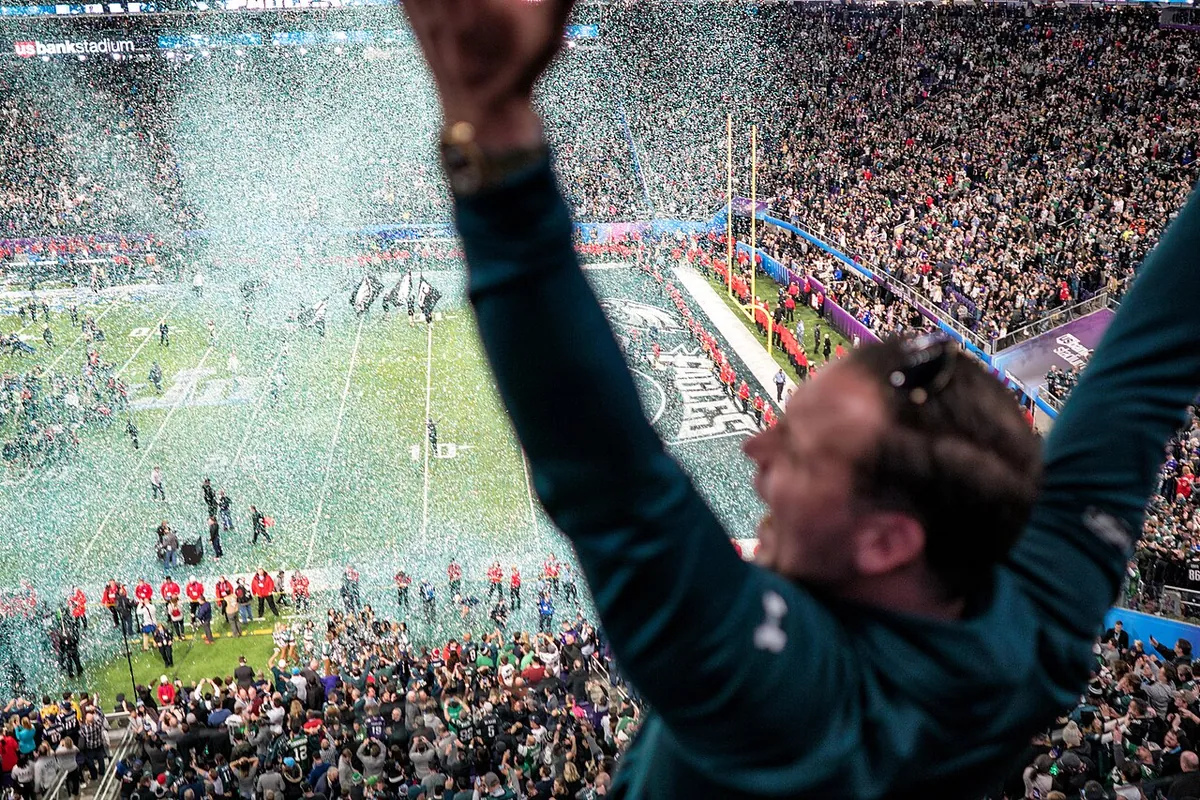
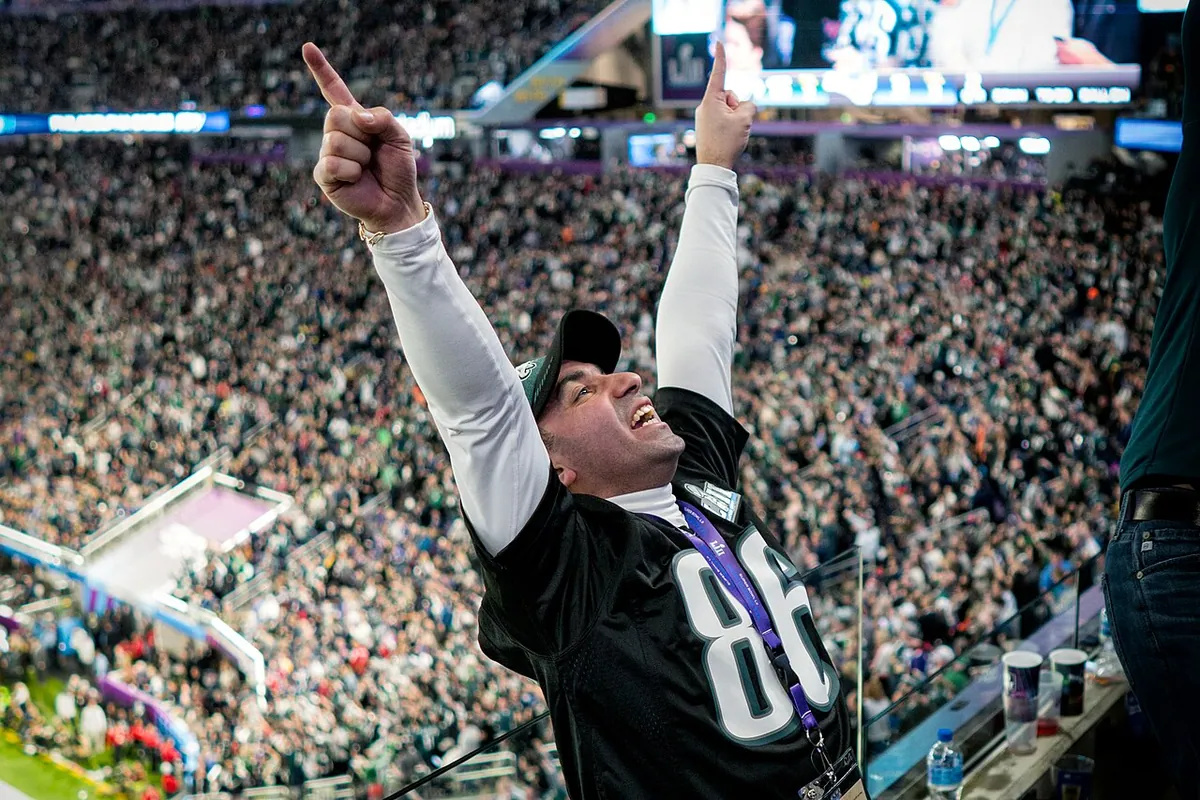
Doug Pederson took over in 2016, and in the 2017 season backup quarterback Nick Foles led the Eagles past the Minnesota Vikings 38-7 in the NFC Championship Game and to the first Super Bowl title in franchise history. Nick Sirianni was hired in 2021, and his 2022 team went 14-3 and beat the San Francisco 49ers 31-7 for the NFC title. The 2024 team, led by quarterback Jalen Hurts, also went 14-3, won 10 straight games from October 13 to December 15, 2024, and beat Washington 55-23 for the conference title. Since 1999 the Eagles have gone 258-177-2 in the regular season through 2025 and 20-16 in the playoffs, and their Super Bowl games are listed here.
| Super Bowl | Season | Opponent | Result |
|---|---|---|---|
| XV | 1980 | Oakland Raiders | Lost 27-10 |
| XXXIX | 2004 | New England Patriots | Lost 24-21 |
| LII | 2017 | New England Patriots | Won 41-33 |
| LVII | 2022 | Kansas City Chiefs | Lost 38-35 |
| LIX | 2024 | Kansas City Chiefs | Won 40-22 |
The 2025 team went 11-6 and lost a Wild Card game 23-19 to the San Francisco 49ers. The 2026 Eagles were 4-7 through November 27 after a 39-38 Thanksgiving win in Dallas, where they came back from a 21-point second-half deficit in the biggest Thanksgiving comeback in NFL history. Former Cowboys quarterback Joe Milton threw for 331 yards and accounted for four touchdowns, and Jake Elliott won the game with a 59-yard field goal with two seconds remaining. In December 2024 the Eagles became one of the first NFL teams to sell an ownership stake to outside investors, an 8% share at a valuation of $8.3 billion.
Video
FAQ
What were the Philadelphia Eagles originally called?
The team has been called the Eagles since it was founded in 1933. Bert Bell and Lud Wray chose the name in honor of the Blue Eagle, the symbol of the National Recovery Administration under President Franklin D. Roosevelt. The franchise replaced the Frankford Yellow Jackets, who won the 1926 NFL championship and went bankrupt in 1931. The Eagles and the NFL treat the Yellow Jackets as a separate franchise, so the Eagles did not start out under another name.
How many Super Bowls have the Philadelphia Eagles won?
The Eagles have won 2 Super Bowls in 5 appearances. Their first title came in Super Bowl LII on February 4, 2018, a 41-33 win over the New England Patriots at U.S. Bank Stadium with backup quarterback Nick Foles. The second came in Super Bowl LIX on February 9, 2025, when they beat the Kansas City Chiefs 40-22 at the Mercedes-Benz Superdome. Before the Super Bowl era the Eagles also won NFL championships in 1948, 1949 and 1960.
Where do the Philadelphia Eagles play their home games?
The Eagles play at Lincoln Financial Field in the South Philadelphia Sports Complex, their home since 2003. From 1971 to 2002 they played at Veterans Stadium. Earlier homes included Franklin Field at the University of Pennsylvania, Connie Mack Stadium, Municipal Stadium and the Baker Bowl. Every Eagles home game since the 1999 season has been sold out.
Who owns the Philadelphia Eagles?
Jeffrey Lurie has owned the Eagles since 1994, when he bought the team for $185 million. Earlier owners included founder Bert Bell, Alexis Thompson, a syndicate of 100 buyers, Jerry Wolman and Leonard Tose. In December 2024 the team sold an 8% stake to outside investors at a valuation of $8.3 billion. Howie Roseman is the general manager and Don Smolenski is the team president.
Who is the head coach of the Philadelphia Eagles?
Nick Sirianni has been head coach of the Eagles since 2021. Through November 27, 2026, his teams have gone 63-33 in the regular season and 6-4 in the playoffs. He has taken Philadelphia to 2 Super Bowls, losing to Kansas City after the 2022 season and beating the Chiefs after the 2024 season. The 2026 team stood at 4-7 after its Thanksgiving comeback win in Dallas.
Who are the biggest rivals of the Philadelphia Eagles?
The oldest rivalry is with the New York Giants, which dates to 1933 and is often cited as one of the best in the NFL. The Dallas Cowboys and Washington are also division rivals in the NFC East. Philadelphia beat Dallas 20-7 in the NFC Championship Game after the 1980 season and rallied from 21 points down to beat the Cowboys 39-38 on Thanksgiving 2026. The Eagles also share a state with the Pittsburgh Steelers, with whom they merged as the Steagles for the 1943 season.
Sources
- Philadelphia Eagles (Wikipedia) Wikipedia
- Philadelphia Eagles philadelphiaeagles.com
- Philadelphia Eagles team history Pro Football Hall of Fame
- Philadelphia Eagles Now Second-Most Valuable NFL Franchise philadelphia.today
- How Many Franchise Wins Do The Philadelphia Eagles Have All Time statmuse.com
- Philadelphia Eagles encyclopedia.com
- nflverse game, roster and draft data nflverse (CC BY 4.0)