Tom Landry was an American professional football coach and player who served as the first head coach of the Dallas Cowboys from 1960 to 1988. His 29 consecutive seasons with one team is an NFL record, as are his 20 consecutive winning seasons from 1966 to 1985. Landry compiled a career record of 270-178-6, winning two Super Bowls, five NFC championships, and 13 divisional titles. His coaching innovations, such as the 4-3 defense and the Flex Defense, had a lasting impact on professional football. Landry was inducted into the Pro Football Hall of Fame in 1990.
Early Life and World War II Service
Thomas Wade Landry was born on September 11, 1924, in Mission, Texas, the son of an auto mechanic. He played quarterback and punter for Mission High School, leading his team to a 12-0 record in his senior season. Landry began studying industrial engineering at the University of Texas at Austin but left to join the United States Army Air Corps during World War II. He completed basic training at Sheppard Field in Texas and preflight training at Kelly Air Force Base.
He was assigned to the 493d Bombardment Group, 860th Bombardment Squadron, part of the Eighth Air Force in England. He returned to the University of Texas in the fall of 1946 to resume his education and his football career. Landry played fullback and defensive back for the Texas Longhorns, contributing to bowl game victories on New Year's Day in 1948 and 1949. He received his bachelor's degree from the University of Texas in 1949 and later earned a master's degree in industrial engineering from the University of Houston in 1952.
Professional Playing Career
He played the 1949 season in the All-America Football Conference, recording one interception and punting 51 times for a 44.1-yard average. After the AAFC folded, the New York Giants selected Landry in a dispersal draft, and he played for them from 1950 through the 1955 season. His best statistical season came in 1951 when he recorded 8 interceptions for 121 yards and two touchdowns. Landry was selected as an All-Pro in 1954, a season in which he also had 8 interceptions.
Over his 80-game professional career, Landry recorded 32 interceptions, which he returned for 404 yards and three touchdowns. He also recovered 10 fumbles, returning them for 67 yards and two additional touchdowns. As a punter, he had 389 career punts for 15,900 yards, with an average of 40.9 yards per punt and a longest punt of 69 yards. His final two seasons with the Giants, 1954 and 1955, were served as a player-assistant coach under head coach Jim Lee Howell, marking the beginning of his coaching career.
Assistant Coaching and Defensive Innovation
He transitioned to a full-time defensive coach after his retirement in 1956 and held the position through 1959. The Giants won the championship in 1956, defeating the Chicago Bears 47-7, but lost to the Baltimore Colts in the 1958 and 1959 title games. It was during his time with the Giants that Landry developed the 4-3 defense. This scheme featured four down linemen and three linebackers, with the key innovation being the positioning of the middle linebacker two yards off the line of scrimmage instead of directly over the center. Giants middle linebacker Sam Huff was central to this defensive system. Landry's defensive units from 1956 to 1959 were among the best in the league, establishing his reputation as a strategic innovator.
Dallas Cowboys Head Coaching Tenure and Records
Tom Landry was hired as the first head coach of the expansion Dallas Cowboys in 1960. The team struggled immensely in its early years, posting an 0-11-1 record in its inaugural season. The team showed its first sign of competitiveness with a 7-7 record in 1965. Landry's overall head coaching record with the Cowboys was 270 wins, 178 losses, and 6 ties. This includes a regular season mark of 250-162-6 and a postseason record of 20-16. His .605 regular season winning percentage is among the highest for coaches with long tenures.
| Season | Regular Season | Playoff Result |
|---|---|---|
| 1966 | 10-3-1 | Lost NFL Championship (GB) |
| 1967 | 9-5-0 | Lost NFL Championship (GB) |
| 1968 | 12-2-0 | Lost Conf. Championship (CLE) |
| 1969 | 11-2-1 | Lost Conf. Championship (CLE) |
| 1970 | 10-4-0 | Lost Super Bowl V (BAL) |
| 1971 | 11-3-0 | Won Super Bowl VI (MIA) |
| 1972 | 10-4-0 | Lost NFC Championship (WAS) |
| 1973 | 10-4-0 | Lost NFC Championship (MIN) |
| 1975 | 10-4-0 | Lost Super Bowl X (PIT) |
| 1977 | 12-2-0 | Won Super Bowl XII (DEN) |
| 1978 | 12-4-0 | Lost Super Bowl XIII (PIT) |
Championships and Coaching Honors
Under Tom Landry, the Dallas Cowboys won two Super Bowl championships. The first came in Super Bowl VI following the 1971 season, a 24-3 victory over the Miami Dolphins where the Cowboys' defense held Miami to a single field goal. The second championship was in Super Bowl XII after the 1977 season, a win over the Denver Broncos. Landry's Cowboys also lost Super Bowls V, X, and XIII. His teams secured five NFC championships and 13 divisional titles during his tenure. Landry was named the NFL Coach of the Year in 1966 after guiding the Cowboys to their first winning season and playoff berth. He was also named the NFC Coach of the Year in 1975. Several players under his guidance won individual awards, including Calvin Hill as AP Offensive Rookie of the Year in 1969, Harvey Martin as AP Defensive Player of the Year in 1977, and Tony Dorsett as AP Offensive Rookie of the Year in 1977.
Schemes and Strategic Innovations
Tom Landry's legacy is heavily defined by his strategic contributions to football. After creating the 4-3 defense with the Giants, he developed the Flex Defense upon arriving in Dallas. This system was designed specifically to counter Vince Lombardi's "run to daylight" offense by assigning defenders specific zones on the field, forcing ball carriers into predetermined areas. Landry also created offensive schemes to score against his own defensive innovations, leading to the development of the multiple offense which used complex formations to disguise simple plays.
In the 1970s, Landry restructured the shotgun or spread offense. In the 1980s, he was an early adopter of situation substitution, using specialized players for specific down-and-distance scenarios. He was among the first coaches to employ specialty coaches for different position groups and to hire a dedicated film coach. Landry was known for unconventional talent acquisition, recruiting soccer players like Efren Herrera and Rafael Septien to be placekickers and drafting Olympic sprinter Bob Hayes to play wide receiver.
Coaching Tree and Influence
Tom Landry produced a significant coaching tree, with many of his assistants becoming NFL head coaches. In 1986, five active NFL head coaches were former Landry assistants. These coaches combined for a regular season record of 477-446-8 and a playoff record of 22-21 over 61 seasons as head coaches after serving on his staffs. The coaching tree won one championship, the 1985 Super Bowl by Mike Ditka's Chicago Bears.
- Mike Ditka: Head coach of the Chicago Bears.
- Dan Reeves: Head coach in the NFL.
- John Mackovic: Head coach in the NFL.
- Gene Stallings: Head coach of the St. Louis Cardinals.
- Raymond Berry: Head coach in the NFL.
Decline, Dismissal, and Final Years
The Cowboys' performance declined in the latter half of the 1980s. After a 10-6 season and divisional round playoff loss in 1985, the team's record fell to 7-9 in 1986. The 1987 season ended with a 7-8 record. The 1988 campaign was Landry's worst since his first year, finishing at 3-13. This marked the Cowboys' third consecutive losing season and the fourth time in five years they missed the playoffs. During this period, owner Bum Bright, who had purchased the team in 1984, publicly criticized Landry's play-calling and questioned the usage of players like Danny Noonan and Herschel Walker.
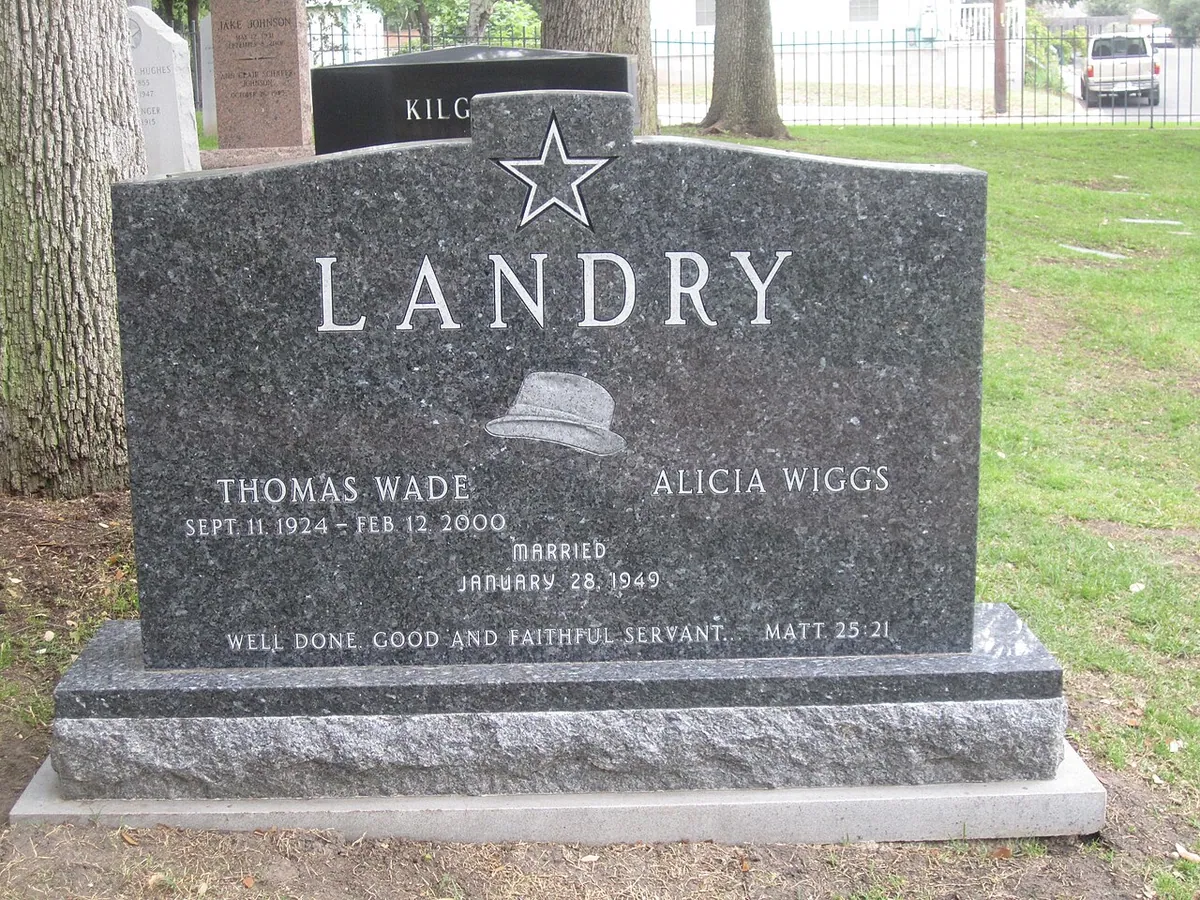
Landry had signed a three-year contract in the summer of 1987 worth $1 million per season. However, facing financial difficulties during the savings and loan crisis, Bright was forced to sell the team. On February 25, 1989, one day after closing on his purchase, new owner Jerry Jones fired Landry. Jones immediately hired Jimmy Johnson, his former college teammate, as the new head coach. General manager Tex Schramm, who had worked alongside Landry for all 29 years of the Cowboys' existence, was also forced out shortly after. Landry died on February 12, 2000, in Dallas, Texas, at the age of 75.
Legacy and Impact
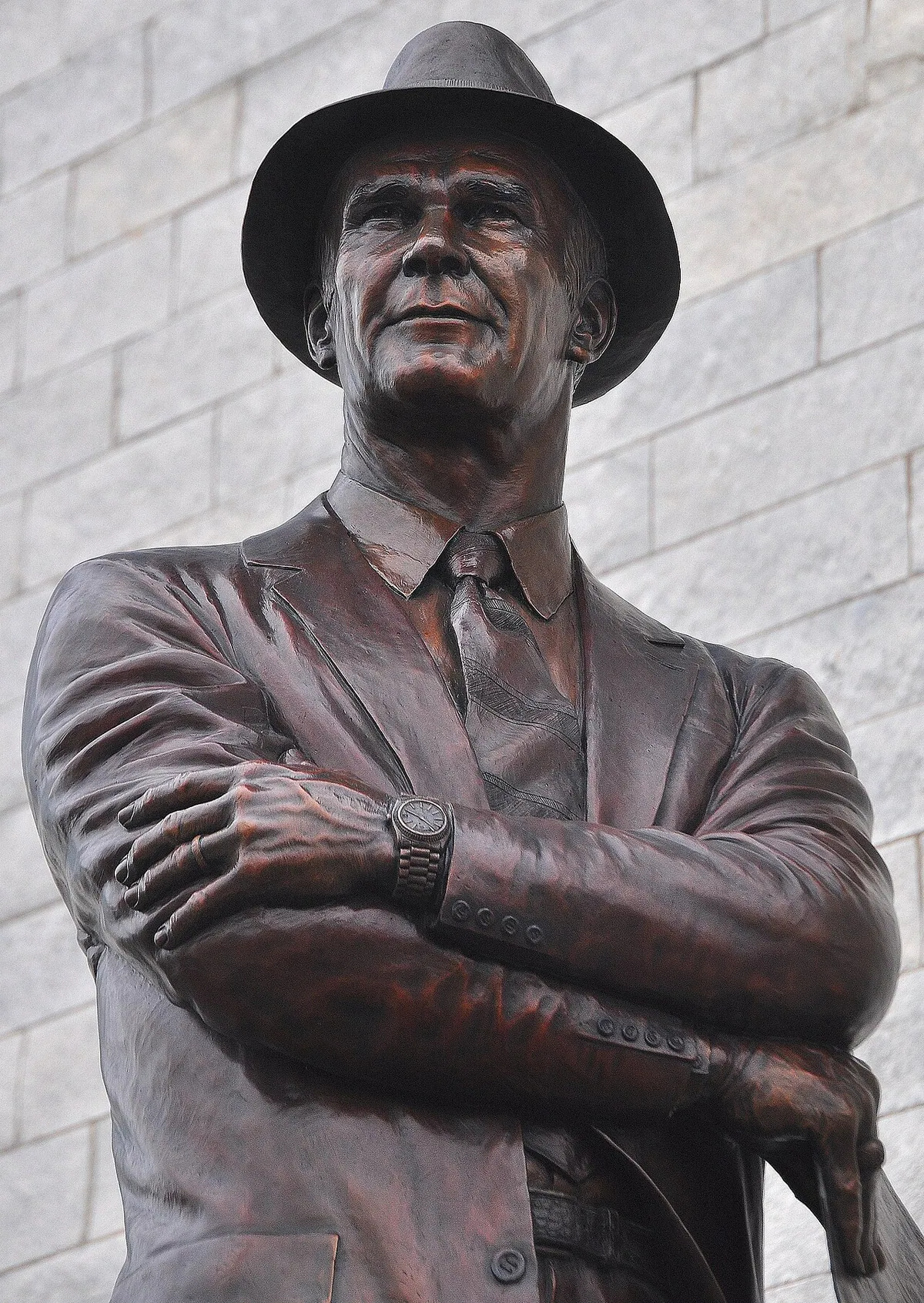
Tom Landry's 29 consecutive years as head coach of the Dallas Cowboys remains an NFL record for longevity with one team. He holds the Cowboys franchise records for most wins (250) and most playoff wins (20). His innovations, including the 4-3 defense, the Flex Defense, and the multiple offense, fundamentally changed professional football strategy and are still reflected in modern game plans. The controversial nature of his dismissal by Jerry Jones after nearly three decades of service highlighted the changing business of the NFL. Despite the unceremonious end, Landry's stoic sideline presence, trademark fedora, and methodical approach became defining characteristics of the Cowboys' rise to prominence. The large number of successful coaches who developed under his tutelage further demonstrates his profound influence on the league's coaching ranks. The football stadium at his alma mater, Mission High School, is named Tom Landry Stadium in his honor.
Video
FAQ
What teams did Tom Landry coach for?
Tom Landry coached for only two NFL organizations. He began his coaching career as an assistant with the New York Giants, serving as defensive coordinator from 1954 through 1959. In 1960, he was hired as the first head coach of the expansion Dallas Cowboys. Landry remained the head coach of the Cowboys for 29 consecutive seasons, from 1960 through the 1988 season, when he was fired by new owner Jerry Jones.
What is Tom Landry's head coaching record?
Tom Landry's overall head coaching record with the Dallas Cowboys was 270 wins, 178 losses, and 6 ties. This includes a regular season record of 250-162-6 and a postseason record of 20-16. His .605 regular season winning percentage ranks among the highest for coaches with long tenures. At the time of his retirement, his 270 total victories ranked third in NFL history behind George Halas and Don Shula.
What innovations did Tom Landry create?
Tom Landry created several major football innovations. While with the New York Giants, he developed the 4-3 defense, which uses four down linemen and three linebackers. In Dallas, he refined this into the Flex Defense to counter specific offensive strategies. Landry also pioneered the multiple offense, restructured the shotgun formation, and was an early proponent of situation substitution, using specialized players for specific game scenarios. He was also among the first to employ specialty coaches and a dedicated film coach.
How long was Tom Landry the Cowboys coach?
Tom Landry was the head coach of the Dallas Cowboys for 29 consecutive seasons, from the team's inception in 1960 through the 1988 season. This 29-year tenure with one team was an NFL record at the time of his dismissal. His streak of 20 consecutive winning seasons from 1966 to 1985 is also an NFL record. Landry was fired on February 25, 1989, by new owner Jerry Jones.
Who are notable coaches in Tom Landry's coaching tree?
Tom Landry's coaching tree includes several notable NFL head coaches. Mike Ditka, who won a Super Bowl with the Chicago Bears, served on his staff. Dan Reeves, who took three different franchises to the Super Bowl, was a Landry assistant. Other head coaches who worked under Landry include John Mackovic, Gene Stallings, Raymond Berry, and Dick Nolan. In 1986, five active NFL head coaches were former Landry assistants.
What were Tom Landry's career statistics as a player?
Tom Landry played as a defensive back and punter, recording 32 interceptions for 404 yards and three touchdowns over his career. He also recovered 10 fumbles, returning two for touchdowns. As a punter, he had 389 punts for 15,900 yards with a 40.9-yard average and a longest punt of 69 yards. These statistics were accumulated during his playing years with the New York Yankees in the AAFC and the New York Giants in the NFL from 1949 through 1955.
Sources
- Tom Landry (Wikipedia) Wikipedia
- Tom Landry Pro Football Hall of Fame
- Thomas W. Landry horatioalger.org
- Tom Landry Head Coaching Record footballdb.com
- Tom Landry, Coaches pro-football-history.com
- Tom Landry Coaching Tree & Career History coaching-tree.app