It is the seventh-oldest collegiate bowl game, first played in 1947 as the Tangerine Bowl. The bowl is operated by Florida Citrus Sports, a non-profit organization that also runs the Pop-Tarts Bowl and Florida Classic. Since the mid-1980s, the Citrus Bowl has typically featured highly ranked teams from the Big Ten and Southeastern Conferences on or around New Year's Day. It had a significant payout among non-College Football Playoff bowls as of 2019.
History and Founding
The initial game was funded by members of the Orlando Elks Lodge, who each contributed $100 to cover expenses. For its first two decades, the bowl primarily featured small college teams. From 1964 through 1967, it served as a College Division regional final, one of four such finals alongside the Pecan, Grantland Rice, and Camellia bowls. The bowl transitioned to hosting major college teams beginning with the 1968 game when the Boardwalk Bowl took over as the College Division Eastern regional final. In March 1983, a $1.25 million agreement with the Florida Citrus Commission led to the name change to the Florida Citrus Bowl. The game moved to a consistent New Year's Day date starting with the 1987 edition. The bowl has been known by several sponsored names, including the Capital One Bowl from 2003 to 2014 and the Citrus Bowl again from 2015 onward.
The bowl's history from 1968 through 1975 included featuring the Mid-American Conference champion against various opponents. During this eight-game span, MAC teams compiled a strong 6-2 record. The bowl was considered for a national championship game in 1986, but the Fiesta Bowl was ultimately chosen to host Penn State and Miami. The game has had a large payout, which is among the highest for non-College Football Playoff bowls. The bowl has generated proceeds for charity since at least 1952, when it was dubbed the 'Little Bowl with the Big Heart.'.
Venue and the 1973 Move to Gainesville
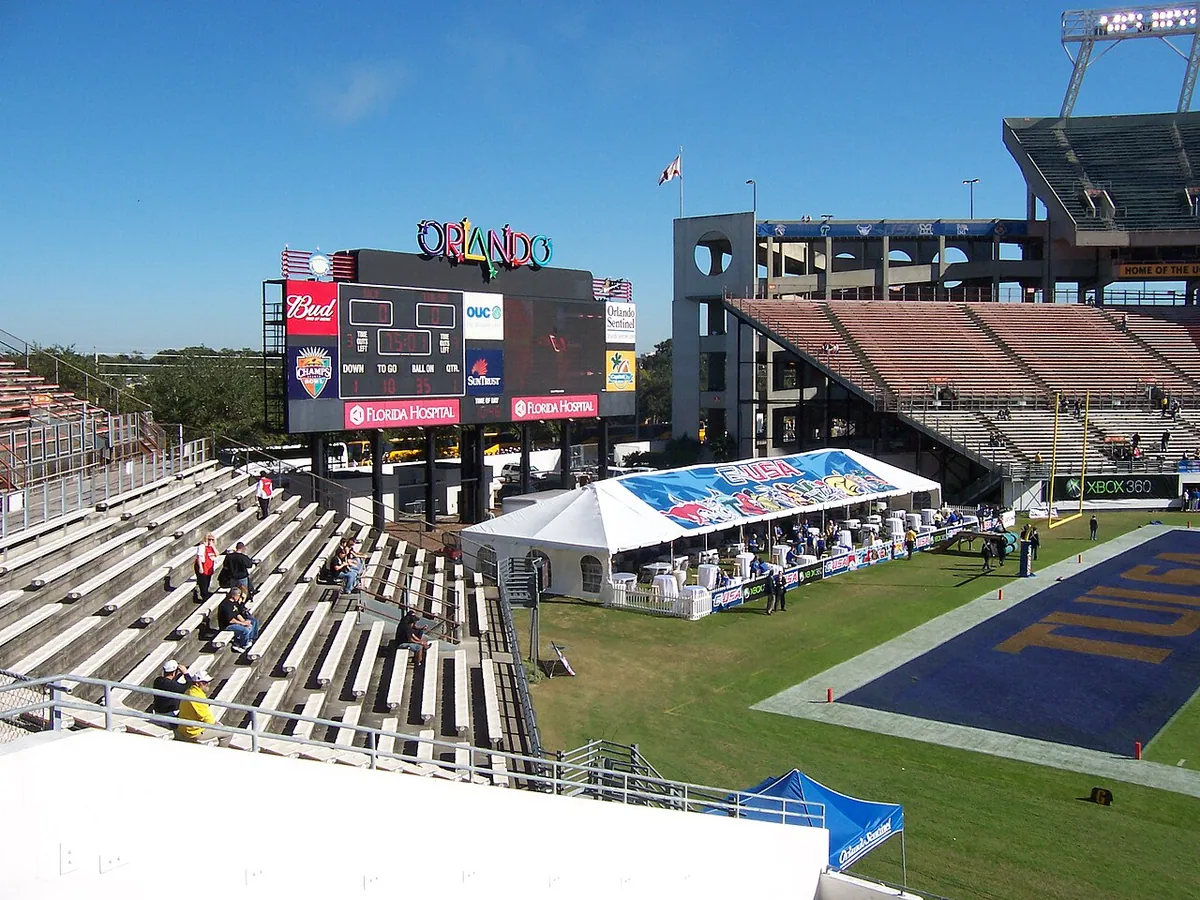
The game has been played in Orlando for almost its entire history, at a stadium now known as Camping World Stadium. A unique one-time relocation occurred for the 1973 game. Planned stadium renovations in Orlando were delayed, leading bowl officials to move the game to Florida Field in Gainesville, the home stadium of the invited Florida Gators. This required special NCAA permission. Both teams practiced and were headquartered in Orlando before being bused to Gainesville for the game. The contest, nicknamed the 'Transplant Bowl,' was played in unusually cold temperatures near 25 degrees Fahrenheit. Miami (OH) defeated Florida 16-7. The temporary move and fear of permanent relocation helped spur the completion of the Orlando stadium expansion, and the game returned there in 1974.
The stadium in Orlando has undergone several major renovations. In 2007, Orange County Commissioners voted to spend $1.1 billion on regional projects that included upgrades to the Citrus Bowl stadium. The record attendance for a Citrus Bowl game is 72,940, set at the January 1, 1998, matchup between Florida and Penn State. The stadium also hosts other major events operated by Florida Citrus Sports. The 1973 game in Gainesville drew 37,234 fans, necessitating the move from the smaller Tangerine Bowl stadium in Orlando.
Conference Tie-Ins and Playoff Era Role
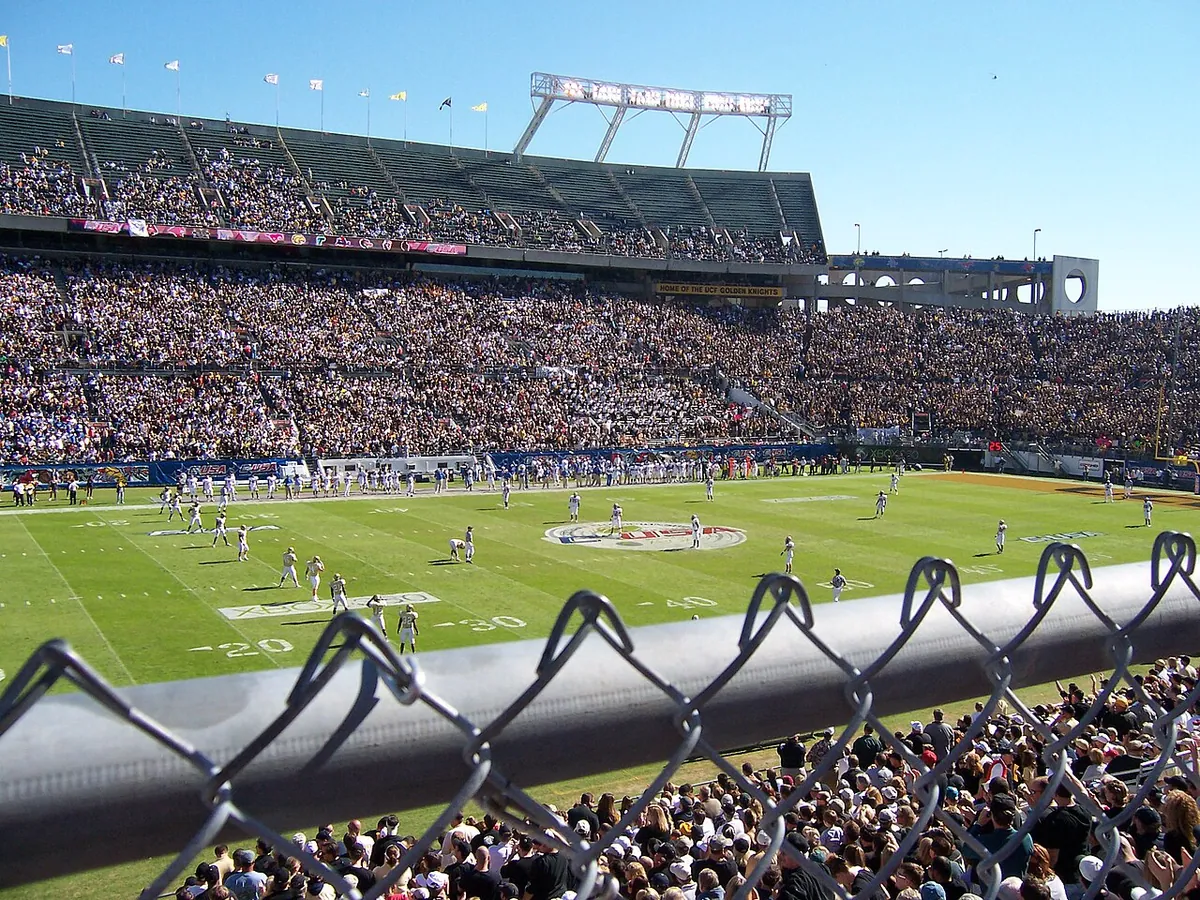
The Citrus Bowl's conference affiliations have evolved significantly over time. From 1968 to 1975, it featured the Mid-American Conference champion against opponents from the Southern Conference, SEC, or at-large teams. From 1987 to 1991, it hosted the Atlantic Coast Conference champion, with ACC teams going 3-2 in those games. Currently, the bowl holds tie-ins with the SEC and Big Ten, with the first selection of available teams from those conferences after the College Football Playoff selection process. In the CFP era, the Citrus Bowl can occasionally host an ACC team. This happens in years when the Orange Bowl is not a CFP semifinal and selects a Big Ten team, freeing the Citrus Bowl to invite an ACC team to face the SEC representative.
This selection process occurred after the 2016 season. The Orange Bowl was not a semifinal and invited Michigan from the Big Ten, so the Citrus Bowl invited Louisville from the ACC to play LSU from the SEC. The following year, Wisconsin was invited to the Orange Bowl, so the Citrus Bowl matched LSU against Notre Dame, an independent that received an invite in place of an ACC team. This flexibility is part of the bowl's agreement within the postseason structure. The bowl has also featured independents at various points in its history, with a record of 3 wins, 5 losses, and one tie in nine appearances since 1968. Notable independent participants have included Notre Dame, Florida State, and Penn State.
Sponsors and Name Changes
The bowl has undergone numerous name changes due to sponsorship agreements. After being the Tangerine Bowl from 1947 to 1982, it became the Florida Citrus Bowl in 1983. The bowl has had several title sponsors, including CompUSA (1994 to 1999), Ourhouse.com (2000), and Capital One from 2001 to 2014. From 2003 to 2014, the game was officially called the Capital One Bowl. When that sponsorship ended, Buffalo Wild Wings became the title sponsor from 2015 to 2017. Subsequent sponsors included Overton's (2018), Vrbo (2019 to 2022), and Cheez-It (2023 to 2025). In 2026, it was announced that Kellogg's had dropped its Cheez-It sponsorship of the game, leaving the game without a title sponsor pending a new deal.
The sponsorship history reflects the commercial evolution of college football. Capital One's involvement included the Mascot Challenge, which ran from 2002 and ended after the 2014 season when the sponsor moved to the Orange Bowl. The game has been called the Citrus Bowl from 2015 to the present, though with various presenting sponsors. The game's television broadcast has typically aired on ABC at 1 p.m. EST on New Year's Day, though it has also been televised on ESPN.
Team and Conference Records
Through the December 2025 edition, 78 games have been played. The Tennessee Volunteers hold the record for the most wins by a single team with 5 victories. The Florida Gators and the Penn State Nittany Lions each share the record for the most losses by a single team with 4 defeats. In terms of conference performance since the bowl began hosting major college teams in 1968, the Southeastern Conference holds a commanding record. The SEC has appeared in 42 games since 1968, winning 26, losing 15, and tying one for a .631 winning percentage. The Big Ten has appeared in 34 games since 1968, with a record of 14 wins and 20 losses. The Mid-American Conference had a strong early run, posting a 6-2 record in its eight appearances from 1968 to 1975. The Atlantic Coast Conference has a record of 4 wins and 6 losses in 10 appearances since 1968. Other conferences with appearances since 1968 include the Big Eight (2-2), the Southern Conference (1-3), the Pac-10 (1-1), the WAC (0-2), and the SWC (0-1).
| Conference | Games (since 1968) | Wins | Losses | Ties | Win Pct. |
|---|---|---|---|---|---|
| SEC | 42 | 26 | 15 | 1 | .631 |
| Big Ten | 34 | 14 | 20 | 0 | .412 |
| MAC | 8 | 6 | 2 | 0 | .750 |
| ACC | 10 | 4 | 6 | 0 | .400 |
| Independents | 9 | 3 | 5 | 1 | .389 |
Most Valuable Players
The bowl has recognized Most Valuable Players, with contemporary newspaper reports detailing awards for specific positions like outstanding back (B), lineman (L), offensive player (O), defensive player (D), or overall MVP (M). Three players have been recognized as MVP in multiple Citrus Bowl games. Chuck Ealey, the quarterback for Toledo, earned the honor in 1969, 1970, and 1971. Brad Cousino of Miami (OH) was named MVP in both 1973 and 1974. Anthony Thomas of Michigan received the award following the 1999 and 2001 games. These players represent key figures in the bowl's history of standout individual performances.
The MVP list includes players from various eras of the bowl's history. The awards highlight significant contributions from players on winning teams. The recognition of multiple MVPs in some games indicates the bowl's tradition of honoring different aspects of play. The three multiple-time winners all came from the Big Ten or MAC conferences during periods when those leagues were prominently featured in the game.
Notable Games and Racial Integration History
The Citrus Bowl has hosted several games with national championship implications. The January 1991 game saw Georgia Tech defeat Nebraska to finish an undefeated season and be voted the 1990 UPI national champion. The bowl also has a significant history regarding racial integration. In 1955, the undefeated Hillsdale College team refused its invitation when bowl officials said its four African-American players could not participate. Similarly, the University at Buffalo turned down a bid to the 1958 game because its two black players would have been barred from playing. Eight years later, the stadium's integration rule had changed, and in 1966 Morgan State became the first historically black college to play in and win the Tangerine Bowl. Another notable game was the January 2000 contest where Michigan State defeated Florida on a field goal on the final play. The 1986 game was also significant as one of the bowls considered to host the national championship game that season before the Fiesta Bowl was selected.
Recent Results and Game Highlights
The Citrus Bowl has continued to feature highly competitive matchups between ranked teams in recent years. The 2023 game saw LSU deliver a record-setting performance, defeating Purdue 63-7, which set marks for most points scored (63) and largest margin of victory (+56) in the bowl's history. In the 2024 game, Tennessee shut out Iowa 35-0. The most recent game, the 2025 Cheez-It Citrus Bowl played on December 31, 2025, was a back-and-forth affair. No. 13 Texas defeated No. 18 Michigan 41-27 in a game that featured seven lead changes. Texas scored 17 unanswered points in the fourth quarter, aided by three Michigan turnovers, to secure the win.
These games maintain the bowl's tradition of hosting premier postseason contests outside the College Football Playoff. Since 1985, the game has featured two teams ranked in the AP poll nearly every year. The 2016 game was played on December 31, marking the first time in 30 years it was not played on January 1 or 2. The game is typically played at 1 p.m. EST on New Year's Day, but when January 1 is a Sunday, it has been played on January 2 or December 31 to avoid conflicting with the NFL schedule.
| Year | Game Name | Winning Team (Record) | Losing Team (Record) | Score |
|---|---|---|---|---|
| 2023 | Citrus Bowl | LSU | Purdue | 63-7 |
| 2024 | Citrus Bowl | Tennessee | Iowa | 35-0 |
| 2025 | Cheez-It Citrus Bowl | No. 13 Texas (10-3) | No. 18 Michigan (9-4) | 41-27 |
Mascot Challenge and Operations
From 2002, the bowl hosted the Capital One Mascot Challenge, a fan-voted contest for the nation's top college mascot. The winning school received a $20,000 award for its mascot program. The contest was held during the bowl's halftime show. When Capital One ended its sponsorship of the Citrus Bowl and moved to the Orange Bowl in 2014, the Mascot Challenge moved with it, and the 2014 season was the last time the contest was held. The group organizes the game and associated events in Orlando.
The list of Mascot Challenge winners includes a variety of schools from across the country. The 2014 winner was Aubie from Auburn University. Other winners included Monte from the University of Montana (2002, 2004), Herbie Husker from Nebraska (2005), and Rocky the Bull from South Florida (2013). The organization's work includes hosting world-class events in Orlando. Florida Citrus Sports also provides pregame hospitality, fan festivals, and group ticket packages for the Citrus Bowl.
- 2002 Winner: Monte (University of Montana)
- 2003 Winner: Cocky (University of South Carolina)
- 2005 Winner: Herbie Husker (University of Nebraska)
- 2007 Winner: Zippy (University of Akron)
- 2009 Winner: The Bearcat (University of Cincinnati)
- 2011 Winner: Wolfie Jr. (University of Nevada, Reno)
- 2013 Winner: Rocky the Bull (University of South Florida)
Early Tangerine Bowl Era (1947 to 1967)
The first Citrus Bowl game was played on January 1, 1947, under the name Tangerine Bowl. Catawba College defeated Maryville 31-6 before a crowd of 9,000 spectators. For the first 17 games, from 1947 through 1963, the bowl featured small college teams. The early games included several contests where one team was shut out. By 1952, the event had earned the nickname the 'Little Bowl with the Big Heart' due to its policy of donating all game proceeds to charitable causes.
During the 1950s, the bowl faced challenges related to segregation. The 1956 game between Juniata and Missouri Valley ended in a 6-6 tie. By the early 1960s, the bowl began to feature more recognizable teams, such as Houston, which defeated Miami (OH) 49-21 in 1962. The period from 1964 to 1967 marked the bowl's role as a College Division Eastern regional final, matching the best non-major teams from a 17-state region. East Carolina won the Tangerine Bowl in both 1964 and 1965 during this phase. Morgan State won the 1966 game, becoming the first HBCU to win the bowl after the stadium was integrated.
Video
FAQ
What is the Citrus Bowl?
The Citrus Bowl is an annual college football bowl game played in Orlando, Florida. It is one of the oldest bowl games, first played in 1947. The game typically features highly ranked teams from the Big Ten and Southeastern Conferences and is played on or around New Year's Day. It is operated by Florida Citrus Sports and has been known by several names, including the Tangerine Bowl and Capital One Bowl, throughout its history.
Where is the Citrus Bowl played?
The Citrus Bowl is played at Camping World Stadium in Orlando, Florida. The game has been held in Orlando for almost its entire history. The only exception was in 1973 when the game was temporarily moved to Florida Field in Gainesville, Florida, due to stadium construction delays in Orlando. The stadium in Orlando has undergone several renovations and expansions over the decades to accommodate the game.
What is the history of the Citrus Bowl?
The game began in 1947 as the Tangerine Bowl, funded by local Elks Lodge members. It initially featured small college teams and later served as a College Division regional final. It transitioned to a major college bowl in 1968. The name changed to the Florida Citrus Bowl in 1983 after a sponsorship deal. It moved to New Year's Day in 1987 and has had several title sponsors since, including Capital One and Cheez-It. The bowl has a notable history regarding racial integration, with teams refusing invitations in the 1950s when black players were barred from playing.
Who are the conference tie-ins for the Citrus Bowl?
The Citrus Bowl currently has tie-in agreements with the Big Ten and Southeastern Conferences. It holds the first selection of available teams from those conferences after the College Football Playoff selection process. Historically, the bowl has had other affiliations, including with the Mid-American Conference from 1968 to 1975 and the Atlantic Coast Conference from 1987 to 1991. From 1992 to 2015, it was a dedicated SEC vs. Big Ten matchup.
Who has won the most Citrus Bowls?
Since the bowl began hosting major college teams in 1968, the Southeastern Conference has the most wins. The SEC has a record of 26 wins, 15 losses, and one tie in 42 appearances since 1968. Among individual teams, the Tennessee Volunteers hold the record for the most Citrus Bowl victories with 5 wins. The Florida Gators and the Penn State Nittany Lions have each lost the game 4 times, the most for any team.
What was a notable recent Citrus Bowl game?
A notable recent game was the 2025 Cheez-It Citrus Bowl, played on December 31, 2025. No. 13 Texas defeated No. 18 Michigan by a score of 41-27 in a contest that featured seven lead changes. Texas scored 17 unanswered points in the fourth quarter to secure the win. Another notable recent game was the 2023 Citrus Bowl, where LSU set bowl records by defeating Purdue 63-7, marking the most points scored and the largest margin of victory in the game's history.
Sources
- Citrus Bowl (Wikipedia) Wikipedia
- Citrus Bowl: Home citrusbowlorlando.com
- Notre Dame Accepts Citrus Bowl Invitation To Face LSU fightingirish.com
- Citrus Bowl tvmaze.com
- Wolverines Fall to Longhorns in Lopsided Fourth Quarter at Cheez-It Citrus Bowl mgoblue.com