The Stanford Cardinal football program represents Stanford University in NCAA Division I FBS competition. The team began play in 1891 and has been a member of the Pacific Coast Conference, the Pac-8, Pac-10, Pac-12, and, since the 2024 season, the Atlantic Coast Conference. Stanford claims two national championships, from 1926 and 1940, and has appeared in 30 bowl games, including 15 Rose Bowls. The program's only Heisman Trophy winner is quarterback Jim Plunkett in 1970.
Program Founding and Early History
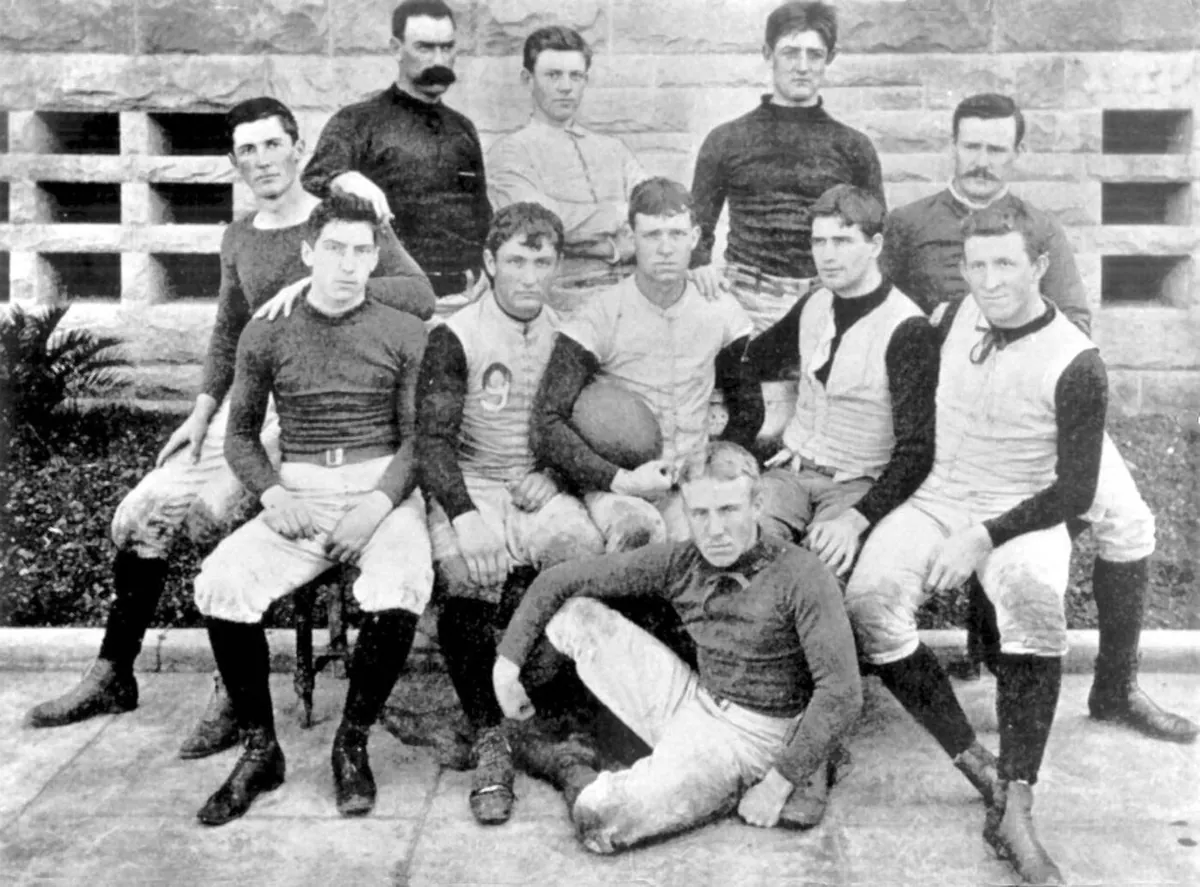
Stanford University first fielded a football team in 1891, playing a limited schedule without a formal coach. The program's first official head coach was football pioneer Walter Camp, who led the team in 1892 and again from 1894 to 1895. Like many schools concerned with the sport's violence, Stanford dropped football in favor of rugby from 1906 to 1917. The school also did not field teams in 1918 due to World War I and from 1943 to 1945 during World War II. Stanford participated in the first-ever Rose Bowl game in 1902, losing to Michigan 49-0. The annual Big Game rivalry against the University of California, Berkeley, which began in 1892, is the oldest college football rivalry in the western United States.
Conference Membership and Moves
Stanford was one of nine teams in the Pacific Coast Conference (PCC) when Pop Warner arrived in 1924. Following the dissolution of the PCC, Stanford competed in the Athletic Association of Western Universities (AAWU), which later became the Pacific-8 Conference. This conference expanded to become the Pacific-10 and then the Pac-12. After the 2023 season and the realignment of college athletics, Stanford left the Pac-12 to join the Atlantic Coast Conference (ACC). When Stanford departed the Pac-12, it held winning all-time series records against every former Pac-12 North division rival except for Washington, with that series tied at 43 wins, 43 losses, and 4 ties.
Head Coaches and Major Eras
Pop Warner coached from 1924 to 1932, leading the team to its first claimed national championship in 1926 and three Rose Bowl appearances. Tiny Thornhill succeeded Warner in 1933 and led the Vow Boys teams to three consecutive Rose Bowls before coaching through 1939. Clark Shaughnessy coached the undefeated 1940 "Wow Boys" to a national title. John Ralston, who arrived in 1963, revived the program, winning two Rose Bowls and coaching Jim Plunkett to the Heisman Trophy. Bill Walsh went 9-3 in 1977 and 8-4 in 1978 before leaving for the San Francisco 49ers. Dennis Green led the team from 1989 to 1991, and Walsh returned for three more seasons from 1992 to 1994. Tyrone Willingham, Jim Harbaugh , and David Shaw followed, with Shaw becoming the program's all-time winningest coach.
| Coach | Years | Record | Notable Achievements |
|---|---|---|---|
| Pop Warner | 1924 to 1932 | 71-17-8 | 1926 National Title, 3 Rose Bowls |
| John Ralston | 1963 to 1971 | 55-36-3 | 2 Rose Bowl wins, coached Heisman winner |
| Bill Walsh | 1977 to 1978, 1992 to 1994 | 34-24-1 | Pac-8 Coach of the Year 1977 |
The Pop Warner Era and First National Title
Glenn "Pop" Warner began his nine-year tenure as Stanford's head coach in 1924, inheriting a talented squad that included fullback Ernie Nevers. Warner's teams were known for innovative offensive systems, including the wingback formation and trick plays like the bootleg. The 1924 season featured a dramatic 20-20 tie with rival California, which led to Stanford's Rose Bowl invitation against Knute Rockne's Notre Dame Fighting Irish . Stanford won all of its 1926 regular season games. They crushed California 41-7 and edged USC 13-12 to earn another Rose Bowl berth.
National and Conference Championships
Stanford claims two national championships in football, awarded by selectors for the 1926 and 1940 seasons. The 1926 team, under Pop Warner , did not lose a game during the regular season and finished with a tie against Alabama in the Rose Bowl. The 1940 team, coached by Clark Shaughnessy, posted a perfect record with no losses or ties and concluded its year with a victory over Nebraska in the Rose Bowl. In terms of conference titles, Stanford has won 15 championships across the PCC, Pac-8, Pac-10, and Pac-12 eras. The program has not yet won a conference championship as a member of the ACC.
Bowl Game History and Major Appearances
Stanford has a long bowl history, participating in 30 postseason games with a record of 15 wins, 14 losses, and one tie. The Cardinal have made 15 appearances in the Rose Bowl Game, the third-most of any program behind only USC and Michigan. Stanford's Rose Bowl wins include a 7-6 victory over Pitt in 1928, a 7-0 win over SMU in 1936, and a 21-13 win over Nebraska in 1941. Other bowl appearances include wins in the 1977 Sun Bowl and the 1978 Bluebonnet Bowl under Bill Walsh, along with trips to the 2011 Orange Bowl and the 2012 Fiesta Bowl. A major bowl victory was a 45-16 win over Iowa in the 2016 Rose Bowl, which capped a 12-2 season and a No. 3 final ranking. That 2015 season marked Stanford's third 12-win campaign, following similar records in 2010 and 2012.
Main Rivalries
The most prominent is the Big Game against the University of California, Berkeley. The 1982 game is infamous for "The Play," a last-second, five-lateral kickoff return by Cal that resulted in a Stanford loss. Another major rivalry is with independent Notre Dame, with the teams competing for the Legends Trophy. Stanford also has rivalries with USC, UCLA, Oregon, and San Jose State. The USC rivalry began in 1925, when Stanford won the first game 13-9 at the Los Angeles Memorial Coliseum.
Stanford Stadium and Home Field
The playing surface is named Foster Field. Stanford Stadium has a capacity of 50,424. The stadium, located in Stanford, California, hosts the Big Game against California in years when Stanford is the home team. Stanford opened its 2026 season at Stanford Stadium against Hawai'i on August 29.
Heisman Trophy History and Near Misses
Stanford quarterback Jim Plunkett captured the Heisman Trophy in 1970, the only Cardinal player to win the award. Plunkett led Stanford to a 9-3 record and a Rose Bowl victory that season. Stanford players have finished second in Heisman voting six times. Quarterback John Elway was second to Herschel Walker in 1982. Running back Toby Gerhart finished behind Mark Ingram II in the 2009 Heisman voting. Quarterback Andrew Luck finished second in both 2010 to Cam Newton and in 2011 to Robert Griffin III. Running back Christian McCaffrey was the runner-up to Derrick Henry in 2015. Running back Bryce Love finished second to Baker Mayfield in 2017.
Notable NFL Players and Draft History
Stanford has a strong tradition of sending players to the NFL, with 263 alumni playing in the league since 1974. The program has produced 150 drafted players since 1974, including 17 first-round selections and two number one overall picks, one of them quarterback Andrew Luck in 2012. Other notable first-round picks include running back Christian McCaffrey (2017), defensive lineman Solomon Thomas (2017), and offensive lineman Andrus Peat (2015). Since the 2016 NFL Draft, Stanford has had at least one player selected each year, with high totals of five picks in 2016, 2019, 2021, and 2023. As of the 2026 season, 36 Stanford alumni are on NFL rosters, including standouts like McCaffrey, tight end Zach Ertz, safety Justin Reid, and linebacker Bobby Okereke .
- Andrew Luck (QB), 4-time Pro Bowler, 2012 No. 1 overall pick (Colts)
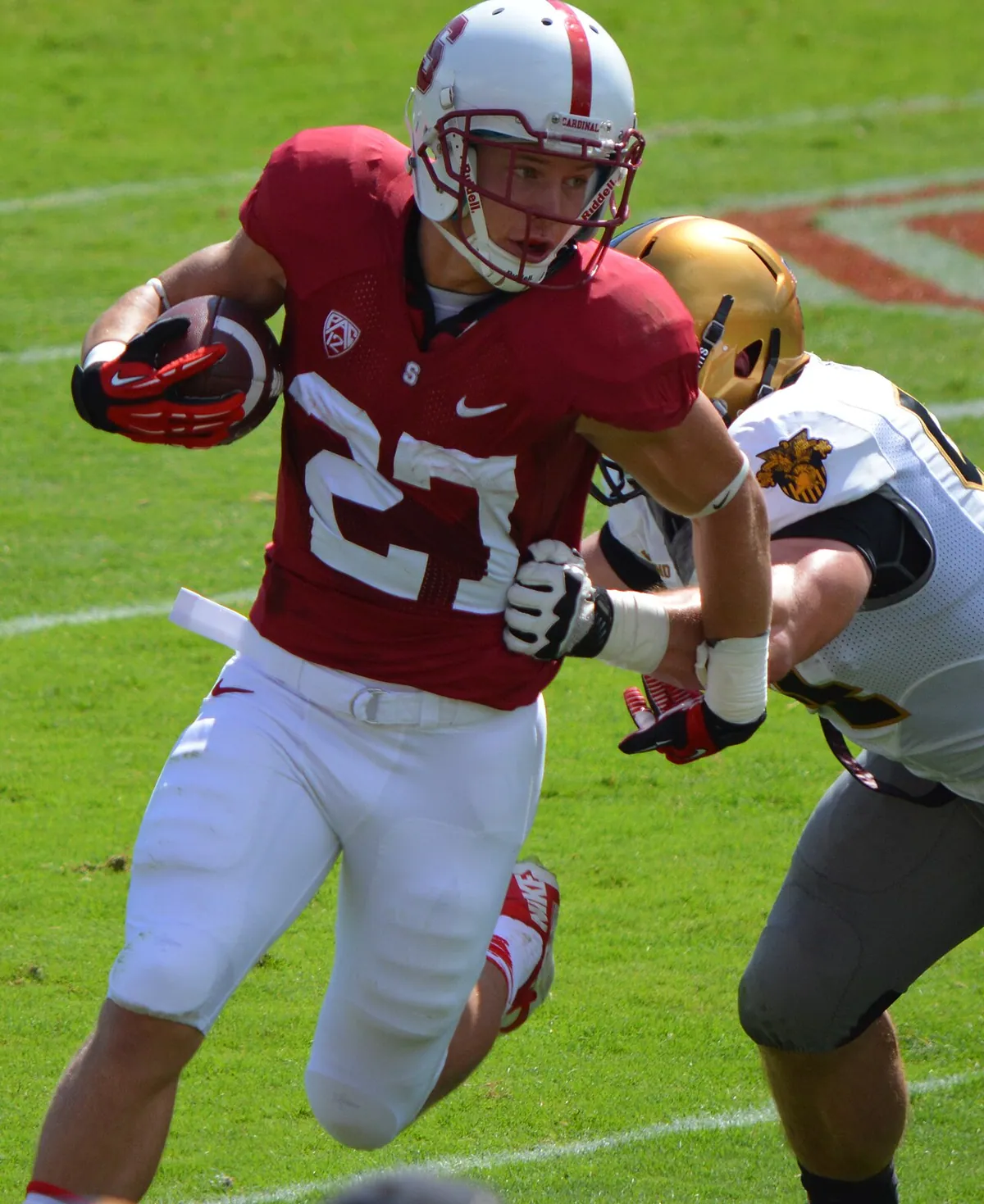
- Christian McCaffrey (RB), 2017 first-round pick at No. 8 overall (Panthers), now with the 49ers.
- John Elway (QB), 9-time Pro Bowler, 2-time Super Bowl champion (Broncos)
- James Lofton (WR), Pro Football Hall of Fame inductee
- David Bailey (LB), 2026 No. 2 overall pick ( New York Jets )
- Jim Plunkett (QB), Heisman winner, 2-time Super Bowl champion (Raiders)
The David Shaw Era and Recent Success
David Shaw led Stanford to postseason play in each of his first three seasons from 2011 to 2013. Shaw's teams finished in the top 10 in 2011, 2012, and 2015, with the high point being a No. 3 ranking after the 2015 season. That 2015 team defeated Iowa in the Rose Bowl, marking Stanford's third 12-win season in a six-year span. Shaw became the program's all-time winningest coach, surpassing the win totals of Pop Warner and John Ralston. His players included Andrew Luck, the Heisman runner-up in 2011, and Christian McCaffrey, the runner-up in 2015.
Recent Seasons, ACC Transition, and Current Status
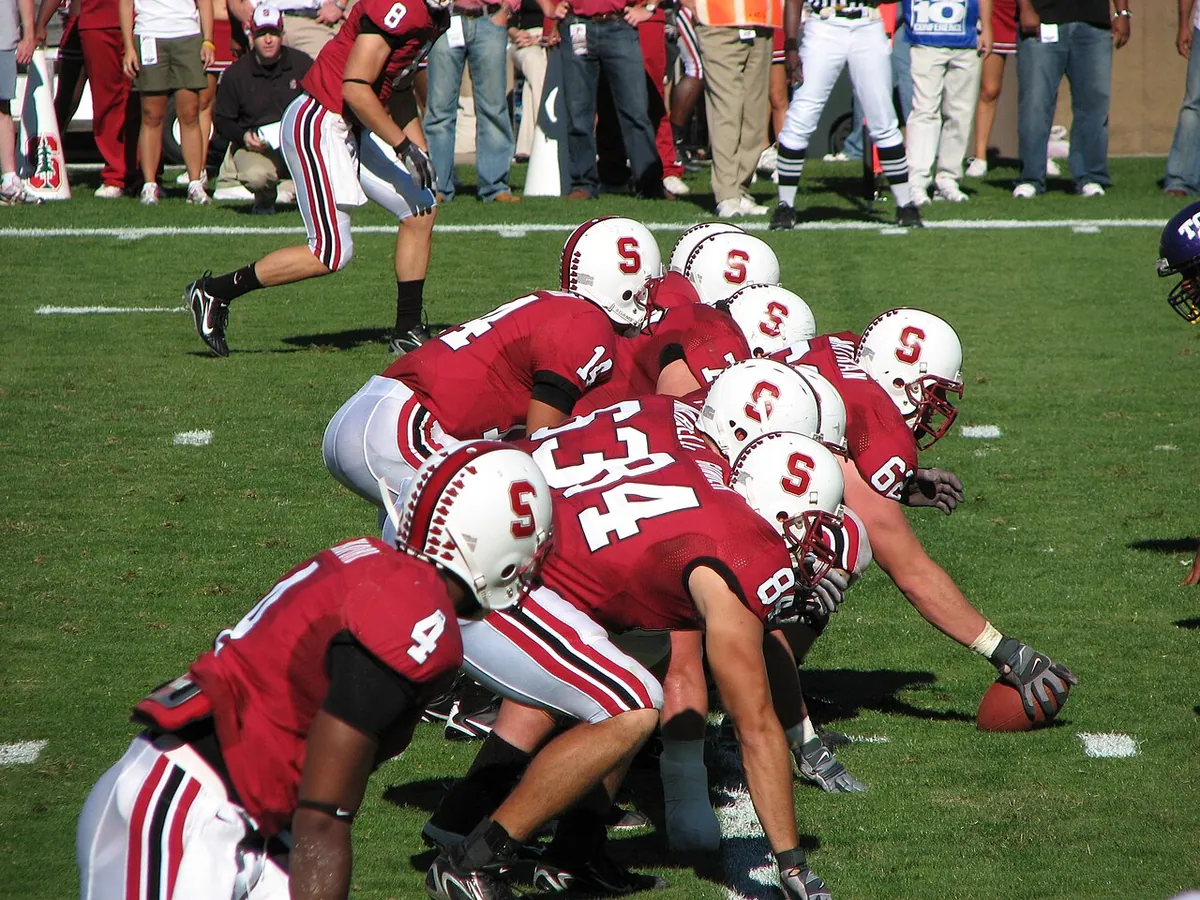
The 2026 season is the first under head coach Tavita Pritchard. In the 2026 season, the Cardinal hold a 6-5 overall record and a 4-4 conference record in the ACC. The team is 4-1 at home in Stanford Stadium this season and has won 9 of its last 12 home games. Stanford is 2-4 away from home this season and is on a two-game winning streak. The current athletic director is John Donahoe, and the general manager of football operations is Andrew Luck.
NFL players from Stanford
| Player | Pos | Years | Main team |
|---|---|---|---|
| John Lynch | FS | 1993–2007 | Tampa Bay Buccaneers |
| John Elway | QB | 1983–1998 | Denver Broncos |
| Richard Sherman | CB | 2011–2021 | Seattle Seahawks |
| Christian McCaffrey | RB | 2017– | San Francisco 49ers |
| David DeCastro | G | 2012–2020 | Pittsburgh Steelers |
| Zach Ertz | TE | 2013– | Philadelphia Eagles |
| Andrew Luck | QB | 2012–2019 | Indianapolis Colts |
| Glyn Milburn | WR | 1993–2001 | Chicago Bears |
| Andrus Peat | G | 2015–2025 | New Orleans Saints |
| Austin Hooper | TE | 2016– | Atlanta Falcons |
| Jake Bailey | P | 2019– | New England Patriots |
| Bob Whitfield | OT | 1992–2006 | Atlanta Falcons |
| Brian Holloway | OT | 1981–1988 | New England Patriots |
| James Lofton | WR | 1978–1993 | Green Bay Packers |
| Ed McCaffrey | WR | 1991–2003 | Denver Broncos |
Video
FAQ
What conference is Stanford football in now?
Stanford football is currently a member of the Atlantic Coast Conference (ACC). The team began ACC competition in the 2024 season after leaving the Pac-12 Conference. Stanford competed in the Pacific Coast Conference and spent decades in its successor leagues, the Pac-8, Pac-10, and Pac-12. The move to the ACC was part of the widespread realignment that reshaped college athletics following the 2023 season. When it left the Pac-12, Stanford held a winning series record against every Pac-12 North rival except Washington, with that series tied 43-43-4.
Who is the current head coach of Stanford football?
The current head coach of Stanford football is Tavita Pritchard. He is in his first season as head coach in 2026, and the Cardinal are 6-5 overall and 4-4 in ACC play. Stanford's general manager of football is Andrew Luck, and its athletic director is John Donahoe. David Shaw holds the program record for most wins by a Stanford head coach.
Where does Stanford play its home games and what is the stadium's capacity?
Stanford plays its home football games at Stanford Stadium on the university campus in Stanford, California. The current Stanford Stadium has a seating capacity of 50,424 spectators. The playing surface is named Foster Field. Stanford is 4-1 at Stanford Stadium in the 2026 season and 9-3 over its last 12 home games.
How many national championships has Stanford football won?
Stanford football officially claims two national championships, from the 1926 and 1940 seasons. The 1926 team, coached by Pop Warner, completed an undefeated regular season and tied Alabama in the Rose Bowl, leading several historical selectors to name them national champions. The 1940 team, coached by Clark Shaughnessy, finished with a perfect record of no losses and no ties, culminating in a Rose Bowl victory over Nebraska. The 1940 team ranked No. 2 in the final AP poll, which was released before its Rose Bowl win over Nebraska.
Which Stanford player won the Heisman Trophy?
Quarterback Jim Plunkett is the sole Stanford player to win the Heisman Trophy. He received the award in 1970 after a season where he led the Cardinal to a 9-3 record and a victory in the Rose Bowl. While Plunkett is the only winner, Stanford players have been the Heisman runner-up on six occasions. John Elway finished second in 1982, Toby Gerhart in 2009, Andrew Luck in both 2010 and 2011, Christian McCaffrey in 2015, and Bryce Love in 2017.
What are Stanford's most famous football rivalries?
Stanford's most famous football rivalry is the Big Game against the University of California, Berkeley, the oldest rivalry in the western United States. Another major rivalry is with independent Notre Dame, with the teams competing for the Legends Trophy. Stanford also has rivalries with USC, UCLA, Oregon, and San Jose State. The 1982 Big Game is famous for The Play, a last-second kickoff return in which Cal lateraled five times to score the winning touchdown.
Sources
- Stanford Cardinal football (Wikipedia) Wikipedia
- Home of Champions, Stanford Cardinal, Official Athletics Website gostanford.com
- Cardinal Athletics, Stanford Facts facts.stanford.edu
- nflverse game, roster and draft data nflverse (CC BY 4.0)