In American football, each team is allowed 11 players on the field during a live play, resulting in 22 total players in action. The full roster of a team is much larger, encompassing separate offensive, defensive, and special teams units that substitute players freely between downs. NFL teams maintain a 53-man active roster during the regular season, with 48 players eligible to dress for games. NCAA Division I programs can have rosters exceeding 100 players, while high school team sizes vary widely based on school size and participation. The rule of 11 players per side is fundamental across all levels of the sport, from youth leagues to the professional ranks.
The 11 Players on the Field
The foundational rule of American football limits each team to 11 players on the field for any given play from scrimmage or during a free kick. This creates a matchup of 11 offensive players against 11 defensive players whenever the ball is live. Officials enforce this rule strictly, and a penalty is called if a team exceeds the limit when the play begins. This 11-on-11 structure is universal, applying to the National Football League, NCAA college football, and high school football across the United States. The modern game's allowance for unlimited free substitutions between plays is what enables teams to maintain such large overall rosters while adhering to the 11-player limit during action.
This system allows for extreme specialization, as coaches can deploy entirely different groups of 11 players for offensive, defensive, and special teams situations. A play begins when the offensive center snaps the ball to the quarterback, initiating action between the two units of 11. The offense is required to line up with a minimum of seven players on the line of scrimmage and a maximum of four players positioned behind it as backs. The defense faces no such formation restrictions and may align its 11 players anywhere on its side of the line of scrimmage. The constant flow of substitutions means that while only 22 players are ever involved in a single play, dozens more participate throughout the course of a game.
NFL Team Roster Composition
During the NFL regular season, each team maintains an active roster of 53 players. Of these 53, a maximum of 48 players are eligible to dress and participate in a game. This 53-man roster is divided into three primary platoons: offense, defense, and special teams. The large roster size is necessary due to the physical demands of the sport and the highly specialized nature of modern positions. Teams must carry enough depth at each position to account for injuries, performance variations, and strategic packages used throughout a 17-game season.
In addition to the 53-player active roster, every NFL team also has a practice squad. Out of the 16 practice squad players, at least 10 must be rookies or players in their second year. Practice squad players train with the team but cannot play in games unless they are promoted to the active roster, replacing a player who is released or placed on injured reserve. During the preseason and training camp, NFL rosters can expand to around 90 players before final cuts are made to reach the regular-season limit of 53.
College Football Roster Size
NCAA college football teams also operate under the 11-player on-field rule but typically carry much larger overall rosters than professional teams. NCAA Division I programs can have rosters exceeding 100 players. The NCAA limits the number of athletic scholarships a team can award to 85. This means a team can have 85 players receiving scholarships, but it may carry additional walk-on players who are not on scholarship, pushing the total roster size higher. New NCAA rules are transitioning toward a roster cap of around 105 players.
The large roster size in college football supports extensive player development and allows for significant specialization and rotation. It is common for teams to have multiple players at every position, creating intense competition for playing time. College teams travel with a subset of their roster for away games, roughly 70 players, while the full squad is available for home games. The unlimited substitution rule is fully utilized at the college level, with coaches frequently rotating players, particularly on the defensive line and at skill positions, to keep athletes fresh throughout the game. This system prepares players for the professional ranks, where specialization is even more pronounced.
High School Football Rosters
High school football follows the same on-field rule of 11 players per team but has no nationally mandated limit on total roster size. The number of players on a high school team varies dramatically based on the size of the school and student participation. Smaller schools might field a team with only 20 to 30 total players. Larger high school programs, particularly in football-focused regions, can have rosters of 50 to 80 players or more. This variability means the experience of playing high school football differs greatly. Athletes at smaller schools often play on both offensive and defensive units due to limited numbers of available players.
With potentially smaller rosters, player versatility is common in high school football. A standout athlete might be the team's starting quarterback on offense and also play safety on defense. Special teams units are often composed of players who also have primary roles on offense or defense, and dedicated kickers and punters are less common than at higher levels. High school rules permit unlimited substitution between plays, and a player can enter and exit the game as often as the coach desires. This flexibility is crucial for managing player stamina and safety, especially when roster depth is limited.
Offensive Positions and Formations
The 11 offensive players are organized into specific positions with defined roles. The unit is led by the quarterback, who receives the snap and directs the play. The offensive line consists of five players: the center, who snaps the ball, two guards flanking the center, and two tackles on the outside. Their primary job is to block for the quarterback and ball carriers. The remaining skill positions include running backs, wide receivers, and tight ends, who are responsible for advancing the ball by running or catching passes. Offensive formations must always include at least seven players set on the line of scrimmage and no more than four positioned behind it as backs. Coaches arrange these 11 players in various formations to exploit defensive weaknesses. The specific number of running backs, wide receivers, and tight ends on the field can change from play to play, as long as the rule of seven on the line and four in the backfield is maintained. For many years, a standard set consisted of the quarterback, two running backs, two wide receivers, and one tight end.
- Quarterback (QB): Directs the offense, receives the snap, and passes or hands off the ball.
- Running Back (RB): Primarily carries the ball on rushing plays and can catch passes.
- Fullback (FB): Often a larger player who acts primarily as a blocker for the tailback.
- Wide Receiver (WR): A pass-catching specialist who lines up split wide from the formation.
- Tight End (TE): A hybrid player who blocks on run plays and is also an eligible receiver.
- Offensive Tackle (OT): Plays outside of the guards, responsible for blocking on edge runs and passes.
- Offensive Guard (OG): Lines up on either side of the center, responsible for blocking interior defenders.
- Center (C): Snaps the ball to the quarterback and often calls out blocking assignments.
Defensive Positions and Alignments
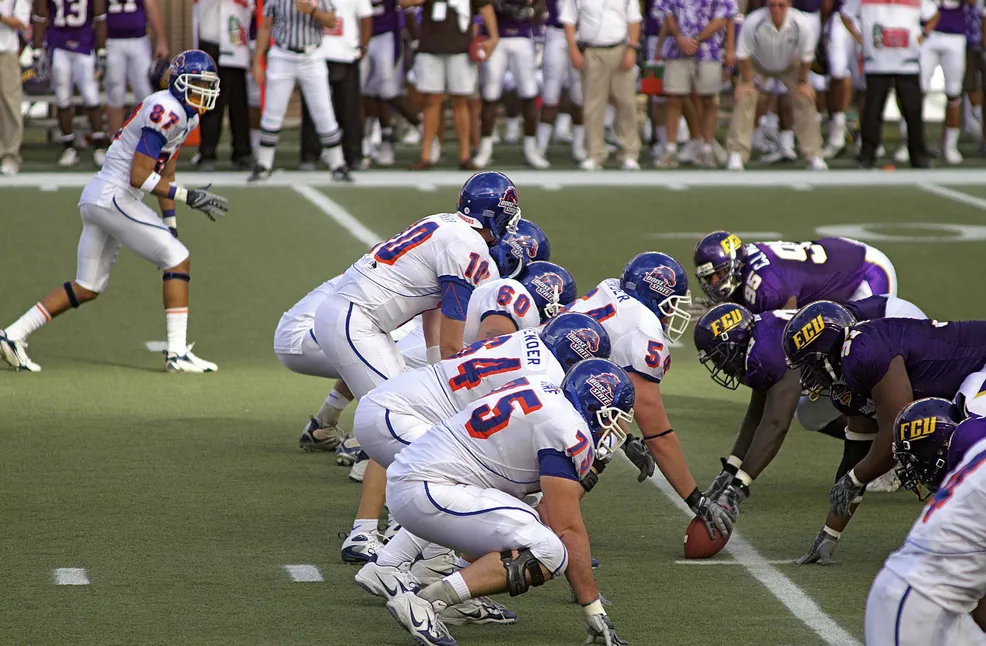
The 11 defensive players are organized to stop the offense and are not bound by the same formation rules as the offense. Their roles are grouped into three levels: the defensive line, linebackers, and the secondary. The defensive line consists of ends and tackles who aim to pressure the quarterback and stop running plays at the line of scrimmage. Linebackers play behind the defensive line and are responsible for stopping runs, covering receivers, and blitzing. The secondary, composed of cornerbacks and safeties, is primarily responsible for covering pass receivers and providing the last line of defense against long plays. Thus, a 3-4 defense consists of three defensive linemen and four linebackers. Coaches substitute players and shift formations based on the offensive personnel and the game situation, using different personnel groupings to match the offense's strategy.
| Position Group | Key Positions | Primary Responsibilities |
|---|---|---|
| Defensive Line | Defensive End, Defensive Tackle, Nose Tackle | Pass rush, run stopping at line of scrimmage |
| Linebackers | Middle Linebacker, Outside Linebacker | Run defense, pass coverage, blitzing |
| Secondary | Cornerback, Safety | Covering wide receivers, deep pass defense |
Special Teams and Substitution Rules
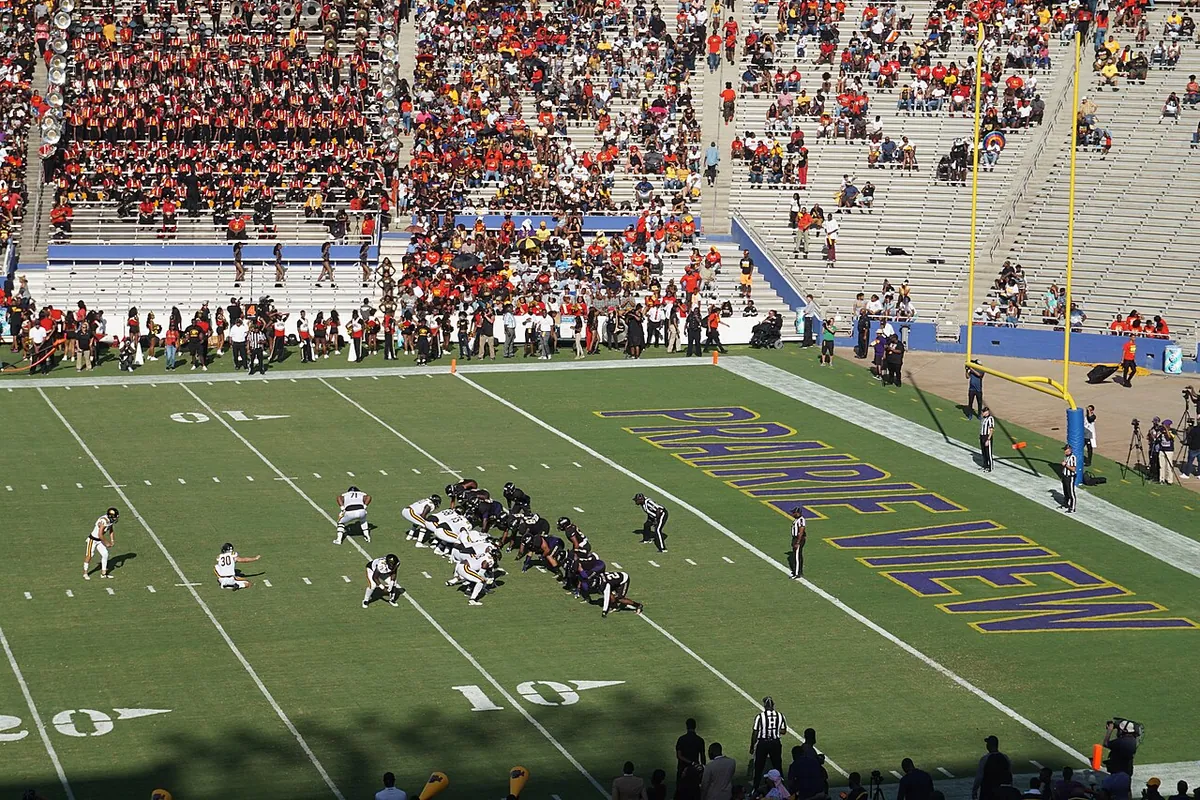
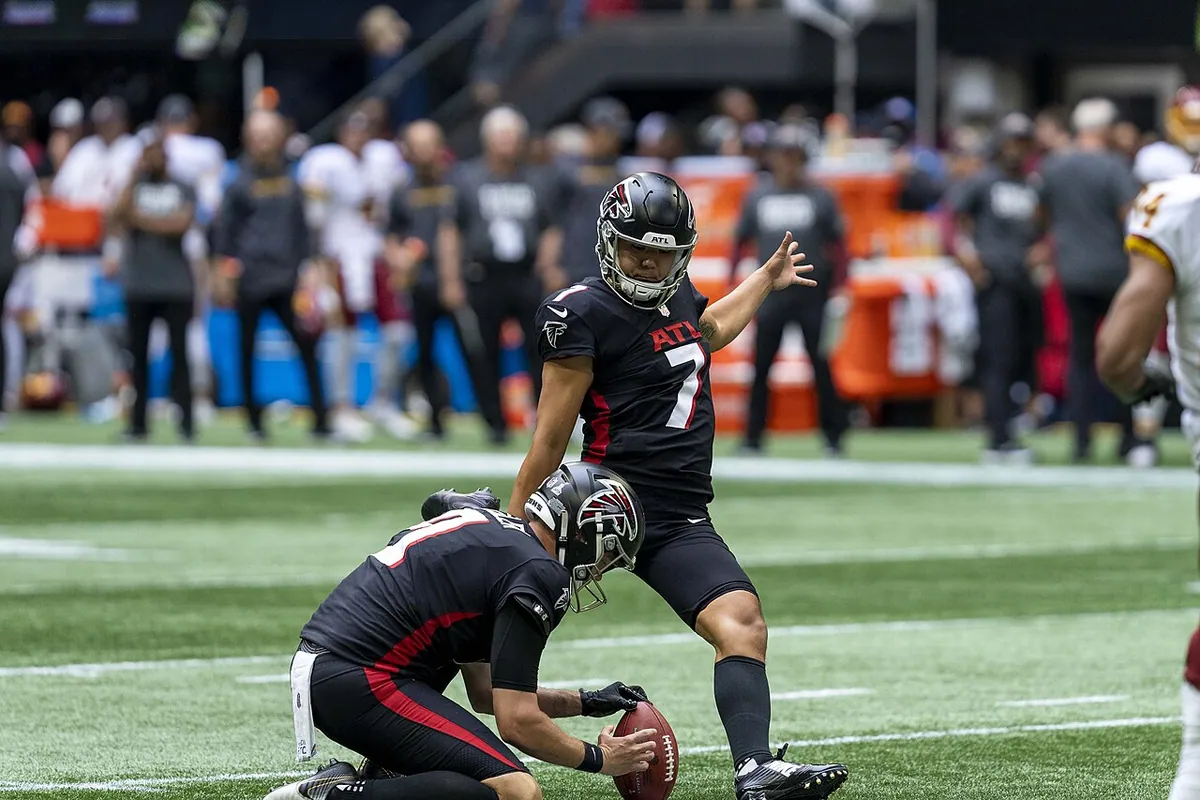
Special teams are the third platoon, consisting of the 11 players on the field during kicking plays such as kickoffs, punts, field goals, and extra point attempts. This unit includes specialist roles such as kickers and punters. The other positions on special teams are typically filled by players who also feature on the offense and defense. In the NFL and college, these roles are highly specialized, while in high school, the same athletes frequently play on offense, defense, and special teams. Special teams handle all kicking situations, which are a critical part of field position and scoring.
The modern game operates with a system of unlimited free substitutions. This means teams can change any number of players between plays, during any dead-ball situation. There is no limit on how often a player may enter or exit the game. This rule is what makes the three-platoon system possible, as coaches can swap out all 11 players to transition from offense to defense or to special teams. The officiating crew will provide the defense a brief opportunity to match substitutions if the offense makes changes, preventing a tactical disadvantage. The constant substitution and specialization are key reasons why football rosters are so large compared to the number of players allowed on the field at one time.
Gameplay and Team Objectives
The offense has four downs to advance the ball at least 10 yards to earn a new set of downs. If they fail, possession turns over to the other team. The defensive team of 11 players aims to prevent this advancement, force turnovers via fumbles or interceptions, and score themselves by returning a turnover for a touchdown or recording a safety. A game consists of four quarters, 15 minutes each in the NFL and college, and 12 minutes each in high school.
Gameplay is controlled by a series of clocks. The game clock runs during plays but stops for incomplete passes, plays ending out of bounds, scores, and changes of possession. A separate play clock, typically 40 seconds in the NFL and NCAA, counts down the time the offense has to start the next play before incurring a delay of game penalty. Each team is also allowed three timeouts per half. Teams change ends of the field after the first and third quarters. The team that wins a pregame coin toss chooses to receive the opening kickoff or defer to the second half, initiating the action between the two units of 11 players.
Video
FAQ
How many players are on an NFL team?
An NFL team has a 53-player active roster during the regular season. On game day, 48 of those players are eligible to dress and play. Teams also maintain a practice squad. In recent years this includes a 17th spot for an international player. Only 11 players from each team are allowed on the field during any given play.
Why are there 53 players on an NFL team if only 11 play?
The 53-player roster accommodates the modern system of unlimited substitutions and extreme specialization. Teams need separate units for offense, defense, and special teams, plus depth at every position to account for injuries and strategic packages. With players substituting freely between plays, a large roster ensures coaches have the right personnel for every situation. The practice squad provides additional developmental depth without counting against the active limit.
How many players are on a college football team?
College football rosters are typically much larger than NFL rosters. NCAA Division I programs can have rosters exceeding 100 players. The NCAA limits scholarships to 85 players, but teams can carry additional walk-on players. Only 11 players are on the field per team during a play. The large roster supports player development, intense competition for positions, and allows for frequent rotation to keep players fresh during games.
How many players are on a high school football team?
High school football team sizes vary widely because there is no national roster limit. Smaller schools may have only 20 to 30 players on the entire team, while larger programs can have 50 to 80 or more. Regardless of total roster size, the on-field rule is the same: only 11 players from each team are allowed during a play. Players at smaller schools often play both offense and defense due to limited roster depth.
Can a football team have 12 players on the field?
A team is not allowed to have 12 players on the field. A penalty is assessed if a team has more than 11 players participating when the play begins. The rule is called too many men on the field and results in a loss of yardage. Officials enforce this rule at all levels of American football to maintain the standard 11-on-11 matchup.
What are the 11 positions on a football team?
On offense, the 11 positions typically include a quarterback, running backs, wide receivers, tight ends, and five offensive linemen (center, two guards, two tackles). On defense, the 11 players are divided among defensive linemen, linebackers, and defensive backs (cornerbacks and safeties). The specific number of each type of player varies based on the formation called by the coach. Special teams units feature specialists like the kicker and punter along with coverage and return players.