They are subject to strict team rules governing their appearance, conduct, and compensation. Cheerleaders are part-time employees who often work 30 to 40 hours per week during the season for hourly wages typically under $10. The first NFL cheer squad was for the Baltimore Colts, and the most famous squad remains the Dallas Cowboys Cheerleaders, who debuted in the 1972 to 1973 season. Cheerleading originated as an all-male activity at Princeton University. A Princeton Cheer was documented as early as 1877. The first organized cheerleader was University of Minnesota student Johnny Campbell, who directed a crowd on November 2, 1898, a date now considered the official birth of organized cheerleading. Women began participating in the 1920s, but their involvement expanded significantly during World War II when many collegiate men were drafted, creating opportunities for women on the sidelines. Lawrence Herkimer, a former Southern Methodist University cheerleader, founded the first cheerleading camp in Huntsville, Texas in 1949 with 52 girls in attendance, and a second clinic drew 350. He created the National Cheerleading Association in 1951, which helped standardize and popularize the activity, and he also patented the pom-pom.
History and Development from College to Professional
The Dallas Cowboys Cheerleaders, debuting in the 1972 to 1973 season and gaining wide exposure during Super Bowl X in 1976, set a new standard for professional squads. ESPN first broadcast the National High School Cheerleading Competition nationwide in 1983. The dominant influence of the Varsity Spirit corporation under Jeff Webb, who was described as the father of modern cheerleading, included controlling camps, competitions, and uniform sales. The activity has evolved to include complex stunts and gymnastics, leading to the formation of safety organizations like the American Association of Cheerleading Coaches and Advisors in 1987. Scientific studies show cheerleading results in a high rate of serious injuries for female athletes, with most linked to stunting activities like pyramids. A 2011 study of American female athletes found that 65 percent of all catastrophic injuries in female sports were from cheerleading. Safety regulations were tightened after a 2006 incident where Southern Illinois University cheerleader Kristi Yamaoka suffered a fractured vertebra from a fall during a human pyramid at a basketball game. This led to the AACCA rules committee making permanent bans in July 2006 on basket tosses and pyramids over two levels high during game play, restricting them to halftime and post-game on mats.
NFL Cheerleading Squads and Team Distribution
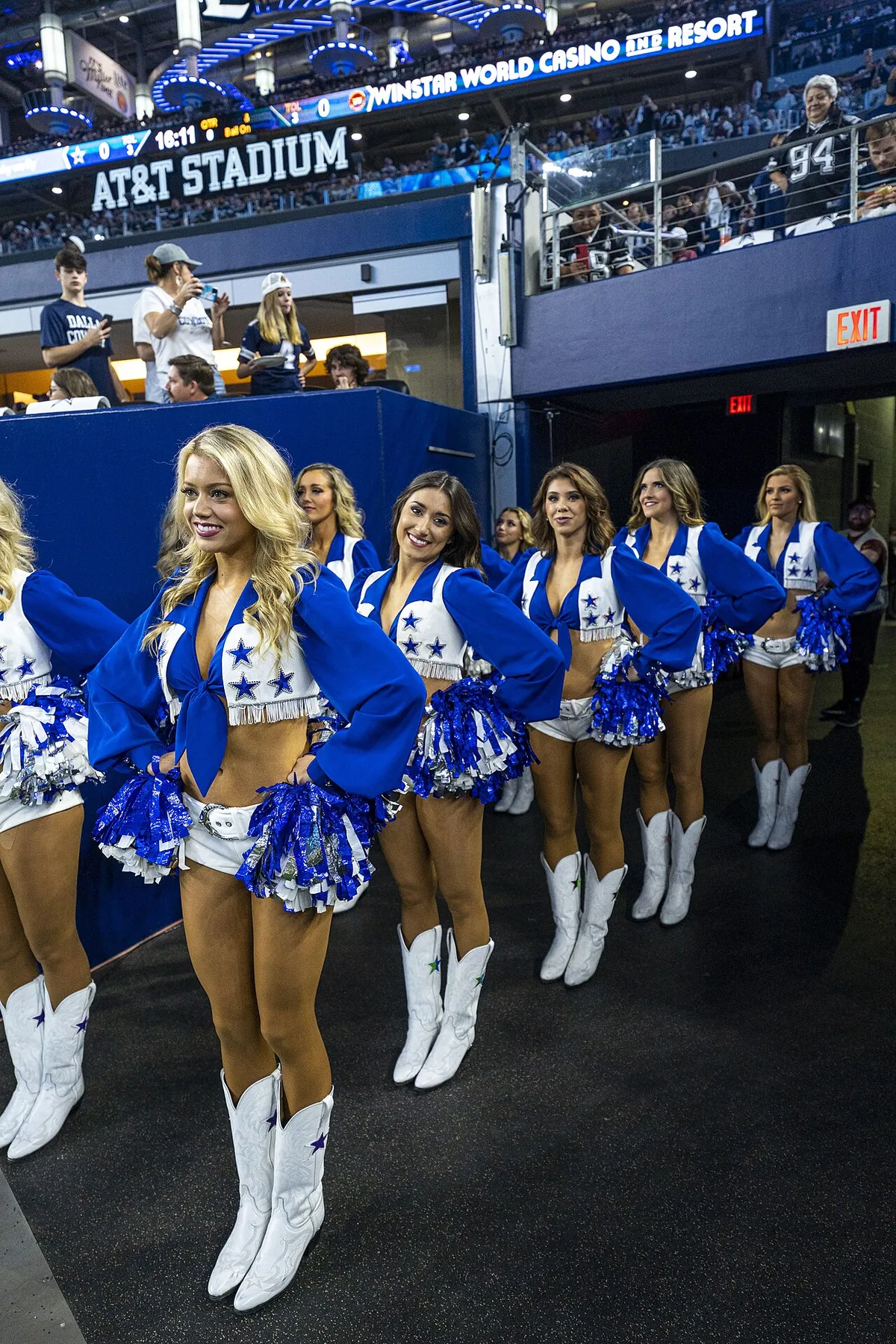
The decision to have them is made by each individual franchise. The primary function of NFL cheerleaders is to perform dance routines on the sideline during games to entertain the audience and maintain crowd energy during breaks in play. They also make numerous public appearances at community and team marketing events throughout the year. The Dallas Cowboys Cheerleaders are the most famous and historically significant squad, with a distinct brand identity and a rigorous application process that includes a written test.
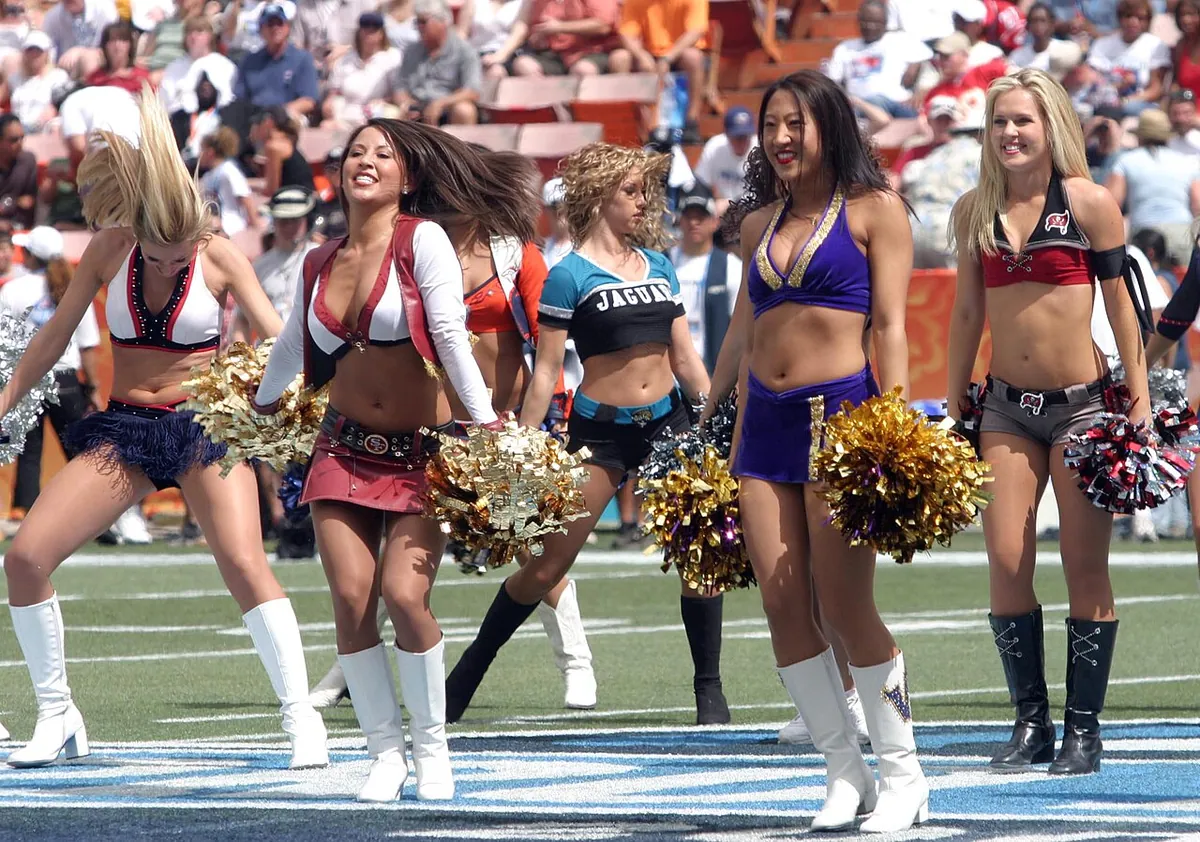
Other teams have followed with their own dance teams. The Florida Marlins were the first Major League Baseball team to have a cheerleading team, and their 'Marlin Mermaids' debuted in 2003, gaining national exposure and influencing other MLB teams. The Los Angeles Rams made history by including male cheerleaders on their squad. In 2019, two male cheerleaders, Napoleon Jinnies and Quinton Peron, performed at the Super Bowl, marking the first time men had done so. Selected cheerleaders represent their teams at the Pro Bowl Games, as seen with the 2025 and 2026 Pro Bowl cheerleader announcements from teams like the Jacksonville Jaguars and Arizona Cardinals.
Six NFL teams have no cheerleaders. These teams are the Chicago Bears, Buffalo Bills, New York Giants, Pittsburgh Steelers, Cleveland Browns, and Green Bay Packers. The Buffalo Bills disbanded their 'Buffalo Jills' squad in 2014 following lawsuits over pay and working conditions. The film 'A Woman's Work: The NFL's Cheerleader Problem' documented lawsuits and issues around low pay and the league's treatment of women in these roles. The absence of squads for these teams is a team-by-team decision, as the Buffalo Bills disbanded their squad in 2014 following lawsuits.
Employment Conditions, Compensation, and Lawsuits
Being an NFL cheerleader is a part-time, seasonal job with demanding hours and modest pay. Cheerleaders typically work 30 to 40 hours per week during the football season, which includes practices, game-day obligations, and required public appearances. Multiple reports and lawsuits indicate their average hourly wage is under $10. With games paying about $150 each, their seasonal income can be as low as $2,780, as reported by ESPN. This compensation often does not meet the nationwide minimum wage when all hours are factored in, especially considering they are not paid for many preparation and travel hours. Most cheerleaders are required to maintain another full-time job or be full-time students, with motherhood also counting as a full-time commitment for these purposes.
Cheerleaders are generally not reimbursed for many job-related expenses. They are often responsible for the cost of their uniforms, as well as maintaining a team-defined appearance, which includes hair coloring at specific salons, specific makeup, and grooming. Teams have faced numerous lawsuits from cheerleaders over unfair wages and working conditions, with some teams choosing to settle. The financial model is starkly different from NFL players, who earn an average of $2 million in a league that generates over $10 billion annually. Cheerleaders do not typically benefit from sponsorship deals or the same level of financial security, and they must cover costs that can negate their already low earnings.
The New York Jets and Oakland Raiders have faced legal action regarding paltry wages and discriminatory practices. The Buffalo Jills lawsuit was a key factor in the team disbanding its squad. These legal challenges have highlighted issues such as cheerleaders being paid only for games and not for mandatory practices or appearances, leading to effective hourly wages far below minimum standards. The 2013 handbook for the Buffalo Jills, described as essentially the boilerplate rulebook for cheerleaders around the league, outlined many restrictive policies.
Strict Rules and Conduct Requirements for Squads
NFL cheerleaders must adhere to a extensive set of conduct and appearance rules that are far more restrictive than those for players. These rules are detailed in team handbooks, such as the one for the former Buffalo Jills, which serves as a model for many squads. A primary rule is the prohibition of any personal, private, or social relationships with NFL players. This ban includes talking, chatting on social media, or physical contact, and can require cheerleaders to leave a venue if a player enters. Some teams mandate that cheerleaders block all players on social media platforms to prevent any interaction. Cheerleaders are also required to maintain a particular look because if they do not, they can be benched without pay for violating their contract.
Appearance is tightly controlled both on and off duty. Teams enforce weigh-ins to maintain an ideal body weight, and some have conducted assessments like 'jiggle tests' to judge body firmness. All tattoos must be concealed and body piercings removed, with pre-game body checks to ensure compliance. Grooming standards dictate nail color, often allowing only natural or French manicures, and require clean pedicures. Hairstyles and makeup looks are frequently chosen by the team, with cheerleaders sometimes needing permission for haircuts or highlights. The 2013 Buffalo Jills handbook stated that nails must be groomed and worn naturally without polish or with a French manicure only.
Cheerleaders often have a dress code that forbids wearing sweatpants in public, even on days off. They cannot eat, drink, or smoke while in uniform, and there are restrictions on driving or walking in costume outside the stadium. Language is monitored, with prohibitions on complaining, using slang, or expressing public opinions. Social media policies forbid posting photos deemed inappropriate, such as lingerie or bikini shots. Violations of these rules can result in fines, being benched without pay, or termination. The 2009 handbook for the Baltimore Ravens stated each player is expected to maintain ideal body weight and physical look for the duration of the contract, with weigh-ins held at the discretion of the team.
Cheerleading in American Schools and Colleges
Cheerleading in American educational institutions serves a different primary purpose than in the NFL, focusing more on school spirit and sideline support for various sports. Most American high schools and colleges have cheerleading squads, with a large number of middle schools also sponsoring teams. The National Federation of State High School Associations estimated in its first true study in May 2009 that there were around 394,700 cheerleaders in public high schools alone. School squads may compete locally, regionally, or nationally, but their main role is to cheer at football, basketball, and other games and to lead pep rallies. The activity is often year-round, with tryouts in spring, summer camps, and support for fall and winter sports. Cheerleading in the United States had an estimated 3.85 million participants in 2017.
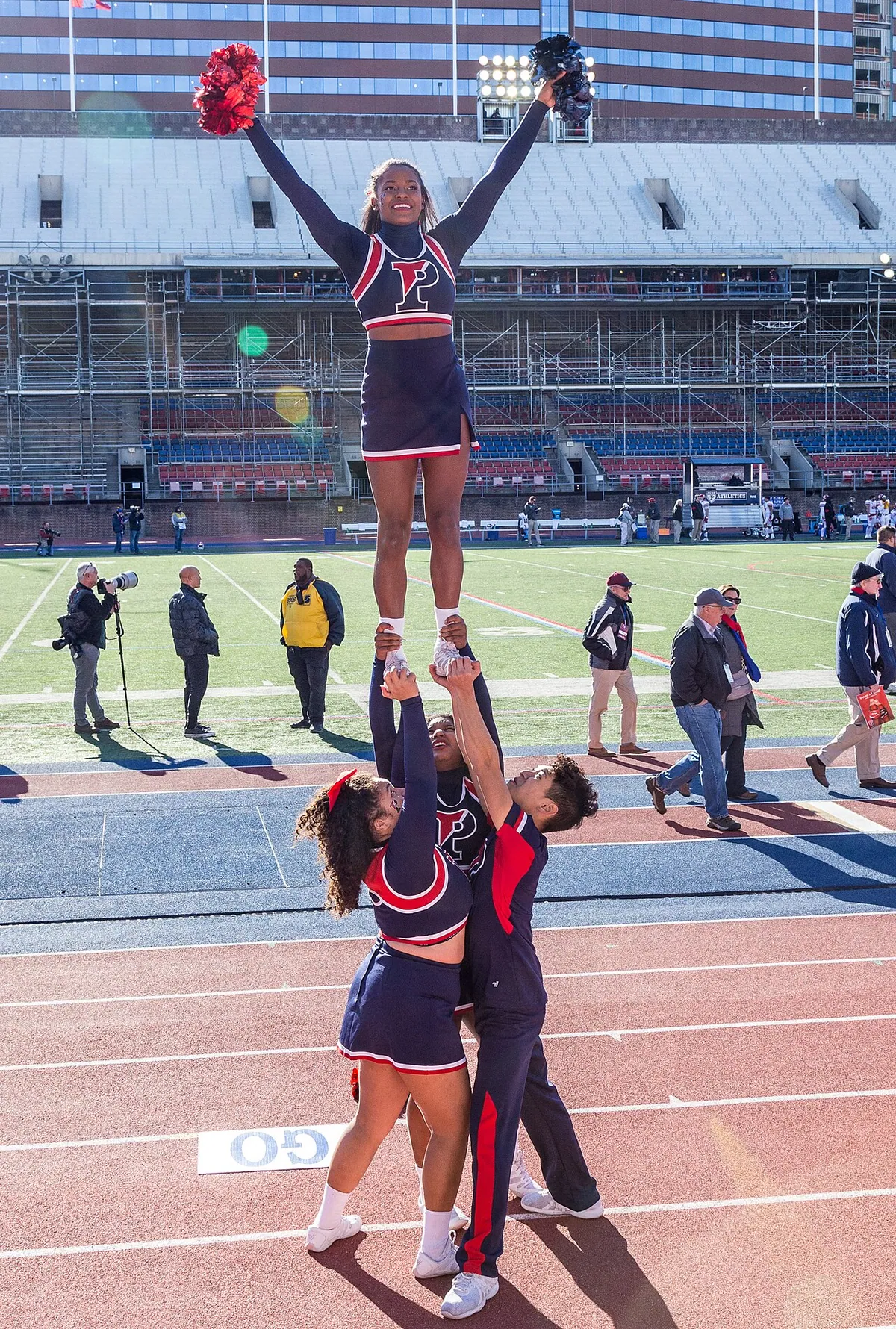
College cheerleading squads are often larger and co-ed, with about 50 percent male participation at that level, though all-girl squads are also common. Modern male cheerleaders focus on tumbling, flips, and strength-based stunts. College teams perform more advanced stunts, including multi-level pyramids and flipping basket tosses. They compete at national championships, which began being broadcast on CBS in 1978. College cheerleaders also act as ambassadors for their universities, participating in fundraisers and events. Safety is regulated by organizations like the NCAA, which requires college cheer coaches to complete nationally recognized safety-training programs such as those offered by the National Council for Spirit Safety and Education, formed in 2003. A new 'Game Day' competition format, focusing on spirit elements like props and choreography, has been introduced in the early 2020s as a second pillar of competitive cheerleading alongside the traditional acrobatic format. Middle school cheerleading follows modified rules from high school, with less extreme stunts, and can be a two-season activity for fall and winter sports. At all scholastic levels, cheerleaders are seen as leaders and ambassadors, with their routines containing components of tumbling, dance, jumps, cheers, and stunting, typically lasting one to three minutes.
Global Growth and International Recognition
The worldwide profile of cheerleading increased due to a 1997 ESPN broadcast of an international competition and the global release of the 2000 movie Bring It On. The International Cheer Union, the governing body, reports having 116 member nations with an estimated 7.5 million participants worldwide as of recent data. The sport gained noticeable traction outside the United States around the end of the 2000s in countries including Australia, Canada, China, Colombia, Finland, France, Germany, Japan, Mexico, the Netherlands, New Zealand, and the United Kingdom. The first international cricket event to include cheerleaders was the ICC Twenty20 Cricket World Cup held in South Africa in 2007.
Some top-tier Brazilian soccer clubs in the Serie A, such as Bahia, Fortaleza, and Botafogo, maintain cheerleading squads. Despite this growth, the sport does not have the same international popularity as other American exports like baseball or basketball, though efforts to popularize it continue. A major step for the sport's legitimacy came in 2016 when the International Olympic Committee recognized the International Cheer Union. This recognition means cheerleading is considered a sport by the IOC and has the potential to become part of the Olympic Games in the future, depending on further negotiations and international popularization. The athletic development of competitive cheerleading includes all-star teams not affiliated with schools and governed by bodies like the U.S. All Star Federation.
Notable Squads and Cultural Impact
The Dallas Cowboys Cheerleaders are the most prominent squad, having gained the spotlight with their outfits and dance moves during the 1972 to 1973 season and especially at Super Bowl X in 1976. Their application process is known for its difficulty, including a written test that even Cowboys players have reportedly failed. These pro squads of the 1970s established cheerleaders as American icons of wholesome sex appeal. Other professional squads have also broken new ground, such as the Los Angeles Rams integrating male cheerleaders, leading to the historic Super Bowl performance by two men in 2019. The Buffalo Jills, though now disbanded, were the subject of significant legal and media scrutiny that highlighted labor issues across the league.
The Florida Marlins' Marlin Mermaids, created in 2003, brought the cheerleading concept to Major League Baseball and received national exposure. At the collegiate level, squads from universities like the University of Minnesota and Southern Methodist University have historical importance due to their roles in the early development of cheerleading and training camps. Varsity Spirit reported earning an annual revenue of more than $150 million by 2004. The cultural impact of cheerleading extends to media, with the sport's image shaped by competition broadcasts on ESPN and CBS since the late 1970s and early 1980s. The first broadcast of Collegiate Cheerleading Championships on CBS occurred in 1978.
Major Safety Rules and Regulations
Following a serious injury to a college cheerleader in 2006, permanent rules were enacted by the American Association of Cheerleading Coaches and Advisors. Key safety regulations implemented by the AACCA rules committee in July 2006 include specific bans on the most dangerous elements of routines. These rules are designed to minimize catastrophic injuries, which studies show are disproportionately high in the sport. The rules often target the most dangerous elements of routines, such as pyramids and tosses. Key safety regulations implemented by organizations like the American Association of Cheerleading Coaches and Advisors include.
- Ban on basket tosses during game play or time-outs (allowed only at halftime/post-game on mats).
- Prohibition of pyramids over two levels high (2 1/2 high or higher) during game play.
- Restriction on one-arm stunts during game action.
- Ban on stunts that involve twisting or flipping during game play.
- Restriction on twisting tumbling skills during game play.
- Requirement for college cheer coaches to complete nationally recognized safety-training programs (NCAA rule).
- Formation of the National Council for Spirit Safety and Education (NCSSE) in 2003 to offer safety training for coaches.
Video
FAQ
How much do NFL cheerleaders get paid?
NFL cheerleaders are typically part-time employees who earn modest wages. Reports and lawsuits indicate they make an average of under $10 per hour. Reports and lawsuits indicate they make an average of under $10 per hour, and their total seasonal income has been reported as low as $2,780. This compensation often does not meet minimum wage standards when all mandatory hours are counted. Cheerleaders are generally not reimbursed for expenses like uniforms, hair, and makeup, and most must hold another job or be full-time students.
What are the main rules for NFL cheerleaders?
NFL cheerleaders must follow strict team rules covering appearance and conduct. They must maintain an ideal weight, with regular weigh-ins and potential suspension for gain. All tattoos and piercings must be concealed. There are grooming standards for nails, hair, and makeup, and a dress code that can forbid sweatpants even off-duty. A cardinal rule is absolutely no fraternizing with players, including talking or interacting on social media. Cheerleaders cannot eat, drink, or smoke in uniform and have restrictions on social media posts. Violations can lead to fines, being benched, or job loss.
What is the difference between NFL cheerleaders and school cheerleaders?
NFL cheerleaders are professional sideline entertainers who perform dance routines during game breaks. School cheerleaders, from middle school through college, have a primary role of leading cheers and building school spirit for their sports teams, with competition being a secondary activity. School cheerleading routines contain components of tumbling, dance, jumps, cheers, and stunting. NFL cheerleading is a paid, part-time job with stringent employment contracts and rules, while school cheerleading is an extracurricular activity or scholarship opportunity with a focus on spirit leading traditions.
Have there been male NFL cheerleaders?
The Los Angeles Rams have included male cheerleaders on their squad. A landmark moment occurred in 2019 when two male cheerleaders, Napoleon Jinnies and Quinton Peron, performed at the Super Bowl, the first men to do so. Historically, cheerleading originated as an all-male activity at Princeton University in 1884. In modern college cheerleading, about 50 percent of participants are male, with their stunts focusing on tumbling, flips, pikes, and handstands, which depend on strong legs and core strength.
Why do NFL teams have cheerleaders?
NFL teams employ cheerleaders to build crowd energy, entertain the audience during breaks in play, and support the team's brand. They perform choreographed dance routines on the sideline to keep fans engaged. Historically, cheerleading evolved from collegiate spirit squads into a professional entertainment feature, popularized by the Dallas Cowboys Cheerleaders in the 1970s. Cheerleaders also serve as ambassadors for the team, making numerous public appearances at community and marketing events throughout the year.
What are some strict appearance rules for NFL cheerleaders?
NFL cheerleaders face strict appearance rules, including prohibitions on visible tattoos and body piercings, which they must conceal. Many teams enforce weight control measures, with regular weigh-ins, and suspension or job loss for significant weight gain. Some teams conduct 'jiggle tests' to assess body firmness. Cheerleaders are also required to maintain a team-defined look, covering costs for hair coloring, makeup, and uniforms themselves, and they cannot wear sweatpants even when off duty.