A strong safety is a defensive back position in American football, assigned to cover the strong side of the offensive formation, which is often the side where the tight end aligns. The primary responsibilities of a strong safety involve stopping the run, covering tight ends or running backs in pass coverage, and occasionally blitzing the quarterback. They are often more physically robust than free safeties, playing closer to the line of scrimmage and functioning as a hybrid between a linebacker and a defensive back. The strong safety serves as an enforcer against the running game and a defender in short-to-intermediate pass coverage. Their assignments are influenced by the offensive formation, specifically aligning to the strong side where the tight end is often positioned. A core duty is to fit into the run defense, meaning they must quickly diagnose run plays, fill gaps in the defensive front, and make tackles near the line of scrimmage. On passing downs, they are frequently tasked with covering the tight end, a running back, or a slot receiver, requiring the ability to match up in man coverage or patrol specific zones like the curl and flat areas. Strong safeties are also utilized as blitzers, applying unexpected pressure on the quarterback from the defensive backfield. This role demands a player who can physically engage blockers and ball carriers while also possessing the agility and awareness to defend the pass.
Alignment and Positioning
Before the snap, a strong safety typically positions himself closer to the line of scrimmage than the free safety. While traditionally aligned to the strength of the offensive formation, modern defensive schemes deploy safeties with more flexibility. Some defenses place the strong safety to the boundary, or short side of the field, while the free safety aligns to the wide side. In two-high safety looks, both safeties may start on or near the hash marks, with their post-snap responsibilities determined by the coverage call. For example, in a Cover 3 rotation, the strong safety will often rotate down toward the line of scrimmage to handle run fits or curl-flat zone coverage, while the free safety drops into the deep middle. This pre-snap alignment and post-snap movement are critical for disguising coverages and confusing quarterbacks. The strong safety's positioning is fundamentally tied to the concept of defensive strength, which is often determined by the location of the tight end or the number of eligible receivers.
Required Skills and Typical Size
Strong safeties require a unique blend of physical and mental skills to excel. They must be powerful, reliable tacklers capable of bringing down ball carriers in the box and in open space. Coverage skills are essential, particularly the ability to match up with athletic tight ends and running backs in man coverage or to read the quarterback and break on passes in zone coverage. Instincts and football intelligence are paramount for quickly diagnosing plays and communicating adjustments to the secondary. The position's hybrid nature means a strong safety must have the strength of a linebacker and the coverage ability of a defensive back. Safeties are the last line of defense and are expected to be reliable tacklers, with many ranking among the hardest hitters in football history. The game's evolution towards a pass-heavy focus has further increased the coverage demands on all defensive backs, including strong safeties.
- Tackling: Must excel at open-field and in-the-box tackling as the last line of defense.
- Coverage: Needs competence in man coverage against tight ends and zone awareness.
- Physicality: Requires strength to take on blocks and deliver impactful hits.
- Football IQ: Demands quick diagnosis and communication with teammates.
- Versatility: Often asked to blitz and play multiple roles in sub-packages.
Variations and Techniques
The strong safety role has evolved into several specialized variations within modern defensive schemes. The position can be referred to as a 'Rover', and an extra safety used in special personnel packages is sometimes called the 'Star'. The techniques employed depend heavily on the coverage call. In match zone coverages, the strong safety reads specific receivers, such as the number two or three option, and decides whether to carry them in coverage or pass them off to another defender. In spot-drop zones, he works to a designated area and reacts to the quarterback's movements. A key coaching point for strong safeties rotating down into coverage is to maintain sufficient depth to handle routes behind them while having enough space to break on throws in front. Blitz timing and edge pressure are also critical techniques that can disrupt offensive timing and create turnovers.
Evolution of the Position
The strong safety position has undergone significant changes as football strategies have shifted over time. Historically, in the era of the one-platoon system, the strong safety would be termed a defensive halfback. The term defensive halfback is still used in Canadian football parlance for a defensive back position. Strong safeties are not seen in the Canadian game, where the strong side linebacker is assigned similar duties to the American football strong safety. As professional and college football became more pass-oriented, the demands on safeties increased, requiring them to be more involved in covering eligible receivers. The traditional dichotomy of the free safety as a deep cover man and the strong safety as a run supporter has blurred, with many modern defenses asking both safeties to be interchangeable and versatile. This evolution has led to the proliferation of hybrid players who can line up in the box like a linebacker but cover like a defensive back, making the strong safety a central piece in defending both spread offenses and power running attacks.
Notable Players
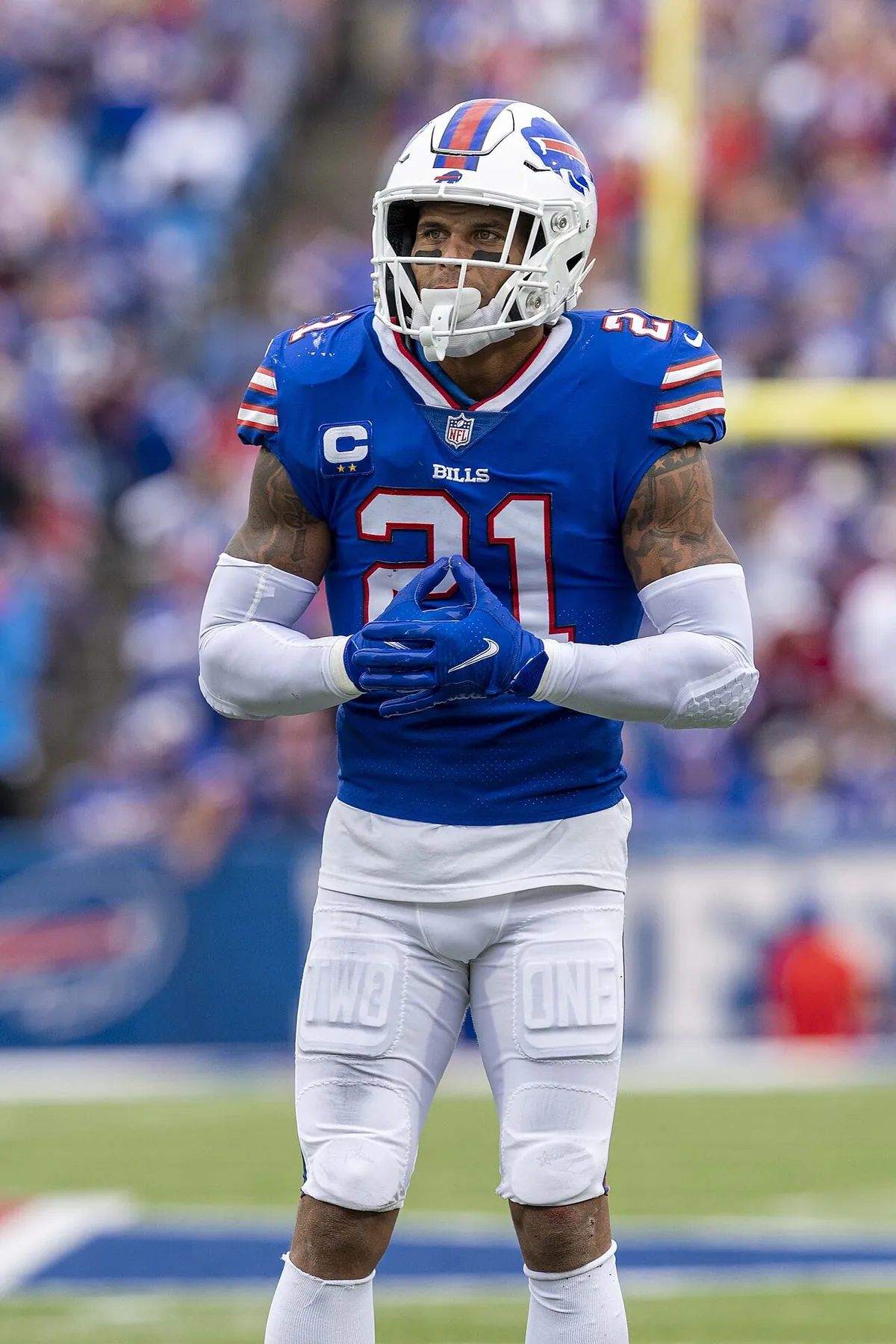
Throughout NFL history, several strong safeties have defined the position with their exceptional play. Troy Polamalu, who played for the Pittsburgh Steelers, is a premier example of a strong safety, while Ed Reed is a premier example of a free safety. In the modern era, active players like Kyle Hamilton, Harrison Smith, and Derwin James are listed as current examples of NFL strong safeties. Other notable current NFL strong safeties include Budda Baker, Brian Branch, Talanoa Hufanga, and Tre'von Moehrig. These players demonstrate the combination of physicality, range, and playmaking ability that defines elite performance at the position. Safeties can also be converted cornerbacks, either by design, as with Byron Jones, or as a cornerback ages, like Rod Woodson, Charles Woodson, DeAngelo Hall, Lardarius Webb, and Tramon Williams.
Statistics and Performance Evaluation
Strong safeties are evaluated using a broad set of statistics that reflect their diverse responsibilities. Traditional counting stats like total tackles, tackles for loss, and sacks measure their impact against the run and as blitzers. Pass defense metrics are equally important, including passes defended, interceptions, and forced fumbles. Advanced analytics also examine coverage grades, missed tackle rates, and quarterback ratings when targeted. For college recruits, film evaluation must show box physicality, open-field tackling, tight end coverage, and blitz production. The role demands a player who can contribute significantly in both run defense and pass coverage, making statistical evaluation complex and comprehensive.
Comparison with Free Safety
The strong safety and free safety are the two standard safety positions, but they have distinct roles and tendencies. A strong safety is typically more involved in defending against the run or covering a slot receiver or tight end. A free safety more commonly patrols the deep middle portion of the field. The free safety is often described as having more freedom to roam and read the quarterback, acting as a defensive quarterback for the secondary. In terms of physical build, strong safeties tend to be stockier and stronger to handle contact near the line, whereas free safeties often possess more pure speed for deep coverage. In coverage schemes like Cover 1, the free safety is the single deep safety, while the strong safety may be assigned to man coverage on a running back or tight end. Both positions require excellent tackling and coverage skills, but their initial alignment and primary responsibilities create different demands on the player.
Video
FAQ
What does a strong safety do in football?
A strong safety is responsible for stopping the run by aligning near the line of scrimmage on the strong side of the offensive formation. He fills running lanes, tackles ball carriers, and takes on blocks from tight ends and fullbacks. In pass coverage, he often covers the tight end, a running back, or a slot receiver, playing both man and zone coverage. The position also involves blitzing the quarterback and providing an extra defender in short-to-intermediate areas of the field.
What is the difference between a strong safety and a free safety?
The strong safety typically plays closer to the line of scrimmage with a greater focus on run support and covering shorter routes, often matching up with tight ends. The free safety usually aligns deeper in the secondary, patrolling the deep middle of the field with more freedom to read the quarterback and help on long pass plays. While the strong safety is often more physically robust, the free safety generally possesses more pure speed for deep coverage. Both positions require coverage skills, but their initial alignment and primary run-pass responsibilities differ.
Where does the strong safety line up?
The strong safety lines up on the defensive side of the ball, traditionally on the strong side of the offensive formation where the tight end is positioned. He typically positions himself closer to the line than the free safety, though this can vary based on the defensive call. In modern schemes, he may align to the boundary or start in a two-high look with the free safety before rotating down post-snap. His exact positioning is dictated by the defensive coverage and the offensive personnel and alignment.
What skills are needed to play strong safety?
Playing strong safety requires excellent tackling ability in both confined spaces and the open field. The position demands physical strength to engage blockers and deliver powerful hits. Coverage skills are essential, particularly the ability to cover athletic tight ends and running backs in man-to-man situations. A high football IQ is necessary for quickly diagnosing plays and communicating with teammates. Strong safeties also need good agility and short-area quickness for zone coverage and blitzing, along with the versatility to perform multiple roles within a defensive scheme.
How does the role of a strong safety differ in Canadian football compared to American football?
Strong safeties are not used in the Canadian football game, which features 12 players on defense. Instead, the strong side linebacker in Canadian football is assigned duties similar to the American football strong safety. Consequently, Canadian football strong side linebackers are often players who previously played strong safety in college or the NFL. This adaptation reflects the different defensive structures, with Canadian formations typically using one safety and two defensive halfbacks, a position not found in the American game.
Why is the position called 'strong safety' in football?
The position is called strong safety because the player is assigned to cover the 'strong side' of the offensive formation, which is typically the side where the tight end lines up. The name also implies a physical component, as the role often requires more strength to take on blocks and tackle in traffic compared to the free safety. This assignment differentiates them from the free safety, who has more freedom to roam the deep field. The strong side is determined by the offensive alignment, and the strong safety's duties are geared towards that area of the field.
Sources
- Safety (gridiron football position) (Wikipedia) Wikipedia
- Free Safety vs. Strong Safety in Football alleyesdbcamp.com
- The Safety Position: An In-Depth Guide throwdeeppublishing.com
- College Strong Safety Recruiting Guide lanceosrecruitingnetwork.com