Super Bowl XLIII
February 1, 2009 · Raymond James Stadium, Tampa, FloridaScoring summary
Game leaders
Game story
Super Bowl XLIII was the championship game of the 2008 NFL season, played on February 1, 2009, at Raymond James Stadium in Tampa, Florida. The American Football Conference champion Pittsburgh Steelers defeated the National Football Conference champion Arizona Cardinals by a score of 27-23. The Steelers secured their record sixth Super Bowl victory with a dramatic 78-yard game-winning drive, capped by a 6-yard touchdown catch by Santonio Holmes with 35 seconds remaining. Holmes was named Super Bowl MVP for his performance, which included nine receptions for 131 yards. The game is widely remembered for its close fourth-quarter lead changes and several memorable plays, and it was chosen by the NFL Network as the best Super Bowl of all time. This victory also gave the Steelers their second championship in four years.
Date, Venue and Host Selection Process
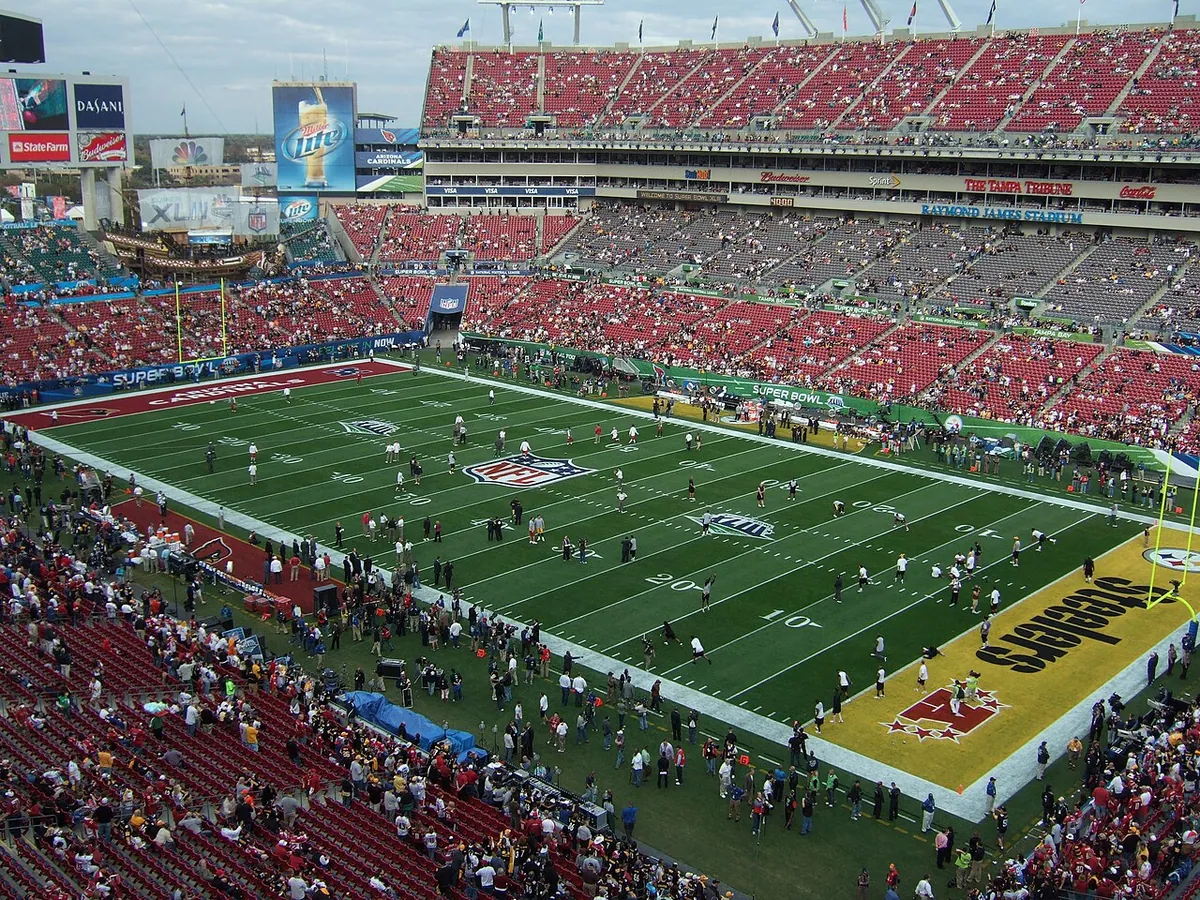
Super Bowl XLIII was played on Sunday, February 1, 2009. The game was held at Raymond James Stadium in Tampa, Florida, an outdoor stadium with a grass playing surface. The game-time temperature was 66 degrees Fahrenheit, and the referee was Terry McAulay. Tampa was awarded the game in May 2005 after a multi-round vote by NFL owners. Four cities were finalists for the bid: Tampa, Atlanta, Houston, and Miami. Atlanta made an aggressive bid, promising $150 million in renovations to the Georgia Dome, while Tampa promoted its warm weather and amenities like a private league party at Busch Gardens. Houston was eliminated on the first ballot, and Miami was eliminated on the second. Neither Tampa nor Atlanta received the necessary three-quarters majority in the third round, forcing a fourth round decided by simple majority. Tampa won that final vote in what was described as a narrow upset. This was the fourth Super Bowl hosted in the Tampa area and the second at Raymond James Stadium. The host committee unveiled the game logo in February 2008, featuring an abstract stadium design with blue and green colors representing the Tampa Bay region's waterways.
The Teams and Their Seasons
The Pittsburgh Steelers entered the game with a 12-4 regular season record, earning the AFC's second seed. Head coach Mike Tomlin, in his second season, guided a team built around a historically dominant defense. The Steelers led the NFL in fewest points allowed per game at 13.9 and fewest yards allowed per game at 237.2. They also ranked second in the league with 51 sacks. Defensive Player of the Year James Harrison led the NFL with 16 sacks, while teammate LaMarr Woodley had 11.5. Safety Troy Polamalu recorded a career-high seven interceptions. The offense was led by quarterback Ben Roethlisberger, who threw for 3,301 yards and 17 touchdowns. His top targets were Hines Ward, who had 1,043 receiving yards, and Santonio Holmes, who had 821. The running game was led by Willie Parker and Mewelde Moore. The Arizona Cardinals, under head coach Ken Whisenhunt, finished the regular season 9-7 to win the NFC West. Whisenhunt had been the Steelers' offensive coordinator for Super Bowl XL before taking the Cardinals job. The Cardinals' success was powered by a resurgent season from 37-year-old quarterback Kurt Warner, who threw for 4,583 yards and 30 touchdowns, earning a 96.9 passer rating. His elite receiving corps featured Larry Fitzgerald, Anquan Boldin, and Steve Breaston, making Arizona the fifth team ever with three 1,000-yard receivers in a season. The Cardinals' offense ranked third in scoring with 422 points. The defense, however, ranked 28th in points allowed during the regular season and was led by players like linebacker Karlos Dansby and rookie cornerback Dominique Rodgers-Cromartie. The matchup had several notable connections and historical footnotes.
- Ken Whisenhunt and his assistant head coach, Russ Grimm, were both passed over for the Steelers head coaching job in favor of Mike Tomlin.
- The Cardinals aimed for their first NFL championship since 1947, which was the longest active drought in the league at the time.
- The franchises were briefly merged during World War II as the Card-Pitt team in 1944.
- Both clubs had been owned by the same families since 1933, with the Rooney family owning the Steelers and the Bidwill family owning the Cardinals.
Road Through the Playoffs
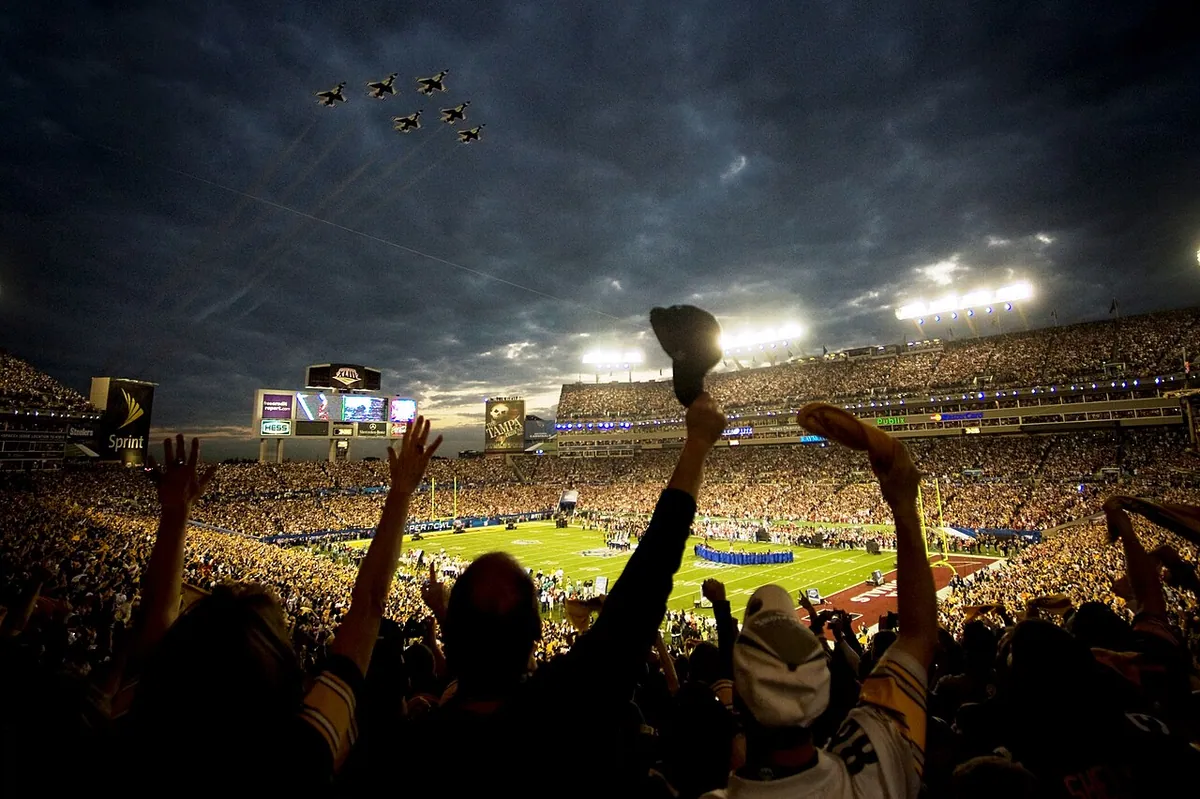
The Pittsburgh Steelers began their playoff run at home in the AFC Divisional Round, defeating the San Diego Chargers 35-24. They gained 342 yards and controlled the ball for over 36 minutes. They then hosted the AFC Championship Game against their division rival, the Baltimore Ravens, winning 23-14 to secure their seventh Super Bowl berth in franchise history. The Arizona Cardinals' path was longer as the NFC's fourth seed. They opened the playoffs with a 30-24 home victory over the Atlanta Falcons in the Wild Card round. In the Divisional Round, they traveled to face the Carolina Panthers and delivered a 33-13 upset. They then hosted the NFC Championship Game, defeating the Philadelphia Eagles 32-25 to earn the franchise's first Super Bowl appearance.
Game Summary by Quarters
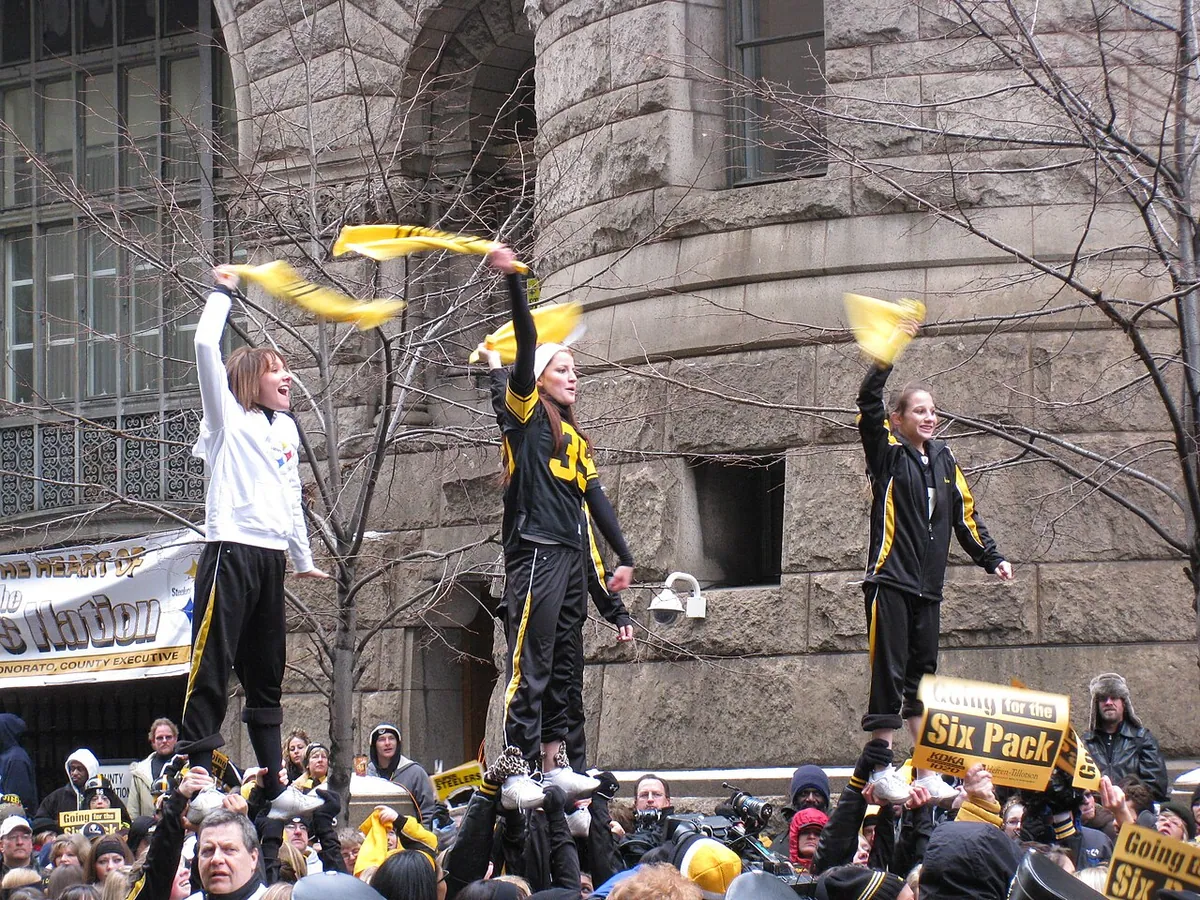
The Steelers took an early lead with a field goal in the first quarter. Jeff Reed kicked a field goal to give Pittsburgh a 3-0 lead. The Steelers extended their lead in the second quarter. The Cardinals responded with a drive deep into Steelers territory just before halftime. With 18 seconds left in the half, Arizona had the ball at the Pittsburgh 1-yard line. On the play, linebacker James Harrison dropped into coverage, intercepted a Kurt Warner pass at the goal line, and returned it 100 yards for a touchdown. The play, which set a Super Bowl record for longest interception return, gave the Steelers a 17-7 halftime lead instead of a potential 14-10 deficit. That single play represented a 14-point swing in a game decided by four points.
The third quarter saw only a single Steelers field goal, a 21-yard kick by Reed, pushing their lead to 20-7. The Cardinals' dramatic comeback began in the fourth quarter. Kurt Warner found Larry Fitzgerald for a one-yard touchdown pass, cutting the lead to 20-14. Arizona's defense then recorded a safety, making the score 20-16. With just under three minutes remaining, Warner hit Fitzgerald on a post route for a 64-yard touchdown, giving Arizona its first lead of the game at 23-20. The Steelers took over at their own 22-yard line with 2:37 left. A holding penalty immediately pushed them back to their own 12. Roethlisberger then engineered an 8-play, 78-yard drive, highlighted by a 40-yard completion to Santonio Holmes. On first-and-goal from the 6, Roethlisberger threw to the back-right corner of the end zone, where Holmes made a leaping catch over three defenders and tapped both feet inbounds with 35 seconds left. The touchdown, confirmed by replay review, gave Pittsburgh a 27-23 victory.
Final Score, MVP and Key Statistics
The final score was Pittsburgh Steelers 27, Arizona Cardinals 23. Steelers wide receiver Santonio Holmes was named Super Bowl Most Valuable Player. He finished the game with nine receptions for 131 yards and the game-winning touchdown. On the final drive alone, he caught four passes for 73 yards. Cardinals quarterback Kurt Warner had an outstanding performance in defeat, completing 31 of 43 passes for 377 yards, three touchdowns, and one critical interception. Larry Fitzgerald caught seven passes for 127 yards and two touchdowns, including the 64-yard score that briefly gave Arizona the lead. Pittsburgh's offense was efficient and committed no turnovers. The Cardinals lost the turnover battle.
Halftime Show and Broadcast Details
The Super Bowl XLIII halftime show featured rock legend Bruce Springsteen and the E Street Band. Their high-energy performance included several of his classic songs. The national anthem was performed by Grammy Award-winning singer Jennifer Hudson. General David Petraeus, then commander of U.S. Central Command, performed the ceremonial coin toss. The game was broadcast nationally on NBC, with Al Michaels handling play-by-play and John Madden providing color commentary. This was Madden's final game as a broadcaster before his retirement two months later. Andrea Kremer and Alex Flanagan served as sideline reporters. The radio broadcast was carried by Westwood One, with Marv Albert and Boomer Esiason calling the action. A 30-second commercial during the broadcast cost an average of $3 million. The broadcast team and the high commercial cost reflected the game's massive audience and cultural significance.
Viewership, Ratings and Cultural Impact
Super Bowl XLIII set a viewership record at the time, becoming the most-watched Super Bowl in history and the most-watched of the 2000s. The NBC telecast attracted an average U.S. audience of 98.7 million viewers, with an estimated total of 151.6 million Americans watching at least part of the game. It earned a national Nielsen rating of 42.0 and a market share of 65. In the local markets, the game drew a 53.6 rating in Pittsburgh and a 47.5 rating in Phoenix. The game is frequently cited as one of the greatest and most exciting Super Bowls ever played. The NFL Network later ranked it as the number one Super Bowl of all time in a top-ten list. It was also ranked number four on the network's list of the Top 10 Greatest Games of All Time. The contest is remembered for its dramatic momentum swings, including James Harrison's record interception return, Larry Fitzgerald's late go-ahead touchdown, and Santonio Holmes's game-winning catch. As of 2026, this remains the Pittsburgh Steelers' most recent Super Bowl championship. For the Cardinals, it was the franchise's only Super Bowl appearance, and it was the last time a Phoenix-based major sports team reached a championship round until the Phoenix Suns made the NBA Finals in 2021.
Legacy and Historical Significance
Super Bowl XLIII holds a significant place in NFL history for several reasons beyond the close finish. The victory gave the Pittsburgh Steelers their sixth Super Bowl title, moving them into sole possession of the record for most championships, a record they still held as of 2026. It was the Steelers' second title in four seasons, reinforcing their status as a dominant franchise in the 2000s. For the Arizona Cardinals, the game represented the end of the longest championship drought in American professional sports at the time, dating back to 1947. The Cardinals' unexpected run to the Super Bowl as a 9-7 team made them only the second such team to reach the title game up to that point. The game also marked a notable intersection of coaching and quarterback legacies. Head coaches Mike Tomlin and Ken Whisenhunt were linked through the Steelers organization, and quarterbacks Ben Roethlisberger and Kurt Warner represented different eras of NFL success. The game's dramatic narrative, combined with record-setting viewership, has ensured its lasting place in football lore. Media outlets consistently rank it among the best Super Bowls ever played due to the high level of play from both teams and its dramatic conclusion.
FAQ
Who won Super Bowl XLIII?
The Pittsburgh Steelers won Super Bowl XLIII, defeating the Arizona Cardinals by a score of 27-23. The victory gave the Steelers their sixth Super Bowl championship, setting a new record for the most wins by any franchise at that time. The game was decided in the final minute when Steelers quarterback Ben Roethlisberger threw a 6-yard touchdown pass to wide receiver Santonio Holmes with only 35 seconds remaining on the clock. This win was the Steelers' second Super Bowl victory in a four-year span, following their win in Super Bowl XL at the end of the 2005 season.
Who was the MVP of Super Bowl 43?
Pittsburgh Steelers wide receiver Santonio Holmes was named the Most Valuable Player of Super Bowl XLIII. Holmes caught nine passes for a total of 131 receiving yards and scored the game-winning touchdown. His performance on the final drive was particularly crucial, as he accounted for 73 yards on four receptions to set up his own touchdown catch in the corner of the end zone. Holmes became the sixth wide receiver to win the Super Bowl MVP award, joining Steelers alumni Lynn Swann and Hines Ward among the recipients at that time.
Where was Super Bowl XLIII played?
Super Bowl XLIII was played at Raymond James Stadium in Tampa, Florida, on February 1, 2009. This was the fourth Super Bowl hosted in the Tampa Bay area and the second at that specific stadium. The stadium is an outdoor venue with a natural grass playing surface, and the game was played in mild conditions with a temperature of 66 degrees Fahrenheit at kickoff. Tampa had won the hosting rights in a competitive bid process against Atlanta, Houston, and Miami in 2005.
What was the halftime show for Super Bowl 2009?
The Super Bowl XLIII halftime show featured a performance by Bruce Springsteen and the E Street Band. The rock legend performed a medley of his classic songs. The high-energy show is remembered for Springsteen's dynamic stage presence. The performance was a major production that entertained the stadium crowd and the massive television audience watching at home.
How many people watched Super Bowl XLIII?
Super Bowl XLIII set a viewership record in 2009, with an average of 98.7 million viewers in the United States tuning in to the NBC broadcast. An estimated 151.6 million Americans watched at least part of the game. The broadcast earned a national Nielsen rating of 42.0, meaning 42 percent of television households were watching, and it had a 65 market share, indicating that 65 percent of TVs in use at the time were tuned to the game. In the local markets, the game drew a 53.6 rating in Pittsburgh and a 47.5 rating in Phoenix.
What is Super Bowl XLIII best remembered for?
Super Bowl XLIII is best remembered for its close sequence of dramatic plays in the final minutes. The game is famous for James Harrison's 100-yard interception return for a touchdown just before halftime, which set a Super Bowl record. It is also remembered for Larry Fitzgerald's 64-yard touchdown catch that gave the Arizona Cardinals a late lead with under three minutes to play. The most memorable moment is Santonio Holmes's game-winning touchdown catch with 35 seconds left, a play that required an exceptional throw from Ben Roethlisberger and a precise toe-tap by Holmes in the corner of the end zone.
Sources
- Super Bowl XLIII (Wikipedia) Wikipedia
- Super Bowl XLIII NFL
- WATCH: Super Bowl XLIII Highlights steelers.com
- A look back at Super Bowl XLIII azcardinals.com
- Super Bowl XLIII Revisited: Larry Fitzgerald's Almost-Immortal Run and the Catch That Stole It, Football Nation footballnationusa.com
- nflverse game, roster and draft data nflverse (CC BY 4.0)
Road to the Super Bowl
San Diego ChargersW 35–24AFC Championship
Baltimore RavensW 23–14