Glenn Edward Bo Schembechler was an American college football player, coach, and athletics administrator. His career head coaching record was 234 wins, 65 losses, and 8 ties. Schembechler's Michigan teams won or shared 13 Big Ten Conference championships and made 10 Rose Bowl appearances. He was inducted into the College Football Hall of Fame as a coach in 1993. He died on November 17, 2006, at the age of 77.
Early Life and Playing Career
Bo Schembechler was born and raised in Barberton, Ohio. His nickname originated from his sister's childhood attempts to say brother. He attended Miami University in Oxford, Ohio, where he played college football as a tackle. Schembechler played under two coaches at Miami: George Blackburn and Woody Hayes. He graduated from Miami in 1951 and earned a master's degree from Ohio State University in 1952 while working as a graduate assistant under Hayes. After serving in the U.S. Army, Schembechler began his coaching career as an assistant at Presbyterian College in 1954, followed by a year as the freshman coach at Bowling Green in 1955 before joining Ara Parseghian's staff at Northwestern in 1956. Schembechler spent the next two seasons at Northwestern as an assistant. In 1958, Woody Hayes hired Schembechler to be an assistant at Ohio State, where he remained for five seasons. Schembechler was fond of recounting how Hayes would fire him in anger, only to send someone to retrieve him later.
Head Coaching Career at Miami (OH)
Schembechler returned to his alma mater as head coach in 1963. Over six seasons, he compiled a record of 40-17-3 with the Miami Redskins. His teams won two Mid-American Conference championships. The 1966 season was his best at Miami, with the team posting a 9-1 overall record. Miami's offense during his tenure was led by quarterbacks Ernie Kellermann and Bruce Matte. In 1967, Schembechler was a candidate for the head coaching job at Wisconsin but withdrew his name from consideration after an interview. He continued to coach at Miami for two more seasons before accepting the head coaching position at the University of Michigan after the 1968 season.
Head Coaching Tenure at Michigan
Bo Schembechler became the 15th head football coach at the University of Michigan in 1969, succeeding Bump Elliott. His 21-year tenure from 1969 to 1989 resulted in a record of 194 wins, 48 losses, and 5 ties, a winning percentage of .796. His teams never had a losing season. In Big Ten Conference play, his record was 143-24-3. Schembechler's Michigan teams won or shared 13 Big Ten Conference titles. His overall bowl record was 5 wins and 12 losses. The 1985 team, led by quarterback Jim Harbaugh, finished with a 10-1-1 record, a Fiesta Bowl victory, and a No. 2 national ranking, the highest finish for any Schembechler-coached team. Only four of his 21 Michigan teams did not play in a bowl game. The table below details the bowl game appearances for Bo Schembechler's Michigan teams.
| Bowl Game | Year | Opponent | Result |
|---|---|---|---|
| Rose Bowl | 1970 | USC | Loss |
| Rose Bowl | 1972 | Stanford | Loss |
| Rose Bowl | 1977 | USC | Loss |
| Rose Bowl | 1978 | Washington | Loss |
| Rose Bowl | 1979 | USC | Loss |
| Rose Bowl | 1981 | Washington | Loss |
| Rose Bowl | 1987 | Arizona State | Loss |
| Rose Bowl | 1989 | USC | Loss |
In his first year, Schembechler was named national coach of the year by the American Football Coaches Association and the Football Writers Association of America. His record of 96 wins, 16 losses, and 3 ties during the 1970s was the best of any Division I coach in that decade. He ranks as the sixth-winningest college football coach of all time based on his career victory total. Only three other coaches, Nick Saban, Joe Paterno, and Tom Osborne, have reached 200 wins in fewer games at the major college level.
The Ten-Year War and Major Rivalries
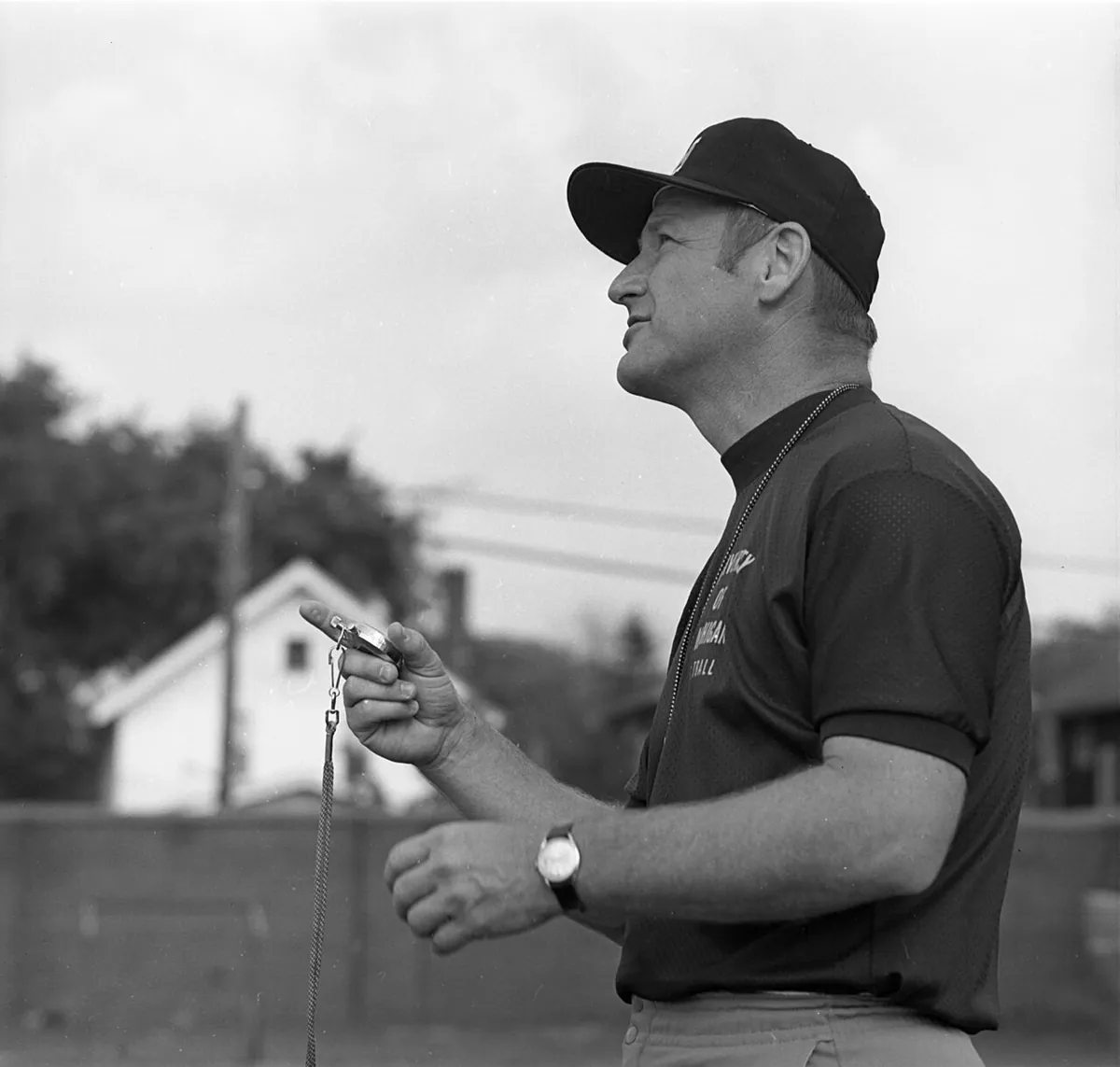
Schembechler's first season at Michigan in 1969 featured a landmark 24-12 upset victory over top-ranked Ohio State, coached by his mentor Woody Hayes. The Buckeyes entered the game as defending national champions with a 22-game winning streak. During those ten seasons, Michigan and Ohio State dominated the Big Ten, with Schembechler holding a 5-4-1 advantage in head-to-head meetings. The rivalry turned the annual game into one of college football's premier events and led to the conference being nicknamed the Big Two, Little Eight. Schembechler also facilitated the renewal of Michigan's rivalry with Notre Dame, though the series did not resume until 1978, after his friend Ara Parseghian had left the Fighting Irish. The 1969 victory is considered one of the greatest upsets in college football history.
Coaching Philosophy and Program Culture
Schembechler's coaching philosophy was centered on toughness, conditioning, and team unity. Upon taking the Michigan job, he posted a sign reading Those Who Stay Will Be Champions, emphasizing his commitment to rebuilding a program that had won only one Big Ten title in the prior 18 seasons. His famous The Team, the Team, the Team speech from 1983 became a defining statement of his belief in collective effort over individual stardom. Schembechler was known for a run-oriented offensive approach, though his teams began to pass more in the 1980s. He often said that three things can happen when you pass, and two of them are bad. His teams were defined by strong defensive play, utilizing a unique five-man angle defense he brought to Michigan. Every player who stayed for four years under Schembechler left with at least one Big Ten championship ring. Key elements of Schembechler's coaching philosophy and legacy include.
- Emphasis on team unity over individual talent, exemplified by his 1983 speech.
- A culture of toughness and intense physical conditioning for players.
- A run-first offensive identity, though his teams incorporated more passing in the 1980s.
- The Those Who Stay Will Be Champions mantra used to motivate his initial Michigan squad.
- A direct coaching lineage through assistants Gary Moeller and Lloyd Carr.
- He turned down a nearly $3 million contract offer from Texas A&M in 1982 to stay at Michigan.
Athletic Director at Michigan
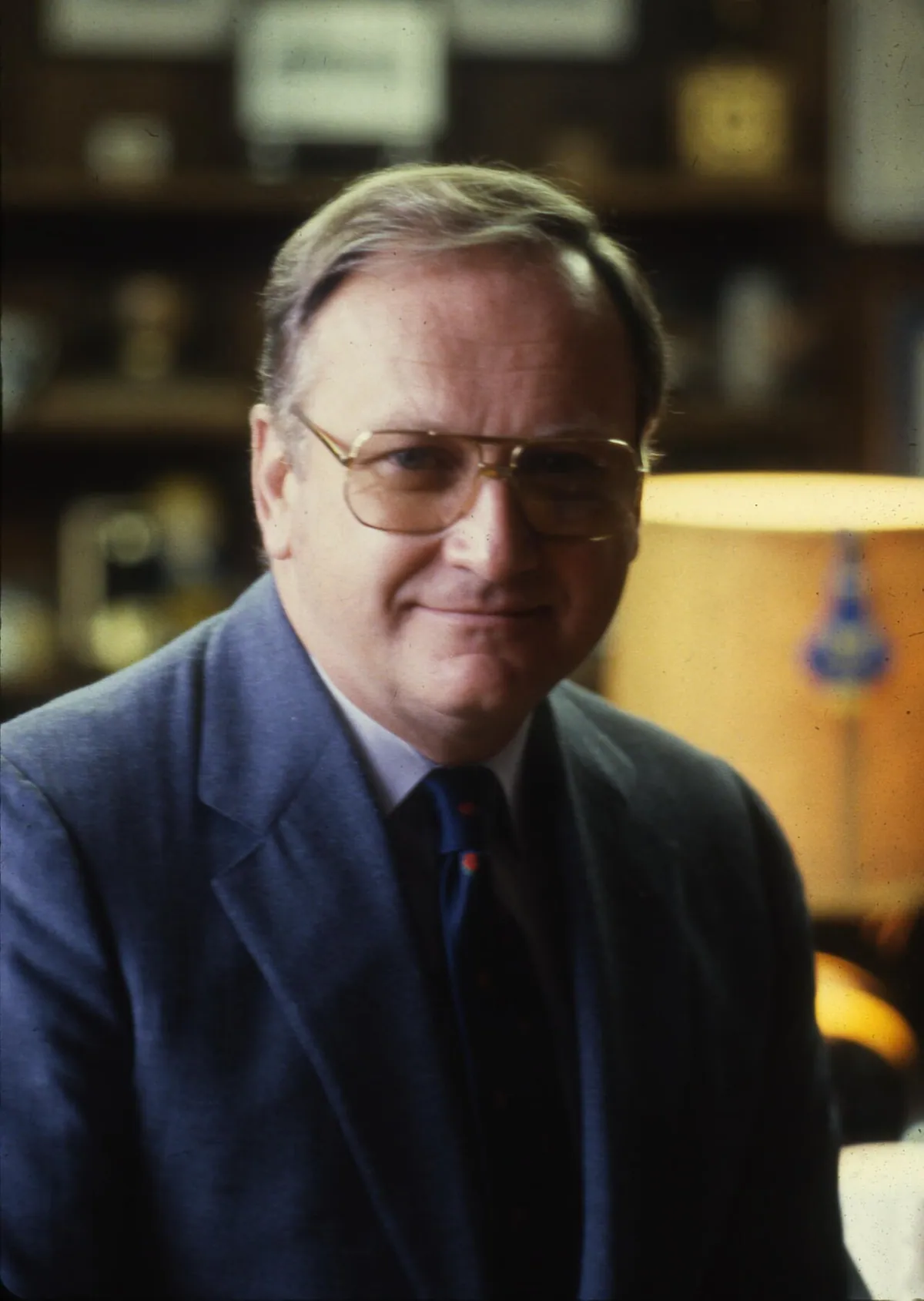
Bo Schembechler served as the University of Michigan's athletic director from 1988 to 1990. He assumed the role in 1988 while still coaching the football team. Just before the 1989 NCAA basketball tournament, he fired men's basketball coach Bill Frieder after Frieder accepted a job at Arizona State but planned to coach Michigan in the tournament. Schembechler appointed assistant Steve Fisher as interim coach, stating that a Michigan man is going to coach a Michigan team. Fisher led the team to six straight victories and the 1989 national championship. Schembechler witnessed the championship game two days after his 60th birthday.
Post-Coaching Career with the Detroit Tigers
Schembechler retired from coaching after the 1989 season and the Rose Bowl in 1990 at the age of 60, citing a history of heart problems. He had suffered a heart attack on the eve of the 1970 Rose Bowl and was hospitalized, missing that game. At the time of his retirement, he had secretly accepted the role of president for the Detroit Tigers, which he announced publicly after the game. From 1990 to 1992, he was the president of Major League Baseball's Detroit Tigers. His tenure with the Tigers included the controversial firing of longtime broadcaster Ernie Harwell in 1991, a decision that drew widespread criticism from fans and the media. Executives at the team's flagship radio station, WJR, later said they were responsible for dismissing Harwell, but Schembechler and club owner Tom Monaghan faced public condemnation for the move. After leaving the Tigers, Schembechler worked as a college football broadcaster for ABC and hosted a sports radio show in Southeast Michigan.
Honors and Hall of Fame Inductions
Bo Schembechler received numerous honors for his coaching career. He is also a member of the University of Michigan Hall of Honor, the Miami University Hall of Fame, and the Rose Bowl Hall of Fame. His career winning percentage of .775 ranks among the highest for major college football coaches. In January 1982, Texas A&M offered Schembechler a 10-year contract worth nearly $3 million to become its football coach and athletic director, which was the richest contract in college athletics history at that time. Schembechler turned down the offer, stating he decided to stay at Michigan because there were things more important than money.
Death and Legacy
Bo Schembechler died of heart failure on November 17, 2006, in Southfield, Michigan, at the age of 77. His death occurred on the eve of the annual Michigan-Ohio State game, which that year was a No. 1 versus No. 2 matchup. As of 2026, Schembechler's record of 194 wins remains the most by any head coach in University of Michigan football history. His legacy is a complex one, defined by his on-field success, his profound impact on the Michigan program and the Big Ten, and the posthumous allegations regarding his handling of the Robert Anderson scandal. He compiled a career record that places him among the winningest coaches in the history of major college football. His longtime assistants, Gary Moeller and Lloyd Carr, led the Michigan program for the 18 years following his retirement.
Video
FAQ
What was Bo Schembechler's overall coaching record?
Bo Schembechler's career head coaching record was 234 wins, 65 losses, and 8 ties over 27 seasons. This includes a 40-17-3 record in six seasons at Miami University from 1963 to 1968 and a 194-48-5 record in 21 seasons at the University of Michigan from 1969 to 1989. His winning percentage was .775. His Michigan teams appeared in 17 bowl games, compiling a record of 5 wins and 12 losses in those contests.
How many national championships did Bo Schembechler win?
Bo Schembechler did not win a national championship as a head coach. His highest finish in the national polls was No. 2, achieved by his 1985 Michigan team that went 10-1-1 and won the Fiesta Bowl. His teams won or shared 13 Big Ten Conference championships. In all but one of his 21 seasons at Michigan, his teams finished ranked in the final polls.
Why did Bo Schembechler retire from coaching?
Bo Schembechler retired from coaching after the 1989 season and the Rose Bowl in 1990 at the age of 60. He cited his history of heart problems as a primary reason for his decision. Schembechler had suffered a heart attack on the eve of the 1970 Rose Bowl and was hospitalized, missing that game. He handpicked his offensive coordinator, Gary Moeller, to succeed him as head coach at Michigan. At the time of his retirement, he had also secretly accepted the role of president for the Detroit Tigers, which he announced publicly after the Rose Bowl.
Did Bo Schembechler coach under Woody Hayes?
Yes, Bo Schembechler coached under Woody Hayes at two different points. After earning his master's degree in 1952 and serving in the Army, he returned to Ohio State in 1958 to work on Hayes's staff again. He spent five seasons there as an assistant from 1958 to 1962 before becoming the head coach at Miami University in 1963. Their close personal and professional relationship defined the famous Ten-Year War rivalry when Schembechler became Michigan's head coach.
What was Bo Schembechler's role with the Detroit Tigers?
Bo Schembechler served as president of the Detroit Tigers of Major League Baseball from 1990 to 1992. He assumed the role immediately after retiring as Michigan's football coach. His tenure was marked by the controversial firing of noted broadcaster Ernie Harwell in 1991, a decision that drew widespread criticism from fans and the media. Schembechler was an opponent of female sports reporters in men's locker rooms during his time with the Tigers. He left the Tigers organization in 1992 and later worked as a college football broadcaster for ABC Sports.
How many Rose Bowl games did Bo Schembechler coach in?
Bo Schembechler coached the University of Michigan in 10 Rose Bowl games. This is a Rose Bowl Game record for appearances by a single coach. His teams made these appearances in the years 1970, 1972, 1977, 1978, 1979, 1981, 1983, 1987, 1989, and 1990. Overall, Schembechler led Michigan to 17 bowl games during his 21 year tenure, with his teams playing in a bowl in each of his final 15 seasons.
Sources
- Bo Schembechler (Wikipedia) Wikipedia
- Bo Schembechler (1993) - Rose Bowl Hall of Fame rosebowlgame.com
- Glenn "Bo" Schembechler (1992) - University of Michigan Hall of Honor mgoblue.com
- Bo Schembechler mwolverine.com