An NCAA football bowl game is a postseason invitational contest for eligible college football teams, primarily in the Division I Football Bowl Subdivision (FBS). The bowl season culminates in the College Football Playoff, a 12-team tournament that determines the national champion. Bowl games are distinct from playoff brackets and are selected through a formal invitation process involving conference tie-ins and committee rankings. The tradition dates back over a century, with the Rose Bowl first played in 1902, and has expanded to include many games featuring teams from all NCAA divisions. The 2026-27 season will begin on December 12 and conclude with the championship game on January 25 in Las Vegas.
Bowl Game Eligibility and Selection Process
To become bowl eligible, a Football Bowl Subdivision team must win at least six games during its regular season. This standard minimum has been in place, though the NCAA has periodically relaxed criteria to fill all available bowl slots. Starting in 2010, teams with a 6-6 non-winning record were permitted to receive bids. Since 2012, teams with outright losing records of 5-7 have also been invited when necessary, with the team possessing the best Academic Progress Rate score among 5-7 teams chosen first. The selection process is not a pure bracket but a tiered system. The top 12 teams qualify for the College Football Playoff, with conference champions and at-large bids determined by the CFP Selection Committee. Most other bowls operate through contractual agreements with specific conferences, known as tie-ins, which dictate which conferences send teams to each game. Bowl representatives then select teams within these frameworks, often prioritizing programs with strong fan bases and television appeal.
The expansion of the bowl system has directly influenced eligibility rules. By the 2010-11 bowl season, 70 teams were needed to participate, a number that grew to 80 by the 2015-16 season. This demand for participants made the inclusion of teams with .500 or losing records a practical necessity. The prevalence of teams without winning records, including three with 5-7 records in the 2015 season, led the NCAA Division I Council to impose a three-year moratorium on the creation of new bowl games in April 2016.
The College Football Playoff and New Year's Six
The College Football Playoff is the championship system for the FBS, expanding to a 12-team format starting with the 2024 season. The playoff field includes the top-ranked conference champions and several at-large selections. The postseason structure incorporates six major bowl games known as the New Year's Six: the Rose Bowl, Sugar Bowl, Orange Bowl, Cotton Bowl, Peach Bowl, and Fiesta Bowl. These bowls rotate hosting the playoff's quarterfinal and semifinal games, with the others hosting premier at-large matchups. The New Year's Six includes some of the oldest and most prestigious bowls, with the Rose Bowl dating to 1902 and the Sugar and Orange Bowls both starting in 1935. These games focus on the top 12 teams in the rankings, and since the CFP began, only five teams ranked lower than 12th have played in a New Year's Six game, though all were still in the top 20. Among the ten oldest bowl games, six are part of the New Year's Six, preserving the original tradition of matching the nation's best teams against one another. The Rose Bowl maintains a unique naming convention, adding sponsors with a "presented by" tag rather than incorporating them into the primary title, a practice it began with the 1998 season.
Complete Schedule of Current FBS Bowl Games
The 2026-27 college football bowl season features over 40 games, beginning on Saturday, December 12 with the Celebration Bowl and concluding with the College Football Playoff National Championship on Monday, January 25 in Las Vegas. The schedule includes a mix of historic and newer invitationals, each with conference tie-ins and title sponsors. Games are played across the country in venues ranging from massive NFL stadiums to smaller college campuses. The following table lists a selection of current FBS bowl games, their venues, and their first season.
| Bowl Game | First Game | Venue | City |
|---|---|---|---|
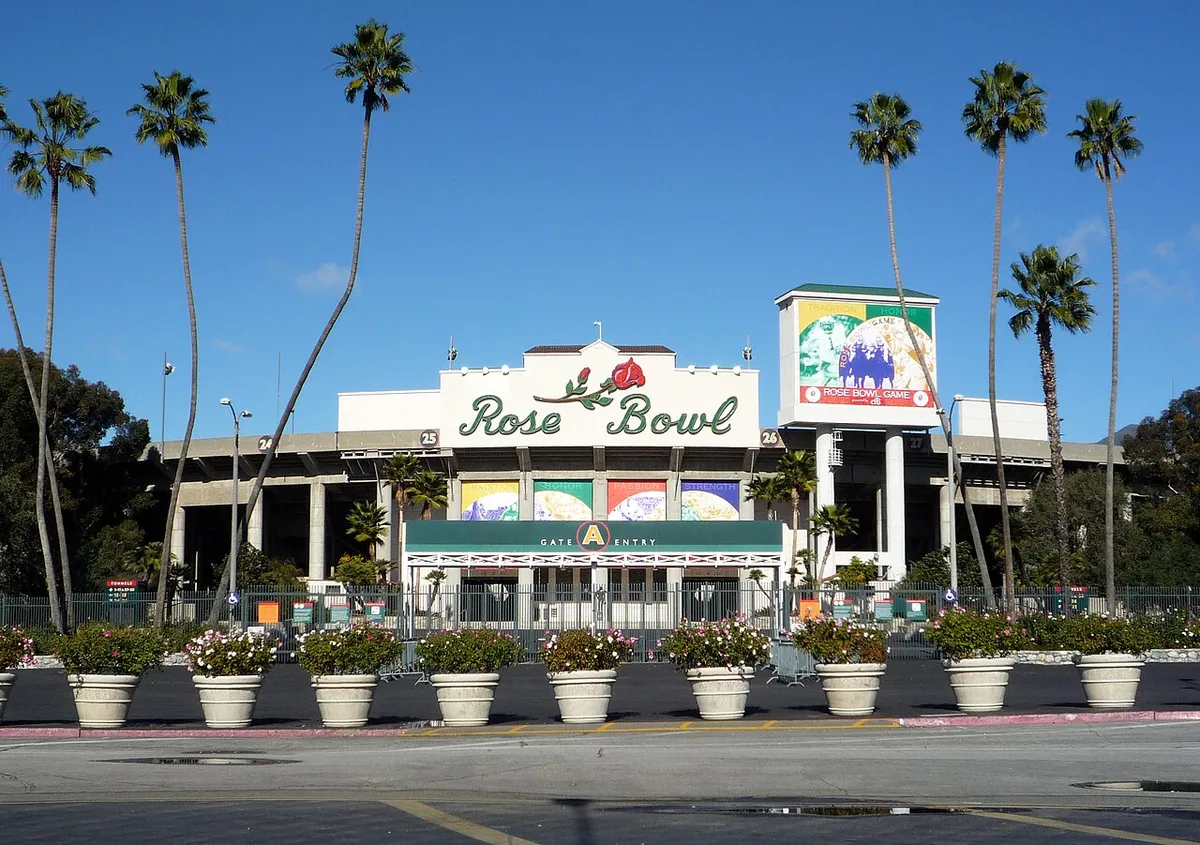
| Rose Bowl Game | 1902 | Rose Bowl | Pasadena, CA |
| Sun Bowl | 1934 | Sun Bowl | El Paso, TX |
| Gator Bowl | 1945 | EverBank Stadium | Jacksonville, FL |
| Citrus Bowl | 1946 | Camping World Stadium | Orlando, FL |
| Liberty Bowl | 1959 | Simmons Bank Liberty Stadium | Memphis, TN |
| Peach Bowl | 1968 | Mercedes-Benz Stadium | Atlanta, GA |
| Fiesta Bowl | 1971 | State Farm Stadium | Glendale, AZ |
| Alamo Bowl | 1993 | Alamodome | San Antonio, TX |
| Music City Bowl | 1998 | Nissan Stadium | Nashville, TN |
| Myrtle Beach Bowl | 2020 | Brooks Stadium | Conway, SC |
| Fenway Bowl | 2022 | Fenway Park | Boston, MA |
The proliferation of bowl games has been steady, reaching 41 total games by the 2015 season, which required 80 participating teams. This growth led to a record 15 teams with non-winning records playing in bowls that year, including three with 5-7 records. In response, the NCAA imposed a three-year moratorium on new bowl games starting in April 2016. Despite this, new games like the Frisco Football Classic, Puerto Rico Bowl, and San Juan Bowl are scheduled to begin play by the 2026 season. The bowl schedule is dense, with a typical season featuring multiple games per day during the holiday period, such as the doubleheader scheduled for Tuesday, December 15, 2026.
Bowl Games in Lower NCAA Divisions and Community Colleges
Postseason bowl games extend beyond the Football Bowl Subdivision to include all levels of NCAA football and even non-NCAA community college football. In the Football Championship Subdivision, Division II, and Division III, bowls offer an alternative postseason opportunity for teams that do not qualify for their division's national championship playoff tournament. The basic eligibility guidelines for these contests mirror those of the FBS. As of 2017, there was one bowl game for the FCS, four bowls for Division II, and ten bowls for Division III, not including championship games like the Stagg Bowl for Division III. These games are the lower-division equivalent of the non-playoff FBS bowls.
- The Celebration Bowl, first played in 2015, is the primary FCS bowl, matching the MEAC and SWAC conference champions as an HBCU national championship.
- Division II bowls include the Heritage Bowl, first played in 2017 in Corsicana, Texas, and the Albanese Candy Bowl, which started in 2019 in Hobart, Indiana.
- Division III features several bowl series, including the ECAC Bowl Series, the Centennial-MAC Bowl Series, and individual games like the Isthmus Bowl (2021) and Lakefront Bowl (2022).
- The Amos Alonzo Stagg Bowl has served as the Division III national championship game since 1973, played in various locations including Salem, Virginia, and Canton, Ohio.
- The NAIA, which is not part of the NCAA, has a national championship game that has historically carried bowl names like the Aluminum Bowl and Holiday Bowl.
- Community college bowl games, which are not sanctioned by the NCAA, also exist and are included in comprehensive lists of college football postseason games.
Historical Development and Proliferation
For nearly a century, bowl games were exclusively for the very best teams, with strict eligibility requirements. The steady creation of new bowls, however, demanded more participating teams, leading to the relaxation of standards. While inviting teams without winning records became more common in the 2010s, there were several precedents from earlier eras. The 1946 Gator Bowl featured South Carolina with a 2-3-3 record, the 1963 Sun Bowl included SMU at 4-6, the 1970 Tangerine Bowl had William & Mary at 5-6, and the 2001 New Orleans Bowl included North Texas at 5-6. The trend peaked in the 2016-17 bowl season when 25 percent of bowl participants, or 20 teams, did not have a winning record.
The bowl system itself evolved from a poll-based method of crowning champions to the Bowl Championship Series (1998 to 2013) and then to the four-team College Football Playoff in 2014, which expanded to 12 teams in 2024. This evolution reflects the ongoing tension between tradition and the desire for a more definitive championship format. The number of proposed new bowls has consistently exceeded the number approved, with organizers continuing to pitch games even during the NCAA's moratorium. Active proposals for games like the Coca-Cola Bowl and others remain on hold, illustrating the constant push for expansion within the postseason.
Financial Aspects, Payouts, and Conference Tie-Ins
Financial payouts vary significantly among bowl games and are closely correlated with the game's prestige and television contract. The New Year's Six and College Football Playoff games offer the largest payouts, which are distributed to the participating teams' conferences. For instance, during the BCS era, each of those bowls had a payout of approximately $18 million. Current payouts for the rotating CFP quarterfinals are around $4 million per team, while semifinal payouts are about $6 million. Other prominent bowls also have substantial payouts, such as the Citrus Bowl at $8,224,578 and the Alamo Bowl at $8,252,740. Lower-tier bowls offer much smaller guarantees, like the Cure Bowl at $573,125 and the Arizona Bowl at $350,000.
These financial arrangements are governed by conference tie-in agreements, which are pre-negotiated contracts specifying which conferences will send teams to a particular bowl. For example, the Rose Bowl has a traditional tie-in between the Big Ten and Pac-12 champions. These contracts ensure a predictable lineup of teams and a stable revenue stream for the bowls and conferences involved. The system creates a clear hierarchy, with the most lucrative and prestigious bowls at the top, linked to the most powerful conferences.
- Citrus Bowl: $8,224,578
- Alamo Bowl: $8,252,740
- ReliaQuest Bowl: $6,666,667
- Pop-Tarts Bowl: $6,071,760
- Texas Bowl: $6,400,000
- Music City Bowl: $5,700,000
- Gator Bowl: $5,350,000
- Sun Bowl: $4,550,000
Notable Bowl Game Records, Events, and Relocations
Several bowl games hold notable records for longevity, attendance, or unique circumstances. The Rose Bowl is the oldest operating bowl, first played in 1902 and held annually since 1916, with a massive permanent seating capacity of 92,542. Due to external events, the Rose Bowl has been forced to move from its Pasadena home on two occasions. After the attack on Pearl Harbor, World War II travel restrictions caused the 1942 game to be played at Duke Stadium in Durham, North Carolina. Decades later, the COVID-19 pandemic led to the 2021 game being held at AT&T Stadium in Arlington, Texas. The Sugar Bowl was moved once, to the Georgia Dome in Atlanta in 2006, after Hurricane Katrina damaged the Superdome in New Orleans. These relocations are rare exceptions for historically stable events.
The College Football Playoff has produced memorable championship results since its inception in the 2014 season. In the first CFP National Championship, No. 4 Ohio State defeated No. 2 Oregon 42-20. The following season, No. 2 Alabama beat No. 1 Clemson 45-40. In the 2016 season, Clemson and Alabama played in the championship game. The expansion to 12 teams for the 2024 season marked the latest major structural change to the postseason, increasing access and the number of meaningful playoff games. Beyond the playoff, individual bowls have rich histories of name changes and sponsorship evolution. For example, the bowl now known as the ReliaQuest Bowl began as the Hall of Fame Bowl in 1986, and the Pop-Tarts Bowl has had over ten different title sponsors in its history, including the Blockbuster Bowl and the Champs Sports Bowl.
Proposed and Defunct Bowl Games
The number of bowl games is not fixed, with numerous games proposed, launched, and eventually discontinued over the decades. The NCAA's moratorium on new bowls, enacted in 2016, was a direct response to the rapid proliferation that saw the number of games reach 41 by the 2015 season. This growth had created a scenario where organizers struggled to find enough eligible teams with winning records, leading to the increased inclusion of 5-7 teams. Despite the moratorium, proposals for new games continue to be developed by organizers and boosters in various cities.
- The Pelican Bowl (1972 to 1975) and Heritage Bowl (1991 to 1999) were earlier FCS bowl games that preceded the modern Celebration Bowl.
- The Miami Beach Bowl was sold to ESPN Events and relocated to become the Frisco Bowl in 2017.
- The Bahamas Bowl was effectively replaced by the Frisco Football Classic, scheduled to begin in the 2025 season.
- Proposals for games like the Legacy Bowl were floated in 2010 but never came to fruition.
- New bowls scheduled to debut include the Puerto Rico Bowl and San Juan Bowl, both set for the 2026 season in Bayamón and San Juan, Puerto Rico, respectively.
Video
FAQ
What is a college football bowl game?
A college football bowl game is a postseason invitational game for eligible NCAA teams, primarily in the Football Bowl Subdivision. Unlike a playoff bracket, teams are selected through a formal invitation process based on win-loss records, conference tie-ins, and committee rankings. The bowl season includes over 40 games, culminating in the College Football Playoff national championship. This system has its roots in early 20th-century traditions, with the first Rose Bowl played in 1902.
How do teams qualify for a bowl game?
Teams generally qualify by winning at least six regular-season games, a standard known as bowl eligibility. Since 2010, teams with a 6-6 record have been eligible, and since 2012, teams with a 5-7 record have been invited when there are not enough 6-win teams to fill all bowl slots. The team with the best Academic Progress Rate among 5-7 teams is selected first under this exception. This relaxation of rules was necessary due to the expansion of the bowl system, which required 80 participating teams by the 2015-16 season.
What are the New Year's Six bowl games?
The New Year's Six are the six premier bowl games that are part of the College Football Playoff system: the Rose Bowl, Sugar Bowl, Orange Bowl, Cotton Bowl, Peach Bowl, and Fiesta Bowl. These bowls rotate hosting the CFP quarterfinal and semifinal games each season. They are among the oldest and most prestigious bowls, focusing on matchups between the top-ranked teams in the country. Since the CFP began, only five teams ranked outside the top 12 have ever participated in a New Year's Six game.
How many bowl games are there?
For the 2026-27 season, there are over 40 bowl games involving Football Bowl Subdivision teams. This includes the six New Year's Six games, numerous other FBS invitationals, and the College Football Playoff National Championship. The number grew steadily, leading to 41 total games by the 2015 season, which prompted an NCAA moratorium on new bowls starting in 2016. Despite the moratorium, new games like the Frisco Football Classic and Puerto Rico Bowl are scheduled to begin by 2026.
Are there bowl games for divisions below the FBS?
Yes, bowl games exist for the Football Championship Subdivision (FCS), Division II, and Division III. These contests provide a postseason opportunity for teams that do not qualify for their division's national championship playoff tournament. The Celebration Bowl is a prominent FCS bowl for HBCU conference champions. As of 2017, there were four bowls for Division II and ten for Division III, not including championship games like the Stagg Bowl. The basic eligibility rules for these games are similar to those in the FBS.
What is the history of teams with losing records in bowl games?
While it became more common in the 2010s, teams with non-winning or losing records have played in bowl games throughout history. Notable early examples include South Carolina (2-3-3) in the 1946 Gator Bowl, SMU (4-6) in the 1963 Sun Bowl, and William & Mary (5-6) in the 1970 Tangerine Bowl. The 2001 New Orleans Bowl also featured North Texas with a 5-6 record. The practice expanded significantly as the number of bowls grew, with 20 teams (25% of participants) lacking a winning record in the 2016-17 bowl season.
Sources
- List of college bowl games (Wikipedia) Wikipedia
- 2026-27 college football bowl game schedule, scores, TV channels, times NCAA
- College Football Bowl Games: How the System Works collegesportsauthority.com