The National Football League is split into the American Football Conference and the National Football Conference. Each of these conferences contains 16 teams organized into four divisions named East, North, South, and West. This structure, which creates eight divisions league-wide, was finalized in 2002 when the league expanded to 32 teams with the addition of the Houston Texans. The divisional format simplifies scheduling, fosters intense regional rivalries, and determines the path to the playoffs and the Super Bowl.
The Current NFL Divisional Structure
For the 2026 NFL season, the 32 teams are organized into the American Football Conference and the National Football Conference. Each conference contains exactly 16 teams, which are further grouped into four geographic divisions of four teams each. The AFC divisions are the East, North, South, and West, while the NFC uses the same divisional names. This setup ensures every team plays its three division rivals twice each season, accounting for six of their 17 regular-season games. The remaining 11 games are determined by a rotating schedule formula that includes matchups against teams from other divisions within the same conference and from one division in the opposite conference. The primary purpose of divisions is to simplify the complex NFL scheduling process while maintaining historic rivalries and competitive balance. Winning a division guarantees a team a spot in the NFL playoffs, with the four division winners from each conference being joined by three wild-card teams with the next-best records.
American Football Conference (AFC) Teams
The American Football Conference was formed in 1970 as part of the NFL-AFL merger and originally consisted of the ten former American Football League teams plus three NFL teams. As of the 2026 season, the AFC's 16 teams are distributed across its four divisions. The AFC East comprises the Buffalo Bills, Miami Dolphins, New England Patriots, and New York Jets. The AFC North consists of the Baltimore Ravens, Cincinnati Bengals, Cleveland Browns, and Pittsburgh Steelers. Teams in the AFC South are the Houston Texans, Indianapolis Colts, Jacksonville Jaguars, and Tennessee Titans. The AFC West includes the Denver Broncos, Kansas City Chiefs, Las Vegas Raiders, and Los Angeles Chargers. The conference champion is awarded the Lamar Hunt Trophy after winning the AFC Championship Game. Between 1995 and 2026, only 9 of the 16 AFC teams have reached the Super Bowl, with the New England Patriots appearing 12 times in that span. The Patriots also hold the record for most AFC championships with 12 titles, the most recent coming in the 2025 season.
National Football Conference (NFC) Teams
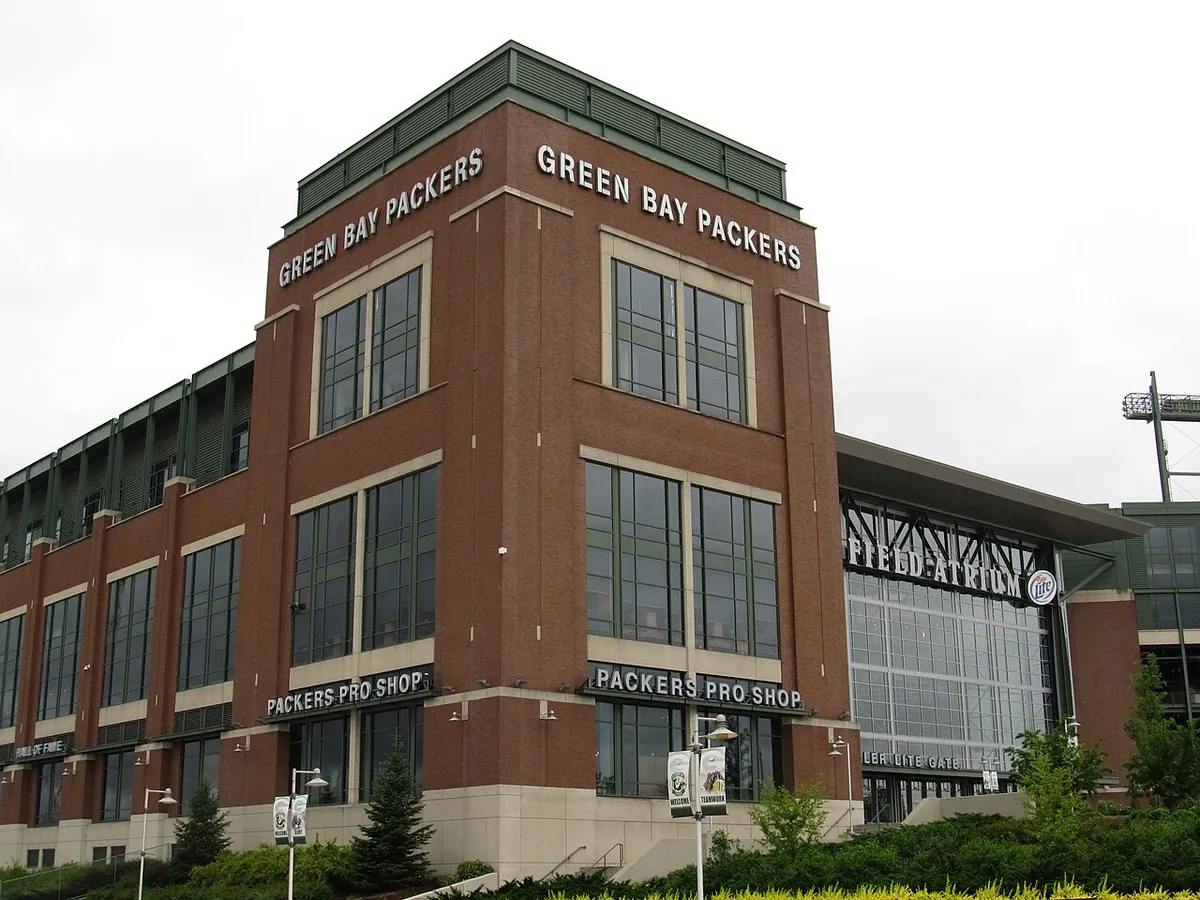
The National Football Conference was also created in 1970 and was formed from the majority of the pre-merger National Football League teams. The NFC currently has 16 teams split into four divisions for the 2026 season. The NFC East contains the Dallas Cowboys, New York Giants, Philadelphia Eagles, and Washington Commanders. The NFC North is made up of the Chicago Bears, Detroit Lions, Green Bay Packers, and Minnesota Vikings. Teams in the NFC South are the Atlanta Falcons, Carolina Panthers, New Orleans Saints, and Tampa Bay Buccaneers. The NFC West includes the Arizona Cardinals, Los Angeles Rams, San Francisco 49ers, and Seattle Seahawks. The NFC champion receives the George S. Halas Trophy. The Dallas Cowboys and San Francisco 49ers are tied for the most NFC championships with eight each. The NFC has sent 13 of its 16 teams to the Super Bowl since 1995, with only the Detroit Lions, Minnesota Vikings, and Washington Commanders failing to make an appearance in that timeframe.
History of the Conference and Division Alignment
The current eight-division structure is a relatively modern invention, finalized in 2002. The NFL and its rival, the American Football League, announced a merger in June 1966 that was completed for the 1970 season. A key challenge was creating two equal conferences from 16 NFL teams and 10 AFL teams. The solution was to move three NFL teams, the Cleveland Browns, Pittsburgh Steelers, and Baltimore Colts, to join the ten AFL franchises, forming the 13-team AFC. The remaining 13 NFL clubs became the NFC. Cleveland Browns owner Art Modell initiated the move, partly to create an in-state rivalry with the Cincinnati Bengals, while Steelers owner Art Rooney followed to preserve his team's rivalry with Cleveland. Each owner received $3 million in indemnities for joining what was still viewed as an inferior circuit. The AFC quickly agreed on a geographic divisional alignment for 1970, but NFC owners could not agree, forcing a random selection from five plans drawn from a fishbowl on January 16, 1970. For over 30 years, each conference had three divisions of uneven sizes. The addition of the Houston Texans in 2002 brought the league to 32 teams, allowing for the current symmetrical structure of eight four-team divisions. The 2002 realignment, approved unanimously on May 22, 2001, moved only one team between conferences: the Seattle Seahawks switched from the AFC West to the NFC West.
How the Schedule and Playoffs Work
The NFL's 17-game regular season schedule is built using a fixed formula that ensures competitive balance and variety. Each team plays six games against its three division rivals, home and away. They then play four games against all the teams from one other division within their own conference, a matchup that rotates annually. Another four games are played against all the teams from one division in the opposite conference, which also rotates. The final three games are assigned based on the previous season's divisional standings, pitting a team against the clubs that finished in the same position in the other two divisions of its conference that it is not already scheduled to play. This structure guarantees that a team's strength of schedule is largely tied to its own performance from the year before. At the end of the season, seven teams from each conference qualify for the playoffs. The four division winners are seeded 1 through 4 based on their regular-season records, with the top seed earning a first-round bye. Three wild-card teams, the non-division winners with the best records, fill seeds 5 through 7. The playoffs are a single-elimination tournament within each conference, culminating in the AFC and NFC Championship Games. The winners of those games advance to face each other in the Super Bowl to determine the NFL champion.
Notable Conference Records and Super Bowl History
Since the first Super Bowl followed the 1966 season, the NFC holds a narrow lead in championships over the AFC. As of 2026, NFC teams have won 29 Super Bowls, while AFC teams have won 27. The most recent NFC Super Bowl winner was the Philadelphia Eagles in 2025, and the most recent AFC winner was the Kansas City Chiefs in 2024. The AFC's success in the Super Bowl has been concentrated among a few franchises since 1995. In that span, only nine different AFC teams have reached the Super Bowl, led by the New England Patriots with 12 appearances. The NFC has seen greater variety, with 13 different teams making the Super Bowl in the same period. Quarterback dominance has also characterized the AFC, as 17 of the 19 AFC champions from 2001 to 2019 started either Tom Brady, Peyton Manning, or Ben Roethlisberger in the Super Bowl. In contrast, the NFC started 16 different quarterbacks in the last 20 Super Bowls. The Pittsburgh Steelers and New England Patriots share the AFC record for most Super Bowl wins by a conference member with six each. In the NFC, the Dallas Cowboys and San Francisco 49ers are tied with five Super Bowl victories apiece.
| Conference | Most Championships | Total Super Bowl Wins | Recent Champion (2025) |
|---|---|---|---|
| AFC | New England Patriots (12) | 27 | New England Patriots |
| NFC | Cowboys/49ers (8) | 29 | Seattle Seahawks |
Key Realignments and Team Movements
The NFL's divisional map has been redrawn several times due to expansion, relocation, and the pursuit of balance. The first major realignment occurred in 1970 with the merger itself. When the Seattle Seahawks and Tampa Bay Buccaneers joined in 1976, they were placed in the NFC and AFC respectively for one season before switching conferences the following year. The Seahawks eventually returned to the NFC in the 2002 realignment. Team relocations have also impacted divisions without always triggering conference changes. The Oakland Raiders moved to Los Angeles in 1982, back to Oakland in 1995, and to Las Vegas in 2020, all while staying in the AFC West. The San Diego Chargers moved to Los Angeles in 2017, remaining in the AFC West. The Houston Oilers moved to Tennessee in 1997, becoming the Titans and staying in the AFC. This mandate directly shaped the creation of the AFC North, ensuring those historic rivalries were preserved.
- 1970: Merger creates AFC and NFC with three divisions each.
- 1976: Seattle and Tampa Bay join, temporarily split between conferences.
- 1995: Jacksonville Jaguars join AFC. Carolina Panthers join NFC.
- 2002: League expands to 32 teams with Houston Texans, creating eight four-team divisions.
- 2002: Seattle Seahawks move from AFC West to NFC West.
- 1996 to 2020: Multiple team relocations occur within conferences, including Raiders to Las Vegas and Chargers to Los Angeles.
Differences from College and High School Football
The NFL's conference and division structure is distinct from the organizational models used in college and high school football. The NFL is a single, unified professional league with one set of rules and a centralized schedule. College football, governed by the NCAA, is split into separate divisions like the Football Bowl Subdivision (FBS) and Football Championship Subdivision (FCS). Within the FBS, teams are organized into conferences such as the SEC, Big Ten, and ACC, but these conferences are independent entities that negotiate their own television deals and have varying membership sizes. College conferences are not subdivided into smaller divisions with the same scheduling rigidity as the NFL, though some have divisions for championship game purposes. High school football in the United States is organized by state athletic associations, which group schools into classifications based on enrollment size and then into leagues or districts, often along strict geographic lines. Neither college nor high school football uses a two-conference model that culminates in a single championship game like the Super Bowl. The NFL's structure is uniquely designed for a closed, professional system with franchise stability, revenue sharing, and a hard salary cap, elements not present at the amateur levels.
Video
FAQ
How many divisions are in the NFL?
There are eight total divisions in the NFL. The league is split into two conferences, the AFC and NFC, and each of those conferences contains four divisions named East, North, South, and West. Each division is composed of four teams, which makes for 32 teams across the entire league. This eight-division structure has been in place since the 2002 season when the Houston Texans joined as the 32nd franchise.
What is the difference between the AFC and NFC?
The AFC and NFC are the two conferences that make up the National Football League. The primary difference is their historical origin. The AFC was formed mainly from the teams of the former American Football League (AFL), plus three original NFL teams. The NFC was formed from the majority of the pre-1970 NFL teams. The two conferences operate under the same league rules and play each other during the regular season, but they each run separate playoff tournaments. The champion of the AFC and the champion of the NFC meet in the Super Bowl.
How are NFL teams assigned to divisions?
NFL teams are assigned to divisions based on a combination of geography, historical rivalries, and league decisions made during realignments. The most recent major realignment in 2002 aimed to create eight divisions of four teams each, grouping clubs by regional proximity where possible to reduce travel. Some placements were dictated by specific agreements, such as the legal settlement that required Cleveland, Pittsburgh, and Cincinnati to be in the same AFC division. Teams almost never switch conferences, with the Seattle Seahawks in 2002 being a rare exception.
Why does the NFL have conferences and divisions?
The NFL has conferences and divisions to simplify scheduling, foster regional rivalries, and structure the path to the championship. The divisional format guarantees home and away games against three rivals each year, creating six predictable matchups. This builds fan interest and reduces travel costs. Divisions also create a clear qualification path for the playoffs, as each division winner earns an automatic postseason berth. The two-conference system has its roots in the 1970 merger between the NFL and the AFL and provides a logical bracket for the playoffs, culminating in the Super Bowl between the conference champions.
Can two teams from the same conference play in the Super Bowl?
No, two teams from the same conference cannot play in the Super Bowl. The Super Bowl is always contested between the champion of the American Football Conference and the champion of the National Football Conference. The playoff tournaments are held separately within each conference. Therefore, the furthest two teams from the same conference can meet is in their conference's championship game, which determines which one advances to the Super Bowl. This structure ensures the Super Bowl is a true inter-conference championship.
When did the NFL go to 8 divisions?
The NFL moved to its current eight-division format in the 2002 season. This change was made possible by the addition of the Houston Texans as the league's 32nd franchise. Prior to 2002, the league had an uneven structure with three divisions in each conference, some containing five teams. The owners unanimously approved the realignment plan on May 22, 2001, creating four divisions of four teams in both the AFC and NFC. This alignment has remained static except for team relocations within their existing divisions.
Sources
- American Football Conference (Wikipedia) Wikipedia
- National Football Conference (Wikipedia) Wikipedia
- NFL Divisions Menu bwicks.soisweb.uwm.edu
- Which Teams Are in the NFC and AFC? NFL Divisions Explained nbc.com
- NFL Conferences & Divisions | Gridiron Decoded gridirondecoded.com
- nflverse game, roster and draft data nflverse (CC BY 4.0)